



What if your best-selling product is already being made in China, but your margins are shrinking because too many middlemen sit between you and the factory? For many ecommerce founders, that question is the real starting point. Buying direct from China can improve pricing, unlock product customization, and give your store more control over inventory quality and lead times. It can also create expensive mistakes if you treat sourcing like a quick price hunt.
This guide is built for online store owners who are in research mode and want a practical path, not hype. The core idea is simple: learning how to buy products from China is less about finding the cheapest unit cost and more about building a repeatable procurement process. A repeatable process protects your cash flow, your customer experience, and your brand reputation when order volumes grow.
At a business level, direct sourcing affects nearly every metric that matters in ecommerce. Product cost influences ad spend efficiency. Consistent quality reduces returns and support tickets. Reliable replenishment keeps winning listings in stock. Better communication with manufacturing partners shortens launch cycles for new SKUs. In other words, sourcing is not a back-office task. It is a growth lever.
Still, buying direct is not the right move for every store at every stage. If your monthly order volume is low, minimum order quantities may strain your budget. If your product specifications are unclear, quality disputes become likely. If your logistics plan is weak, a good factory price can be canceled out by shipping and compliance surprises. The opportunity is real, but it rewards preparation.
As you read the rest of this article, you will see a structured framework for making smarter sourcing decisions. We will cover how to define product requirements, evaluate suppliers, verify quality before mass production, negotiate terms, and plan shipping into your fulfillment model. We will also look at where a China buying agent can fit into your operation when language, factory vetting, or on-the-ground coordination become bottlenecks.
To keep this practical, focus on three questions from the start:
Can this product support direct-import economics after shipping, duties, packaging, and returns?
Do I have clear specifications that a factory can execute consistently?
Should I manage supplier communication myself, or use a buying agent to reduce execution risk?
If you can answer those questions with discipline, you are already ahead of many new importers. The sections ahead will help you turn that discipline into a sourcing system you can scale, whether you are launching your first private-label product or upgrading an existing catalog.
For readers who want deeper tactical detail, this introduction connects directly to the broader topic of sourcing products from China and the operational role a buying agent can play when your team needs faster, cleaner execution.
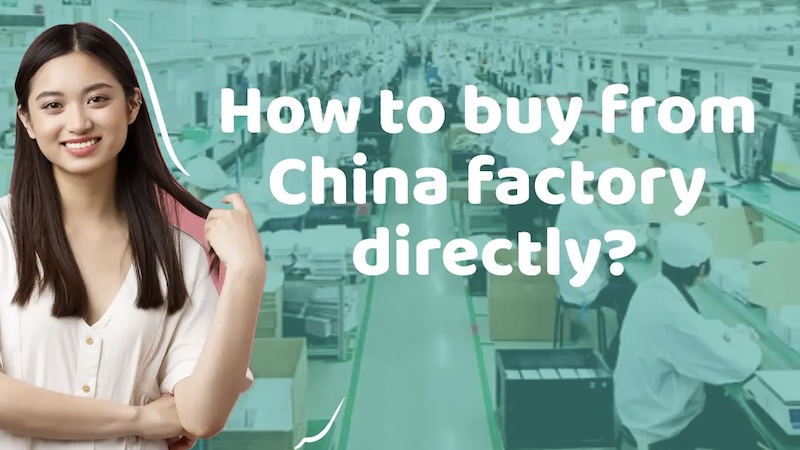
The previous section clarified why this topic draws strong commercial interest but may not fit every site strategy. With that context in place, this section focuses on execution: how to compare sourcing paths so your online store makes decisions based on margin, risk, and operational capacity rather than assumptions.
For most teams exploring buying direct from China, the real choice is not whether to source internationally, but which path gives the best control at your current stage. The two most common routes are B2B marketplaces and factory-direct outreach, and each can support direct sourcing from China when used with clear qualification standards.
B2B marketplaces are often the fastest way to start China direct sourcing because they reduce discovery time. You can filter by product category, order quantity, and production capabilities, then compare multiple manufacturers in a short cycle. For an online store validating demand or testing a new SKU, this speed can be a practical advantage.
Factory-direct sourcing usually takes more effort up front. You need to identify potential factories, contact them individually, and verify whether they are true manufacturers rather than trading intermediaries. That extra work can pay off when you need tighter unit economics, custom packaging, or product modifications that support brand positioning.
A useful way to compare both routes is to evaluate five operating factors:
Supplier discovery and verification
Marketplaces simplify first contact and initial filtering, but verification still belongs to you. Factory-direct sourcing gives you deeper visibility into production discussions earlier, yet requires stronger internal process discipline.
Pricing structure and margin impact
Marketplaces can be competitive for standard products, especially at moderate volumes. Factory-direct relationships may unlock better long-term pricing when your order cadence is predictable and volumes increase.
Customization and brand control
If your strategy relies on private labeling, bundle variation, or packaging consistency, factory-direct communication is often more flexible. Marketplace suppliers can still support customization, but options may be narrower depending on the seller model.
Lead times and communication flow
Marketplace messaging can be convenient, especially during supplier shortlisting. Factory-direct workflows can become more efficient after onboarding because technical details and production updates move through fewer layers.
Risk management and continuity
Both paths require sample testing, clear specifications, and written quality expectations before payment milestones. In direct sourcing, reliability comes from process quality, not from channel choice alone.
For many online stores, the best model is phased rather than absolute. Start with marketplaces to shortlist and test small runs, then transition selected high-performing products into factory-direct programs once demand is proven. This approach helps you avoid overcommitting while still building toward stronger margins and operational control.
When applying this to buying direct from China, keep your decision anchored to business model realities: your average order value, reorder frequency, return rate, and tolerance for inventory risk. A store with seasonal demand may prioritize flexibility, while a store with stable replenishment cycles may prioritize factory-level pricing and deeper quality control workflows.
In practical terms, direct sourcing succeeds when your sourcing path matches your current maturity. If your team is early-stage, marketplaces can reduce complexity. If your catalog is established and forecast accuracy is improving, factory-direct programs can become a strategic lever. Either way, the objective is the same: build a repeatable sourcing system that protects customer experience while improving contribution margin over time.
After comparing marketplace sourcing with factory-direct outreach, the practical question is how to decide which supplier is actually safe and profitable to work with. For online stores, buying direct from China works only when your evaluation process protects margin, delivery reliability, and customer experience at the same time.
Start verification as a risk filter, not a paperwork exercise. Ask for the supplier’s business license, legal entity name, operating address, and export experience for your product category. Confirm that the legal name on quotes, invoices, and bank account details matches. If payment details change suddenly, pause and re-verify through a known contact channel.
Next, validate production reality. Request recent factory photos, core equipment lists, quality process notes, and sample batch records. A live video walk-through can help confirm whether the supplier is a manufacturer or a trading intermediary. Neither model is automatically bad, but you need clarity before negotiating terms.
For compliance, map requirements to your market and product type before placing a deposit. Check labeling, material, and safety documentation early so you do not discover gaps after inventory is in transit. If you lack in-house capacity, a China buying agent can coordinate document checks and pre-shipment inspections while you keep final approval authority.
Quoted unit price is rarely the number that decides whether buy products from China is sustainable for your store. Build a landed-cost sheet that includes every cost from factory floor to customer-ready stock. This turns supplier comparison into a margin decision instead of a guess.
Include, at minimum:
Unit cost and packaging cost at source.
Freight and insurance based on shipment mode and seasonality.
Duties, taxes, customs brokerage, and inspection-related fees.
Warehouse receiving, prep, and last-mile fulfillment costs.
Defect allowance, return handling, and payment processing fees.
Then test margin under realistic scenarios: slower sell-through, higher freight, or a 2% to 5% defect swing. If profitability disappears under mild stress, the quote is too fragile. Buying direct from China should improve contribution margin after all operating costs, not just lower the catalog price.
Minimum order quantity and lead time are where cash flow pressure usually appears first. A low price tied to a large MOQ can overexpose your store if demand is uncertain. Instead of accepting the first volume break, negotiate staged commitments: a smaller initial run, then larger repeat orders tied to quality and on-time performance.
Lead time planning should combine production time, quality checks, transit, and customs clearance into one timeline. Add buffer for peak periods and rework risk so your reorder point reflects reality. For many online sellers, stockout cost and late delivery penalties are more damaging than paying a slightly higher unit cost.
Use a simple risk grid before each purchase order:
Demand risk: How confident are you in monthly sell-through?
Supply risk: How stable is quality across batches?
Time risk: What happens if delivery slips by two to four weeks?
Cash risk: How much working capital is locked per cycle?
This framework keeps buying direct from China tied to business outcomes: stable margins, predictable availability, and fewer expensive surprises.
After you validate suppliers and map your true landed cost, your decision-making becomes much clearer. The strongest results from buying direct from China come from disciplined trade-offs, not from chasing the lowest unit price.
Treat supplier reliability and margin math as one decision. A lower quote only helps if quality, documentation, and fulfillment consistency hold up over repeated orders. For buying direct from China, the right partner is the one that protects your customer experience while still leaving room for healthy margins after freight, duties, packaging, and returns risk.
Plan around MOQ and lead time before choosing your initial assortment. Product selection should reflect your cash flow tolerance and inventory velocity, not just trend appeal. Smaller, testable order structures usually reduce downside when demand is uncertain, while larger commitments make sense only when reorder timing and sell-through confidence are already proven.
Use a risk-adjusted sourcing model, not a price-only model. Compare options by combining quality consistency, communication reliability, production capacity, and total delivered cost. This keeps buying decisions grounded in operational reality and helps avoid hidden losses that appear later through delays, defects, and stockouts.
Standardize your pre-order checklist to improve repeatability. Keep the same evaluation sequence each cycle: verify business legitimacy, confirm specifications and compliance needs, stress-test unit economics, and align order size with lead-time exposure. Consistency in process is what makes buying direct from China scalable for an online store.
Optimize for long-term purchasing performance, not one-off wins. The goal is a sourcing system that stays resilient as volumes grow, product mix changes, and shipping conditions shift. When each order is evaluated through the same commercial and operational lens, you reduce surprises and make better inventory bets over time.
If buying direct from China is not your highest-fit growth page, shift to commercial topics that connect directly to your store economics and customer promise. These themes often convert better because they map to immediate decisions buyers already need to make.
Landed-cost planning by product type: Show how freight, duties, packaging, and return risk change margin at SKU level.
MOQ and cash-flow planning for small catalogs: Help operators decide reorder thresholds without overstocking.
Lead-time buffering for seasonal launches: Explain how to plan launch windows with realistic production and transit variability.
Quality-control checkpoints for repeatable reorder cycles: Outline pre-production, pre-shipment, and post-arrival checks that reduce avoidable defects.
Import-vs-domestic sourcing break-even scenarios: Compare speed, control, and gross margin tradeoffs for different growth stages.
These topics still support the broader goal of sourcing China products direct for your online store, but they are easier to tie to concrete service pages, product pages, and decision tools. They also strengthen trust because the reader can see how your guidance connects to execution.
To close this article with action, run a quick content audit this week: tag each existing sourcing page as publish, redirect, or skip based on offer fit, then prioritize one replacement topic that most directly supports your current revenue model. That single step turns sourcing advice into a measurable editorial plan.
 English