



How confident are you that the factory behind your next order is real, capable, and aligned with your quality standards? That question sits at the center of every successful sourcing decision, especially when lead times, cash flow, and brand reputation are on the line.
For many buyers, the first challenge is not finding a supplier. It is learning how to verify a Chinese company before money changes hands. A polished website, fast replies, and attractive pricing can create a strong first impression, but they do not prove legal registration, production capacity, or process control. Without a clear verification process, buyers risk delays, quality failures, payment disputes, and compliance headaches that are difficult and expensive to unwind.
This article focuses on a practical path to factory verification before you place orders. It is designed for informational research: you are comparing options, assessing risk, and building a due-diligence workflow you can repeat across products and partners. Rather than relying on assumptions, you will learn what to check, why each check matters, and how to interpret what you find.
You will also see how company verification in China differs from simple profile screening. In practice, verifying a business typically combines legal checks, ownership and license review, operational evidence, site-level validation, and communication consistency over time. When handled well, China factory verification helps you separate trading entities from true manufacturers, identify mismatch between claims and reality, and decide when deeper audits are justified.
To keep expectations clear, this guide does not promise a perfect risk-free outcome. Verification is about reducing uncertainty before commitment, not eliminating every possible issue. The goal is to make better decisions with the information available, stage your risk as order values increase, and protect your business from avoidable surprises.
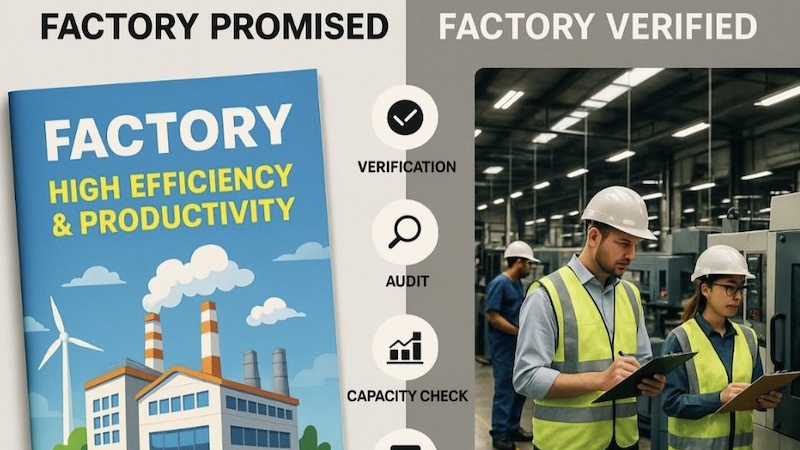
Now that you understand the basic verification workflow, it helps to clarify why this step is not optional. Before you commit deposits, tooling fees, or launch timelines, factory verification protects your margins, your brand, and your delivery commitments.
When buyers skip due diligence, they often assume a polished website or fast replies prove capability. In practice, that can hide critical gaps: a trading company posing as a manufacturer, subcontracting without disclosure, expired licenses, or quality systems that exist on paper only. A proper China factory verification process helps you confirm who you are really buying from and whether they can deliver at your required standard.
A practical way to approach this is to treat verification as risk control, not paperwork. If you verify a Chinese company early, you reduce expensive surprises later in production, inspection, and shipping. This is especially important when product defects, delays, or compliance failures could interrupt sales channels or damage customer trust.
Key business reasons to complete company verification in China before placing orders include:
You confirm legal and operational legitimacy. Factory verification validates registration details, business scope, ownership, and whether the supplier can legally manufacture your product category.
You test real production capability. You can assess machinery, workforce stability, process control, and whether output capacity matches your forecast.
You reduce quality and consistency risk. A site-level review shows how the factory handles incoming materials, in-process checks, and final inspection standards.
You strengthen commercial leverage. Verified facts let you negotiate realistic lead times, payment terms, and quality clauses based on evidence, not promises.
You protect continuity. Early detection of red flags gives you time to qualify alternatives before your launch calendar is exposed.
For procurement teams, supplier verification in China should feed directly into sourcing decisions, not sit in a separate compliance folder. Build a simple pass/fail framework tied to your order value and product risk. For example, low-risk accessories may require basic document checks plus a remote audit, while high-risk or custom products usually justify deeper evaluation verification and on-site confirmation.
Verification also improves internal alignment. Finance can release payments with clearer controls, operations can plan around realistic output, and quality teams can define checkpoints that match factory conditions. That shared visibility prevents last-minute disputes over whether issues were "unexpected" or visible from the start.
If you are wondering how strict to be, use a proportional standard: the higher the potential loss from failure, the deeper the review should be. In other words, supplier evaluation is not about distrust. It is about disciplined decision-making before money and timelines are locked in.
In short, verify first, order second. A structured company verification in China process turns sourcing from a gamble into a managed operation and creates a stronger foundation for long-term supplier performance.
You now know why verification matters before you commit cash, timelines, and brand reputation. The practical question is how to verify a Chinese company in a way that is structured, repeatable, and useful for purchasing decisions.
Start with legal identity, because every contract, invoice, and claim depends on it. Request the company’s registered Chinese name, business license number, legal representative, and registered business scope. Then confirm that these details match all commercial documents, including bank account holder name and sales contracts. This first layer of company verification in China helps prevent payments to unrelated entities and reduces dispute risk if quality or delivery issues arise.
A polished website does not prove active manufacturing. Verify the physical factory address, then check whether the site is owned, leased, or shared with other businesses. You should also confirm whether the entity is a manufacturer, trader, or both, since this directly affects lead time control and pricing transparency. Strong China factory verification links the legal entity to the real operating location where your goods are produced.
Match the factory’s actual capability to your product requirements before negotiating volume. Ask for production line details, key equipment lists, process controls, and capacity by month, then test answers against sample quality and delivery commitments. Review relevant certifications and confirm they apply to the specific site and product category, not just a parent group. Effective factory verification combines paperwork with technical fit, so your order is realistic from day one.
Past transaction patterns often reveal whether a supplier can handle your order profile. Look for consistency in export activity, main product categories, and destination markets over time. Flag abrupt changes in business scope, unusual payment requests, or repeated legal issues tied to product compliance. If you are building a supplier evaluation & verification in China workflow, this step helps separate stable operators from high-risk partners before you issue a purchase order.
Reputation checks are most useful when they are specific. Request recent buyer references for similar products, then ask targeted questions about defect handling, communication speed, and corrective action quality. Public reviews can help, but treat broad praise or complaints cautiously unless details are verifiable. Add dispute screening for recurring contract conflicts, and focus on patterns rather than one-off incidents. This gives your supplier evaluation stronger decision support.
Before large or repeat orders, validate everything through an on-site review or qualified third-party audit. A solid audit should confirm legal records, facility conditions, production flow, quality checkpoints, and traceability controls in one report. Ask for photo evidence and clear nonconformity notes with corrective action timelines. This final stage of company verification in China turns assumptions into documented facts and supports confident supplier approval.
A simple six-step method keeps verification practical while protecting margins, schedules, and customer trust. If internal bandwidth is limited, a structured supplier evaluation and verification process can still be implemented through standardized checklists and independent field audits.
After you confirm legal records, operating status, production capability, and compliance signals, the practical question becomes execution. You now need a verification model that matches your order value, risk tolerance, and internal team capacity. The right mix helps you verify a Chinese company efficiently without turning due diligence into a slow, expensive bottleneck.
DIY checks can work when orders are small, products are simple, and your team already understands company verification in China. You can review business licenses, compare registration details across databases, request recent factory photos, and run structured video audits. This approach is lower cost and gives you direct control, but it depends heavily on your staff’s ability to spot inconsistencies and follow up fast.
Third-party China factory verification is usually better when product risk is higher, timelines are tight, or supplier information is difficult to validate remotely. Independent teams can perform on-site confirmation, management interviews, production-line observation, and document cross-checks under a repeatable process. In practice, many importers use a hybrid model: internal screening first, then external factory verification before deposits and before scale-up orders.
Different service providers solve different gaps, so matching role to need matters. A sourcing agent is helpful when you need supplier shortlisting plus negotiation support, especially if your team lacks local language coverage. An inspection firm is ideal for process control around pre-production, inline, and pre-shipment checks, but it is not always a full legal-entity verifier. A dedicated verification company is strongest when your priority is identity, ownership, facility legitimacy, and operational authenticity.
Use a simple trigger framework:
1. Use DIY only for low-value trial orders and low-complexity products.
2. Add a verification company before large deposits, custom tooling, or exclusivity terms.
3. Add inspection firms when production consistency and defect prevention are core risks.
4. Use sourcing agents when supplier discovery and communication are your main bottlenecks.
After comparing DIY checks and third-party services, the practical question is cost. Budgeting for China factory verification is less about finding the cheapest option and more about buying enough risk reduction before you issue a purchase order.
When you verify a Chinese company, pricing usually follows service depth. A light desk review is inexpensive but limited, while a full on-site audit provides stronger evidence for supplier evaluation and verification in China.
Below are common ranges buyers use for planning. Actual quotes vary by scope, factory location, urgency, and reporting detail.
| Service type | Typical price range | What you usually get | Best use case |
|---|---|---|---|
| Basic desk-based company check | $80 to $250 | Business license review, legal entity match, public record checks | Early-stage filtering of multiple candidates |
| Remote document verification | $150 to $400 | Validation of certifications, bank details, ownership signals, document consistency checks | Screening before spending on travel or audits |
| Standard on-site factory verification | $300 to $900 | Site visit, address confirmation, workforce and line observation, photo evidence, basic capacity review | First order risk control for new suppliers |
| Enhanced factory audit | $800 to $2,000+ | Deeper process review, quality system checks, compliance points, management interviews | Higher-value orders or regulated product categories |
| Ongoing monitoring or re-verification | Monthly or quarterly retainers, often customized | Periodic status checks, change alerts, follow-up visits | Long-term supplier evaluation and relationship management |
In practice, a desk check can help with company verification in China, but it cannot replace physical confirmation when order values are meaningful. For many importers, the best balance is a staged approach: start with low-cost screening, then fund on-site verification only for shortlisted factories.
Your final budget is mainly affected by five factors:
Scope depth: A quick legal check costs far less than a full operational and quality-system review.
Factory complexity: Multi-building sites, specialized processes, or subcontracting networks take longer to verify.
Turnaround time: Rush requests often increase service fees.
Geography and logistics: Remote industrial areas can add travel and coordination cost.
Reporting requirements: Detailed bilingual reports, corrective-action tracking, and management calls typically raise pricing.
From a business perspective, treat factory verification as a pre-order control, not an administrative expense. If one failed shipment can erase your margin for a quarter, paying for reliable factory verification is usually the lower-cost decision. A practical rule is to align verification spend with order risk: low-value test orders may justify basic checks, while larger or repeat programs warrant stronger on-site validation and periodic re-checks.
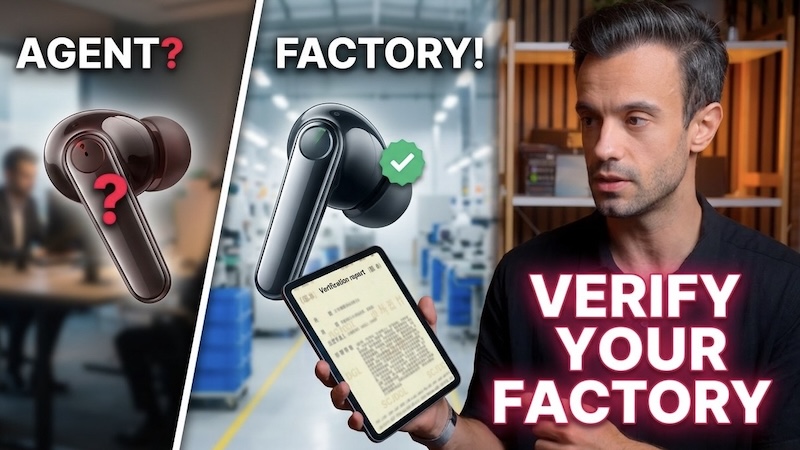
After reviewing verification options and cost ranges, your final decision should come from evidence quality, not from the lowest price or fastest promise. This checklist helps you verify a Chinese company in a way that protects cash flow, delivery timelines, and product quality before you release payment.
Use red flags as decision triggers, not minor warnings. If one severe issue appears, pause immediately and investigate before moving forward with factory verification.
Legal identity mismatch: Company name on the business license, bank account, and contract does not match exactly, or the supplier asks payment to a personal account.
Inconsistent operations evidence: Claimed factory address, production photos, and audit notes do not align, or site visits show a trading office rather than a production line.
Unverifiable compliance claims: The supplier shares certificates with missing issuer details, altered dates, or product scope that does not match your item.
Pressure tactics before verification: Repeated urgency requests for deposit payment before company verification in China is complete.
Poor communication traceability: Frequent changes in contact person, unclear answers to technical questions, or refusal to share core records.
A practical framework keeps your team aligned and reduces subjective decisions. Score each supplier against identity, capability, quality systems, communication reliability, and payment risk.
Approve: All critical checks pass, documents are consistent, and China factory verification confirms real production capacity for your product category.
Conditional Approve: No critical failures, but gaps remain. Proceed only with safeguards such as smaller pilot orders, stricter inspection points, milestone payments, or support from a product sourcing agent/company.
Reject: Any high-risk failure on legal identity, ownership, payment legitimacy, or major capability mismatch. Do not send funds while unresolved.
For teams managing China product sourcing at scale, this framework creates clear handoffs between sourcing, quality, and finance so decisions are faster and more defensible.
Before transferring any deposit, build a clean verification file that can support internal approval and later dispute handling if needed. Keep version-controlled copies in one shared location.
Business license and translated company details used in the purchase contract.
Bank account proof matching the legal entity and contract party.
Factory audit or verification report, including address, headcount range, and key equipment list.
Product-specific quality records: sample approval, specs, test requirements, and inspection plan.
Signed commercial terms: Incoterms, payment milestones, defect handling, lead time commitments, and authorized signatory names.
If your internal bandwidth is limited, a Product Sourcing Company can help structure this package and coordinate evidence collection without replacing your final approval authority. The goal is simple: verify a Chinese company with documented confidence, then pay only when your risk controls are satisfied.
After identifying red flags, applying an approve or reject framework, and organizing your payment file, this final recap keeps your process focused and defensible. Use these points as a quick reference before you place any order.
Treat verification as a go or no-go control, not a formality. The goal to verify a Chinese company is to confirm legal identity, operating status, and real production capability before money moves. If critical checks fail or remain unclear, pause. A delayed order is usually less costly than resolving quality, delivery, or legal disputes later.
Match the depth of factory verification to order risk. Small trial orders may justify a lighter review, while larger or repeat orders require deeper company verification in China, including on-site confirmation and document consistency checks. The key principle is proportional effort: higher exposure needs stronger evidence and tighter validation.
Use consistency as your core test across all records. China factory verification is strongest when business licenses, ownership details, site observations, product scope, and communication behavior align without conflict. One mismatch may be explainable, but multiple mismatches indicate elevated risk and should change your decision status.
Document decisions so they are repeatable and auditable. Every approval level should tie back to what was verified, what remains open, and what conditions apply before payment or scale-up. Clear records reduce internal confusion, support procurement handoffs, and make future re-verification faster when company details or production conditions change.
Re-verify at defined triggers, not only at onboarding. A one-time check can become outdated. Repeat key checks when ownership, banking details, factory address, product category, or order volume changes. Ongoing factory verification helps maintain control as commercial risk evolves, rather than relying on assumptions from an earlier snapshot.
Taken together, these takeaways keep company verification in China practical: verify identity, validate capability, align effort with risk, and record decisions in a way your team can defend.
Q1: What are the first steps to verify a factory in China before placing an order?
Start with a desktop check: confirm the company’s Chinese legal name, business license number, registered address, and legal representative. Compare this data across invoices, contracts, bank details, and their website. Request recent photos/videos of production lines, quality checks, and warehouse areas, then ask product-specific technical questions to test real manufacturing knowledge. Next, run a third-party background check and, if the order value is meaningful, schedule an on-site factory audit. Verification should confirm legal existence, manufacturing capability, quality systems, and consistency between what is promised and what is actually operating.
Q2: How can I tell if a supplier is a real factory and not a trading company?
Ask for evidence tied to production ownership and control. A true factory can usually provide workshop layouts, machine lists, process flow charts, staffing by department, and in-line QC records. Verify the business scope on the license to see whether manufacturing is included. During a video tour or on-site audit, check whether branding, equipment, raw materials, and work-in-progress match your product category. Also review export records and ask where key processes happen (in-house vs outsourced). Some trading companies are transparent and useful, but you should know exactly who manufactures your goods.
Q3: Which documents should I request to verify a factory in China?
Request the business license, tax registration details (where applicable), bank account details under the same legal entity, and any relevant certifications (for example ISO 9001, BSCI, SEDEX, or product-specific compliance files). Ask for recent test reports from recognized labs if your category needs safety or regulatory conformity. You should also collect proforma invoice samples, quality inspection templates, and references from similar clients. The goal is not just collecting paperwork, but cross-checking consistency: company name, address, scope, and seals should align across all documents before you pay deposits.
Q4: Is a factory audit necessary for small orders, and when should I invest in one?
For very small trial orders, a full audit may not always be cost-effective, but at minimum you should complete document verification, a live video inspection, and pre-shipment quality checks. Invest in a formal on-site audit when order value is high, product risk is high (safety-critical or complex), lead times are tight, or this factory may become a long-term supplier. Audits are especially valuable before tooling payments, large deposits, or exclusivity agreements. Think of audit cost as risk insurance: preventing one major quality or fraud issue often saves far more than the audit fee.
A reliable close to this process is simple: verify identity, verify capability, and verify consistency. If your goal is to verify a Chinese company, confirm legal registration details match the exact business you plan to pay, then confirm the physical factory can produce your specific product to your requirements. Effective factory verification is not a single document check. It is a layered review of licenses, site reality, equipment, quality controls, and communication discipline.
For most buyers, the practical decision point is this: do the findings support a pilot order, or do they require a pause. Company verification in China should end with a clear go, no-go, or conditional-go outcome. A conditional-go can work when gaps are minor and documented with corrective actions, deadlines, and accountability before mass production starts.
Use this final decision checklist before placing any order:
Entity match: Legal name, license details, bank account ownership, and contract party are consistent.
Factory proof: The audited site, production lines, and staffing match your product scope and volume needs.
Process control: Incoming material checks, in-process controls, and final inspection standards are defined and followed.
Risk controls: Payment terms, quality thresholds, defect handling, and shipment milestones are written into your agreement.
Pilot validation: A trial run or small batch confirms real-world performance before scaling.
If one of these points fails, delay commitment and resolve the gap first. That discipline is the difference between a routine sourcing project and a costly recovery effort. China factory verification works best when it is treated as a decision system, not a paperwork exercise.
Your concrete next step: schedule a factory verification against your current shortlist this week, then approve only the supplier that passes your written criteria without unresolved critical issues. Acting now, with a structured standard, gives you a stronger negotiating position and a safer first order.
 English