


How Can You Negotiate MOQ with Chinese Suppliers
Have you ever stared at a Chinese supplier’s MOQ (Minimum Order Quantity) requirement and thought: “This number will sink my budget” or “I can’t move that much inventory—am I stuck?” You’re not alone. For global buyers, negotiate MOQ with Chinese suppliers often feels like navigating a maze: too high, and your cash flow freezes; too low, and you risk losing the deal or facing inflated unit costs. But here’s the truth they don’t always tell you: MOQs aren’t set in stone. The world’s manufacturing powerhouse operates on a logic of flexibility—if you speak the right language of costs, trust, and long-term value.
Before you dive into haggling, though, you need to crack the first code: why do Chinese suppliers set MOQs the way they do? To negotiate effectively, you must first understand the industry-specific rules that shape these requirements. That’s where we start—with a deep dive into understanding MOQ requirements across Chinese industries.
Understanding MOQ Requirements Across Chinese Industries
MOQ negotiation becomes much easier when you know what a factory is actually protecting. After the basic introduction to MOQ talks, the practical question is how those requirements change by product type, production method, and supplier priorities.
Before finalizing terms for small-lot orders, compare supplier identity, production capability, payment timing, and defect-handling rules.
What MOQ Means in Chinese Manufacturing Context
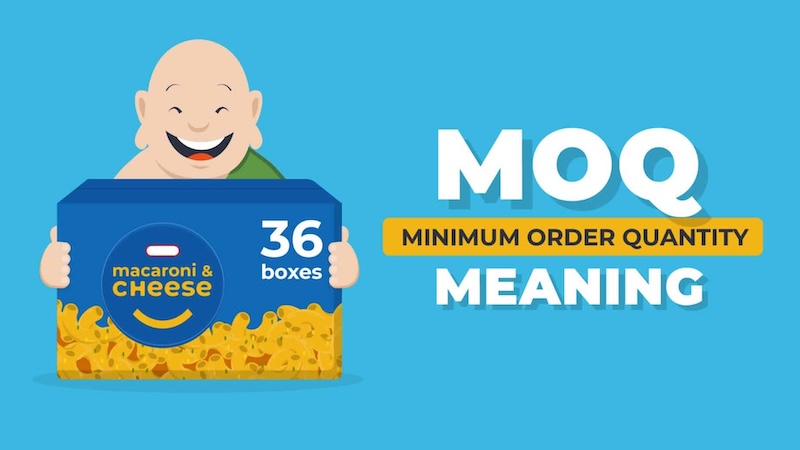
In Chinese manufacturing, MOQ usually means the smallest order that makes production workable for the factory, not simply the lowest quantity a sales team wants to sell. That threshold can reflect raw material purchasing, setup time, tooling use, packaging runs, labor planning, or quality-control effort. In many cases, the MOQ applies at several levels at once: per SKU, per color, per size, per packaging style, or per total order.
For buyers, that distinction matters. A factory may accept a low total order volume but still require a minimum quantity for each variation. When evaluating flexible MOQ Chinese manufacturers, ask whether the stated MOQ is for the finished product, each variant, or the full purchase order. That clarification prevents costly misunderstandings during sampling and quotation.
It is also useful to distinguish between the “official MOQ” and the “practical MOQ.” The official MOQ is what appears on a listing, quotation sheet, or sales script. The practical MOQ is the quantity the supplier can really support under specific conditions, such as standard materials, simple packaging, or a shared production run. Many buyers miss opportunities because they assume the first number is non-negotiable. Often, the better question is: what changes would let the factory produce a smaller run efficiently?
For example, a supplier might quote 1,000 units for a custom item, yet accept 300 units if the buyer uses an in-stock color, plain packaging, and one logo application method. In that case, the MOQ was not purely about volume. It was tied to complexity. Understanding that difference helps buyers negotiate in a way the factory can accept without losing money.
Industry-Specific MOQ common comparisons and Variations
MOQ is not uniform across industries. It often rises when production depends on custom molds, printed packaging, specialized materials, or long machine changeovers. It tends to be more flexible when factories already stock common materials or run standardized product lines.
A practical way to read MOQ by industry is:
- Apparel and textiles: MOQ may depend on fabric availability, dye lots, and size or color breakdowns.
- Consumer electronics: Higher minimums are common when custom components, certification work, or branded packaging are involved.
- Packaging and printed goods: Minimums often reflect plate setup, material waste, and batch printing efficiency.
- Home goods and accessories: Stock designs may allow smaller opening orders than fully customized products.
This is why reliable flexible MOQ Chinese manufacturers are usually easiest to find in categories with modular production, existing materials, or semi-custom options. Buyers should compare MOQ not only by supplier, but by customization level.
The same industry can also contain very different MOQ structures depending on the supplier’s business model. In apparel, a factory serving established Western brands may insist on larger fabric commitments, while a workshop supplying online sellers may allow smaller mixed-size runs using stocked fabrics. In electronics, a trading company may advertise low MOQs because it sources from several assemblers, but the buyer may sacrifice consistency or traceability. In packaging, a printer may be flexible on box quantity but not on custom inserts because inserts require separate cutting tools or additional hand assembly.
A good rule is to compare three things together: the product, the process, and the factory type. A low MOQ from the wrong supplier can be more expensive in the long run if quality drifts or lead times slip. On the other hand, a slightly higher MOQ from a capable factory may still be the better option if it gives you stable materials, repeatable quality, and a predictable reorder path.
These segmented production features create abundant choices for buyers pursuing low MOQ China product sourcing, while experienced purchasers prioritize cooperating with verified flexible MOQ Chinese manufacturers to balance cost and order volume.
Why Chinese Manufacturers Offer More Flexibility Than Global Competitors
Many buyers look for trusted flexible MOQ Chinese manufacturers because a large number of factories are experienced in export business and accustomed to serving importers at different growth stages. In practice, flexibility often comes from dense supply networks, access to shared materials, and the ability to combine orders across product lines or production schedules.
That does not mean every factory will lower its minimum. More often, flexible suppliers in China adjust the structure of the order instead. They may offer stock components, simpler packaging, mixed models, or trial runs with fewer custom elements. Such producers can therefore be a strong fit for small and mid-sized brands, but only when the buyer understands what is negotiable and what is tied to real production constraints.
That industry context strengthens your bargaining position because you can propose terms that reduce factory risk instead of simply asking for a smaller number.
Another reason for this flexibility is supplier competition. In many Chinese manufacturing clusters, factories operate near one another and often share upstream resources such as packaging vendors, material markets, subcontract processors, and freight partners. That ecosystem allows some suppliers to accept smaller opening orders because they do not need to build every input from scratch. A buyer ordering a common stainless-steel bottle, cotton tote, phone accessory, or household organizer may benefit from existing materials and standard components already moving through the local supply chain.
However, buyers should not confuse flexibility with unlimited accommodation. A supplier may say yes to a low MOQ to win the order, then recover margin through higher unit pricing, looser tolerances, delayed lead times, or later requests for change fees. This is why successful negotiation depends on both price and process discipline. A truly useful low MOQ is one that remains workable after sampling, production, inspection, and shipment.
7 Proven Strategies to Negotiate Lower MOQs with Chinese Suppliers
Because MOQ levels vary so widely by industry and production setup, negotiation works best when your request fits the factory’s real operating constraints. That is why buyers looking for flexible MOQ Chinese manufacturers get better results with practical trade-offs instead of simple price pressure.
One proven shortcut to ease order limits is to leverage third-party procurement resources, as sourcing agents reduce supplier MOQ via consolidated order pooling; to effectively cut MOQ via sourcing agent, buyers need to finalize all product specs and inspection criteria in advance.
- Match Your Order Volume to Factory Size and Capacity
A small or mid-sized factory may accept a lower opening order more easily than a large plant built for long production runs. Ask about normal batch sizes, machine setup needs, and idle capacity. When your volume matches their workflow, your MOQ request sounds commercially reasonable rather than risky.
This is especially important in sectors where larger factories prioritize major accounts. A 500-unit order may be insignificant to a supplier that normally runs 50,000-piece batches, but meaningful to a factory with shorter lines and more mixed production. Buyers who target the right factory size often get better MOQ terms with less negotiation because the order naturally fits the supplier’s operating model.
- Leverage Multiple Product Variations to Meet Minimum Thresholds
If one SKU cannot meet the minimum alone, combine colors, sizes, or minor design variations under the same material and tooling base. Many suppliers are more open to a shared production total than a tiny single-variant order. This approach can help buyers work with reliable flexible MOQ Chinese manufacturers without overcommitting to one version.
For instance, an apparel buyer may split 600 units across three sizes and two colors while still using the same fabric and construction method. A home-goods buyer might order one base design in several neutral finishes instead of requesting separate custom builds. This strategy works best when the variations do not create extra tooling, separate raw-material purchases, or complex packing requirements.
- Offer Longer-Term Partnership Commitments
Factories often reduce MOQ when they see repeat business potential. Instead of asking for a one-off exception, present a realistic purchasing plan for the next few orders, even if volumes start small. A credible forecast, clear reorder timing, and fast feedback can make trusted flexible MOQ Chinese manufacturers more willing to support your launch.
The key word is realistic. Experienced suppliers can usually tell the difference between a genuine growth plan and a buyer making inflated promises. A simple three-order estimate is often more persuasive than an overly ambitious annual forecast. If you can show current sales channels, preorders, distributor interest, or prior sales data for similar products, your request becomes much more credible, an essential step for anyone focused on small business China MOQ sourcing.
- Pay Premium Unit Prices for Reduced Order Quantities
Lower MOQ usually means higher cost per unit because setup, labor, and purchasing efficiency are spread across fewer pieces. In many cases, accepting that trade-off is the cleanest path to a smaller first order. Treat it as a risk-management cost that protects cash flow and tests demand before scaling.
This is often the smartest option for new products. Paying slightly more per unit on 300 pieces may be far safer than funding 3,000 pieces at a lower unit price before market demand is proven. Buyers sometimes focus too heavily on the quoted production cost and ignore the carrying cost of inventory, markdown risk, or the cost of replacing poor-performing packaging after launch.
- Time Your Orders During Low-Demand Manufacturing Periods
Factories are often more flexible when lines are not fully booked. If your order can fill a quiet production window, the supplier may accept a reduced minimum to keep machines and staff occupied. Ask directly when their schedule is lighter rather than negotiating MOQ in isolation from timing.
Seasonality varies by industry. Apparel factories may be constrained before major retail cycles, while gift, decoration, and consumer-products suppliers may experience spikes before holiday export seasons. If your launch schedule is flexible, placing a trial order during slower months can improve both MOQ flexibility and communication speed because the sales and production teams have more bandwidth.
- Bundle Orders with Other Buyers or Products
Some buyers reach the threshold by consolidating related products, while others coordinate combined runs through a sourcing partner or importer. The key is operational compatibility: similar materials, shared processes, and aligned quality requirements. This can lower costs without forcing excess inventory into your warehouse.
A common example is private-label accessories. A buyer may combine several small items from the same factory into one consolidated order, allowing the supplier to meet a broader production value target even if each item alone is below the nominal MOQ. This approach can work well, but it requires careful control of packaging details, carton marks, and inspection criteria so that one weak item does not create delays for the rest.
- Work Directly with Factory Owners to Bypass Trading Company Markups
When possible, discuss MOQ with the decision-maker at the factory rather than only with a sales intermediary. Owners and production managers usually have clearer authority over exceptions, scheduling, and margin trade-offs. This is especially useful when comparing flexible MOQ Chinese manufacturers in China, where trading companies may add markups and limit negotiation flexibility.
That does not mean trading companies are always the wrong choice. Some are useful for startup buyers because they aggregate several factories and can sometimes help combine orders. But if MOQ is your main issue, direct factory communication usually gives you a clearer picture of what is truly possible and what conditions must change to make it work.
Skilled pre-work around specs, pricing and delivery rules greatly improves the success rate of formal Chinese factory MOQ negotiation, especially for buyers with limited bulk order capacity.
Taken together, these seven tactics shift the conversation from “Can you lower the MOQ?” to “How can we structure a workable first order?” That framing is often what helps buyers identify manufacturers that are genuinely open to a practical deal.
How to Find Reliable Factories for Low Minimum Orders
After deciding where you can trade volume, timeline, or unit price, the practical question becomes where to find factories that will even discuss smaller opening orders. The search matters because the right shortlist gives you more room to negotiate MOQ with Chinese suppliers instead of spending weeks on factories that only serve large-volume buyers.
Before finalizing cooperation with potential partners, compare supplier identity, production capability, payment timing, and defect-handling rules.
Navigating Alibaba and 1688 for Low MOQ Suppliers
Alibaba is usually the easiest starting point for overseas buyers, but low displayed MOQs do not automatically mean real flexibility. Treat listings as a first filter, then verify whether the supplier can support a pilot order, mixed SKUs, or sample-to-bulk progression. On 1688, you may find more factories and trading companies with small batch China supplier MOQ habits, but communication and payment handling can be harder if you do not read Chinese or have local support.
Focus on practical signals rather than slogans. Look for suppliers that show multiple pack sizes, customized order options, or repeat references to stock-ready items. Then message them with a specific request: product spec, target quantity, color or size mix, and your expected reorder path. That approach helps identify reliable payment terms faster than asking only, “What is your MOQ?”
When using these platforms, response quality is often as revealing as the listing itself. Suppliers who answer directly, clarify assumptions, and explain what affects MOQ are usually more reliable than those who respond with generic catalogs and vague promises.
Exploring Physical Sourcing Hubs Like Guangzhou’s Apparel Manufacturing Zones
Online research is efficient, but physical sourcing clusters can uncover suitable producers that are not well presented on major platforms. In Guangzhou, buyers often use dense apparel and small-batch sourcing areas to compare factories, workshops, and intermediaries in person. The value is not just price discovery. You can inspect materials, see how suppliers organize production, and test who is genuinely open to smaller first runs.
This route is most useful for fashion, accessories, and fast-moving consumer goods where design turnover is high and supplier responsiveness matters. Bring a clear tech pack, sample, or product brief. Without that, a sourcing hub visit can become a browsing trip instead of a negotiation advantage.
Using Specialized MOQ-Focused Supplier Directories
General marketplaces cast a wide net, but specialized directories and category-specific databases can save time when your priority is trustworthy sourcing options. These resources are helpful when you need factories already accustomed to startups, product tests, or lower-volume private label orders. They also make it easier to screen for product-category fit, communication quality, and willingness to scale from a small trial into repeat production.
Use a simple evaluation checklist:
- Ask for the true production MOQ, not only the sales-team MOQ.
- Confirm whether mixed variants can count toward one minimum.
- Check if stock components reduce custom order thresholds.
- Review how the supplier handles sampling, lead times, and reorders.
- Compare three to five options before treating any factory as a trusted partner.
For buyers seeking reliable China-based production support, the strongest candidates are usually the ones that explain their limits clearly and propose workable alternatives rather than giving a flat yes or no.
Another advantage of specialized channels is context. A qualified sourcing directory may already know which suppliers are startup-friendly, which ones are only flexible on standard products, and which factories become difficult after deposit payment. That kind of screening is valuable because MOQ flexibility only matters when it is paired with communication discipline and repeatability. Reliable third-party industry directories can deliver targeted lower MOQ China sourcing help and shorten the supplier screening cycle for novice importers.
Evaluating Manufacturer Reliability and Quality Standards
Directories, marketplaces, and sourcing hubs can help you shortlist factories with lower minimums. The harder part is confirming that a supplier offering a small run can also deliver consistent quality, because MOQ flexibility only helps if the goods arrive as promised.
When seeking out relevant sourcing guidance, the safest starting point is a written specification, a sample standard, and a clear inspection trigger.
Verifying Factory Credentials and Certifications
When you negotiate with factory-side coordination, credibility matters as much as price. Start by confirming the company name, business registration details, factory address, and the scope of products it is actually authorized to make. A supplier may present itself as a factory while operating mainly as a trading company, which can affect lead times, communication, and your leverage during MOQ discussions.
Ask for clear copies of relevant certifications, but do not stop at the document itself. Check whether the certificate matches the legal company name, product category, and production site you are discussing. If your product needs category-specific compliance, request evidence tied to that exact item rather than a general company profile.
For procurement teams comparing production quality support in China, a practical review should include:
- Business license and registered entity details
- Factory or workshop photos tied to current production
- Quality management certificates relevant to the product
- Export experience for your product type
- Consistency between quotes, certificates, and factory information
That verification work strengthens your position in MOQ talks. A factory with documented capabilities is more likely to discuss pilot orders, mixed SKUs, or staged production in a realistic way.
Requesting Samples Before Committing to MOQ Agreements
Samples are not a formality. They are one of the best tools for evaluating trusted supplier coordination before you accept any MOQ agreement. A sample lets you check materials, construction, sizing, finishing, packaging, and labeling against your requirements, while also showing how carefully the supplier follows instructions.
Request samples that reflect actual production conditions, not an idealized showroom version. If possible, ask for the sample to use the same materials, workmanship standards, and packaging approach planned for the bulk order. For products with variations, request a sample set covering the most important colors, sizes, or finishes.
Use the sample stage to test communication and process control as well. Did the factory confirm specifications in writing, flag unclear details, and revise quickly after feedback? Approved samples create a reference point for quality expectations, defect handling, and any future reorder.
A useful practice is to convert the approved sample into a simple control package: photos, measurements, packaging details, labeling instructions, material notes, and acceptance criteria. Even for a small order, this documentation reduces ambiguity.
Cost Considerations When Negotiating Flexible MOQs
After checking factory credentials and reviewing samples, the conversation usually turns to money. That is where many buyers discover that a smaller minimum order can reduce upfront risk while raising the cost of each unit, so price analysis needs to be as careful as supplier screening.
Before locking in sourcing terms with selected manufacturers, compare supplier identity, production capability, payment timing, and defect-handling rules.
Understanding the Price-Volume Tradeoff
Flexible MOQs are useful because they let you test demand, refine packaging, or validate quality before placing a larger order. Still, smaller runs often mean a higher per-unit price because the factory must spread setup time, labor planning, materials sourcing, and machine changeovers across fewer pieces. When working out commercial terms, treat the unit price as only one part of the negotiation, not the whole decision.
A practical approach is to ask for tiered quotes at two to four quantity levels. That makes it easier to compare a trial order against a follow-up order and see where the price begins to improve meaningfully. Reliable manufacturers should be able to explain which costs are fixed, which are volume-sensitive, and whether future larger orders can offset some first-run expenses.
A core bargaining lever during price talks is MOQ payment terms negotiation, such as installment delivery or staged deposit settlement, which can convince factories to relax minimum order standards.
Hidden Costs in Low MOQ Production Runs
Low MOQs can look attractive until extra charges appear outside the headline quote. Common examples include mold or tooling fees, custom packaging costs, color matching, labeling, inspection charges, and higher shipping rates because small orders do not use space efficiently. Some factories may also require payment for leftover raw materials if your order volume is too low to consume their standard purchasing batch.
This is why transparent cost breakdowns are often more valuable than the cheapest option. Clear suppliers usually break out costs in writing and explain which fees are one-time, recurring, or refundable against later orders.
Calculating Total Landed Cost for Small Order Quantities
For negotiation purposes, total landed cost gives a more realistic picture than factory price alone. Build your estimate by combining unit cost, setup fees, packaging, inspection, freight, duties, taxes, payment processing, and the cost of replacing defective units if quality issues appear. For small orders, shipping and handling can have an outsized effect, which means a cheaper ex-factory quote may still be the more expensive choice overall.
表格
| Cost area | Ask the manufacturer | Why it matters |
| Unit price | What changes at each quantity tier? | Reveals the true volume discount |
| Setup fees | Are these one-time or repeated? | Affects reorder economics |
| Packaging | Is export-ready packing included? | Prevents surprise add-ons |
| Freight readiness | Carton size and gross weight? | Helps estimate shipping impact |
For buyers sourcing from Chinese manufacturers, the strongest negotiation position comes from knowing your target landed cost before you counteroffer. That lets you push for the right concession, such as lower tooling amortization, bundled inspection, or improved packaging terms, instead of chasing a unit price that does not actually protect margin.
It is also wise to model a failure scenario. If 5 percent of a small order arrives defective, what will replacement cost look like once express freight, customer refunds, or delayed launch timing are considered? That exercise often changes the definition of a “good” MOQ deal. The best first order is not necessarily the one with the smallest quantity, but the one with the lowest controlled risk, a core goal for anyone building out their low MOQ China product sourcing plan.
FAQ
Q1: What does MOQ mean in Chinese manufacturing?
A: MOQ stands for Minimum Order Quantity — the smallest number of units a supplier is willing to produce or sell in a single order. For manufacturing oversight, this number reflects real production costs such as material purchasing, machine setup time, and packaging. Understanding MOQ helps buyers plan budgets, negotiate effectively, and avoid surprises when sourcing from China. It is the core benchmark affecting all types of low MOQ China product sourcing plans across different manufacturing sectors.
Q2: Can you negotiate MOQ with Chinese suppliers?
A: Yes, in most cases MOQ is negotiable with Chinese suppliers. The most effective approach is to treat it as a business conversation rather than a simple request. Production-focused suppliers respond best when buyers provide clear sales forecasts, offer tradeoffs like simplified specifications or fewer product variants, and propose a staged order plan that demonstrates long-term commitment and reduces supplier risk. Mastering systematic skills helps buyers professionally negotiate MOQ with Chinese suppliers without blind bargaining.
Q3: Why do manufacturers set minimum order quantities?
A: Factories set minimum order quantities to cover fixed production costs including raw material procurement, machine changeover time, labor scheduling, and packaging setup. MOQ is not an arbitrary number — it reflects the supplier’s production rhythm and profitability threshold. When buyers understand these underlying factors, they are better positioned to negotiate realistic and mutually beneficial order quantities, especially when working with flexible MOQ Chinese manufacturers.
Q4: What is the best strategy to lower MOQ with a Chinese factory?
A: The best strategy to lower MOQ includes presenting verifiable sales forecasts, reducing product complexity by limiting colors or variants, offering a deposit or prepayment, and proposing a phased order schedule that grows over time. Approaching the negotiation with data and genuine business reasoning — rather than pressure — tends to produce the most favorable outcomes for both parties. These practical trade-offs are core advice for anyone doing small business China MOQ sourcing in cross-border procurement.
Q5: How can buyers reduce minimum order limits via third-party procurement resources?
A: Multiple trusted procurement partners exist across the industry; qualified third-party procurement partners help buyers as sourcing agents reduce supplier MOQ, and many global merchants choose to cut MOQ via sourcing agent for hassle-free order setup. Such professionals rely on aggregated order volumes and established factory partnerships to secure relaxed minimum requirements for individual purchasers.
Q6: Can foreigners buy directly from Chinese manufacturers on platforms like 1688?
A: Yes, foreigners can buy from Chinese manufacturers on 1688, which is Alibaba’s domestic wholesale platform offering lower prices and often more flexible MOQ options. However, the site is primarily in Chinese and designed for domestic buyers. Many suppliers maintain storefronts on both Alibaba and 1688. Using a sourcing agent or translation tools can help foreign buyers navigate the platform and communicate effectively. These platforms become primary channels for most buyers to realize stable low MOQ China product sourcing.
Q7: Are flexible minimum-order manufacturers suitable for startups?
A: Absolutely. Manufacturers with adjustable MOQ rules are particularly valuable for startups that need to test product-market fit without committing to large inventory. Startups benefit most by clearly explaining their growth potential, providing realistic sales projections, and offering tradeoffs such as simplified product designs. Novice importers can get professional lower MOQ China sourcing help from qualified industrial service resources to avoid common sourcing traps.
Q8: What tradeoffs can buyers offer to get a lower MOQ from Chinese suppliers?
A: Buyers looking to negotiate with manufacturers can offer several meaningful tradeoffs: accepting simpler product specifications, reducing the number of SKUs or color variants, agreeing to standard packaging instead of custom packaging, paying a larger deposit upfront, or committing to a staged order plan with clearly defined future volumes. Each of these reduces supplier risk and makes smaller runs more financially viable. All these compromises efficiently resolve the typical pain point of small batch China supplier MOQ for global importers.
Q9: How important is a sales forecast when negotiating MOQ with Chinese manufacturers?
A: A clear and credible sales forecast is one of the most powerful tools when negotiating with production-focused suppliers. Suppliers want confidence that a smaller initial order will lead to larger repeat business. Presenting documented demand data, market research, or existing customer commitments signals that you are a serious, low-risk buyer — making factories far more willing to accommodate lower minimum order quantities. Detailed forecasts are critical leverage during formal MOQ payment terms negotiation and quantity adjustment communication.
Q10: What should importers know before starting formal factory talks?
A: Importers should understand that MOQ reflects real production economics, not arbitrary policy. Before approaching manufacturers, define your target quantity, know your budget, and prepare supporting materials such as sales forecasts and product specifications. Being transparent about your business stage — whether a startup, an established brand testing a new category, or a buyer managing cash flow — builds trust and increases the likelihood of a successful MOQ negotiation. Gathering full specs and budget data lays a solid foundation for smooth Chinese factory MOQ negotiation.
Conclusion
The FAQ likely clarified the practical sticking points, but the core decision is still simple: negotiate MOQ as a business case, not as a favor. Buyers usually get better results when they present a realistic opening volume, accept sensible tradeoffs on packaging or customization, and confirm every concession in writing before payment. That approach helps you compare available manufacturers more clearly and separate reliable providers from sellers who agree too quickly and revise terms later.
In practice, the strongest outcome is not the lowest possible starting quantity. It is a workable first order with clear unit pricing, lead time, quality expectations, and a path for repeat purchases if sales develop. When reviewing potential manufacturing partners in China, look for consistent communication, willingness to explain cost drivers, and terms that stay stable from quotation to pro forma invoice. Reliable suppliers usually make the limits visible, which gives you a firmer basis for negotiation than vague promises.
A disciplined buyer should also treat the first order as a test of the entire supplier relationship, not just the product itself. Did the factory keep documentation aligned? Were samples consistent with bulk production? Were costs transparent? Did the supplier handle revisions calmly and clearly? These signals often matter more than a small difference in MOQ because they predict whether scaling will be smooth or painful.
For a concrete next step, take one product you are actively sourcing and prepare a short MOQ negotiation brief before contacting any factory. Include your target order size, acceptable design simplifications, packaging preferences, quality requirements, and reorder potential. Send the same brief to a small shortlist and compare the replies side by side. That will give you a practical way to judge available manufacturers on transparency and fit, not just on the first price they offer.