What Happens After You Send an Inquiry
Sourcing from China for the first time feels like stepping into a system nobody explained to you. You find a supplier, they send a quote, something gets lost in translation, and a few months later you are holding a shipment that does not match what you ordered.
It does not have to work that way.
Maple Sourcing runs projects through a defined process, adjusted to your product, supplier status, and order stage, so you know where you are, what happens next, and what gets checked before money moves or goods ship.
Here is the typical process.
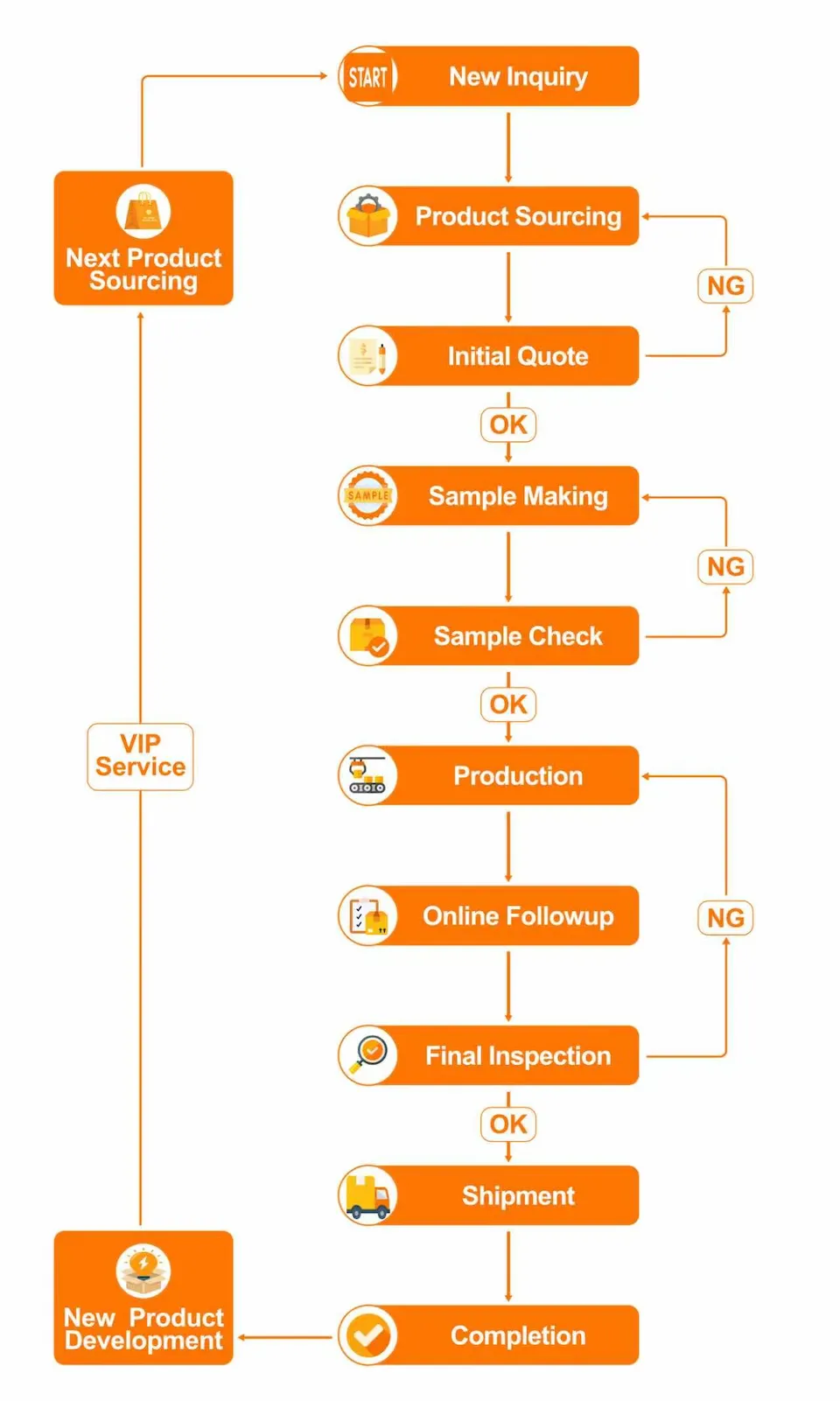
Step 1: New Inquiry
You tell us what you need.
That might be a product you want to develop from scratch, a supplier you want to verify, an existing order you want quality-controlled, or simply a category you want to explore. You do not need a finished brief. A rough description, a reference product, or even a photo is enough to start.
We review your inquiry and usually respond within one business day with questions, a suggested scope, or both.
Step 2: Product Sourcing
We find suitable suppliers for your product.
This is not a keyword search on Alibaba. Our supplier sourcing work looks for factories with relevant category experience, suitable production capacity for your order size, and the ability to meet your quality, communication, and delivery requirements. We check whether they are a manufacturer, a trading company, or a hybrid, because that distinction affects your price, your quality visibility, and how much control you have over production.
We typically shortlist 2 to 4 candidate suppliers and share a comparison so you can make an informed decision before paying any deposit.
If the first shortlist is not strong enough, we refine the search before asking you to move forward.
Step 3: Initial Quote
We get you a real price, not a placeholder.
Once a suitable supplier is identified, we request a detailed quotation: unit price at your target quantity, MOQ, lead time, payment terms, and packaging options. We review the quote for anything unusual, like inflated tooling costs, unclear payment structures, or pricing that does not match the market, and negotiate where there is room.
You see the final quote with our notes. If the quote makes commercial sense, we move to samples. If it does not, we negotiate, refine the supplier search, or look for a better option before moving forward.
Step 4: Sample Making
The factory produces a sample based on your specification.
This is where most sourcing projects either gain traction or reveal problems. A sample is not just a preview. It is a test of whether the factory understood your requirements and can meet them consistently.
We brief the factory clearly: materials, dimensions, finish, color references, packaging details, and any certifications required. For products designed from scratch, this stage runs inside our product development service, with drawings and tooling managed alongside the sample. We follow up during sample production to catch misunderstandings early.
When practical, we review the sample in China before it is sent to you, so you are not waiting weeks only to find the wrong material was used.
Step 5: Sample Check
You approve the sample. We document it.
When the sample reaches you, you review it against your requirements. If something needs to change, like color, dimension, material, or finish, we feed that back to the factory and coordinate a revised sample.
Revision rounds are normal. Many custom products take more than one sample round before both sides are satisfied. We manage that process so you are not emailing the factory directly in a language neither side handles comfortably.
Once you approve the sample, it becomes the production benchmark for the bulk order.
Step 6: Production
The factory begins manufacturing your order.
You have approved the price. You have approved the sample. Production starts with a deposit, typically 30% of the order value, though this varies by supplier and order size.
From this point, the order is in motion. At this stage, the buyer should not have to chase the factory every few days. Our role is to keep production aligned with what was agreed.
Step 7: Production Follow-Up
We monitor production so you do not have to.
Most serious sourcing problems begin during production, even if they are only discovered at inspection. A raw material gets substituted. A component comes in late. A specification detail gets misremembered. A factory takes on another urgent order and your timeline slips.
Through manufacturing control, our team follows up with the factory at regular intervals: materials status, production start, progress updates, and any issues flagged. You receive updates at key milestones without needing to chase.
If something is off-track, we tell you immediately, with context and a recommended response. A delay caught at week 2 is manageable. The same delay caught at week 6, when your goods are supposed to be shipping, is not.
Step 8: Final Inspection
We inspect the finished goods before you release payment.
This is the most important step in the process for most buyers. Your balance payment, typically 70% of the order value, is your main lever over the factory. Once it is paid and the goods are shipped, your options narrow considerably.
Before you release that payment, we arrange a quality inspection to check the finished goods against your approved sample and written specification. An inspection can usually be booked on 2 days’ notice, with the report delivered the next day. We measure dimensions, check materials, assess workmanship, review packaging, and count quantities. Findings are documented with photos and a clear recommendation: release, hold, or request rework.
You receive the inspection findings before releasing the balance payment, while you still have leverage to request rework, replacement, discount, or shipment hold. If the inspection finds problems, we coordinate remediation with the factory before goods are released.
If the inspection passes, you have a documented basis for releasing the balance payment.
Step 9: Shipment
Goods leave China.
Once the balance is paid, the factory releases the shipment to your freight forwarder. We prepare the handoff by confirming that the commercial invoice, packing list, and required shipping documents are accurate and consistent before the goods are released.
We do not book freight on your behalf. That is your freight forwarder’s role. But we make sure the goods are ready, the documents are correct, and the factory hands over cleanly.
Step 10: Completion
We close the project record.
Once the shipment handoff is complete, we document supplier performance, quality findings, and any issues resolved during the order, so the next project starts from a stronger foundation.
What Happens Next
Most buyers reach completion and face one of two decisions.
Repeat Order or New Product Sourcing: you want to reorder the same product, or source something new from a supplier base we already understand. Because we already know your standards, your market, and your quality requirements, the next project moves faster.
New Product Development: you want to develop something that does not exist yet. A new design, a new category, a product that needs tooling and multiple development rounds. We treat this as a fresh project, but one that benefits from everything we learned in the first.
Either way, the process repeats, and it gets more efficient every time. For clients with ongoing or high-volume sourcing needs, we can provide more dedicated account management and closer coordination across multiple products and orders.
Every project starts with a conversation. Tell us what you are trying to source. We will tell you honestly whether and how we can help.