Prototype & Hardware Sourcing from China: Drawing to Batch
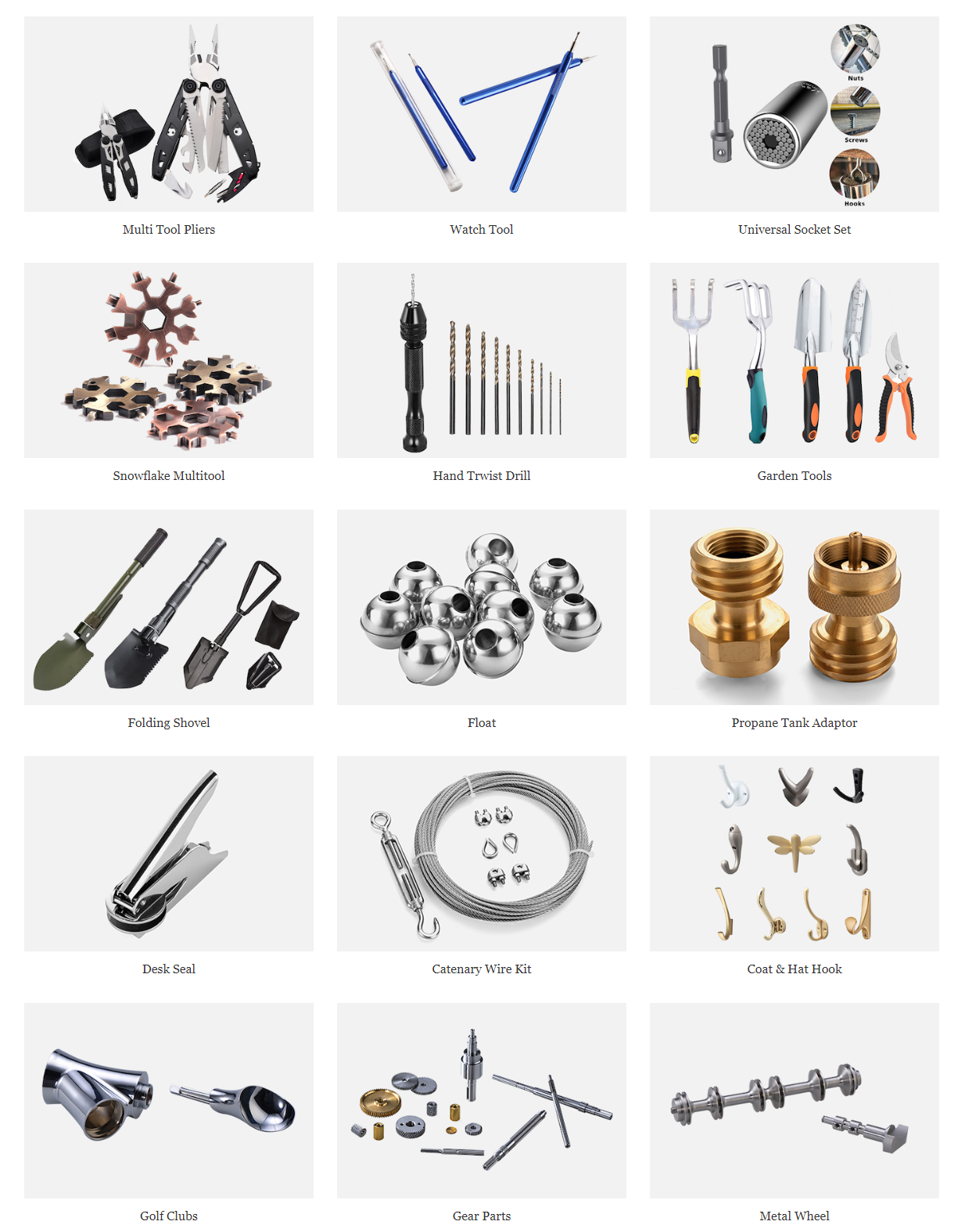
Send a drawing to China and you will get a part back; whether it matches the drawing is another matter, and that gap is where we work. We source and quality-check custom metal parts and hardware, from CNC machined prototypes, laser cut metal parts, die castings, and stampings to household hardware.
Custom parts punish loose sourcing twice. Once at the prototype, where a wrong tolerance wastes weeks, and again at production, where a factory can quietly substitute the material it quoted.
What We Source
| Product Type | What Matters Most | Common Approvals to Review |
|---|---|---|
| CNC machined parts | Tolerance to drawing | Material certificates, REACH |
| Laser cut metal parts | Edge quality, dimensional accuracy | Material certificates |
| Die castings | Air pockets, surface finish | Material certificates, RoHS |
| Stampings | Strength, dimensional accuracy | Material certificates |
| Household hardware | Corrosion resistance | REACH, Prop 65 |
Which approvals apply depends on your destination market and your exact product. We confirm the list for your case before you commit to a factory. On minimums: machined prototypes can start at 1 to 10 pieces, and production hardware at 100 to 500 units, or around 1,000 once custom printed packaging enters.
From Drawing to Production
From drawing to first article: send a CAD file, a technical drawing, or a reference sample. We match it to the right machining or casting shop, manage the first articles, and verify dimensions and tolerances against the drawing before you approve.
From prototype to production: the shop that machines one perfect piece is often not the factory that produces 10,000 economically. We manage that handoff so production parts keep the prototype’s tolerances and material grade. A common route: prove the design with a small machined batch, then move to casting or stamping once volume justifies the tooling.
When molds cost more than the order: products built from many sheet metal parts, in stainless steel or powder-coated mild steel, can run up enormous tooling bills if every part is stamped. For runs of 200 to 500 units, laser cutting can deliver functional parts without tooling cost, and a long-term partner factory of ours runs large-format laser cutters built for exactly this work.
Why Prototype and Hardware Buyers Work With Us
We work inside China’s machining and hardware cities: Dongguan and Shenzhen for CNC machining, Foshan and Jiangmen for die casting and hardware, close enough for real factory visits, not just video calls.
Our inspectors know metal parts and their failure patterns: dimensions that drift mid-run, air pockets hiding inside castings, plating that peels, and threads that strip on the third use.
We compare quotes at the material level. Identical-looking quotes can hide a cheaper alloy priced as 6061, 201 stainless where 304 was specified, or a lower hardness than the drawing calls for. We break each quote down before you pick a supplier.
We arrange testing through SGS and Intertek, from material verification and salt spray to packaging transit tests, often at better rates than buyers get approaching the labs directly.
What We Check Before Shipment
Dimensions: critical dimensions measured against the drawing on sampled units, with gauges and calipers, not eyesight.
Material: the sampled units match the material grade in the contract, not just the paperwork.
Plating and coating: coverage, adhesion, and corrosion resistance, especially on hardware that lives outdoors or in damp rooms.
Threads and fit: fasteners run into real threads, parts assembled with their matching parts, tolerances confirmed where parts meet.
Function and load: hinges, fixings, and load-bearing parts tested against real working force, not showroom handling.
Packaging: carton strength and drop checks, since metal cargo is heavy and unforgiving on weak boxes.
Case Study: 400 Smart Gardens, Zero Molds
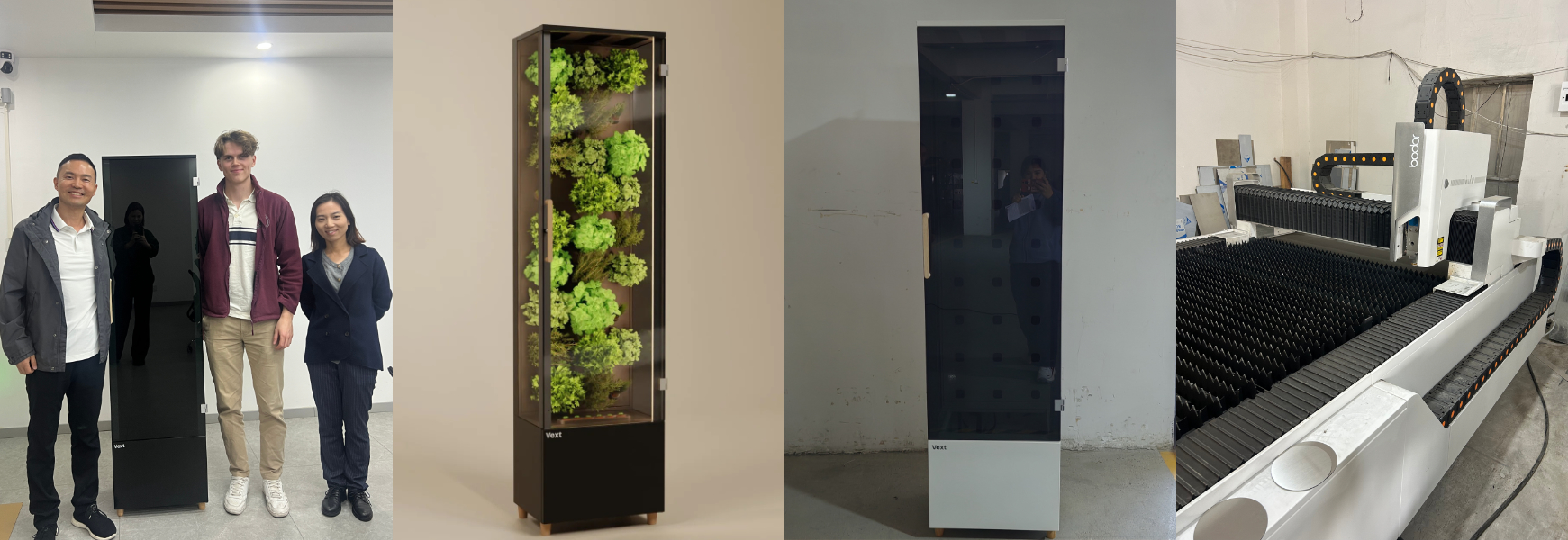
Vext, a Finnish startup, asked us to OEM the Nordic Smart Garden: a 173 cm tall indoor cabinet that grows salad greens, built almost entirely from welded, powder-coated mild steel. The design carried dozens of individual metal parts, and the first order was 400 units. Stamping every part would have meant a tooling bill the order could never justify.
So we cut instead of stamped. A long-term partner factory runs a 6,000 W laser cutter with a 1.5-by-3-meter bed, built to handle mild steel up to 20 mm thick. Laser cutting has one known weakness, the sharp edge left on the back of every cut, so we controlled it twice: smooth edges faced outward wherever a user could touch, sharp edges turned inward into welded joints, and 100% inline inspection with immediate rework.
We put quality before speed, and our QC inspector spent a full week on the line running functional and appearance checks on every unit. The cabinets shipped to Europe in early 2026, sold out quickly, and drew strong reviews from users. Our value in one sentence: the right process, the right factory, and someone standing on the line while your product is built.
FAQ
Q1. Can you make a prototype from a sample, without drawings?
Often, yes. A physical sample can be measured and turned into a working drawing, which then becomes the standard the prototype is checked against. Complex internal features may still need your input on intent.
Q2. What files do you need for a quote?
A STEP or IGES file plus a PDF drawing with tolerances and materials marked gets the fastest, most accurate quotes. If you only have a sketch or a sample, we can still start, and firm up the drawing during prototyping.
Q3. What materials can you make parts in?
Common requests cover aluminum alloys, stainless and carbon steel, brass, and zinc alloys, plus engineering plastics for machined parts. If your drawing calls for a less common grade, we confirm availability and price impact before quoting.
Q4. How long does a machined prototype take?
Simple CNC parts often run 1 to 2 weeks. Parts needing multiple processes, special materials, or surface treatment can take 3 to 4 weeks. We confirm the timeline per part before you commit.
Q5. What surface finishes are available?
Common options include anodizing, zinc plating, chrome plating, black oxide, powder coating, and brushing or polishing. Each carries a different cost and corrosion performance, and we help you match the finish to your market.
Q6. After a prototype is approved, how do I know production parts will match it?
The approved prototype, drawing, and inspection checklist become the reference standard, with dimensions, material grade, and finish written into the production contract. First articles from the production factory are measured against it before mass production starts.
Q7. Can you work with a factory I already use?
Yes. If you already have a supplier, we can step in on the quality side only: first article measurement, in-process checks, and pre-shipment inspection against your drawing. Many clients start there and add sourcing later.
Q8. Who owns the mold and the drawings?
You should, and it belongs in the contract before tooling starts. We put mold ownership, drawing confidentiality, payment milestones, and tooling transfer terms in writing so you can move production if you ever need to.
Ready to Source Prototypes and Hardware?
Tell us the part, target quantity, packaging plan, and destination market. We will tell you what it should cost, what approvals to review, and where the quality risks sit before you commit.