
China Sourcing Agent Fees: What You Really Pay
A sourcing agent’s real cost is the commission plus everything the commission does not cover. Compare the model, what the percentage is taken on, what is included, and whether the factory also pays the agent.
| Fee Model | How You Pay | Best Fit | Confirm First |
|---|---|---|---|
| Commission | Percentage of order value | Repeat orders | Base and minimum |
| Flat project fee | Fixed sum | Supplier search | Deliverables and revisions |
| Monthly retainer | Fixed monthly payment | Ongoing buying | What it covers |
| Hybrid | Retainer plus percentage | High-volume buying | Split between parts |
Each model hides its cost in a different place, which is what the last column is for.
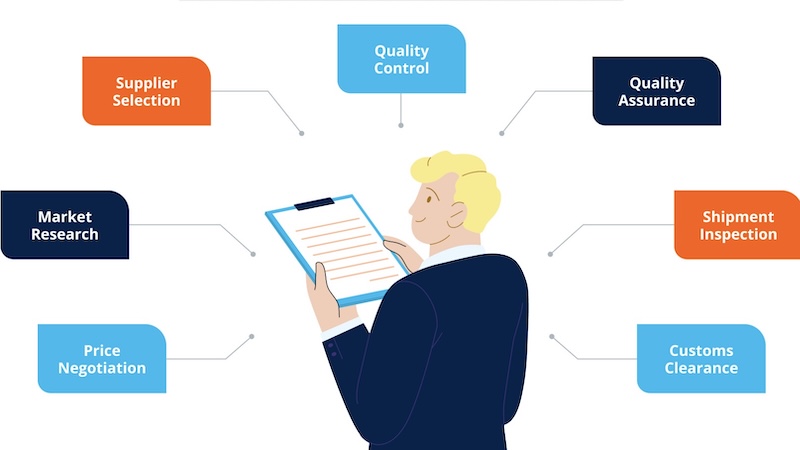
What a Sourcing Fee Actually Covers
A sourcing fee pays for someone to act on your side in China. Finding candidate factories, proving they are real, pushing your specification through, and watching production are the work being bought. The goods are a separate payment to the factory, which is why a China sourcing agent quotes a service rather than a price per unit.
What sits outside the fee matters more than what sits inside it. Samples, courier charges, factory visits, product testing, and inspection cost in China can sit inside the price or arrive as separate invoices. A quote that stays silent has not answered the question, so ask which of them are included and which are billed on top.
The 4 Ways Agents Charge
1. Commission: a percentage of order value that scales with your order rather than with the work. A $20,000 order and a $200,000 order can need the same number of factory visits. That is why large buyers push the rate down and small buyers meet a minimum fee instead.
2. Flat project fee: a fixed sum for defined work such as a supplier search or an audit program. Pin down the deliverables and the number of revision rounds, because scope creep is what turns a flat fee into a running argument.
Asking what sits inside any of these percentages and what arrives as a separate invoice is a fair question to put to an experienced sourcing partner before you sign.
3. Monthly retainer: a fixed monthly payment for continuous buying. The agreement has to name how many products, factory visits, and inspection days it covers, or the retainer quietly loses value as your range grows.
4. Hybrid: a smaller retainer paired with a lower percentage, which suits steady repeat buying where both sides want predictable numbers. Get that split written down, because the overlap between the two is where the arguments start.
What a Fair Commission Looks Like
Published sourcing rates cluster between 3% and 10% of order value, and the spread is explained by scope rather than by the agent’s city. Small, technical, or heavily customized projects sit at the top of that range, and a plain repeat order of a catalog product sits at the bottom.
Job titles in this trade are not standardized. An import export agent commission and a sourcing agent commission can buy very different work. One quote carries export paperwork and shipping arrangement, the next stops at finding and vetting factories. Get the activity list behind each percentage instead of reading anything into the name.
A percentage means nothing until you know what it multiplies. Five percent of the factory price is a very different invoice from five percent of a total that also carries tooling, packaging, inland freight, and inspection. A Shenzhen electronics agent can look expensive next to a generalist until you check which quote includes the test reports.
The Markup You Cannot See
The cost that hurts buyers is the one folded into the factory quote. An agent can advertise 2% and still keep a slice of the product price, and nothing on the invoice will show it.
A charge you can see is not the problem, but the one you cannot see is. A stated handling charge or service margin is a normal way to run a business, and you can price it against the rest. An unstated one behaves like the other hidden import costs that only surface once the goods are already moving.
Run the Numbers on One Order
Numbers settle this faster than principles. Both agents buy the same goods at a true factory price of $20,000 and run the same inspection and sample work, so only the fee structure differs.
| Sourcing Cost on One Order | Fee Charged | Same Extras | Markup in the Goods | Total |
|---|---|---|---|---|
| Agent A, all charges listed | $1,000 | $430 | none | $1,430 |
| Agent B, 2% plus hidden markup | $424 | $430 | $1,200 | $2,054 |
Agent A charges 5% of the real factory price and puts $430 of inspection, samples, and courier on the same invoice. Agent B quotes the goods at $21,200 and takes its 2% on that figure rather than the real one. The $1,200 it added never appears anywhere, so the identical order costs $624 more.
Red Flags in a Fee Structure
A rate far below the market is a reason to slow down, and a free service is a reason to stop. Somebody funds that work, and it is normally a supplier commission or a margin buried in your unit price. That is how a reseller earns rather than how an agent charges. Settle whether you are dealing with an agent or trading company first.
Refusing to name the factory is the second warning sign. An agent who will not tell you who makes your goods controls your whole supply chain. Buyers who choose a sourcing company on price alone find that out too late.
When the Fee Is Worth Paying
The fee pays off when the order carries more coordination than you can run from another time zone. Custom tooling, several suppliers feeding one product, and compliance paperwork all cost you hours worth more than the percentage.
A simple repeat order from a factory you already trust rarely justifies a full commission. A flat fee for the few tasks you cannot do yourself is better value. Putting that scope into a sourcing agent agreement stops it expanding into a percentage of everything you buy.

FAQ
Q1: Does a minimum fee apply per order or per product?
Both structures exist, and the difference is large for buyers ordering several small items. Ask whether a $500 minimum covers one purchase order containing four products or is charged four times.
Q2: How do I compare a percentage quote against a flat fee quote?
A search fee usually buys the search and nothing after it, so add whatever running each later order costs before you compare anything. Price both routes over two years at the volume you realistically expect, then again at half of it, since that is where the percentage quietly wins.
Q3: Should the factory price and the fee be shown separately?
Ask for the two to be split, whether on separate invoices or as a breakdown on one, because a single combined figure leaves any markup untraceable. Where the agent also exports or collects for several suppliers one invoice is normal, so judge the breakdown rather than the number of documents.
Q4: Do I still pay if I reject every supplier the agent puts forward?
You are paying for the work, not for a result you like, so the money is usually gone either way. Agree up front how many qualified candidates count as delivery, and what happens when none of them survives your own checks.
Q5: Who pays when a sample has to be remade three times?
Sample rounds are normally billed at cost, and repeated rounds caused by an unclear specification land on you. Set the number of included rounds in the quote, and put in writing who pays when the fault is the factory’s.
Q6: Does the commission apply to tooling and mold payments as well?
Many agents charge on the full amount they handle, which means a one-off tooling payment can attract the same percentage as the goods. Have tooling quoted separately, at a reduced rate or a fixed handling charge, before that invoice is raised.
Q7: Does the fee change if production runs late?
A commission is tied to order value so it does not move, a retainer keeps billing every extra month, and either model can add visits and re-inspections on top. The fee gap is the small number here, so put who carries a late shipment into the agreement instead of chasing the cheaper model.
Q8: How do I check I was charged what we agreed?
Recalculate the percentage against the base you agreed, then match every extra against the list in the quote, because the first invoice sets the pattern for the ones after it. Raise anything that does not line up on order one, while the details are fresh and nobody has to admit to a habit.
Conclusion
The percentage is the least useful number in the quote. A full list of charges is a good start, but it proves nothing about the product price. The test that separates agents is whether yours will put the factory’s own quote in front of you.
An agent who will not show you the factory’s own quote is telling you where their money comes from. We put the factory price in front of you and charge for the work instead, as an experienced sourcing partner you can audit at any point in the order.