



Shenzhen is China’s leading electronics sourcing hub. For consumer electronics, tech accessories, and smart devices, a local sourcing agent can give you faster access to factories, components, and testing labs than a general agent working remotely.
| City | Specialization | When to use a local agent |
|---|---|---|
| Shenzhen | Consumer electronics, tech components, smart devices | Anything with a circuit board, battery, or wireless function |
| Guangzhou | Apparel, fashion accessories, beauty products | Fabric, garments, leather goods |
| Yiwu | Small commodities, stationery, party supplies | High-variety, low-cost general merchandise |
| Foshan | Furniture, lighting, home products | Furniture, fixtures, decorative hardware |
A sourcing agent based in Shenzhen has daily access to Huaqiangbei — one of the world’s most concentrated electronics component markets — and established relationships with the factories that make phones, earphones, chargers, smart home devices, power banks, and hundreds of other tech products. This local network is the core of what a Shenzhen agent brings. An agent based elsewhere and “covering Shenzhen” remotely is a different proposition.
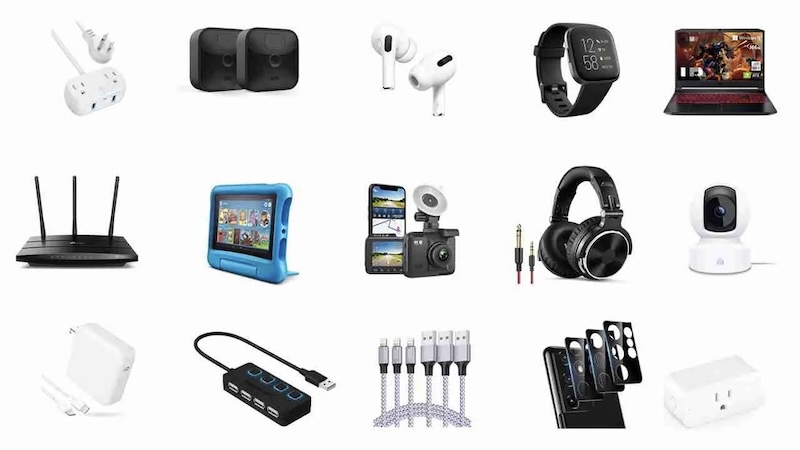
Consumer electronics and accessories are the category where Shenzhen dominates. Phone chargers, cables, earphones, Bluetooth speakers, power banks, phone cases, screen protectors, smartwatches, LED lighting, and USB gadgets — all of these are manufactured within the greater Shenzhen-Dongguan corridor, often with multiple competing factories within the same industrial park.
Smart home and IoT devices are increasingly produced in and around Shenzhen. Wifi-connected plugs, smart speakers, home security cameras, and remote-controlled lighting all draw on Shenzhen’s strength in wireless communication modules, firmware development, and compact PCB manufacturing.
Electronic components and modules — if your product requires custom PCBs, microcontrollers, sensors, or display panels, Shenzhen’s component market allows for fast prototyping and sampling. Huaqiangbei alone has streets dedicated to specific component types, and a Shenzhen agent who knows the market can source individual components far faster than any online search.
OEM and ODM electronics — many Shenzhen factories offer both original design manufacturing (ODM, where they supply a ready design you can brand) and original equipment manufacturing (OEM, where they manufacture to your specifications). A Shenzhen agent who works regularly with these factories understands the distinction and can negotiate accordingly.
Understanding what a sourcing agent costs is covered elsewhere. Here the focus is on what a Shenzhen agent does that is specific to electronics sourcing.
Supplier identification and verification. A Shenzhen agent can visit factories in person and assess whether a supplier is a genuine manufacturer, a trading company, or an assembly operation buying components from elsewhere. Verifying a Chinese supplier remotely is possible but slower — a Shenzhen-based agent can do a preliminary visit within days.
Sample coordination. Electronics samples often require functional testing beyond visual inspection. A Shenzhen agent can arrange for samples to be tested at local labs, verify charging output on power accessories, test Bluetooth range on wireless devices, and confirm that firmware matches specifications — before samples are shipped to you.
Specification management. Electronics have more technical specifications than most product categories. A good Shenzhen agent understands the difference between fast-charge and standard charging protocols, knows what IP ratings mean for waterproofing, and can translate your technical requirements into the language factories understand.
Certification support. Electronics may require FCC, CE, RoHS, or other compliance documentation for your destination market. A Shenzhen agent with electronics experience knows which requirements apply to your product and can coordinate testing at accredited local labs before goods ship.
Pre-shipment inspection. Electronics inspection goes beyond AQL sampling. A pre-shipment inspection for electronics should include functional testing on a sample from each batch, packaging drop tests, and confirmation that the firmware version or model number matches the certified version. A factory audit before the first order confirms whether the facility has the production controls to consistently meet your specification.
A Shenzhen sourcing agent is particularly valuable in these situations:
You are new to electronics sourcing from China. The electronics supply chain has a steeper learning curve than general merchandise. Trading companies, spec misrepresentation, firmware substitution, and certification fraud are all common failure modes. An experienced Shenzhen agent protects against all of them.
Your product has wireless or battery components. FCC, CE RED, and lithium battery transport rules are complex. For air shipments, IATA lithium battery rules may apply, including packaging, documentation, marking, and state-of-charge requirements. A Shenzhen agent with experience in regulated electronics categories can steer you to compliant suppliers and help with documentation.
You need fast sampling or prototyping. Because Shenzhen has components and manufacturers so close together, iteration cycles can be much faster than in many other sourcing locations. A local agent can manage multiple factory visits, collect samples, test them, and courier to you — often within one to two weeks.
You are sourcing Amazon FBA electronics. China sourcing for Amazon sellers involves FBA prep, FNSKU labeling, invoices, product compliance documents, safety test reports, and possible approval for restricted electronics categories. A Shenzhen agent familiar with FBA workflows can coordinate all of this locally before goods are shipped.

Not every agent based in Shenzhen specializes in electronics. Some are generalists who happen to be located there. For electronics sourcing, look for:
Category depth. The agent should be able to name specific factories in Shenzhen or Dongguan for your product category, explain the difference between factory types, and identify the right certification pathway without you having to explain it first.
Existing factory relationships. An agent with established factory relationships can get you faster responses, better sample priority, and more reliable lead time estimates than a buyer approaching the same factories cold.
Inspection capability. For electronics, confirm that the agent can arrange functional testing beyond visual inspection — or has a relationship with a third-party lab that can.
Export documentation experience. CE technical files, FCC test reports, packing lists for lithium battery shipments — confirm the agent has handled these for clients in your target market before.
Understanding China’s electronics manufacturing ecosystem helps you ask better questions when evaluating a Shenzhen agent.
1. What products is Shenzhen best known for manufacturing?
Consumer electronics — phones, earphones, chargers, power banks, smart home devices, LED lighting, and related accessories. The city also dominates for electronic components, PCBs, and firmware-enabled hardware. Its supply chain depth for products with circuit boards is difficult to match in China.
2. Can a Shenzhen agent help with non-electronics products?
Yes, but that is not where a Shenzhen agent adds the most value. For apparel, home goods, furniture, or stationery, agents based in Guangzhou, Yiwu, or Foshan typically have better supplier networks and category knowledge. Use a Shenzhen agent for what Shenzhen does best.
3. How do I know if a Shenzhen agent is a specialist or a generalist?
Ask them to name specific factories for your product category. Ask about the most common quality issues with that product type in China, and how they detect them. A specialist will answer immediately and specifically. A generalist will give vague answers about “vetting suppliers” and “ensuring quality.”
4. How do I know if the bulk order will match the sample?
Specify every critical detail in the purchase order — firmware version, component brand, battery capacity, finish color. Then arrange a pre-shipment inspection that includes functional testing, not just a visual check. The most common quality gap in electronics is a component substitution that happens between sample approval and bulk production.
5. How fast can a Shenzhen agent get me samples?
For standard products available from existing factory tooling, 7–14 days from factory confirmation to sample dispatch is typical. Custom or modified products requiring new tooling or firmware changes take longer — 3–6 weeks is common for first prototype.
6. What should I bring to my first conversation with a Shenzhen agent?
A clear product description, any reference products or links, your target price range, and your destination market. The more specific you are, the faster the agent can identify suitable factories and give you a realistic assessment of what is achievable at your price point.
7. Can a Shenzhen agent help with Amazon FBA preparation?
Yes, many Shenzhen agents are experienced with FBA prep — FNSKU labeling, poly-bagging, carton requirements, and shipment plan compliance. Confirm this experience before engaging, as not all agents have worked with Amazon’s specific requirements.
8. Is Shenzhen still competitive for electronics sourcing in 2026?
Yes. While some manufacturing has moved to Vietnam and Southeast Asia for cost reasons, Shenzhen retains its dominance in electronics because the component supply chain, engineering talent, and testing infrastructure are difficult to replicate elsewhere quickly. For most electronics categories, Shenzhen remains the most practical sourcing hub.
Shenzhen is not just another China sourcing location. It is the world’s most developed electronics manufacturing ecosystem, and sourcing from it without local representation is harder and riskier than it needs to be.
A Shenzhen-based agent with genuine electronics category expertise shortens your sampling cycle, improves your certification confidence, and reduces the quality gaps that appear between sample and bulk production.
For businesses sourcing electronics and tech products from Shenzhen, see supplier sourcing in China.
 English