Maple Sourcing Ltd.
Maple Sourcing Ltd.
We Make Your Sourcing Easy!
Need help? sales@maplesourcing.com
English
Maple Sourcing Ltd.
Maple Sourcing Ltd.

Choose a China Sourcing Company: Questions to Ask and Red Flags to Watch

Published:
Updated:
6293 Views
Table of Content [Hide]

    How do you tell a reliable China sourcing company from one that will disappoint you when it matters most?

    Every sourcing company says the same things. They have experience. They have factory relationships. They guarantee quality. None of that tells you whether they will actually perform when something goes wrong in production — which, sooner or later, often happens.

    Choosing the right sourcing partner is one of the most important decisions an importer makes. A good one catches problems before they become expensive. A bad one can cost you more than doing it yourself.

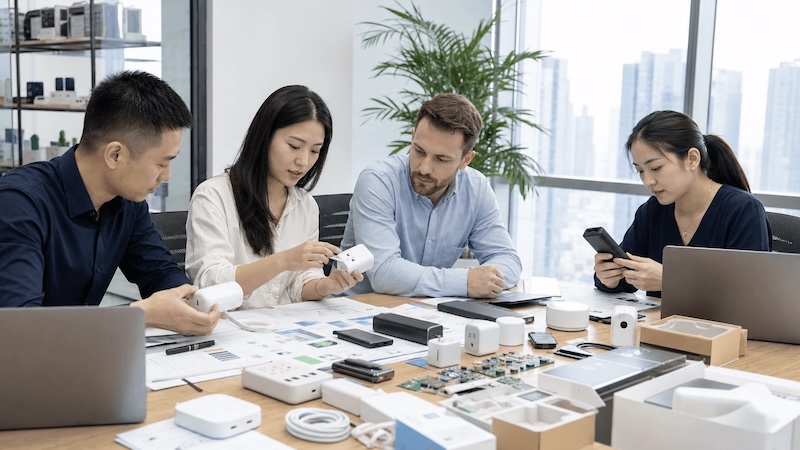
    importer-meeting-sourcing-agent

    What a Sourcing Company Actually Does

    A sourcing company acts as your representative in China — finding suppliers, coordinating samples, following up on production, arranging quality inspection, and handing off to your freight forwarder. It works on your behalf, not as a seller of its own products.

    This is different from a trading company, which buys from factories and resells at a markup. Trading companies work fine for standard products, but they add a layer between you and the factory — which can make quality control and pricing less transparent.

    It is also different from buying directly on Alibaba. Direct sourcing gives you cost control but requires time, language ability, and factory evaluation skills. The risks of buying from Alibaba without proper vetting are real. A sourcing company fills that gap.

    The Questions That Separate Good Sourcing Companies from Generic Ones

    Most sourcing companies answer the question “what do you do” well. The more revealing questions are about process.

    How do you build and narrow your supplier shortlist?

    A strong answer explains the research process: which categories they work in, how they identify candidate factories, what criteria they use to disqualify suppliers, how they compare quotes, and at what stage they verify the factory before recommending it. A vague answer — “we have a network of verified suppliers” — tells you nothing about the process.

    What does your factory verification process include?

    Verification should cover business registration, supplier type (manufacturer, trading company, or hybrid), production capability, capacity relative to your order size, and quality systems. A company that cannot describe how they verify Chinese companies before recommending them is not doing meaningful due diligence.

    How do you handle quality control during and after production?

    Ask specifically about written specifications, how samples are reviewed and approved, whether in-process checks are available, and what their pre-shipment inspection process looks like. A sourcing company that does not arrange or recommend quality inspection before final payment is released is leaving a major risk unmanaged.

    What happens when something goes wrong?

    This is the most important question. Ask for a specific example of a quality problem or supplier delay they have managed and how they resolved it. Generic answers about “escalation processes” or “strong supplier relationships” are not answers. A company with real experience will describe specific situations, specific actions, and specific outcomes.

    How are you compensated, and does the factory pay you anything?

    Fee transparency matters because it affects whose interests the agent is actually serving. An agent who earns commission from suppliers has an incentive to recommend suppliers who pay higher commissions, not necessarily the best fit for your order. Understanding sourcing agent fees in China — and how your agent is compensated — should be clarified before engagement, not after.

    How to Evaluate Category Experience

    A sourcing company with strong general experience is not the same as one with experience in your specific product category. The risks, factory landscape, common defects, certification requirements, and supplier ecosystem vary significantly between electronics, textiles, hardware, consumer goods, and specialty products.

    Ask how long they have been sourcing in your product category, what typical defects or quality risks they watch for, and which manufacturing regions they work with most frequently. A company specializing in electronics should understand component sourcing, PCB specifications, and relevant certifications. Assessing factory capacity and capability for your specific order size is a core part of that evaluation. A company with strong hardware experience should know the tooling and finishing standards that matter for your product.

    Ask to see factory audit reports or inspection reports from similar products. The quality of their documentation tells you a lot about the quality of their process.

    Fee Structures: What to Expect and What to Watch For

    Sourcing companies typically use one of three fee models:

    Percentage of order value — often 5–10% of purchase value. Straightforward, but check whether it applies to the factory price or the total landed cost, and whether it creates any incentive to recommend higher-priced suppliers.

    Fixed project fee — a set fee for a defined scope of work. More predictable for complex projects with clearly defined deliverables.

    Hybrid model — a combination of fixed fees for specific services (supplier search, sample management, inspection) plus a percentage for ongoing order management.

    When comparing fees, ask what is included. Supplier search, sample coordination, factory audit, production follow-up, inspection, and shipment handoff may be priced separately. A low headline fee that excludes quality inspection and production follow-up may cost more in total than a higher fee that includes them. The hidden costs of importing from China — duties, freight, inspection, rework — should be factored into any cost comparison.

    A typical example: The numbers are illustrative, but the risk is common. A buyer chooses a 3% commission agent over a 7% full-service agent. The 3% agent does not arrange pre-shipment inspection. The batch arrives with a 12% defect rate. The cost of rework and replacement exceeds the full-service agent’s fee for the entire order. The “cheaper” option cost more.

    Red Flags That Signal a Problem

    Some patterns reliably indicate a sourcing company that will not serve your interests well.

    They cannot describe their supplier vetting process clearly. “We have verified suppliers” is not a process. If they cannot explain how they screen factories before recommending them, they are probably not doing it.

    They discourage or skip quality inspection. A sourcing company that tells you inspection is unnecessary, suggests it is not worth the cost, or does not have a clear inspection workflow is not prioritizing your interests. Inspection before final payment is a standard practice for buyers who want to manage quality risk.

    They ask for payment to a personal account. Payments should go to a registered business entity, not to an individual’s personal bank account. Payment to personal accounts is one of the clearest signals of a problem.

    They promise prices that do not make sense. A supplier quote that is significantly lower than comparable market quotes without an explanation of how quality and logistics are maintained is worth treating with skepticism. Price and quality are not independent variables.

    They hide the factory after engagement. A buyer-side sourcing company should be willing to disclose which factory is producing your goods once a project is engaged and commercial terms are clear. If they refuse to disclose the factory name after engagement, or make it difficult to arrange inspection, ask why.

    They are vague about what goes wrong and how they handle it. Any experienced sourcing company should have managed production problems. If they cannot give specific examples of problems they have resolved, they may not have the experience they claim.

    How to Verify a Sourcing Company Before Engaging

    Due diligence on the sourcing company itself matters as much as due diligence on suppliers.

    Ask for their business registration. A legitimate company should be able to provide their Chinese business registration without hesitation. Verify that the name on the registration matches the name on their invoices and emails.

    Request client references, case examples, or sample reports in your product category. Speak with clients where possible, especially those who have sourced similar products. Ask specifically about how the agent handled a problem, whether they disclosed the factory, and whether their cost estimates matched the actual landed cost.

    Start with a trial order. A small, well-defined first order is the best way to evaluate a sourcing company’s actual performance. Define clear deliverables and quality expectations, and use the first order to observe how they communicate, how they handle the unexpected, and whether their documentation matches what they promised.

    Request sample inspection reports. Ask to see real inspection reports from previous orders — not templates, but actual reports with photos, defect counts, and conclusions. The format and detail of their documentation tells you about the rigor of their process.

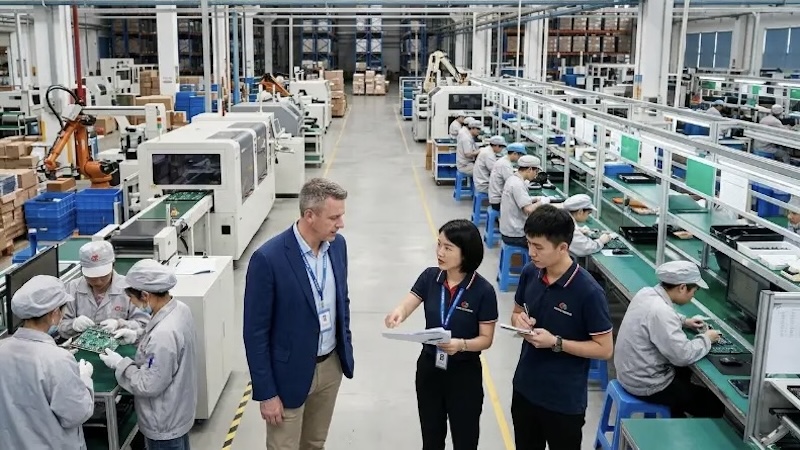
    Check quality at factory

    Who Benefits Most from a Sourcing Company

    Not every buyer needs a full-service sourcing company for every order. The value is highest in specific situations:

    New category, no existing supplier relationships. Starting from scratch in an unfamiliar product category without a local partner is slow and risky. A sourcing company with category experience compresses the supplier search and reduces the chance of selecting the wrong factory.

    Custom product development. Developing a product from drawings or prototypes requires specification management, sample rounds, tooling coordination, and factory communication that is difficult to manage remotely. The complexity justifies the cost of local support.

    High-value or quality-sensitive orders. The return on quality inspection and production monitoring scales with the order value. For many orders above $10,000–$15,000 from a new supplier, professional oversight is usually worth considering.

    Buyers without China-based resources. An importer in the UK or Australia with no one in China is entirely dependent on what the factory chooses to report. A sourcing company changes that.

    FAQ

    1. What is the difference between a sourcing agent and a trading company?

    A sourcing agent represents the buyer, finding factories and managing quality on the buyer’s behalf. A trading company buys from factories and resells products, adding its own margin. Sourcing agents typically provide more factory transparency and direct cost control. Trading companies may be faster for standard products but add a layer between the buyer and the actual manufacturer.

    2. How much does a China sourcing company charge?

    Fees vary by model and scope. Percentage-based agents often charge 5–10% of purchase value. Fixed-fee models are common for defined scopes like supplier search or inspection. Hybrid models combine both. Always ask what is included, as inspection, sample management, and production follow-up may be priced separately.

    3. How do I know if a sourcing company is legitimate?

    Request their business registration and verify that it matches their invoices and correspondence. Ask for client references, case examples, or sample reports in your product category. Request sample inspection reports or audit reports from previous work. A legitimate company should be able to provide reasonable documentation and explain its process clearly. It should not ask for payment to personal accounts.

    4. Should I use a sourcing company or source directly from a factory?

    Direct sourcing offers more cost control but requires time, language ability, and quality management resources. A sourcing company is more appropriate when you are entering a new category, developing a custom product, managing orders remotely, or when the order complexity or value justifies the cost of professional oversight.

    5. What questions should I ask a sourcing company before hiring?

    Ask how they screen and shortlist suppliers, what their factory verification process includes, how they handle quality inspection, what happens when something goes wrong, and how they are compensated. Ask for specific examples of problems they have resolved. The quality of these answers is more predictive of performance than any marketing claims.

    6. How can I evaluate a sourcing company’s quality control process?

    Ask to see inspection reports from previous orders. Review whether they use written product specifications and defect classifications, whether they conduct pre-shipment inspection before final payment is released, and whether they have experience with inspection in your product category.

    7. What should I do if a sourcing company refuses to disclose the factory?

    Once a project is engaged and commercial terms are clear, a buyer-side sourcing company should be willing to disclose which factory is producing your goods. Refusal to disclose factory identity after engagement — especially combined with requests for large upfront payments — is a significant red flag. Buyers should have the right to know where their goods are being produced.

    8. Is it worth using a sourcing company for a small first order?

    For a small first order from an unfamiliar supplier or category, the risk mitigation value of professional oversight can outweigh the fee, even on modest order values. The more important factor is whether the order involves custom specifications, quality-sensitive requirements, or a new supplier relationship. If any of these apply, sourcing support is usually worth considering.

    Conclusion

    The right sourcing company is not the one with the most impressive website or the lowest commission rate. It is the one that can explain clearly how it manages suppliers, handles problems, controls quality, and protects your interests when things do not go as planned.

    Evaluate on process, documentation, and track record — not on claims. Start with a trial order. Ask to see real reports. Speak with actual clients. The sourcing company that welcomes that scrutiny is the one worth working with.

    For buyers evaluating supplier sourcing support, supplier sourcing in China covers the process from factory identification to sample approval.

    Need help finding reliable China suppliers?
    Maple Sourcing helps search, compare, and shortlist suitable suppliers before you request samples, pay deposits, or start production.
    Aaron Li
    I’m Aaron Li, a sourcing expert. Since 2012, I’ve helped 300+ startups source from China and manage product standards. Here, I share practical answers to common questions about sourcing and quality control.
    PREV: No information
    All Articles
    How to Calculate Landed Cost from China: Formula + Example
    CIF vs FOB Shipping from China: Which Should You Use?
    Carton Shipping Marks: What Importers Should Specify
    Where to Source Products for Retail Arbitrage in 2026
    Chinese Wholesale Websites: Which One Should You Use?
    Senior Living Products from China: What Importers Should Source in 2026
    Wholesale Home Decor from China: What Retailers Should Check
    How to Source Solar Panels from China: A Buyer's Guide
    Can You Get Free Samples from Chinese Factories? Here's How
    Dollar Store Products in Africa: What Sells Best from China
    Private Label Sourcing from China: The Pros, Cons, and What Most Sellers Get Wrong
    4 Risks of Buying from Alibaba Before You Pay
    How to Find Wholesale Suppliers for Small Businesses
    CBM Calculator for Ocean Freight: Formula and Examples
    Profitable Ecommerce Niches: How to Find Gaps Before You Source
    Proforma Invoice or Commercial Invoice? What Every Importer Needs to Know
    Gross vs Net Weight in Shipping: What to Check
    Direct vs Indirect Sourcing: How to Choose the Right Model
    How to Write a Quote Request That Gets Real Prices
    Supply Chain Trade-Offs: Cost, Speed, and Risk
    How Much Does It Cost to Start an Import Export Business?
    China's Major Logistics Companies: Who They Are and What They Do
    How to Get a Supplier to Lower the Price, Not the Quality
    The Hidden Costs of Importing from China That Eat Your Margin
    Sourcing from China for Amazon: What Most Sellers Get Wrong
    Custom Packaging from China: How Small Businesses Can Start
    Supplier Quality Audit in China: What to Check and Why
    China Manufacturing Hubs: Which Region Fits Your Product?
    Made in PRC: What the Label Means and Why It Matters for Importers
    FCL vs LCL Container Shipping: Which Is Right for Your Order?
    Sea Freight vs Air Freight: The Real Cost Difference and When to Use Each
    Top Toys to Import from China: What’s Selling in 2026
    China to Canada Shipping: How to Cut Freight Costs
    Alibaba vs AliExpress: Which Platform Should You Use?
    China to USA Imports: How to Navigate Tariffs Without Losing Your Margin
    OEM or ODM? How China Manufacturers Define the Difference
    How to Protect Your Product Idea When Outsourcing from China
    FOB vs EXW for China Imports: What the Difference Really Costs You
    1688 Purchasing Agent: How to Buy from China’s Domestic Market
    Yiwu Market Product List: What to Buy and What to Avoid
    What Is 4PX Shipping? Delivery Times, Tracking, and Delays
    DHL Shipment On Hold? What to Do and Who Fixes It
    Best Taobao Agent for Kitchen Products: What to Look For
    Can You Trust an Alibaba Verified Supplier for Quality?
    Foshan Furniture Market Guide: What to Buy, What to Check
    Guangzhou Fabric Market Guide: What to Buy, What to Avoid
    Is the Canton Fair Worth It for a First-Time Buyer?
    Why Huaqiangbei Electronics Market Is Becoming Risky for Importers
    China Electric Toothbrush Suppliers: What to Check
    Bag Manufacturers in China: How to Find One That Can Execute Your Design
    Managing Sample Orders in China: Why What You Imagined Isn't What You Get
    Top 5 Shipping Documents Every Importer Must Know
    Procurement Life Cycle: Step by Step for Logistics
    Top Beauty and Healthcare Products on Amazon: Seller Risks
    Can Your Factory Actually Deliver? How to Check Before You Order
    Top 10 Wholesale Markets in China: Which One Fits Your Product?
    Why Are So Many Toothbrushes Made in China?
    Shenzhen's Best-Known Products: From Electronics to Innovation
    Lower MOQ, Same Supplier: Negotiation Tactics That Actually Work
    Why Brands Use OEM Instead of Their Own Factories
    Why Smart Importers Consolidate Shipments from Multiple Suppliers
    10 Profitable Products to Import from China to Europe (2026)
    Key Shipping Ports in China and North America for Importers
    What Apple's China Suppliers Teach Small Buyers in 2026
    Incoming Quality Control in China: What Buyers Need to Know
    China Sourcing Agent Fees: Hidden Costs and Real Rates (2026)
    8 Most Profitable Products from China to Resell in 2026
    Why Are Most Things Made in China? The Real Reasons Behind the Label
    Inspection Companies in China: How to Choose in 2026
    How Much Cheaper Is Manufacturing in China?
    Customized Products from China: 4 Trends Buyers Should Check
    China Pre-Shipment Inspection Process: What Buyers Need to Know
    Global Sourcing Challenges: What Goes Wrong and How to Fix It
    How to Source Electronics from Shenzhen Markets
    How to Verify a Chinese Company Without Visiting China
    Bulk Order from China: 7 Checks Before You Pay
    How to Order from Alibaba Without Losing Your Deposit or Getting the Wrong Product
    What Makes China's Supply Chain Impossible to Replace?
    Rapid Prototyping in China: Get Samples Faster
    China FBA Sourcing: What Amazon Sellers Must Know Before the First Order
    Buying in Bulk from China: Is It Still Worth It?
    Sourcing LED Lights from China: 6 Checks Before You Order
    How a China Sourcing Service Saves You Time, Money, and Costly Mistakes
    How to Contact Chinese Factories and Get a Reply
    China Manufacturing: 8 Steps to Keep Orders on Track
    Kitchen Products from China: 7 Supplier Mistakes to Avoid
    6 Practical Checks to Find the Best Products to Import from China
    Trendy Electronics from China: What’s Selling in 2026
    Chinese Supplier Search: How to Shortlist the Right Ones
    Shenzhen Sourcing Agent: Best for Electronics and Tech Sourcing
    Hardware Import from China: What Buyers Must Check First
    China Direct Sourcing: When It Helps and When It Hurts
    China Supplier Management: 5 Things to Lock Down
    Direct Product Sourcing in China: A Beginner's Complete Guide
    China Outdoor Product Suppliers: What Separates Good from Bad
    China Buying Agent: When You Need One and When You Don’t
    Manufacturing in China: What’s Changed and What Hasn’t
    The Real Cost of Managing China Procurement In-House
    Metal Products from China: 6 Checks Before You Order
    How a China Sourcing Agent Helps Amazon Sellers Scale Fast
    Read More
    References
    Our Features
    Custom Products
    Turn concept to reality
    Quick Response
    Within 24 hours
    Detail Oriented
    Strive for perfection
    Assured Quality
    100% Guarantee