



On a crowded U.S. street, attention is the most valuable currency. Drivers pass storefronts in seconds, pedestrians split focus between phones and traffic, and retail choices happen in real time. In that environment, static posters often lose the battle for visibility. An outdoor led installation changes that equation by turning a fixed sign location into a dynamic communication channel. Instead of showing one message all day, a business can rotate timely promotions, adjust creative by hour, and keep visual content fresh without reprinting physical materials.
That shift is why the modern led display has moved from novelty to mainstream infrastructure in American advertising. From shopping corridors and stadium districts to transit-heavy intersections, brands increasingly rely on digital visual surfaces to create presence, reinforce recognition, and drive immediate action. Well-designed advertising panels do more than look bright. They align location, timing, and message into one clear prompt that says, “Notice this now.”
At the center of this transformation is flexibility. Traditional signage has fixed production cycles, fixed messaging, and fixed wear patterns. By contrast, led advertising allows businesses to publish and revise campaigns quickly, often with same-day updates. A single led screen can present breakfast offers at 8:00 AM, promote lunchtime bundles by noon, and shift to evening events by 6:00 PM. For U.S. businesses dealing with weather swings, traffic variability, and seasonal buying behavior, that agility creates practical marketing leverage.
This article begins from a straightforward thesis: LED advertising boards are not just brighter signs. They are strategic media assets that combine visibility, speed, and relevance in ways static formats cannot match. Whether used by a local restaurant, a pharmacy chain, or an entertainment venue, an outdoor led board helps organizations communicate at the pace of real consumer movement.
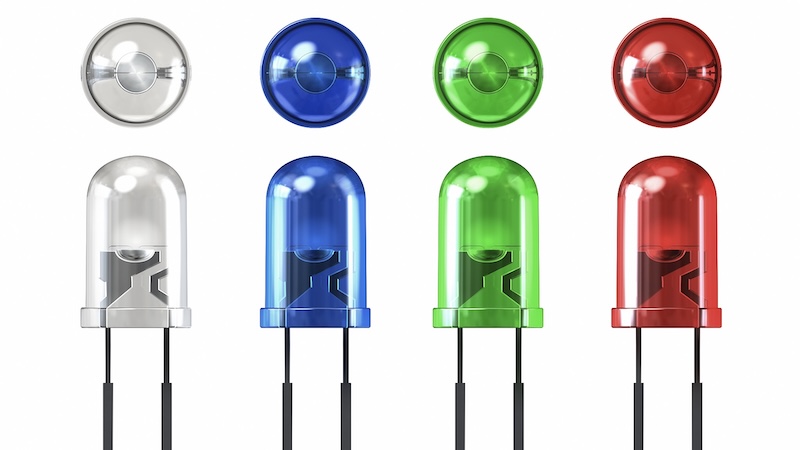
Several market realities in the United States explain the growth of digital signage in high-traffic environments. Consumers are exposed to thousands of marketing impressions daily, and only a few break through. A modern led display succeeds because it is built for high-competition visual settings. It offers strong contrast in daylight, legibility after dark, and motion-capable creative that can guide attention without requiring long dwell time.
At the same time, advertising panels powered by LED technology support practical campaign management. Teams can schedule offers around operating hours, inventory shifts, and local events without replacing hardware. For a multi-location business, coordinated led advertising can keep brand standards consistent while still allowing location-level customization. A flagship store in Chicago and a suburban location in Texas can run shared campaigns while tailoring copy to local weather or game-day traffic.
Another reason for momentum is content efficiency. A single led screen can replace multiple printed placements over time, reducing repeated print and installation cycles. For businesses that update prices, menus, event lineups, or service announcements frequently, digital publishing minimizes lag between decision and execution. The result is not just convenience. It is better message relevance at the moment a customer is nearby and ready to act.
When organizations evaluate an outdoor led investment, they usually focus on outcomes rather than hardware specifications. The following advantages are the most commonly valued in U.S. commercial environments:
Immediate visual impact in competitive spaces A high-quality led display can maintain readability across changing daylight conditions and nighttime environments. This visibility supports faster brand recognition from passing traffic and better recall for repeated commuters.
Dynamic campaign control Digital advertising panels allow scheduled content rotation by time, day, and promotional priority. Instead of waiting for print turnaround, teams can update creative quickly in response to demand patterns.
Operational responsiveness With led advertising, businesses can publish urgent updates such as weather hours, limited inventory notices, or event changes. This is especially useful in regions with sudden weather disruptions.
Multi-message efficiency One led screen can carry multiple campaigns, reducing the need for separate static placements. This gives marketing teams room to test and iterate without adding physical sign clutter.
Long-term communication value Over time, an outdoor led asset can support branding, promotions, community notices, and directional messaging from a single location, making it useful beyond one campaign cycle.
The strength of LED boards is not limited to one industry. In U.S. markets, different sectors use led displays in ways tied to local buying behavior and regulation-conscious messaging.
Retail environments use led signs for seasonal offers, holiday hours, and new product launches. Restaurants and quick-service locations push breakfast, lunch, and dinner creatives in timed sequence. Entertainment venues promote upcoming dates and ticket windows, then shift to sponsor messages before and after events. Auto dealerships present rotating inventory highlights and financing prompts. Healthcare-adjacent businesses, such as wellness clinics or supplement retailers, can use commercial led messaging for service awareness, while ensuring claims remain compliant with applicable standards, including FDA regulations when health and wellness language is involved.
Financially, campaign flexibility also matters. A business that accepts Credit Cards, PayPal, and Apple Pay can reflect payment convenience directly on a led display during checkout-heavy periods. A retailer running a weekend promotion can schedule “Ends Sunday” messaging and then switch automatically on Monday without replacing physical materials. That speed helps maintain message accuracy and customer trust.
The most important mindset shift is this: a digital board is not only a sign format. It is a communication system anchored in place. Effective led advertising depends on matching three variables: location context, creative clarity, and update rhythm. A board facing commuter traffic needs short, bold phrasing. A board near pedestrian zones can support slightly richer detail. A venue with regular programming benefits from predictable content calendars.
In this context, advertising panels become part of daily business operations. Marketing, store management, and operations teams can align messaging with opening hours, staffing peaks, and local demand changes. A single led screen near a storefront can simultaneously support brand storytelling and transaction-oriented prompts, such as limited-time bundles or appointment reminders.
It is useful to be clear about what LED boards can and cannot do. An outdoor led installation can significantly improve noticeability and message freshness, but results still depend on creative quality and placement strategy. Short, readable copy, high-contrast design, and disciplined scheduling usually outperform cluttered layouts. Strong performance comes from execution, not brightness alone.
Likewise, a led display is most effective when integrated with broader local marketing. If in-store promotions, social content, and on-site signage align, the audience experiences one coherent message journey. If those channels conflict, even strong led advertising loses efficiency. In practice, the board works best as the public-facing layer of a coordinated communication plan.
As U.S. consumers continue to expect timely, relevant information, digital out-of-home communication will keep evolving toward adaptive content and faster updates. In that direction, advertising panels provide a durable foundation because they combine physical presence with digital control. Businesses do not need to choose between brand visibility and campaign agility. A properly managed led screen delivers both.
This introduction sets the foundation for the rest of the discussion: LED advertising boards matter because they meet modern attention conditions better than static media. They offer visibility where competition is highest, flexibility where timing is critical, and consistency where brand trust is built. For organizations looking to communicate clearly in real-world traffic, an outdoor led strategy is no longer optional experimentation. It is increasingly a core part of modern advertising execution.
Building on the introduction’s core idea, the real power of modern LED advertising is not just visibility, but technical precision. To choose an LED display that performs in the real world, you need to understand how pixel pitch, brightness, and lifespan shape clarity, readability, and long-term return for every led screen installation.
Pixel pitch is the distance, in millimeters, between adjacent pixels on an led display. Smaller pitch means more pixels packed into the same area, creating sharper images and text at close range. Larger pitch means lower pixel density, which is often acceptable for longer viewing distances and can lower upfront cost for larger advertising panels.
For practical U.S. planning, think in terms of how close people will stand to your led screen. A P1.5mm led display is typically suited for near-view applications such as indoor retail windows, lobbies, or transit interiors where people may stand only a few feet away. A P2.5mm to P3.9mm range is common for mixed-distance led advertising zones, including storefront facades and street-level placements. A P5mm configuration is often used where viewers are farther away, such as roadside outdoor led placements that are read from moving traffic.
A simple decision framework helps:
Nearest viewer distance: If people are within roughly 5 to 10 feet, prioritize tighter pitch.
Message format: Fine text and dense pricing grids require smaller pitch than bold branding graphics.
Board size: Large-format advertising panels can tolerate larger pitch when viewed from farther back.
Budget tradeoff: Smaller-pitch led displays generally cost more per square foot, so match resolution to actual need.
When pixel pitch is matched to audience distance, led signs look clean and intentional instead of noisy or blurry.
Brightness, typically measured in nits, determines whether an led screen remains readable under ambient light. For indoor settings, lower brightness levels are usually sufficient, while outdoor led environments demand significantly higher brightness to compete with direct sunlight, reflections, and weather-related haze. If brightness is too low, even a high-resolution led display can appear washed out during peak daylight hours.
In U.S. deployments, brightness planning should account for real local conditions: southern sun exposure, winter glare from snow in northern states, and nighttime neighborhood sensitivity in mixed-use zones. Commercial led systems should include automatic brightness adjustment so the board can reduce output after sunset and increase output in daytime. That preserves visibility and helps avoid overly harsh night viewing for pedestrians and nearby residents.
Viewing distance also affects perceived brightness and readability. A roadside led advertising installation viewed from a moving car must deliver quick, high-contrast recognition. In contrast, a plaza-based led display where people pause and look can rely more on design detail and less on extreme luminance. The key is balancing three elements together: brightness, contrast, and content simplicity.
For most advertising panels, practical readability improves when you:
Use high-contrast color pairings.
Keep fonts bold and spacing generous.
Limit message complexity for fast-glance environments.
Test day and night legibility before final content rollout.
A bright board alone is not enough. Effective led advertising combines calibrated brightness with message design tuned to real viewing behavior.
A 100,000-hour rating is often cited for premium led display modules, and it matters because LED advertising boards are capital assets expected to operate for years, not months. This rating usually refers to the point where brightness output declines to a defined percentage of original performance rather than a sudden total failure. In practical terms, lifespan determines maintenance cycles, replacement timing, and total cost of ownership for your led screen.
Durability is especially critical for outdoor led use in the U.S., where boards face heat, rain, wind, freeze-thaw cycles, humidity swings, and airborne dust. Long-life advertising panels should pair robust LED components with weather-resistant enclosures, thermal management, and stable power design. These factors protect image consistency and reduce unplanned downtime, which directly affects campaign continuity.
When evaluating lifespan claims, focus on operating conditions and maintenance discipline, not headline hours alone. A led display running at maximum brightness 24/7 in harsh climate conditions may age faster than a comparable system operated with smart dimming and regular cleaning. Reliability also depends on power quality and installation standards.
To protect longevity and value in led advertising deployments:
Use scheduled inspection for modules, power supplies, and connectors.
Enable brightness automation to avoid unnecessary strain.
Keep ventilation paths clear and cabinets clean.
Replace aging components proactively before visible failure.
In short, the 100,000-hour benchmark is meaningful because it signals durability potential. But real-world performance comes from the full system: component quality, operating strategy, and disciplined upkeep of your led signs and commercial led assets.

After understanding pixel pitch, brightness, and lifespan, the next practical decision is where your LED advertising board will operate. The technical differences between an indoor installation and an outdoor led setup directly affect image quality, durability, safety, and long-term cost.
An indoor led display is designed for controlled environments where ambient light, weather, and viewing distance are more predictable. In malls, retail stores, airports, sports bars, corporate lobbies, and event venues across the United States, indoor advertising panels typically prioritize image refinement over brute brightness. That means tighter pixel pitch, smoother motion handling, and color uniformity that supports close-up viewing.
For indoor led advertising, one of the most important design goals is visual comfort. Viewers may stand only a few feet away from the led screen, so coarse pixel spacing can make text edges look jagged and product images appear blocky. A finer pixel pitch helps create a cleaner look, which matters for premium branding, menu boards, directional messaging, and promotional campaigns that rotate throughout the day.
After evaluating board sizes and form factors, the practical next step is to translate those decisions into operating priorities you can execute week after week. In the US market, the most successful LED advertising board programs are not built on one impressive purchase, but on disciplined alignment between placement, content, compliance, and measurement across every outdoor led activation.
A useful way to summarize this section is to focus on what consistently drives results for an outdoor led deployment, whether you run one led display at a storefront or a network of advertising panels across multiple cities. The fundamentals below are the decisions that make led advertising reliable, legally safe, and commercially effective.
Match format to environment, not preference. A bright, high-resolution led screen only performs when scale, viewing distance, and traffic behavior are aligned. For roadside outdoor led use, message simplicity and legibility matter more than visual complexity. For pedestrian-heavy retail areas, tighter pixel pitch on a led display supports richer content and clearer product visuals. The same creative file should not be forced across all advertising panels without adjustments for context. Strong led advertising strategy begins with environment-first planning, then adapts each led screen layout to local conditions.
Treat content operations as a business process. Content freshness is a performance driver, not a design luxury. Teams that schedule by daypart, weather, promotions, and local events usually get more value from the same led display inventory than teams that run static loops for months. Build a publishing cadence, approval workflow, and rollback plan before expanding your outdoor led footprint. If you are accepting payments for promoted offers shown on advertising panels, ensure ad copy and redemption terms are synchronized across channels, including point-of-sale systems that accept Credit Cards, PayPal, and Apple Pay. This keeps led advertising credible and reduces customer friction.
Design for compliance from day one. In the United States, municipalities may regulate brightness, operating hours, animation speed, and placement, especially for outdoor led installations near traffic corridors. If your led advertising includes health or wellness messaging, claims should be reviewed carefully for FDA-related risk, especially when product language could imply treatment or prevention outcomes. Your led display can be visually bold without making unsubstantiated promises. Compliance discipline protects your brand, avoids costly takedowns of advertising panels, and supports long-term continuity for every led screen campaign.
Engineer for uptime and maintainability. A premium led display with inconsistent uptime underperforms a modest system that runs reliably. Preventive maintenance, remote diagnostics, and spare-part planning are essential for commercial led operations. Environmental stress in US climates, such as summer heat, winter freezes, rain, and coastal humidity, can degrade outdoor led performance over time. Establish service intervals, monitor power quality, and keep redundancy plans for high-priority advertising panels. Reliable led signs preserve campaign continuity and prevent revenue loss tied to dark screens.
Measure outcomes beyond impressions. Visibility is only the starting point. The strongest led advertising programs track actionable indicators, such as lift in in-store visits during campaign windows, redemption rates for time-bound offers, and revenue shifts by creative version. Even without complex attribution tools, you can compare pre-campaign and post-campaign performance on a defined calendar, for example 06/01/2026 through 06/30/2026. Consistent measurement helps you decide which led display locations deserve higher investment, which advertising panels need creative revision, and when an outdoor led unit should be repositioned or reformatted.
Across all five takeaways, one pattern stands out: successful led advertising board execution is integrated, not isolated. Hardware decisions influence content strategy. Content strategy affects compliance exposure. Compliance and reliability shape operating cost. Measurement closes the loop and informs the next deployment cycle. When these elements are managed together, each led display becomes a compounding asset rather than a one-time expense.
For US operators, budgeting discipline is part of this integration. Total cost should include permitting, electrical work, structural support, CMS licensing, creative production, and maintenance, not just the initial led screen price. A lower upfront quote can become expensive if brightness controls are poor, modules fail frequently, or remote management is limited. Commercial led planning should compare lifecycle value over several years rather than headline purchase cost alone.
Finally, consistency at brand level matters when scaling. If you manage multiple led displays, define standards for typography, animation limits, approval timelines, and emergency override messaging before rollout. This reduces internal delays and keeps advertising panels on-message across regions. Outdoor led systems are most effective when they behave like a coordinated media channel, not a collection of disconnected devices. With the right governance model, your led signs can deliver sustained awareness, stronger conversion support, and better operational predictability in a competitive US advertising landscape.
Q1: How long do LED advertising boards typically last?
Quality outdoor LED advertising boards are built for longevity, typically lasting 80,000 to 100,000 hours of operation. In practical terms, if your display runs 12 hours daily, you can expect 18 to 22 years of performance before the LEDs dim to 70% of their original brightness. Lifespan depends on several factors including LED quality, weather protection, proper ventilation, and maintenance. Commercial-grade displays with IP65 or higher ratings withstand rain, dust, and temperature extremes better than consumer models. Regular cleaning and timely component replacement extend operational life. Most manufacturers warranty their LED boards for 3 to 5 years, covering both hardware and LED performance, giving businesses confidence in their investment.
Q2: What is the typical cost range for an outdoor LED advertising board?
Outdoor LED advertising board costs vary widely based on size, resolution, and features. Small storefront displays (4x6 feet) start around $3,000 to $8,000, while medium-sized boards (8x12 feet) range from $15,000 to $40,000. Large-format billboard-size installations can exceed $100,000. Pixel pitch significantly affects price—tighter spacing means sharper images but higher costs. Beyond the initial purchase, budget for installation ($1,000-$5,000), electrical work, permits, structural mounting, and ongoing electricity (typically $50-$300 monthly depending on size and runtime). Content management software may require subscription fees. Despite upfront investment, LED boards eliminate recurring printing costs and offer better ROI than traditional signage through dynamic messaging capabilities and extended lifespan.
Q3: Can I update content on my LED advertising board remotely?
Yes, modern LED advertising boards feature cloud-based content management systems that allow remote updates from any internet-connected device. You can change messaging, upload new graphics, schedule campaigns, and adjust display settings through web portals or mobile apps without visiting the physical location. This capability is especially valuable for multi-location businesses managing several displays simultaneously. Most systems support various content formats including images, videos, animations, and live data feeds like weather or social media. You can schedule content to play at specific times—breakfast specials in the morning, happy hour promotions in the evening. Advanced platforms offer playlist templates, real-time monitoring, and instant emergency messaging. Some systems even allow third-party advertising management if you rent display time to other businesses.
Q4: What pixel pitch should I choose for my LED advertising board?
Pixel pitch—the distance between LED clusters—determines image clarity and optimal viewing distance. The rule of thumb: viewing distance in feet equals pixel pitch in millimeters. For roadside billboards viewed from 50+ feet, P10 to P16 (10-16mm spacing) provides adequate resolution at lower cost. Storefront displays viewed from 10-25 feet benefit from P6 to P8 for sharper text and detailed graphics. Close-range indoor applications or pedestrian zones need P4 or tighter for crisp imagery. Tighter pitch means higher resolution but significantly increases cost and power consumption. Consider your primary audience's typical viewing distance, content type (simple text vs. detailed images), and budget. Consult with suppliers who can demonstrate different pixel densities at your intended viewing distances before purchasing.
Q5: Do LED advertising boards require special permits or approvals?
Yes, most U.S. municipalities regulate LED advertising boards through zoning laws, sign ordinances, and building codes. Requirements vary significantly by location. Common regulations address maximum size, brightness levels (especially for nighttime operation), placement distances from residential zones, animation speed, and content restrictions. Some cities limit digital signage in historic districts or ban it entirely in certain zones. Before purchasing, check with your local planning department and obtain necessary permits—installation without approval can result in fines or mandatory removal. The permit process typically involves submitting site plans, display specifications, and proof of electrical compliance. Homeowner associations may impose additional restrictions. Factor 4-12 weeks for permit approval into your project timeline. Reputable LED board suppliers often assist with compliance documentation and can advise on local requirements.
The FAQ clarified the practical decisions that matter most when choosing and operating a board, from placement and brightness to compliance and maintenance. Building on that, the final takeaway is straightforward: a well-planned LED advertising board is not just a sign, but a measurable communication system that can adapt to real business needs in the United States.
Across industries, the strongest results come from matching technology choices to audience behavior. An outdoor led installation along a commuter corridor has a different job than an indoor led display in a retail lobby, yet both rely on the same fundamentals: clear messaging, correct sizing, reliable operation, and responsible claims. When the content strategy and technical setup align, led advertising becomes more than visual noise. It becomes timely, local, and useful, which is why many businesses continue shifting budget from static formats into digital advertising panels and dynamic led screen networks.
In practical terms, planning should start with the customer moment you want to influence. If the goal is immediate foot traffic, your led display and advertising panels should prioritize short, high-contrast creative with a clear action step, such as a same-day promotion. If the goal is long-term brand recall, led advertising should rotate consistent visual cues, logo treatments, and seasonal offers on an outdoor led unit where repeat exposure is high. In both cases, your led screen should be readable at expected vehicle or pedestrian speeds and designed around local context, including neighborhood lighting, zoning constraints, and weather patterns common in US regions.
Financially, an LED advertising board performs best when treated as an operating asset rather than a one-time install. That means evaluating total cost over time: hardware, installation, power use, software, content updates, and preventive service. Payment planning also matters in US operations, where teams may split upfront and recurring costs through Credit Cards, PayPal, or Apple Pay workflows depending on procurement policy. The advantage of a modern led display is that campaign changes do not require reprinting physical media. That flexibility helps businesses respond quickly to inventory shifts, weather events, local sports schedules, and holiday demand windows without restarting from scratch.
Compliance remains essential, especially for regulated categories. Any health, wellness, or medical-adjacent message shown on advertising panels or a led screen should avoid unsupported outcomes and stay aligned with FDA regulations for health and wellness claims. Even outside regulated sectors, transparent language protects brand trust. A commercial led system can amplify a promise instantly, so message review standards should scale with that reach. This is particularly important for promotions with deadlines, price conditions in USD, or region-specific legal disclosures that need to appear clearly and long enough to be understood.
Operational discipline is what separates average execution from high-performing led advertising. Teams that define content ownership, update cadence, approval workflow, and performance checkpoints are better positioned to maintain consistency month after month. A technically strong outdoor led board can still underperform if messaging is stale or irrelevant. Conversely, even a modest led display footprint can outperform expectations when content is refreshed according to real customer behavior. Regular audits of playback logs, creative quality, and uptime help keep advertising panels effective while reducing avoidable downtime.
For decision-makers comparing options, these closing priorities provide a practical framework:
Design for context, not just visibility. Choose each led screen format based on distance, dwell time, and environment, then build creative that can be absorbed quickly. Outdoor led placements in high-speed corridors need simpler layouts than pedestrian zones. Prioritize readability first, then visual flair.
Treat content as an ongoing program. A led display only delivers sustained value when messaging evolves. Build a calendar around promotions, seasonal moments, and local events in the US market. Structured updates keep led advertising relevant and improve campaign longevity.
Measure outcomes you can act on. Track indicators tied to business goals, such as store visits, inquiry volume, or redemption behavior, then adjust creative on your advertising panels accordingly. Continuous testing turns a static assumption into a learning loop.
Protect trust through compliance and clarity. Ensure prices in USD are accurate, disclaimers are legible, and regulated claims are reviewed before publication. A commercial led network can scale reach quickly, so internal review standards should be equally strong.
Plan lifecycle costs early. Budget for maintenance, software, and content production alongside hardware. When procurement and finance align on realistic operating costs and payment preferences like Credit Cards, PayPal, or Apple Pay, the led screen program is easier to sustain.
Ultimately, the long-term value of an LED advertising board is not determined by brightness alone. It comes from the discipline to connect message, medium, and moment. Businesses that apply this discipline can use outdoor led assets, indoor led displays, and broader advertising panels to deliver consistent communication at scale while staying responsive to local market conditions. In a crowded media environment, that combination of visibility and agility is the core advantage of modern led advertising.
As media habits continue to evolve, the role of the led screen will likely become even more integrated with day-to-day operations, not less. Teams that treat led displays and led signs as strategic infrastructure can align promotions, service updates, brand storytelling, and community messaging without rebuilding campaigns from zero each time. That is the practical conclusion: when planned carefully, operated responsibly, and refreshed consistently, an LED advertising board can remain one of the most adaptable and accountable tools in a US marketing mix.
 English