Why do some importers build reliable, profitable electronics catalogs while others get stuck with delays, compliance headaches, and products they cannot confidently sell? The difference is rarely luck. It usually comes down to process.
If you are researching electronic products in China, you are entering one of the most dynamic sourcing ecosystems in the world. The electronics industry in China offers broad product variety, fast iteration cycles, and multiple manufacturing tiers, from commodity accessories to specialized devices. That scale creates opportunity, but it also increases complexity for first-time and growing importers.
This guide is built for informational research and practical decision-making. Instead of hype, it focuses on a clear, step-by-step path for importing electronic products made in China with fewer surprises. You will see how to think through product selection, supplier screening, sample validation, price structure, shipping choices, and documentation in a sequence that reflects how real import projects move.
A common misconception is that electronics wholesale from China is mainly about finding the lowest quote. In practice, import success depends more on balancing unit cost with quality consistency, testing standards, lead times, and after-sales risk. A low ex-factory price can quickly become expensive when defect rates rise or shipment timing slips.
To keep the article practical, each section will address the decisions that matter most before money is committed at scale. We will break down what to verify early, what to negotiate before production, and what to confirm before final shipment release. You can expect a structured walkthrough that helps you:
Compare product opportunities based on demand, complexity, and risk.
Evaluate manufacturing capability beyond catalog photos and chat responses.
Plan payment terms and logistics with realistic margins and timelines.
Reduce compliance and quality exposure before goods leave the factory.
Create a repeatable import workflow you can improve over time.
Throughout the article, the goal is clarity. You will not need advanced trade experience to follow the steps, but you will get enough depth to avoid beginner mistakes that are costly in electronics. By the end, you should have a framework for moving from research to execution with more confidence and control.
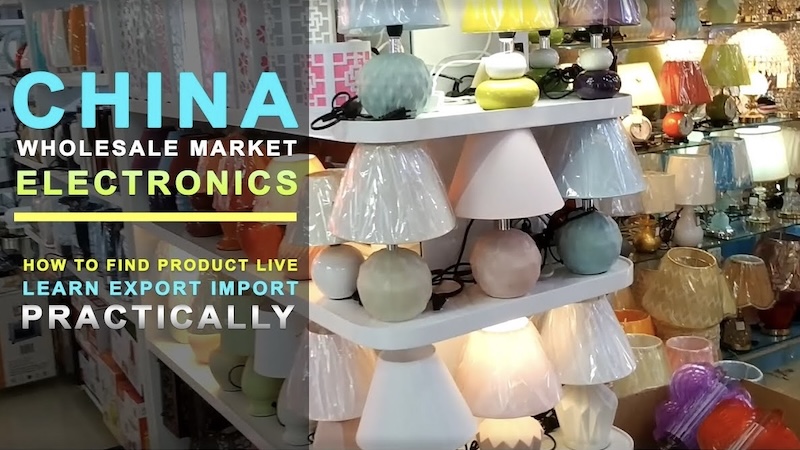
With the import process now in view, this section helps you decide whether your product idea truly fits the electronics industry in China before you spend money on sampling or production. A clear fit-and-risk check protects margins, reduces delays, and keeps your first purchase aligned with real buyer demand.
When people search for electronic products in China, they often focus on low unit price first. That is important, but price alone is not a strategy. For importers, especially first-time buyers, the better question is: "Can this product category be sourced consistently, pass compliance requirements, and still leave room for profit after shipping, testing, and returns? A practical way to assess electronic products made in China is to score each product idea against three filters:
Market fit: Is there clear demand in your target sales channel, and can you offer a meaningful differentiator (bundle, design, warranty, or niche focus)?
Supply fit: Are there multiple capable factories or electronics wholesale distributors in China for this category, so you are not dependent on one source?
Risk fit: Can you manage quality control, certification, battery handling, and after-sales support without overwhelming your team?
If a product passes only one filter, pause and refine it. If it passes all three, move forward to supplier shortlisting.
Use this checklist early, during product selection, not after payment:
Compliance risk: Electronics may need safety and electromagnetic compliance for your destination market. Confirm test requirements before ordering packaging or labeling.
Quality drift risk: A strong sample does not guarantee stable mass production. Define tolerances, test methods, and defect thresholds in writing.
Component volatility risk: Chipsets, batteries, and connectors can change due to availability. Ask how substitutions are controlled and approved.
Logistics risk: Battery products, fragile items, and high-value goods need route planning and protective packaging that can raise landed cost.
After-sales risk: Return rates and warranty claims can erase profit. Plan spare parts, troubleshooting SOPs, and replacement policy from day one.
This is where electronics wholesale from China can work well for smaller buyers: tested, ready-stock SKUs from vetted wholesale distributors can reduce lead time and tooling risk compared with fully custom projects.
Before placing any order, verify your intent with four decision questions:
Are you validating demand with a small launch, or committing to scale immediately?
Do you need private label now, or can a neutral product help you test faster?
Is your target margin calculated on landed cost, not factory price?
Can your team handle technical support for the product category you choose?
If your answers are unclear, start with lower-complexity SKUs and modest MOQs through electronics wholesale channels, then upgrade to custom manufacturing once sell-through is proven.
In short, the smartest approach to electronic products in China is not "find the cheapest quote." It is matching product complexity, supplier depth, and buyer intent to your current business stage. That decision framework keeps your import plan practical, bankable, and ready for the next step in supplier evaluation.
After confirming that your product category is a strong fit and your risk tolerance is realistic, execution becomes the real differentiator. Importing electronic products made in China successfully depends less on luck and more on disciplined planning, supplier screening, and verification before you place production deposits.
Start with a written specification sheet before you contact factories. For electronic products in China, vague requirements often lead to inconsistent quality, redesign fees, and delayed shipments. Your spec should cover core performance, materials, connector types, firmware expectations, packaging, labeling, and acceptable defect thresholds. Include testing methods for key functions so suppliers can quote against the same standard.
At the same time, map your compliance scope for the markets you plan to serve. Clarify safety, EMC, battery transport, and labeling requirements that apply to your product class. Then build a target landed cost model, not just an ex-factory price target. Add tooling, unit price tiers, inspection fees, freight, duties, insurance, and returns risk. This gives you a practical margin guardrail before negotiations begin.
With specs and cost boundaries set, create a structured shortlist instead of chasing the lowest quote. In the electronics industry in China, capability varies widely, so compare suppliers against your product complexity and order profile. Ask each candidate for recent production examples, manufacturing scope, quality workflow, lead-time discipline, and communication responsiveness.
For buyers exploring electronics wholesale from China, include both direct factories and electronics wholesale distributors in China where appropriate. Distributors can simplify mixed-SKU purchasing, while factories may offer stronger control for custom products. A practical shortlist process includes:
Match supplier specialization to your exact device category.
Confirm minimum order quantities and scalable pricing bands.
Review quality controls for incoming parts and final assembly.
Check export experience for your destination market standards.
Score communication speed and technical clarity during RFQ.
This approach helps you compare total fit, not just initial unit cost.
Before mass production, validate what each supplier can deliver in real conditions. Request samples built to your specification version, then run functional, durability, and packaging checks against your acceptance criteria. Treat sample approval as conditional until documentation, labeling, and consistency are verified across repeat builds.
Factory audits add another layer of risk control. Even a focused audit can confirm production lines, process controls, calibration routines, and traceability discipline. Pair this with a review of electronics made in China reviews from credible buyer channels to identify recurring issues such as shipment delays, communication gaps, or quality drift. Patterns matter more than single comments. By combining sample results, audit findings, and review signals, you reduce sourcing risk and enter production with clearer confidence and stronger negotiating leverage.
After defining specs, compliance scope, and target landed cost, the practical question becomes where margin is gained or lost in your sourcing path. The model you choose, factory direct, trading company, or sourcing agent, changes unit price, risk exposure, and total operating effort for electronic products made in China.
For importers buying electronic products in China, cost comparison should go beyond quoted unit price. A lower ex-works quote can still produce a higher landed cost if quality slippage, communication delays, or rework rates increase. In the electronics industry in China, sourcing model selection is therefore a cost-control decision, not only a purchasing preference.
Use this side-by-side view when evaluating electronics wholesale from China:
| Sourcing model | Typical price level | Main cost advantages | Main hidden costs | Best fit |
|---|---|---|---|---|
| Factory direct | Lowest on paper at scale | Better leverage on BOM, packaging, and process changes | Higher management load, higher MOQs, possible gaps in export coordination | Teams with clear specs, stable volume, and in-house QC capability |
| Trading company | Mid-range | Broader catalog, easier mixed orders, faster supplier switching | Added margin layer, less factory transparency, variable technical depth | Buyers needing speed and variety over maximum price compression |
| Sourcing agent | Fee-based plus supplier price | Local execution support, supplier filtering, negotiation, follow-up | Agent quality varies, fee structure complexity, potential role overlap | Buyers who need on-the-ground control without building a local office |
Factory direct can deliver the strongest unit economics, especially once demand is consistent and design revisions are limited. However, importers often underestimate coordination labor: engineering clarification, production follow-up, inspection scheduling, and shipping handoffs. If your team cannot manage these well, apparent savings can be consumed by delays, defect handling, and missed sales windows.
Trading companies can be efficient for smaller batches or multi-SKU electronics wholesale programs. They often consolidate products across categories, which helps when testing demand or building bundles. The tradeoff is reduced visibility into the original factory cost structure. You pay for convenience, but that premium may still be cheaper than operational friction if internal sourcing resources are thin.
Sourcing agents sit between these two paths. A strong agent can reduce total cost by tightening RFQs, comparing like-for-like quotes, and catching quality or timeline risks early. This model is especially useful when buyers are still learning how to evaluate electronics wholesale distributors in China and need practical support across supplier communication, sample iteration, and shipment readiness.
To compare models fairly, keep one fixed quote sheet with identical specs, test standards, packaging details, and Incoterms. Then score each option on five factors: unit price, non-recurring costs, defect/rework risk, internal labor hours, and timeline reliability. That framework keeps procurement decisions tied to business outcomes, margin, cash flow, and fulfillment performance, rather than headline price alone.
After comparing factory direct, trading company, and sourcing agent models, you now need a sharper filter: product category and supplier type. This is where many import plans succeed or fail, because sourcing logic for consumer gadgets is different from sourcing logic for parts or custom builds.
When reviewing electronic products in China, split your shortlist into three lanes before you request quotes. Consumer devices (earbuds, smart home items, accessories) are usually design-led and packaging-sensitive. Components (PCBs, power modules, connectors) are tolerance-led and reliability-sensitive. OEM/ODM electronic products made in China are process-led, where your control over specs, firmware, and testing defines long-term margin.
For import planning, evaluate each lane with different checkpoints:
Consumer devices: verify certifications, packaging accuracy, and defect handling rules.
Components: validate technical drawings, batch consistency, and traceability records.
OEM/ODM: confirm tooling ownership, engineering change control, and firmware update policy.
This structure helps buyers avoid treating all electronic products from China as interchangeable, which is a common and expensive mistake.
Not all suppliers in the electronics industry in China play the same role. Some electronics made in China companies manage catalogs and flexible MOQs, which can suit fast tests for electronics wholesale from China. Contract manufacturers, by contrast, are stronger when you need repeatable production against fixed standards, especially for private-label or custom assemblies.
Use a role-based comparison during qualification:
Catalog-focused company: faster SKU onboarding, wider assortment, variable process depth.
Contract manufacturer: deeper process control, tighter engineering communication, clearer quality accountability.
Business relevance is direct: if your model depends on stable replenishment, warranty protection, and fewer field failures, contract capability matters more than unit price alone. If your model depends on assortment speed, a broader trading-style partner may fit the first phase better.
Physical product quality is only part of import performance. Add service and software partners when product success depends on app pairing, firmware localization, after-sales diagnostics, or platform integration. For many electronic products made in China, these layers decide whether returns stay manageable after launch.
Practical triggers include recurring firmware bugs, high support tickets, and delayed certification updates. At that point, combining hardware sourcing with testing labs, QA services, or embedded software teams improves control without changing your core sourcing route.
For importers scaling beyond a few SKUs, this integrated view turns China consumer products sourcing into a more predictable operating system: category-fit product checks, supplier-role clarity, and support capability added at the right time.

After comparing product categories and supplier types, you now have enough detail to make a commercial decision, not just a sourcing preference. This step turns findings about electronic products in China into a clear internal go or no-go outcome tied to margin, operations, and customer experience.
Use a cross-functional checklist before committing to electronic products made in China at scale. The goal is to confirm fit with your existing buying, fulfillment, support, and finance workflows rather than approving a supplier in isolation.
Commercial fit and unit economics Validate landed cost, minimum order quantity, payment terms, and expected gross margin by SKU. Compare scenario pricing for pilot volume versus forecast volume so finance can see whether electronics wholesale from China improves contribution margin after shipping, duties, returns, and warranty exposure.
Workflow and operational fit Confirm lead times, reorder cadence, packaging standards, and labeling requirements against your internal planning cycle. Operations should test whether incoming inventory data, carton specs, and quality checkpoints align with current warehouse and ERP routines.
Compliance and risk ownership Assign internal owners for product safety documentation, import paperwork, and post-sale liability controls. For categories in the electronics industry in China with higher failure sensitivity, define who approves test reports, who handles incident escalation, and what triggers a shipment hold.
Customer impact and support readiness Review expected defect rates qualitatively, spare-part strategy, replacement policy, and technical support scripts before launch. Customer teams need a realistic service model, especially for products requiring setup guidance or firmware updates.
Decision gate and trigger thresholds Set explicit pass-fail thresholds: target margin floor, maximum acceptable lead-time variance, quality acceptance criteria, and cash-flow tolerance for deposits. If one or more thresholds are missed, leadership can pivot or reject quickly without restarting the full investigation.
If commercial or operational alignment is weak, do not force a full rollout. A structured pivot can preserve momentum while reducing risk.
Start with a narrower assortment: import only stable, low-support SKUs while keeping complex items in your current channel. This lets teams learn import execution without overloading service operations.
Shift to a different engagement model: if factory-direct complexity is too high, test a trading intermediary or regional stocking partner with clearer ordering and documentation processes. You may pay more per unit, but gain predictability during the transition.
Adjust your offer architecture: bundle accessories separately, simplify variants, or reduce customization so procurement and quality controls remain manageable. For many buyers, this improves speed to market more than chasing the absolute lowest unit cost.
Finally, choose reject with documented rationale when the model conflicts with your core workflow. A disciplined no decision protects margin and customer trust, and gives your team a reusable framework for future evaluations of electronic products in China.
With the decision framework complete, the key is to convert your internal findings into a clear import path that matches your real buying workflow. These takeaways condense the core choices for sourcing electronic products in China without adding unnecessary complexity.
Start with product-fit before supplier-fit. Define the exact specification, compliance needs, and lifecycle risk for electronic products made in China before comparing factories or traders. This keeps sourcing decisions tied to what your business can reliably sell, support, and replenish.
Use category-based sourcing logic. Treat consumer devices, components, and OEM/ODM builds as different procurement tracks. In practice, electronic products in China require different quality controls, documentation depth, and lead-time buffers depending on category, so one import playbook should not be applied to every SKU type.
Separate manufacturing capability from commercial reliability. A strong technical producer is not automatically a strong cross-border partner. For electronics wholesale from China, evaluate quote clarity, order terms, communication discipline, and after-sales handling alongside production capacity to reduce execution risk.
Decide channel structure early. Choose whether you are buying directly from a manufacturer, through a contract manufacturing model, or via a trading layer based on order volume, engineering complexity, and internal bandwidth. This is often the practical difference between a scalable import process and a costly one-off purchase.
Proceed only when sourcing aligns with your operating model. If the electronics industry in China can support your margin structure, quality expectations, and replenishment rhythm, proceed with controlled pilots. If not, pivot to alternate categories or sourcing regions, or reject the initiative to protect focus and capital efficiency.
- Approving samples that do not match mass-production tolerances.
- Missing written acceptance criteria for cosmetic and functional defects.
- Treating shipping timelines as fixed instead of planning buffer inventory.
- Ignoring post-arrival checks, then discovering issues after marketplace launch.
- Expanding SKU count before one product line is operationally stable.
If you plan to source electronic products in China, treat risk control as a purchasing requirement, not an optional add-on. Start small, verify every critical assumption, and only scale when your process proves stable. This mindset helps you avoid expensive surprises while building a dependable supply pipeline for electronic products made in China.
Use this practical framework to close your plan:
Define a tight first-order scope. Choose a focused SKU set, clear target cost, and minimum technical requirements. For electronics wholesale from China, smaller pilot quantities can expose packaging, compatibility, and durability issues before they affect larger inventory commitments.
Validate supplier and product claims in writing. Confirm model numbers, component specifications, warranty terms, and labeling details before payment. For the electronics industry in China, written documentation is your strongest tool for reducing misunderstandings across factories, traders, and wholesale distributors.
Build a layered quality process. Combine pre-production confirmation, in-process checks when possible, and final pre-shipment inspection. A layered approach is more reliable than relying on a single checkpoint at the end.
Control landed-cost exposure early. Estimate unit economics using product cost, shipping mode, duties, compliance testing, and return risk. A product that looks profitable at quote stage can fail once total landed cost is calculated.
Create a scale trigger and exit trigger. Define in advance what performance allows reorders and what failures pause sourcing. This keeps decisions objective when deadlines and inventory pressure increase.
For many importers, partner selection is where plans either hold up or break down. If you are comparing channels for electronics wholesale, prioritize partners that can provide product traceability, consistent communication, and stable fulfillment performance over the lowest headline quote. A structured shortlist of electronics wholesale distributors in China can help you evaluate options using the same criteria, instead of changing standards from one vendor conversation to another.
As you move forward, keep your process documented: product spec sheets, inspection criteria, shipping terms, payment milestones, and corrective-action rules. This documentation becomes your operating playbook and makes each reorder faster and safer.
The decision-oriented takeaway is simple: do not import faster than your control system can handle. Launch with a controlled test order, review results against your predefined triggers, and then scale only the products and partners that meet your standards. If you need a concrete next step today, build a short comparison list of potential electronics wholesale distributors in China and score each one against your risk controls before requesting final quotes.
 English