For procurement teams, housekeeping managers, and distributors evaluating China laundry bags, the practical criteria are product consistency, commercial-grade construction, customization capability, and a sourcing process that reduces quality risk. This article focuses on how to assess laundry bags in China for hotel and commercial use, with special attention to reliable China laundry bags that fit operational needs rather than just low headline pricing.
China’s manufacturing depth matters most when it matches real hotel operating demands. For buyers comparing China laundry bags or other commercial options, the useful question is not simply where a bag is made, but whether it can hold up in daily collection, transport, and repeated wash cycles.
Hotel laundry moves constantly between guest rooms, housekeeping carts, chutes, loading areas, and wash rooms, so durability starts with construction rather than marketing claims. Look closely at reinforced seams, dense stitching, secure drawcord channels, and handles that are attached to spread load instead of stressing one point. In practice, these details usually matter more than broad claims about being "heavy duty. For buyers reviewing China-based production support, ask suppliers to explain how the bag is intended to perform under repeated lifting, dragging, and commercial washing. A reliable China laundry bags partner should be able to discuss stitching methods, stress points, closure design, and how samples behave after repeated handling. If those answers are vague, treat that as an evidence gap and request physical samples before placing a large hotel order.
A bag that is too small slows housekeeping, while one that is too large can become awkward, overfilled, and harder to move safely. Hotels should match bag size to the task: room-linen collection, towel separation, guest laundry, or back-of-house bulk movement. Capacity decisions should also reflect cart dimensions, chute openings, and how staff actually sort linens during busy turnovers.
When comparing trusted factory-side coordination, ask for flat dimensions, fill guidance, and examples of common hotel use cases instead of relying on generic size labels alone. Large-capacity laundry bags may look efficient on paper, but they can create strain if the loaded bag becomes difficult to lift or unstable on carts. The best choice balances throughput with staff handling, storage space, and workflow consistency across the property.
Material choice affects service life, wash compatibility, and day-to-day usability. In hotel settings, laundry bags need fabrics that resist tearing, dry reasonably well, and tolerate repeated washing without excessive distortion. Mesh styles can improve airflow and visibility for some sorting tasks, while solid fabrics may be better when privacy, containment, or finer textile protection matters.
This is where product sourcing discipline becomes useful. When evaluating reliable China laundry bags, request sample testing under your actual laundry process, including wash, drying, and handling conditions, rather than assuming one fabric suits every department. A thoughtful China laundry bags supplier should help clarify which material works for guest laundry, linen collection, or transport use. That practical review supports better purchasing decisions and follows the same sourcing best practice mindset used in careful China components sourcing.
After weighing load size, wash cycles, and general wear, the material choice becomes the deciding factor. For buyers comparing China laundry bags for hotel and commercial use, fabric selection shapes service life, handling comfort, and how well bags fit different property standards.
Nylon canvas remains the most practical option for many hotels because it balances strength, flexibility, and everyday usability. In high-turnover laundry rooms, bags are dragged, lifted, stacked on carts, and exposed to repeated washing. That makes nylon canvas a common choice among reliable China laundry bags intended for back-of-house operations.
Buyers should look beyond a simple material label and check construction details such as reinforced seams, sturdy drawcord channels, and handles that can tolerate frequent handling. A well-made nylon canvas bag is usually better suited to mixed-use collection, transport, and sorting than lighter fabrics. For procurement teams reviewing manufacturing oversight, this is also where best practice for China components sourcing matters: consistent stitching, trim quality, and closure hardware often separate dependable batches from short-lived ones.
Cotton rope bags serve a different purpose. They are often selected by upscale or boutique properties that want a softer, more refined presentation for guest-facing laundry collection. Compared with more utilitarian materials, cotton options can support a premium room experience when appearance and touch matter alongside basic function.
That said, buyers should treat cotton rope bags as a style-and-use-case decision, not an automatic upgrade. Cotton may be well suited to in-room guest laundry or valet collection, but it may not be the strongest fit for rougher internal transport where bags face constant friction and damp conditions. Trusted production quality support for luxury settings often pair cotton bodies with careful finishing, secure closures, and branding options, so the bag supports both housekeeping operations and the property's visual standards.
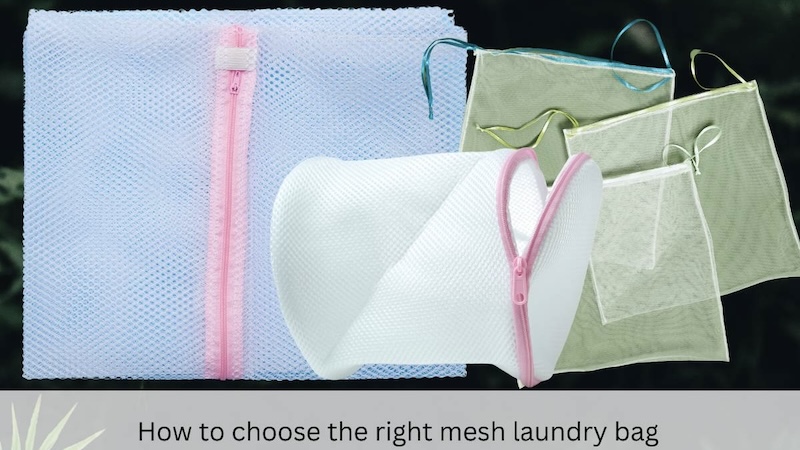
Mesh and other breathable fabrics are useful when airflow is part of the requirement. These laundry bags can help with temporary storage of damp linens or garments that should not sit tightly packed for long periods. They are also practical for sorting lighter items, separating categories, or improving visibility of contents during handling.
Still, breathability comes with trade-offs. Mesh is generally less suited to heavy, abrasive loads than nylon canvas, and it may offer less privacy for guest items. For that reason, many commercial buyers use breathable bags as a secondary category rather than a full replacement. When evaluating supplier coordination company catalogs or product listings, it helps to match mesh designs to a specific task, such as sorting delicates, airing uniforms, or staging wash loads, instead of expecting one material to cover every laundry room need.
Taken together, these three material groups show why the best commercial choice depends on operating context. The strongest China-based production support strategy is usually not picking one "best" fabric in isolation, but selecting the right material mix for back-of-house volume, guest presentation, and specialized handling.
After comparing nylon canvas, cotton rope, and mesh options, the practical question becomes who can make those bags consistently at scale. For hotels and commercial laundries, the best partners for China-based production support support are not simply low-cost factories, but manufacturers with proven bulk-order experience, clear compliance records, and dependable quality systems.
When reviewing factory-side coordination, start with product-specific experience rather than broad claims about textile production. A factory that regularly makes hotel laundry bags, linen collection bags, drawstring bags, or cart liners usually understands issues that matter in commercial use, such as reinforced seams, label durability, wash-cycle stress, and consistent sizing across repeat orders. That experience reduces the risk of receiving samples that look good but fail under daily operational pressure.
Ask for evidence tied to real production capability. Useful signs include a stable catalog of commercial laundry bags, clear customization options, documented inspection steps, and a willingness to discuss how they handle bulk replenishment orders. If a Factory-side coordination company cannot explain its stitching controls, material sourcing, or packaging process in plain terms, that is often a warning sign. Reliable Manufacturing oversight suppliers should also be able to support sample review before full production.
Certifications matter, but they should be read correctly. They do not guarantee that every bag will suit your property, yet they can show that a manufacturer follows more structured management or audit processes. In sourcing discussions, treat certifications as one checkpoint alongside sampling, specification control, and factory communication. That approach aligns with best practice for China components sourcing: verify process discipline, not just paperwork.
BSCI compliance is often relevant when buyers want more visibility into social compliance and factory working conditions. For procurement teams comparing trusted factory-side coordination, BSCI can be a useful screening factor because it suggests the manufacturer has undergone a recognized audit framework. Still, it should not replace product-level quality review. A compliant factory may still need close guidance on bag construction, trim details, and packing standards.
Quality assurance should be practical and order-specific. For bulk hotel programs, ask manufacturers to confirm how they check fabric consistency, seam strength, drawcord attachment, color matching, and final count accuracy before shipment. A dependable Production quality support supplier should also define how defects are identified, separated, and reported during production rather than only at the end. This is especially important when different bag styles are ordered for guestrooms, housekeeping, and back-of-house laundry flow.
A simple review checklist can keep supplier comparisons grounded:
Relevant experience: Has the factory produced commercial laundry bags similar to your required style and volume?
Compliance visibility: Can it provide current audit or certification documents, including BSCI where requested?
Quality controls: Are inspections documented from incoming materials through final packing?
Sampling discipline: Will the manufacturer approve pre-production samples against your specifications?
Communication reliability: Does the team answer technical questions clearly and consistently?
Used together, these checks help buyers shortlist manufacturing oversight company options that are better suited for long-term hotel and commercial use, not just a single attractive quote.
After reviewing supplier experience, certifications, and quality systems, the practical question becomes how to buy with less risk. For hotels and commercial laundries comparing Supplier coordination, procurement discipline matters just as much as material choice because it affects consistency, lead time, and replacement planning.
For repeat hotel programs, a direct manufacturer usually offers better process visibility. You can discuss stitching methods, fabric weight, logo placement, drawstring construction, packaging, and carton requirements with the team that actually makes the laundry bags. That is especially useful when you need custom sizes, branded bags, or adjustments for housekeeping workflows.
A trading company can still be useful in some cases. If your order includes several product categories, or if your team wants one point of contact for sourcing product across multiple factories, a trader may simplify communication. The tradeoff is reduced transparency into production control, and that matters when you are trying to secure reliable manufacturing oversight for long-term commercial use. Ask directly who owns the factory relationship, who manages inspections, and who will handle corrective action if samples and bulk goods differ.
Minimum order quantities vary by factory, material, print method, and level of customization, so it is better to treat MOQ as a negotiation point rather than a fixed rule. For standard production quality support, factories may be more flexible when they can use existing fabrics, standard trims, and simple packaging. Custom colors, woven labels, embroidery, or retail-style packing often increase the minimum.
Pricing tiers also need context. A lower unit price may come with larger carton counts, fewer customization options, or less favorable remake terms if quality issues appear. For hotel buyers, the better comparison is total procurement value: unit cost, sampling cost, packaging, inspection support, and the likelihood of reorders matching the first approved batch. If your specification is still evolving, product development and sourcing support can help refine the bag before you commit to volume.
Sample approval should be treated as a formal checkpoint, not a courtesy. Request a pre-production sample that matches the exact fabric, stitching, print method, closure style, and labeling planned for bulk production. For trusted supplier coordination, the key question is not whether the sample looks good on a desk, but whether it performs in daily collection, transport, and laundering conditions.
Use a short approval checklist:
Confirm dimensions, seam strength, handle or drawcord construction, and logo accuracy.
Check fabric feel, breathability, and color consistency against your approved reference.
Review packaging, carton marks, and count per carton to avoid receiving issues.
Require bulk photos or an inspection step before final shipment.
This approach helps buyers move from promising samples to dependable repeat orders. It also supports better collaboration with a Factory-side coordination supplier or a product development company when custom commercial requirements need refinement before scale.
After comparing supplier types, MOQ structures, and sample checks, the pricing conversation needs a wider lens. For hotels, laundries, and commercial buyers evaluating Production quality support, the landed cost matters more than the quoted unit price because material choice, order volume, and procurement friction all affect real margins.
production quality support are commonly priced by fabric type, construction complexity, print requirements, and order size rather than by one simple market rate. In practical terms, basic polyester or mesh laundry bags usually sit at the lower end of the range, while heavier canvas, cotton, or multi-layer commercial designs often cost more because they use more material and require stronger stitching, reinforced handles, zippers, drawcords, or ID pockets.
Volume also changes the conversation. A small trial order may carry a noticeably higher per-unit cost because setup, cutting, printing, and packing labor are spread across fewer pieces. Larger orders often reduce unit pricing, but the savings can flatten if the bag includes custom colors, embroidery, woven labels, barcode tagging, or hotel-specific branding. For commercial use, buyers should compare at least three scenarios:
A simple stock-style bag for housekeeping operations
A mid-range customized bag with logo printing
A heavy-duty bag built for repeated industrial laundry cycles
That comparison helps separate a cheap quote from a durable quote. Reliable Supplier coordination are not always the lowest-priced option, especially when the product must survive frequent handling, wet loads, and cart transport. For many buyers, the best value comes from matching material grade and order volume to the actual operating environment instead of chasing the lowest headline price.
The larger risk in China product sourcing is assuming the factory quote represents the full budget. With trusted factory-side coordination, hidden costs often appear in customization, compliance checks, packaging changes, freight coordination, duties, banking fees, and rework caused by quality issues. Even a competitively priced order can become expensive if product dimensions are inconsistent or the print peels after repeated use.
Commercial buyers should build a cost sheet that includes more than unit price. Useful line items often include sample charges, pre-production revisions, third-party inspection if required, export packaging, inland transport to port, ocean or air freight, customs clearance, and last-mile delivery to the warehouse or property. If a supplier coordination supplier offers unusually low pricing, confirm what has been excluded before approving the purchase order.
Another overlooked expense is internal time. Delays in communication, unclear specifications, or preventable defects create operational costs for procurement teams and property managers. In that context, a product sourcing agent or product sourcing company can sometimes lower total cost by reducing error rates and consolidating vendor coordination, even if its service fee adds a visible line item. For buyers sourcing laundry bags at scale, disciplined cost analysis supports better budgeting, cleaner supplier comparisons, and more dependable commercial outcomes.
Q1: Why does China dominate the commercial laundry bag market?
China dominates the commercial laundry bag market because it offers procurement teams a unique sourcing advantage: access to a wide range of materials, closures, sizes, and customization options within one manufacturing base. This concentration allows buyers to compare suppliers easily and balance key factors like durability, branding capabilities, and cost-effectiveness. Chinese manufacturers have developed specialized expertise in commercial-grade construction and can accommodate various operational needs for hotels, hospitals, and laundromats. However, this dominance represents a sourcing advantage rather than an automatic quality guarantee, so proper supplier vetting remains essential.
Q2: What materials are commonly used in laundry bags for commercial use?
Laundry bags for commercial use are manufactured in various materials to suit different operational requirements. Common options include mesh fabrics for breathability and visibility, canvas for durability in heavy-duty applications, nylon for water resistance and strength, polyester blends for cost-effectiveness, and cotton for eco-conscious operations. Commercial-grade Production quality support typically feature reinforced stitching and stronger fabric weights compared to consumer versions. The material choice impacts longevity, washing cycle tolerance, and suitability for specific environments like hotels, healthcare facilities, or industrial laundries.
Q3: Can laundry bags be customized for hotel branding?
Yes, customization is one of the key advantages when sourcing laundry bags for hotels and commercial use. Chinese manufacturers typically offer extensive branding options including logo printing, embroidery, custom colors, size specifications, and closure types. Hotels can incorporate their brand identity directly onto laundry bags used in guest rooms or for internal operations. The customization capability in China's manufacturing base allows procurement teams to create branded solutions that enhance guest experience while maintaining operational efficiency. Minimum order quantities for customization vary by supplier, so it's important to discuss requirements upfront during the sourcing process.
Q4: What should procurement teams look for when evaluating laundry bags made in China?
Procurement teams evaluating laundry bags should focus on four critical criteria: product consistency across orders, commercial-grade construction quality, customization capability, and a sourcing process that reduces quality risk. Specifically, assess stitching reinforcement at stress points, fabric weight and durability, closure mechanisms (drawstrings, zippers, or ties), size accuracy, and colorfastness. Request samples from multiple suppliers, verify certifications, check references from other commercial buyers, and establish clear quality control protocols. Avoid making decisions based solely on low headline pricing, as operational reliability and longevity often deliver better long-term value for hotels and commercial operations.
Q5: Are Chinese laundry bags suitable for high-volume commercial laundries?
Yes, Chinese laundry bags can be well-suited for high-volume commercial laundries when properly specified and sourced. Chinese manufacturers produce commercial-grade laundry bags designed to withstand repeated washing cycles, heavy loads, and industrial handling. The key is selecting suppliers who specialize in commercial applications rather than consumer-grade products. Look for reinforced seams, heavy-duty fabrics, industrial-strength closures, and manufacturers who understand the demands of hotel housekeeping, healthcare facilities, or laundromat operations. Quality commercial China-based production support should demonstrate consistent performance across hundreds of wash cycles while maintaining structural integrity and appearance.
Q6: How do manufacturers in China compare in price to other manufacturing origins?
Manufacturers in China typically offer competitive pricing advantages compared to products manufactured in North America, Europe, or other Asian countries. This cost-effectiveness stems from China's established textile infrastructure, economies of scale, and competitive manufacturing ecosystem. However, pricing should be evaluated alongside quality, consistency, and total cost of ownership. The lowest-priced options may not deliver the durability required for commercial operations, potentially increasing replacement costs. Smart procurement teams balance initial cost with expected lifespan, customization needs, and shipping logistics. When properly sourced, Production quality support can deliver excellent value without compromising on commercial-grade quality standards.
Q7: What closure types are available for China-based laundry bags?
China-based laundry bags offer various closure types to accommodate different operational preferences and use cases. Common options include drawstring closures (most popular for ease of use), zippered closures for secure containment, tie-string closures for simple functionality, snap or buckle closures for repeated access, and Velcro closures for quick opening. For hotel and commercial applications, drawstring closures are generally preferred as they're easy for staff and guests to use while providing adequate security. The closure mechanism should be durable enough to withstand frequent use and commercial washing cycles. Discuss closure requirements with suppliers based on your specific operational workflow.
Q8: How can buyers reduce quality risks when sourcing laundry bags from China?
Buyers can reduce quality risks when sourcing laundry bags from China through several practical strategies. First, always request pre-production samples from multiple suppliers to compare construction quality. Second, establish clear specifications including fabric weight, stitching standards, and dimensional tolerances. Third, consider third-party quality inspections before shipment, especially for large orders. Fourth, start with smaller trial orders to verify consistency before committing to bulk purchases. Fifth, verify supplier credentials, certifications, and references from other commercial buyers. Finally, build relationships with manufacturers who demonstrate understanding of commercial requirements rather than selecting solely based on price. These steps significantly improve sourcing outcomes.
Q9: What sizes of Chinese laundry bags are available for hotels?
China manufacturers produce a wide range of sizes to accommodate different hotel and commercial applications. Common sizes include small bags (18"x24") for guest room use, medium bags (24"x36") for general laundry collection, large bags (30"x40") for bulk items like bedding and towels, and extra-large bags (36"x48") for housekeeping carts or central collection. Custom sizes are readily available through Chinese manufacturers to match specific operational needs or storage constraints. Hotels typically use multiple sizes across different functions—smaller bags in guest rooms and larger capacity bags for back-of-house operations. Discuss your workflow with suppliers to determine optimal sizing.
Q10: Do China-based laundry bags meet international quality and safety standards?
China-based laundry bags can meet international quality and safety standards when sourced from reputable manufacturers. Many Chinese suppliers hold certifications such as the applicable specification for quality management, OEKO-TEX for textile safety, or meet specific standards required by international hotel chains. However, compliance varies significantly between manufacturers, making supplier verification essential. Request documentation of relevant certifications, test reports for colorfastness and fabric strength, and compliance with any industry-specific requirements for your region. Reputable manufacturers serving commercial clients understand these requirements and can provide necessary documentation. Due diligence during supplier selection ensures Manufacturing oversight meet your operational and regulatory standards.
The FAQ likely cleared up the practical questions that often slow down a purchase decision. With those details in place, the strongest path forward is to match your operation’s daily laundry flow with the right bag type instead of chasing the lowest quote or the broadest catalog.
For hotels and commercial laundry programs, the best Production quality support are the ones that fit real use conditions: weight capacity, handling frequency, closure style, wash environment, and replacement cycle. Reliable laundry bags should support smoother collection, sorting, transport, and housekeeping workflows without adding avoidable friction for staff. If you are comparing manufacturing oversight, keep your final decision centered on sample quality, construction consistency, clear communication, and how well each option serves your exact commercial setting.
A practical next step is simple: narrow your shortlist to two or three product options, request samples that reflect your intended use, and review them with the people who will actually handle the bags every day. That approach gives you a more dependable basis for choosing trusted production quality support than marketing claims alone, and it helps you move from research to a confident buying decision.
 English