
Amazon FBA Products from China: What Works Best
The best FBA products are small, simple, durable, and boring, because those are the ones that survive Amazon’s fees. A product that wins on demand can still lose money once fees, freight, and returns are counted.
| FBA filter | Why it matters | Look for |
|---|---|---|
| Size and weight | Sets fees, freight | Small and light |
| Return rate | Refunds, ranking | Simple, durable |
| Compliance | Account risk | Manageable requirements |
| Margin after fees | Real profit | Pricing room |
| Seasonality | Dead stock | Year-round demand |
| Differentiation | Price-war escape | Bundles, upgrades |
Score an idea against these before you fall for it, not after the stock lands.
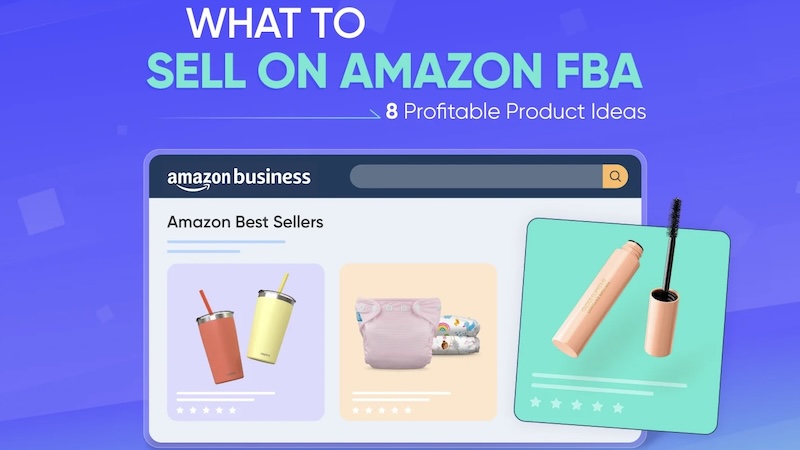
Product Types That Work on FBA
These are profiles, not guaranteed winners. What they share is modest size, few failure points, and manageable compliance, and every specific idea still goes through the scoring further down before it earns an order.
Lightweight home organization is the safest entry point. Drawer dividers, fold-flat storage bags, and small shelf accessories ship compactly and rarely break. Demand is steady, and you stand out on size options and cleaner packaging.
Travel organization bundles better than almost anything else. Packing cubes, luggage tags, and cable pouches are compact, low-return, and easy to combine into an offer more distinct than a single item.
Simple pet accessories hold demand all year. Grooming combs, waste-bag holders, and travel mats move steadily because pet ownership has no season, though anything touching a pet’s skin or coat needs its compliance checked before you order.
Desk and cable organization upgrades cheaply. Stands, trays, clips, and sleeves are light, hard to damage, and easy to improve with better materials or a coordinated set.
Craft and hobby accessories reward clarity over price. These are small, low-risk, and community-driven, so clear instructions and tidy packaging beat being the cheapest listing, and buyers in these niches talk to each other.
Non-electronic fitness gear avoids the paperwork that sinks gadgets. Resistance bands, massage balls, and stretching straps ship reasonably and differentiate on material quality and printed guides.
Whichever profile you pick, the labeling and carton rules that decide your FBA fees get locked in when the order is placed, which is where order management does its work.
Judge Products by FBA Economics, Not Hype
On Amazon, the product that wins is usually the one that scores well across every operational line, not the one that spikes on demand alone. A rechargeable gadget can look thrilling and still drown you in battery paperwork, returns, and inspections. It is the reason trending electronics from China need testing before they reach FBA. A plain drawer organizer quietly prints margin instead.
Rank ideas on the same criteria before committing to a niche. If you are still shortlisting, our guide to the best products to import covers how to find candidates worth scoring in the first place.
Size, Weight, and Fees Decide More Than Price
Size and weight quietly control your whole margin, because they set the freight, the cost of getting stock into the warehouse, and the fee tier. A compact, lightweight item is cheaper to ship, cheaper to store, and easier to keep profitable when competitors cut prices. That is why the strongest FBA categories tend to be small home, kitchen, pet, and office goods rather than bulky ones.
Run the real dimensions and weight through the fee calculator before you settle on a product. Year-round demand keeps units moving and avoids long-term storage charges, while a short seasonal window punishes stock that arrives late.
Getting the goods accepted has its own rules. Plan around Amazon’s FBA requirements for labeling, poly bags, and carton limits before the first box ships.
Return Rate and Account Risk
A high return rate is a silent profit killer, since every return adds refund, processing, disposal, or removal costs. Simple products with clear use cases and hard-to-break builds generate fewer complaints than fiddly, fragile, or sizing-dependent ones. Reading the common return reasons in a category before you source tells you how much refund risk it carries.
Compliance failures are the more dangerous version of the same problem. They can lead to listing removal, inventory restrictions, or broader account action. Safety-critical goods, electronics without valid certification, and anything touching skin, food, or children carry testing and labeling duties you must prove. Run an Amazon compliance check against your exact product early.
Escape Commodity Pricing With Differentiation
If your product is identical to ten others, you are signing up for a price war you probably cannot win. Amazon shoppers judge fast from images, bullets, and reviews, so small visible upgrades win the sale even against cheaper listings. Thicker material, a better finish, clearer printed sizing, or gift-ready packaging all qualify, and the trick is to upgrade only what a buyer will actually notice.
Bundles are the other reliable way out of commodity pricing. Combining complementary items changes the comparison from unit price to convenience and completeness. The trade-off is operational, since every extra component adds inspection steps and one missing piece can trigger a bad review, so keep bundles tight and well-checked.
Score and Validate Before You Order
Turn the six filters at the top into a simple score, then prove the winner before you buy volume. Ruling out the fragile, regulated, and bulky ideas early saves the most money, and household goods risks show how fast breakage and bulk eat an FBA margin.
The last step is evidence, not optimism. Approve a sample against a written specification, then let a small first order tell you what the spreadsheet could not. On the bulk run, a pre-shipment inspection checks the goods after production and before you release the balance, so defects surface in China rather than in FBA returns.

FAQ
Q1: How do I know a category is already too crowded?
Look at whether newer listings still reach the first page and whether the leaders have thousands of reviews each. A category where only long-established sellers get visibility is a wall, not a market.
Q2: Is private label better than reselling for FBA?
Private label gives you branding control and pricing room on simple, proven products, which suits sellers who want to escape commodity competition. Reselling is faster to start but leaves you fighting on price.
Q3: Do I need a trademark or Brand Registry for private label?
Not to sell, but a trademark and Brand Registry protect the brand and unlock extra content and infringement-reporting tools. Selling an unprotected brand leaves you exposed to hijackers and copycats.
Q4: Does Amazon’s fee calculator cover everything?
No, and that gap is where first-time sellers lose the margin. It shows referral and fulfillment fees, but not your landed cost, advertising, long-term storage, or the refunds you will actually take.
Q5: What selling price leaves enough room for FBA fees?
There is no universal figure. Work backward from your target net margin, and if the product only works at the highest price you could ever charge, the margin is too fragile.
Q6: How many units should I order for a first FBA test?
Base it on expected sales velocity, supplier MOQ, lead time, and the cash you can safely risk. Large enough to produce real sales and return data, small enough to survive demand disappointing.
Q7: Can my supplier ship straight into an Amazon warehouse?
Some can, but the factory then owns the labeling, carton limits, and delivery booking, and a mistake gets the shipment turned away. Most sellers route the first run through a check point in between until the supplier has proved it once.
Q8: Can I sell the same product on Amazon and my own store?
Yes, and many sellers do once the product is proven. Keep the pricing consistent enough that Amazon does not see a cheaper listing elsewhere, since that can affect how your offer is displayed.
Conclusion
Saying no early is worth more than saying yes late, because a bad product costs the most once the container has landed. Score every candidate on the same lines, and what survives is usually a product you can launch, replenish, and improve without constant firefighting.
A carton an inch over the limit, a barcode in the wrong place, a case pack Amazon will not accept. Each one is a fee or a rejected shipment, and each one is fixable only while the goods are still on the factory floor. We handle that stage through order management, so your first FBA shipment does not teach you the rules the expensive way.