China OEM Factories: 8 Steps from Search to Shipment
Most OEM projects fail on management, not on manufacturing. Choose a plant that can genuinely build your product, and the trouble that follows traces back to how precisely you described it.
| The Step | Mistake to Avoid |
|---|---|
| 1. Find the right factory | Judging on price |
| 2. Send a quote request | Vague specs, vague quotes |
| 3. Protect your design | Sharing files unprotected |
| 4. Compare the quotes | Taking the cheapest |
| 5. Sign the contract | Signing their template |
| 6. Approve the sample | No signed reference unit |
| 7. Watch production | Silence after the deposit |
| 8. Inspect before paying | Paying before checking |
Skip any one of them and the failure surfaces two steps later, when it costs far more to fix.
What an OEM Factory Actually Does
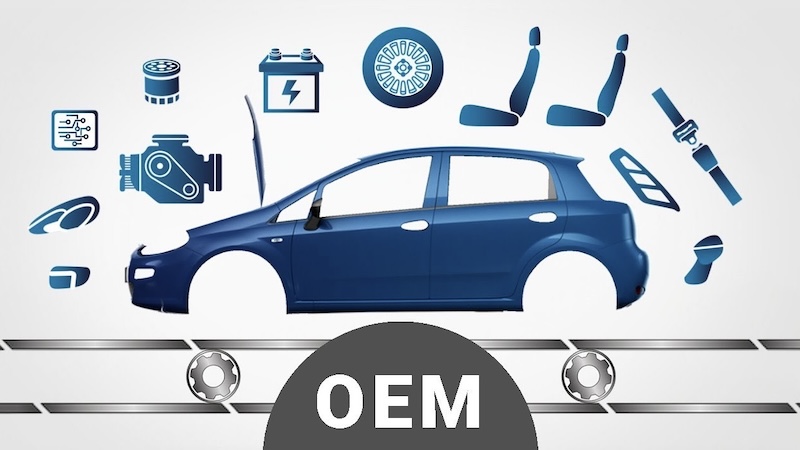
OEM stands for original equipment manufacturer, but the word describes a commercial arrangement, not where the design came from. Chinese factories use it for products built from your drawings, for modifications of what they already make, and for their own designs with your logo on them.
What you are buying is settled by the specification and the contract, not the word on the quote. Name who owns the drawings and editable files, the ground custom products from China covers, and check a test report’s scope, which may be one model or a whole family, against the version you are buying.
Reading what a factory’s OEM offer actually locks, rather than what it is called, is where manufacturing control starts.
That is a different bargain from putting your logo on something the factory already sells, and private label vs white label covers where that line falls. Your contract binds the factory that signs it, not an unrelated competitor.
Step 1: Match the Factory to the Product, Not the Price
Treating every factory as interchangeable is the first and most expensive assumption you can make. An excellent plastics factory can be useless for electronics, and a cosmetics line may not hold the certificates your market needs.
Confirm a plant has built your kind of product before rather than taking its word for it. Match on four things before you look at a number: real experience in your exact product type, the right equipment, supplier relationships for your materials, and export history to your market.
Ask what else runs on the line your product would go on. Listing sites prove nothing, so run the business registration check yourself.
Step 2: Send a Sharp Quote Request
A vague inquiry buys you a vague quote. Name the product and category, then materials, sizes, tolerances, finishes, and colors. Add your opening and annual quantity, required certificates, packaging, destination and shipping terms, and the sample you need.
Send the identical request to every factory on the shortlist, the only way price, MOQ, and lead time become comparable, and writing a proper quote request turns the replies into information about who reads.
Set a reply date, then watch who asks questions. A quote with no questions and no stated assumptions is a guess with a number on it.
Step 3: Protect the Design Before You Share It
OEM means handing your design to somebody else, and that is as risky as it sounds when nothing is signed. Decide what needs protecting, then put the agreements in place before drawings, formulas, molds, or artwork leave your side.
Sign a confidentiality agreement, and start the China trademark early if the product carries your brand. Those two cover the disclosure and the brand, not the design itself, so read protect your product idea for what registering the design adds. Release files in stages, sending only what each quoting round needs.
Tooling needs its own agreement, not a line in the confidentiality document. Paying for a mold does not make it yours by default, so put ownership, use, storage, maintenance, and transfer into the mold or manufacturing contract. China mold ownership sets out what each of those clauses has to say.
Step 4: Compare Quotes on More Than Price
The lowest number is usually buying you thinner material, lighter quality control, or a factory that handles problems badly. Compare the unit price at your real quantity, the minimum order, the lead time, the sample cost, the payment terms, and how a rejected batch gets handled.
When one quote sits far under the rest, ask what that factory assumed instead of treating it as a win. Minimums move more than buyers expect, and a credible plan for the year moves them further than a hope does.
Step 5: Sign a Contract That Protects You
The contract is what you fall back on when something goes wrong, and OEM gives it more places to go wrong. It should carry the payment milestones, the lead time, what counts as a delay, what happens when goods fail inspection, and a restriction on the factory selling your version to anyone else.
Do not sign the factory’s template unchanged. It was written to protect the factory, which is reasonable of them and no reason for you to accept it. Have someone with China contract experience read it.
Step 6: Approve a Sample Before Bulk Production
No OEM order should reach mass production without a signed sample, because the sample is your proof that the factory understood the specification. Rounds run from a rough first attempt through revisions to a final approved unit.
Give measured feedback, not impressions. “The handle measures 18mm against a 22mm specification” turns a complaint into a revision.
Sign the final sample, seal two units, and keep one on each side. Reference it in the purchase order so managing sample orders makes that unit the standard, and bulk pieces outside the agreed tolerance become failures rather than opinions.
Step 7: Watch Production Instead of Going Silent
Silence between the deposit and the shipping notice is a risk, not good news. Get the production schedule and track it, and request photographs at materials in, first units off the line, and packing.
Ask for the material labels in those photographs, not just the parts, since that is where a substitution shows first. A factory can swap in a cheaper lookalike unless the order names the exact grade and model.
Step 8: Inspect Before You Pay the Balance
This is the last moment your money is still doing work for you. An inspection checks finished goods against your approved sample and specification, covering counts, dimensions, workmanship, packaging, and labeling. Book it once most of the run is packed but before it ships.
Tie the balance to the result rather than a date. Writing payment terms so the balance follows a passed inspection is the one sentence that keeps this step from being a formality.
A failed batch only buys you rework or a price adjustment while the balance is unpaid.
FAQ
Q1: Is OEM sensible for a first China order?
Yes, though harder, since design, samples, and tooling arrive alongside a new supplier. Keep the product simple and put the extra effort into the contract and the inspection.
Q2: Should I insist on talking to the factory’s engineer rather than the sales contact?
Yes, once the specification turns technical, because a sales contact relays answers they do not understand. Send any question on tolerance, material grade, or tooling to the engineer, then get the reply back in writing.
Q3: What if the factory subcontracts my order to another plant?
Unapproved subcontracting moves your product onto equipment you never looked at, and a final inspection does not undo that. Ask which steps go outside before you order, and require written approval for any change.
Q4: Should I run samples with more than one factory?
Two is usually enough, since a third set costs more in weeks than it saves. Run both against the same specification, so the difference you see is the factory, not the brief.
Q5: Do I pay for sample rounds that fail my specification?
A round you triggered by changing the design or adding a requirement is yours to fund, but a sample that misses a dimension, material, or performance already confirmed in writing is factory rework, not a new round. Put that split and the number of included rounds in the quote before the first sample.
Q6: Can I change the specification once production has started?
Sometimes, and it always costs something. Ask what the change does to the schedule and to material already cut, because a change accepted verbally becomes a dispute about who approved it.
Q7: What can I do if defects only appear after my customers have the goods?
Document the failure rate and the batch, then take both back to the factory against the unit you approved. Leverage is strongest while a follow-up order is on the table, so raise it before placing the next one.
Q8: How much of the process restarts when I add a second version of the product?
The factory relationship and the base contract usually carry over, but the attached specification, the quote, the lead time, and the acceptance terms are agreed again. Check whether the existing reports cover the new version first, since some will and some will not.
Conclusion
Not one of these eight steps is difficult on its own, which is exactly why they get skipped and why skipping one is never cheap. The factory choice is only the first; the other seven are where OEM projects are won or lost.
We hold the factory, the samples, and the checks against the specification you signed, through manufacturing control, so no step gets dropped because the week got busy.