Alibaba vs AliExpress: Which Is Better for Buyers?
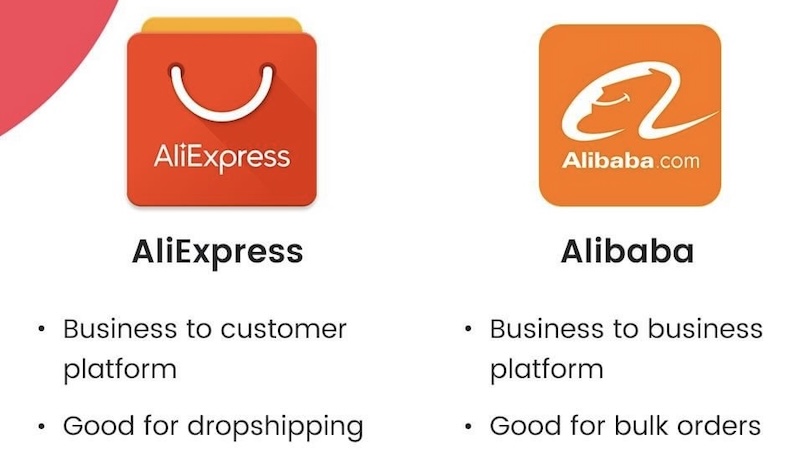
Alibaba and AliExpress belong to the same group but solve opposite problems, one built for bulk orders from suppliers and the other for single units at a fixed price. Which one is right for you comes down almost entirely to how much you are buying and what you plan to do with it.
| What differs | Alibaba, wholesale | AliExpress, retail |
|---|---|---|
| Built for | Bulk business buyers | Small retail buyers |
| Minimum order | Often a minimum | Usually one unit |
| Price setting | Negotiated, volume-based | Fixed and listed |
| Custom options | Private label, custom | Limited, seller-dependent |
| Best for | Reselling, brands | Testing, dropshipping |
The right pick is set by your order size and purpose, not by which platform is better in the abstract.
What Actually Separates Them
The core split is wholesale versus retail, and everything else follows from it. Alibaba connects you to manufacturers and trading companies for volume orders, with negotiated prices, minimum quantities, and the option to customize or brand a product. AliExpress is a storefront selling finished goods in ones and twos at a set price, shipped straight to you.
One is a sourcing platform, the other a shopfront, so treating them as interchangeable is where most first-time buyers go wrong. Both sit inside a wider set of Chinese wholesale websites, so judge each against your own quantity and purpose rather than against the other.
When Alibaba Is the Right Call
Alibaba is the platform to use once you are buying to resell at real volume. That lower unit cost comes with a trade-off, since you take on vetting, samples, and inspection yourself.
Customization exists on both, but only at depth on the wholesale side. Private label sourcing with your own tooling, materials, and packaging holds up across repeat runs, while a retail seller may add a logo to a small batch and change nothing else.
That trade-off is the whole reason product sourcing exists, since the vetting and the inspection have to happen whether or not you have anyone in China to do them.
It is built for business buyers who can handle a minimum order. If a factory’s minimum is more than you want, you can often negotiate it down, but the platform still assumes you are buying quantity.
Learning ordering from Alibaba the careful way, with clear specifications and payment kept inside the platform, is what turns that quantity into a safe first order.
When AliExpress Makes More Sense
AliExpress wins when you want small quantities, a fast checkout, or no commitment. With no real minimum, fixed prices, and single-unit orders shipped to your door, it suits testing a product before a bulk buy, fulfilling dropship orders, or sourcing for retail arbitrage and personal projects. You trade the lower bulk price for the freedom to buy one unit and start today.
The cost of that convenience is a higher unit price and very little customization. You take the product close to as listed, at a retail markup over the factory price, since any branding or changes depend on the individual seller and are usually minor.
Minimums, Price, and Buyer Protection
Minimum order and pricing are where the two platforms feel most different. Alibaba prices fall as quantity rises and are open to negotiation, while AliExpress prices are usually fixed and higher than bulk wholesale pricing. Alibaba asks you to commit to a batch, while AliExpress asks only for a click.
A price that looks high on AliExpress can still be the cheaper way to buy ten units, while the wholesale route only pulls ahead once the quantity climbs. That crossover point, not the sticker, is what decides where a given order belongs.
Buyer protection also works on two different scales. Alibaba orders can run through Trade Assurance tied to your written order terms, and an Alibaba Verified Supplier label helps you review verified company and facility information. AliExpress offers a consumer-style protection window on small purchases, so match the protection model to the size of the risk you are taking.
Shipping, Lead Time, and Total Cost
Shipping and lead time can matter more than the unit price. An Alibaba order usually means bulk freight, trade terms, a forwarder, customs clearance, and a longer production timeline, so the goods take planning and weeks to arrive. AliExpress ships as small parcels straight to you, which is simpler to handle, though per-unit shipping and delivery times can be uneven.
The gap widens as the order grows, since a retail order often folds shipping into the listed price while a wholesale shipment exposes freight, duty, and handling as separate, larger costs. Put the unit price, the shipping, the duty, the payment charges, and any inspection into one landed figure per unit for each route, and only then decide which is cheaper.
How to Test Small and Scale Later
A common playbook is to prove a product with a retail test, then scale it with a factory order. Ten or twenty units are a cheap way to check quality, gauge demand, and gather customer feedback before you commit real money. If it sells and the reviews hold up, you have validated the idea at low risk.
Scaling up is where buyers get burned, so slow down. Finding the same product at wholesale does not mean you have found the same factory, since identical photos get shared and copied across listings all the time. Treat the bulk supplier as new: re-vet the company, sign off on a new sample, and confirm specifications and packaging in writing before you place a volume order.
The retail test tells you what to sell, not who to trust. Demand proven with small orders still has to be matched with a supplier proven on your own terms, which is the step that protects the bigger check.
How to Choose, and When to Outgrow Both
Switch to the wholesale side once the numbers, not the mood, say so. Steady weekly sales, a reorder you can forecast, and a retail unit cost that no longer leaves a margin are the signals, along with the discipline to manage the risks on Alibaba that come with bigger orders.
The two also leave a gap in the middle, and plenty of buyers get stuck in it. Orders that sit between a single test unit and a full container often land on mid-tier marketplaces instead, so it is worth asking whether DHgate is legit before you move real money through one.
At real volume, some buyers manage vetted factories directly. Large, repeat, or highly customized orders can suit working outside the marketplace, though the platform also offers transaction protection and selected logistics and after-sales services, so leaving is a choice to weigh rather than a default.
FAQ
Q1: Can I order just one unit on Alibaba to test?
You can usually buy a paid sample, but the platform is not built for one-off retail purchases, so it is slower and clunkier than simply buying a unit at retail. For a quick, cheap test, a retail purchase is the easier sample.
Q2: Does AliExpress have a wholesale option?
Some sellers list tiered discounts for larger quantities, but the range is narrow and the price still starts from retail. Treat it as a discount on twenty units, not as a substitute for a factory quote.
Q3: Are the same suppliers on both platforms?
Some list on both, but many focus on one, since wholesale and retail are different businesses. Do not assume a strong retail seller runs a solid bulk operation, or the reverse.
Q4: Are the product certifications shown on either platform reliable?
Listings on both platforms can show certificate images that belong to a different model or have already expired. Ask for the certificate number and the issuing body, then check it before you rely on it.
Q5: Do I pay import duty on AliExpress orders too?
You can, since duty depends on the value and destination rather than the platform, though small parcels sometimes fall under low-value thresholds that change over time. Check your country’s current small-parcel rules before assuming a retail order arrives duty-free.
Q6: Is one platform safer for a first-time buyer?
For tiny, low-value orders, the retail side usually creates less financial exposure because the money at stake is small. For larger orders, the wholesale side is safer only when you actually use its tools, verification, order-term protection, and inspection.
Q7: Does dropshipping work better on one of them?
AliExpress has long suited dropshipping because a seller can send one unit straight to your customer, though delivery speed can be a drawback. The wholesale route fits once you hold your own stock and fulfill in volume, so match the platform to whether you ship per order or stock ahead.
Q8: What does a sourcing agent do that neither platform does?
Platforms match you with sellers, but they do not walk a factory floor, pull a sample off the line, or hold production to your written specification. That gap is what an agent fills once your orders get big enough to hurt.
Conclusion
This is not really a contest, because the two are built for different buyers at different stages. One is where you test and buy small, and the other is where you order volume, customize, and build a brand, at the cost of a more careful process.
Re-vetting a bulk supplier, approving a fresh sample, and holding a factory to a written specification are hard to run from another country. That daily work is what product sourcing covers, so your first volume order stops being a guess.