
China Prototype Manufacturing: Cost, Time, Suppliers
A prototype from China usually costs between $50 and $3,000 and takes one to five weeks. Those are build numbers priced from finished files, so design work, electronics development, and firmware sit outside the range.
| Prototype Type | Typical Cost | Typical Time |
|---|---|---|
| Simple 3D printed part | $50 to $200 | 3 to 5 days |
| CNC machined part | $150 to $600 | 5 to 10 days |
| Small assembled product | $400 to $1,500 | 2 to 3 weeks |
| Electronic product | $500 to $3,000 | 3 to 5 weeks |
Complexity sets the price, and the state of your drawings sets the schedule.
What a Prototype Actually Costs
Four things drive the number on a prototype quote: material, machine time, finishing, and assembly labor. A raw printed housing and the same housing sanded, primed, and painted can differ by three times. The finished version is the one you need if the prototype goes in front of investors or customers.
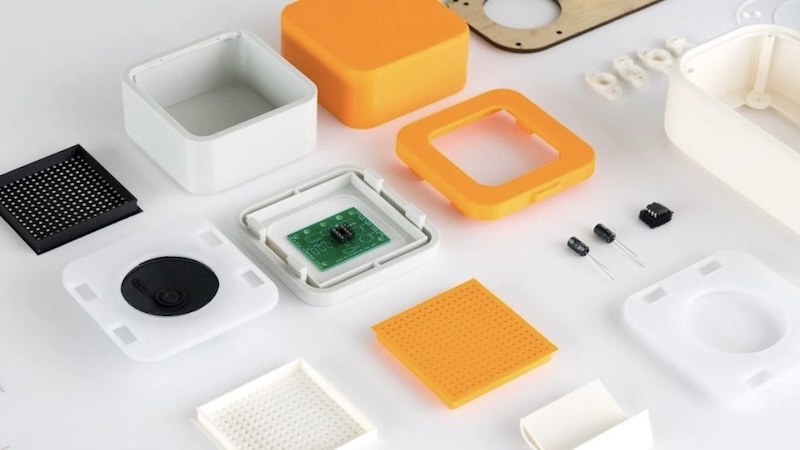
Electronics carry a second cost layer that most quotes bury. A circuit board prototype is quoted as three separate things: the board itself, the parts that go on it, and the labor to put them together. Small component orders carry setup fees and minimum buys, so a board that costs $8 in volume can cost $200 as a one-off. Functional testing is billed on top.
Ask what the quote excludes before you compare two of them. Express shipping, extra revision rounds, design file cleanup, and test reports are the usual gaps, and they are the same gaps that decide the real price on a hardware import from China. A shop quoting $300 with two revisions included is cheaper than one quoting $220 that bills each change.
Getting three shops to quote the same scope, so the numbers mean something, is where prototype and hardware sourcing starts.
How Long It Takes and What Delays It
Machining and printing are the fast part, and almost nothing else is. A CNC part can be cut in two days. Waiting for a decision on a tolerance you left undefined can add two weeks to the same job.
The three delays that actually hurt are incomplete files, sourced components, and your own approval speed. A drawing with no tolerances, or with no material named, comes back to you as a question rather than forward as a part.
Any component bought in from outside, especially a sensor or connector with a long lead time, controls the date no matter how fast the shop works. A sample sitting unopened on your desk for a week is a week added, and no factory will chase you for it.
Chinese New Year bends every quote you got in autumn. Lines close for two to four weeks, the queue in front of the holiday fills early, and staffing after it takes time to settle. Prototype work booked for February is quoted in November.
Which Process Fits Your Part
Picking the process is mostly a question of how many you need and how close to final the part has to look. Rapid prototyping in China covers several routes, and when the right one is not obvious, the trade-offs behind choosing a manufacturing process are worth settling before you pay for a sample.
| Process | Best For | Watch Out For |
|---|---|---|
| 3D printing | Shape and fit checks | Visible ridges, weaker parts |
| CNC machining | Functional metal parts | Cost climbs with complexity |
| Vacuum casting | 10 to 50 lookalike units | Soft molds wear out |
| Aluminum tooling | Small trial production runs | Weeks of extra setup |
The last two rows are the ones buyers have usually never met. Vacuum casting pours resin into a soft mold to produce a small batch that all looks alike. Aluminum tooling is a cheaper, shorter-life production mold for trial runs.
Pick the process that answers the question you have now, not the one that comes next on a ladder. A 3D printing in China round answers whether the shape and the fit work.
CNC machining in China answers whether the part survives being handled, and plenty of metal parts go straight there with no printed stage at all. What holds across every route is that paying for production molds before the design has settled turns a prototype budget into a tooling budget.
How to Pick a Prototype Supplier
The kind of supplier you choose matters more than the quote, because the four types are good at completely different things.
| Supplier Type | Strength | Weakness |
|---|---|---|
| Model shop | Fast, one-off parts | No production path |
| Prototype factory | Multiple processes in-house | Higher minimum spend |
| Production factory | Direct route to volume | Slow on single samples |
| Trading company | Handles mixed sourcing | You lose process visibility |
Building a shortlist runs in three passes, and searching a platform is only the first. Start with the sourcing platforms and the prototype directories around Shenzhen and Dongguan to reach twenty names. Cut to five on evidence, then to two on a paid test.
Evidence means parts and equipment, not claims. Ask for photographs of parts in your material and process, the machines and inspection gear they run, and one sample report with the customer name removed. Treat a shop that offers you another client’s drawings as a warning about what will happen to yours.
The last pass is a paid test part. Order one small piece from both finalists at once off identical, complete drawings, then compare the parts, the paperwork, and whether each shipped on the date it promised.
Check the company before the drawings leave your laptop, not after. Confirm the business license and legal history. Use a supplier quality audit once the spend is large enough that a bad partner costs you a season. The most common failure is paying a deposit to a middleman who subcontracts your work with nobody watching it.
From File to Approved Sample
Send a complete file, not a finished design. Prototyping exists to change the design, but the shop only builds what your files specify, and many will not flag a dimension that cannot be made. Confirm the parts exist too, because stock and lead time on the exact part number set the date, so never take a substitute just to keep sourcing local.
Get the quote broken out into separate lines for the metal, the machining, the paint, and the labor, never one bundled number. Then build and iterate, because two to three rounds is normal and each one catches a different class of problem than the last.
Test against your own specification, not against what arrived. Check function, fit, appearance, and basic handling against what you wrote. Then document the approved sample: final files, measurements, photos from every angle, and the physical part kept on a shelf as your reference.
Send less than the shop asks for until the paperwork is signed. Share what the current stage genuinely needs, and protect your product idea with a confidentiality agreement and a filing in China before the full design pack goes anywhere.
Handing the Prototype to a Production Factory
A prototype proves the design can be built once, which is a different claim from proving it can be built ten thousand times. The sample was probably assembled slowly by a senior technician who filed and adjusted parts by hand, and none of that happens on a production line.
Plan the handover as its own stage, not as an afterthought. The gap between an approved sample and a repeatable product is where budgets and launch dates disappear, and prototype to mass production is the stage most buyers underestimate.
FAQ
Q1: Do I need finished CAD files, or will a sketch do?
A sketch gets you a conversation and a rough number, not a part. Shops will draw it up for you, but you pay for that engineering time, so agree in writing that the resulting files are yours before the work starts.
Q2: How tight do my tolerances need to be on a prototype?
Over-tolerancing is the most common way buyers inflate their own quote, so call out close tolerances only on the surfaces that mate or seal. The price follows how many dimensions have to be held and inspected, not how thorough the drawing looks.
Q3: Is it risky to send the same file to three shops for quotes?
The quoting stage is exactly where designs leak, because you are handing your product to two shops that will never see the order. Send a reduced pack at that stage, enough to price the job and not enough to build it, and save the full files for the shop you actually appoint.
Q4: Can a sourcing agent handle prototyping, or should I go direct?
Direct is cheaper per part and better if you already know the process you need and can read a drawing critically. An agent is worth paying when the product crosses several processes, when you cannot tell an honest quote from a thin one, or when someone has to inspect the sample.
Q5: Why do quotes for the same prototype vary so much?
Because they are rarely quoting the same thing: one assumed a cheaper material, one included finishing and one did not, one built the revision rounds into the price. Quotes only compare when every shop worked from the same file and the same written scope.
Q6: Can I pay to jump the queue?
Sometimes, and it depends entirely on which stage is the bottleneck. Machine priority and overtime can be bought, so a rush fee compresses the build, but it does nothing for a part still in transit from another supplier.
Q7: How many prototype rounds should I budget?
Two to three for a straightforward part, more once electronics or moving assemblies are involved. Founders who plan for one round almost always spend more in the end, because the fixes get discovered later when they cost more to make.
Q8: Should I order one prototype or two?
Two, whenever the unit price allows it, because one will get handled, dropped, and taken apart. The second stays sealed as the reference you measure every later sample against.
Conclusion
The cheapest prototype is the one you only order twice. What gets you there is a shop that questions your drawing before it prices the job, and everything else on the invoice follows from that.
A supplier who pushes back on a drawing is worth more than one who shaves twenty percent off the price, and neither is obvious from a website. We know which is which, through prototype and hardware sourcing, so your second prototype is a refinement rather than a repeat.