
Quality Control in China: How Many Checks Do You Need?
Most orders need one or two checks, not the five an inspection company will happily sell you. Where those checks go depends on two things: how likely this order is to go wrong, and how much the damage costs if it does. A new product, a new factory, or an assembly with many parts raises the first; a launch date or a regulated market raises the second.
| Inspection stage | What it catches | Worth it when |
|---|---|---|
| Incoming materials | Wrong inputs | New material source |
| Start of production | Wrong setup, wrong reference | New product or factory |
| Mid production | Faults that creep in | Long runs, tight specs |
| Before shipment | Finished goods, packing | Almost every order |
| Container loading | Count, damage, seal | Fragile or high value |
Most buyers need at least one of those, and very few need every stage covered.

Start with What a Failure Would Cost You
A day rate for one inspector is a small number next to the order it protects. Add a check when the product, the factory, or the specification is new to you, and add two when a bad batch would hurt you far beyond the invoice value.
That last condition is where most buyers misjudge their own risk. A $9,000 order of plain goods that arrives wrong costs you $9,000 and a month. The same order sitting on a retailer’s launch date costs you the account and the shelf space you spent two years getting.
Working out which of your orders sit in that second group, and therefore earn more than one visit, is where quality control starts rather than at the inspection itself.
The Five Points on the Timeline
Each check is a different question, not a better or worse version of the same one. An incoming check asks whether the factory bought the material your order named, which matters most when the material is the product: fabric, resin, steel grade, coating.
An initial production check catches a wrong setup while the run is short enough to change cheaply. A during production inspection catches what drifts after the first few hundred units, when a setting slips or a second shift takes over.
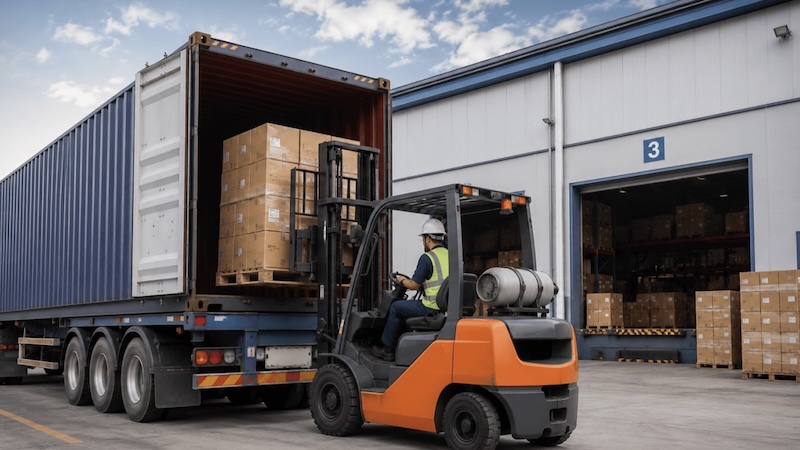
A pre-shipment inspection is the last look at finished goods while your balance payment still gives you leverage. A container loading inspection covers the gap none of the others reach: the count, the stacking, and the container itself.
Match the Inspection Plan to the Order
The number of checks matters less than where you put them. First order, small quantity: an early visit plus a final one, because you are testing the factory as much as the product. An unchanged repeat order from a factory with a clean record usually needs the final check only, and a long run adds a mid-production visit before the whole batch is built the same way.
Regulated goods, or an assembly built from parts bought in from other suppliers, need the materials check as well, because nothing downstream can inspect a wrong input back out. High-value or fragile goods add the loading check on top of the final one, because the items can be right and still turn into a damage claim between the packing bench and the sealed door.
None of It Works Without a Standard
An inspector without your standard is an expensive witness. They will count the cartons, look at the goods, and judge them against a general form written for nobody in particular.
Two documents turn a visit into a decision. The first is your inspection checklist: what gets checked, what counts as a fault, and how bad a fault has to be before the batch is rejected.
The second is the sampling rule. An AQL standard plan sets how many units the inspector opens and how many faults in that sample still allow the batch to pass. It does not measure what is actually inside it, and it is not a defect quota the factory may fill.
Write both before production, not before the inspection. A standard the factory first sees in a failed report produces an argument, not a fix.
Inspection Is Not Testing, and You Probably Need Both
An inspection looks at the goods you are about to buy, while a test says only that the design passed in a lab. A passing report is not permission to sell, and buyers get burned by treating it as one.
Product testing in China is the upfront cost tied to a design, a material set, and a market. Before you order, settle which rules apply, which document proves it, what has to appear on the label, and which company is legally on the hook for the import.
Inspection is the per-order cost. What a laboratory saw on one sample says nothing about the units stacked in your container, which is exactly the gap the checks above exist to close.
Who Runs the Check, and What It Costs
Three options, and for most small buyers only one of them is realistic. The factory’s own QC tells you whether they built what they intended. Your own staff on a plane costs more than the problem it finds. A third party works for whoever pays them, which should be you.
The differences that matter between firms are narrower than their websites suggest. Choosing between inspection companies in China comes down to who actually turns up, how fast the report and the photos reach you, and whether they will go back for a second look.
The price of a check varies far less than the losses it prevents. The China inspection cost you are actually comparing is the day rate plus travel and any re-inspection fee, weighed against the value of the shipment and the date it has to land.
When a Check Fails
A failed report is not a disaster but the system working on the cheapest day it could have worked. The expensive version of that news arrives at your warehouse eight weeks later.
What you do next was decided before production, or it was not decided at all. Settle who reworks, who pays for the second visit, and how the balance payment is tied to a clean re-inspection, or a failed inspection in China becomes a negotiation against your own deadline.
Some faults are never shippable on a promise, and the line sits where the product could hurt someone, break the law, or fail to do its job. Everything else is a commercial choice between rework, sorting, and a discount, and it is yours to make in writing rather than the factory’s to settle while your container waits.
What Resets a Proven Plan
A track record belongs to a stable process, not permanently to the factory. Three things put the early checks back on the table, and none of them arrives with an announcement.
Production conditions first: a new material supplier, a move to another workshop or to a subcontractor you have never seen, or a change to the tooling, the size, or the packing, including the ones you asked for yourself.
Then the order itself: a long gap since the last run, a sudden jump in quantity, or the first run after Chinese New Year. Every year a share of the workforce does not come back, so your line can be rebuilt from new hands without anyone mentioning it.
Last, negative evidence: complaints or returns rising, or a new rule from a platform, a retailer, or a regulator that makes yesterday’s product unsellable. Quality fade sits here too, since a factory that quietly swaps a component to protect its margin reaches you as returns before it reaches a report.
Use Each Inspection to Change the Next Order
A plan should get lighter when the evidence improves and heavier when the same failure comes back. Most buyers do neither. They book the same check on every order forever, so the money they spend tells them nothing.
Clean runs are a reason to look again, not an automatic discount: drop a stage only when none of those three things has happened. The same defect twice earns the opposite, so put it on the checklist by name and move the next check to the stage where the fault was created, not the stage where you keep finding it.
FAQ
Q1: Do I need a separate plan for each product, or one plan for the supplier?
Keep the record by product and by the workshop that builds it, not by the company name on the invoice. A supplier can be clean on one item and poor on another, and averaging the two hides the order that is about to go wrong.
Q2: What if the supplier offers to cover the inspection fee?
Then the inspector’s client is the factory, whatever the report says on the cover. Book and pay for the check yourself, and treat the offer as a hint about how that report would have read.
Q3: Does a factory audit cover any of this?
No. An audit looks at the factory’s systems and capacity and is worth doing before a first order. It still never tells you what came off the line for you, which is what every check in this article is for.
Q4: Should the same person come back for the later stages?
It helps on a long run, because the second visit starts from what the first one saw rather than from your paperwork. Ask for continuity when you book, but take a different name over a date that slips.
Q5: Is it too late to book a check once the line is running?
Rarely, and the real question is what is left to catch. A visit booked when the run is nearly complete does the work of a final check, so pay for that rather than an early one with nothing left to find.
Q6: Does shipping straight to Amazon change the plan?
Yes, because nobody on your side ever sees the goods. When the container goes from the factory to the fulfillment warehouse, the check at the factory is the only look anyone takes before a customer takes it.
Q7: How long do the extra checks stay after a bad shipment?
Keep them until the same fault has had two chances to come back and did not, then review the plan the way you would after any other change. Dropping the extra check on one good report usually means the fix was never proven, only unrepeated.
Q8: What went wrong when goods pass inspection but still come back as returns?
Split the failure before you change anything: the sample missed it, the standard allowed it, the damage happened after the check, or the listing promised something the product never did. Pull ten returned units and photograph them, because each cause leaves a different mark.
Conclusion
Buy the checks that would have caught the failure you cannot absorb, and stop there. Anything past that point is comfort you are paying for. Skipping them altogether is a bet that pays off on nearly every shipment and loses badly on the one you needed to land clean.
Three checks where one would do is waste, and one where three were needed is how a launch window disappears. We work out which it is, then send someone to stand on the floor, through quality control, so the day rate lands where it changes the outcome.