A low quoted price is not enough to judge a factory, trader, or sourcing partner. If you plan to verify China suppliers before placing tooling, deposits, or large production orders, start by confirming business legitimacy, product capability, quality controls, and communication reliability. This approach fits importers comparing unfamiliar vendors, growing brands moving beyond small test orders, and procurement teams that need a repeatable screening process. The key criteria are simple: can the supplier legally operate, consistently make your product, document its processes, and respond clearly when details matter.
What if the most expensive mistake in China sourcing is not choosing the wrong quote, but skipping verification before money changes hands? That is why supplier evaluation and verification in China should happen early, before negotiation moves into samples, payment terms, or production scheduling. A careful review helps you spot mismatched business scopes, weak factory oversight, unclear ownership, and quality risks that may not appear in a polished catalog.
Supplier verification matters because the name on a quotation does not always match the business behind production. To verify China suppliers well, you need to know whether you are dealing with a factory, a trading company, or a mix of both, since that affects pricing, quality control, communication, and accountability.
A direct manufacturer usually shows evidence that it controls production rather than only arranging orders. Ask for its business license, factory address, main product range, production photos or live video, and examples of equipment used for your category. A real factory can usually discuss raw materials, process steps, lead times, tooling, quality checks, and packaging details without vague answers.
You should also compare what the supplier says across documents, emails, and online profiles. If the company introduces itself as a factory but its records emphasize export services or many unrelated product lines, that deserves closer review. For buyers who want reliable verify China suppliers results, a factory audit or third-party supplier evaluation & verification in China can confirm whether production is actually in-house.
Some trading companies present themselves as factories to win trust or protect their upstream sources. That does not automatically make them risky, but it does change how you should evaluate them. Warning signs include a showroom-style website with dozens of unrelated categories, repeated claims of "own factory" without clear production proof, and reluctance to arrange a video tour of the workshop floor.
Other red flags appear during technical discussions. If the contact person avoids detailed answers about tolerances, machine capacity, inspection points, or production bottlenecks, they may be passing questions elsewhere. In practice, trusted verify China suppliers checks often reveal mismatched addresses, borrowed factory photos, or documents tied to a different operating entity. Those gaps matter because they can complicate quality claims, delivery issues, and after-sales responsibility.
A trading company is not always the wrong choice. In some sourcing situations, it can add value by combining products from several factories, managing communication, and handling export coordination more smoothly than a small workshop can. This can be useful if you need mixed product lines, lower minimum order quantities, or a single contact to manage several suppliers.
The key is transparency. If a trading company clearly explains its role, identifies the actual factory, and supports inspection, sample control, and documentation checks, it may still fit your procurement plan. For businesses trying to verify China suppliers in China, the goal is not to reject intermediaries by default. It is to confirm who makes the product, who owns quality responsibility, and which partner gives you the most dependable path for supplier evaluation and verification.
A supplier may look like a real factory on paper, but appearances are not enough. Before you trust product photos, workshop videos, or sales claims, verify the company behind them through its legal registration.
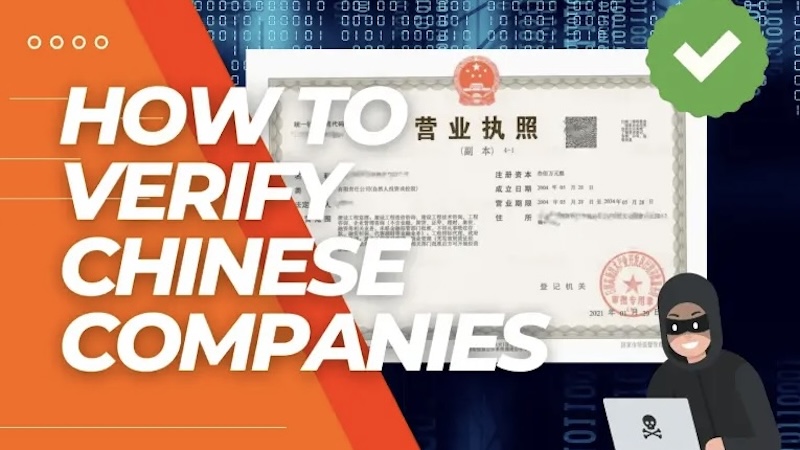
For buyers trying to verify China suppliers, the business license is the first hard document to review. It helps confirm that the company legally exists, that its registered name matches what appears on contracts and invoices, and that you are dealing with the same entity that will receive payment. This step does not prove quality by itself, but it sharply reduces the risk of dealing with a misrepresented or loosely organized operation.
Start by asking for a clear copy of the supplier’s business license in Chinese, not only an English profile or a sales brochure. Key fields to review include the full legal company name, unified social credit code, legal representative, registered address, establishment date, registration status, and business scope. If a seller hesitates to provide this document, that alone deserves closer attention.
To verify China suppliers in China more reliably, compare those fields against public registration records. The goal is simple: make sure the company name, code, and status line up across every document you receive. If the bank account name, contract entity, and license name do not match, pause the process and ask for a written explanation before moving forward.
NECIPS is commonly used to check basic company registration details. When you search the supplier’s legal Chinese name or unified social credit code, you can usually confirm whether the business is active and whether the registration data matches the license copy you received. This is one of the most practical ways to separate a trusted verify China suppliers process from a purely relationship-based judgment.
A few points matter during review:
Confirm the company status is active rather than revoked, cancelled, or abnormal.
Check whether the registered address appears complete and consistent across documents.
Review the legal representative and compare that name with formal paperwork when relevant.
Save screenshots or records of your search for your supplier file.
If the search result is unclear, use the exact Chinese company name from the license rather than a translated version.
Registration details become more useful when you compare them with what the supplier claims to produce. A company presenting itself as a factory should have a business scope that reasonably aligns with manufacturing, processing, or trading in the product category you plan to buy. If the scope appears unrelated, or if a supposed manufacturer mainly shows trading language, ask direct follow-up questions.
This is where reliable verify China suppliers work becomes practical rather than theoretical. Cross-check the registration address against the factory address, compare the establishment date with the company story, and make sure the entity on the proforma invoice is the same one shown on the license. If anything feels inconsistent, do not guess. Request clarification in writing, because careful document matching is one of the simplest ways to verify China suppliers before larger costs or production risks appear.
A valid business license tells you the company exists and that its stated scope matches what it claims to sell. From there, stronger due diligence comes from testing whether that business has actually shipped goods, managed disputes responsibly, and shown signs of operating on stable footing.
For buyers trying to verify China suppliers, customs export data can add a practical layer that registration records cannot provide. It helps confirm whether a supplier has a history of exporting the kinds of products it offers, how consistently shipments appear over time, and whether the exporter name matches the legal entity you already checked.
When reviewing records, focus on pattern rather than isolated entries. A few points matter most: product description alignment, shipment frequency, recent activity, and name consistency across documents. If the company says it is an experienced factory but export activity is thin, irregular, or tied to a different entity, that gap deserves follow-up. Some manufacturers export through affiliated trading companies, so the answer is not always disqualifying, but it should be explained clearly. This is one of the most useful ways to reliable verify China suppliers before placing a meaningful order.
Export history shows commercial activity, but legal records can reveal how a company behaves when business becomes difficult. To verify China suppliers in China with more confidence, check whether the business or its legal representative appears in court cases, enforcement actions, or dispute records that suggest unpaid debts, contract issues, or repeated operational problems.
The goal is not to reject every supplier with a dispute on file. Commercial businesses can face routine disagreements. What matters is the pattern, seriousness, and recency. A single older contract dispute may be manageable if the company can explain it and provide supporting documents. Repeated cases involving nonpayment, false representations, or enforcement risk deserve much closer scrutiny. For procurement teams that want trusted verify China suppliers, this step helps separate ordinary business friction from warning signs that could affect delivery, quality, or recovery options later.
Financial checks are often less about finding perfect transparency and more about spotting practical signals of stability. Many private companies will not disclose full audited statements to a new overseas buyer, so use a layered review instead. Look at registered capital, operating history, tax status where available, hiring consistency, facility condition, payment terms, and whether the supplier can support reasonable sample, tooling, or production commitments without pushing for risky prepayment.
Ask simple commercial questions and watch how the company responds. Can it explain capacity limits, lead time pressure, and raw material purchasing arrangements in a consistent way? Does it suddenly offer unusually generous terms that do not fit its apparent size? Buyers who want to verify China suppliers should treat these operational clues as part of the financial picture. Even a basic background review can help you avoid suppliers that look legitimate on paper but may struggle to perform once an order is live.
After reviewing export activity, dispute records, and basic financial signals, you still need direct evidence that the company behind the paperwork is the same business answering your inquiries. This is where practical, low-cost checks help you verify China suppliers with more confidence before you place samples or production deposits.
A phone call can reveal more than a long email thread. Call the main number listed on the company website, business license, and trade platform profile, then compare who answers, how the company introduces itself, and whether the contact details match across channels. Ask specific questions about product lines, minimum order quantities, lead times, factory location, and export markets. Consistent answers suggest better internal control, while vague or shifting responses deserve follow-up.
Video calls add a stronger layer to supplier evaluation & verification in China. Request a live walk-through of the office, warehouse, or production area rather than a polished promo video. Ask to see signage, workstations, packaging areas, and current inventory. If a supplier avoids live calls, keeps the camera off, or cannot connect you with a manager, quality lead, or sales contact you have already been emailing, treat that gap seriously when trying to identify reliable verify China suppliers.
A supplier website should support its identity, not replace verification. Review whether the company name, address, phone number, email domain, and product range align with its registration details and past communications. A mismatch does not automatically prove fraud, but it can indicate a trading company presenting itself as a factory or a business operating through multiple entities.
Look beyond design quality. Check whether product descriptions are specific, whether team or facility photos appear original, and whether contact pages use a business domain instead of only free email services. Also compare the company's presence across B2B listings, social platforms, and directory profiles. When you verify China suppliers in China, a consistent digital footprint usually supports credibility, while copied images, thin content, and changing contact details call for deeper evaluation verification before moving ahead.
Certifications can be useful, but only if they are relevant and current. Ask for clear copies of business-related certificates, product compliance documents where applicable, and quality management records connected to the goods you plan to buy. Then verify whether the company name on each document exactly matches the legal entity you have been reviewing.
Pay attention to scope, issuing body, and expiration date. A legitimate certificate may still be irrelevant if it covers a different product line, factory site, or affiliated company. If a supplier sends blurred files, cropped pages, or documents with inconsistent names and seals, pause the process and request clarification. For buyers who want trusted verify China suppliers, this document review is a practical screening step before paying for a full verify China suppliers service or engaging verify China suppliers experts for on-site checks.
After phone checks, website reviews, and document validation, some gaps usually remain. A professional verifier helps close those gaps with on-site evidence, which is often what buyers need before sending a deposit or scaling an order.
Third-party verification becomes valuable when the order value is meaningful, the product has compliance risk, or the supplier relationship is still new. If a factory gives polished answers on calls but you still cannot confirm its production capability, ownership, or quality systems, an outside inspection company can verify China suppliers with more independence than a self-reported document package.
Named providers such as SGS, CFC, and similar inspection firms are commonly used for factory audits, pre-shipment inspections, and supplier evaluation. In practice, a buyer should consider them when tooling is involved, custom specifications matter, or delays would disrupt launch plans. For importers trying to build a reliable verify China suppliers process, this step is less about distrust and more about reducing blind spots before commitment.
Not all verification services deliver the same depth. Some providers focus on a basic business check, such as registration details, location confirmation, and a brief facility review. Others offer a broader verify China suppliers service that includes management interviews, production-line observation, quality control procedures, workforce checks, and document cross-checking.
When comparing options, ask four practical questions:
What evidence is included in the final report, such as photos, checklists, and copies of key records?
Is the visit announced, semi-announced, or flexible based on factory conditions?
Does the provider have experience with your product category and risk points?
Can the scope be tailored for supplier evaluation and verification in China rather than a generic site visit?
A lower fee may be enough for a simple screening order, but a more thorough audit is often the better choice when product complexity or compliance exposure is higher. The right decision is not the cheapest provider. It is the provider whose scope matches your commercial risk.
A useful audit should confirm that the company legally exists, operates from the stated address, and has facilities consistent with the products it offers. It should also review production capacity, equipment condition, in-process quality controls, incoming material handling, finished goods inspection, and basic traceability practices. These details matter when you want trusted verify China suppliers rather than a sales office posing as a manufacturer.
A stronger report also checks management structure, export experience, subcontracting practices, and any mismatch between claimed certifications and what the site actually shows. For buyers that need to verify China suppliers in China with fewer assumptions, the best audit reports are specific, photo-supported, and clear about limitations. If a provider cannot inspect a claimed capability, the report should say so directly instead of implying certainty.
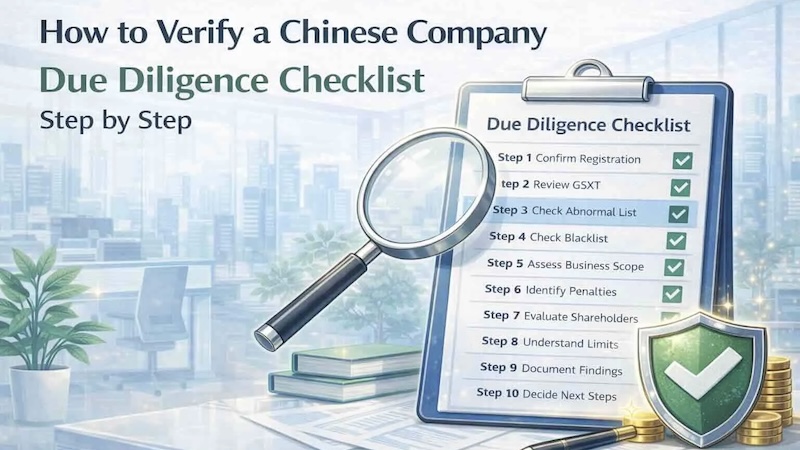
After weighing when an independent audit makes sense, many buyers still have a few practical questions before they can verify China suppliers with confidence. These answers focus on the gaps that often remain after basic checks and third-party inspections.
Q1: How many verification steps are enough before placing an order?
There is no universal number, because the right depth depends on order value, product risk, and how difficult replacement would be if the supplier fails. For a low-risk test order, buyers often combine business license review, live communication, and reference checks. For higher-risk categories, it is more prudent to add a factory audit, sample validation, and contract review before payment.
Q2: Can I trust a supplier that only communicates through a trading platform?
Treat platform messaging as a starting point, not proof of legitimacy. A serious supplier should also be willing to share its registered company name, business documents, factory or office address, and direct contact details. If a company avoids basic disclosure or keeps changing identities across channels, that is a warning sign.
Q3: What is the difference between verifying a trading company and a factory?
A trading company may be legitimate and still be the right partner, but you should confirm what role it actually plays. Ask whether it owns production, subcontracts manufacturing, or manages sourcing across multiple plants. If your goal is to verify China suppliers in China for quality control and production visibility, identifying the real manufacturing site matters more than the sales label.
Q4: Should I ask for samples before or after verification?
Ideally, do both in parallel for speed, but do not let a good sample replace due diligence. A polished sample can come from a different source than the one used for mass production. Sample review is useful for checking workmanship, packaging, and specification fit, while supplier verification helps confirm the business behind the sample can actually deliver consistently.
Q5: What are the most common red flags during supplier verification?
A short checklist helps keep reviews consistent:
Company names do not match across invoices, bank details, and certificates.
The supplier resists live video, site visits, or independent inspection.
Product claims are broad, but supporting documents are vague or expired.
Payment pressure appears early, especially requests to use personal accounts.
Responses become inconsistent when you ask technical or production questions.
Q6: Do I need a local expert to reliable verify China suppliers?
Not always. Many importers can complete early-stage checks themselves if the product is simple and the order is small. Still, a local inspector or verify China suppliers service becomes more valuable when language barriers, custom components, tooling, or compliance-sensitive goods raise the stakes. In those cases, outside help improves visibility rather than replacing your judgment.
Q7: How should I compare verification providers?
Look beyond the sales pitch. A trusted verify China suppliers company should clearly explain scope, reporting format, turnaround, and what evidence it will collect on site. Ask whether photos, staff interviews, production observations, document checks, and follow-up clarification are included, so you can compare service quality rather than only verify China suppliers cost.
Q8: If a supplier passes verification, is it safe to place a large order immediately?
Passing checks reduces risk, but it does not eliminate it. Many buyers still begin with a controlled trial order to test communication, production discipline, packaging accuracy, and shipping performance under real conditions. That approach is often smarter than treating verification as a one-time approval.
Q9: What if two sources give conflicting information about the same supplier?
Pause and reconcile the mismatch before sending funds. Ask the supplier to explain the inconsistency in writing, then confirm the answer against official registration records, audit findings, or fresh documentation. When details still do not line up, trusted verify China suppliers experts usually treat the unresolved conflict itself as a material risk.
Q10: How often should I re-verify an existing supplier?
Re-check when something meaningful changes: ownership, bank account details, production location, product scope, or order volume. Even stable partners can shift operations over time. For ongoing sourcing, China verify China suppliers work is less about a single pass and more about maintaining visibility as the relationship grows.
The FAQ likely clarified common sticking points, but the core decision is still simple: verify China suppliers with a repeatable due diligence process before you commit meaningful money, volume, or brand risk. The most reliable verify China suppliers approach is not a single database check or one reassuring call. It is a layered review of business identity, operating reality, product capability, documentation, and independent confirmation when the order justifies it.
In practice, trusted verify China suppliers work starts by matching the level of checking to the level of risk. A low-value sample order may only need basic registration and contact verification, while a custom product, regulated item, or large deposit usually deserves deeper document review and third-party inspection. If a supplier resists normal checks, gives inconsistent records, or pushes for urgency before transparency, treat that as a decision signal rather than a problem to explain away. Buyers trying to verify China suppliers in China often save time and avoid avoidable losses by rejecting weak candidates early instead of negotiating longer with unclear ones.
Your concrete next step is to choose one active supplier conversation and run it through the same verification sequence covered in this guide, using written notes for every checkpoint. That disciplined comparison makes it easier to identify reliable verify China suppliers, spot gaps that still need evidence, and decide whether to proceed, pause, or walk away. If the facts stay consistent, you can move forward with more confidence. If they do not, you have already learned what you needed before the real cost begins.
 English