This article is most useful for product teams, buyers, and engineers comparing manufacturing options for a new part or a redesign, especially when they need a reliable molding process rather than a generic recommendation. The key decision criteria are practical: what the part must do, how consistently it must be made, how many units are needed, and what tradeoffs are acceptable before moving into supplier discussions.
For injection molding process, the safest starting point is a written specification, a sample standard, and a clear inspection trigger.
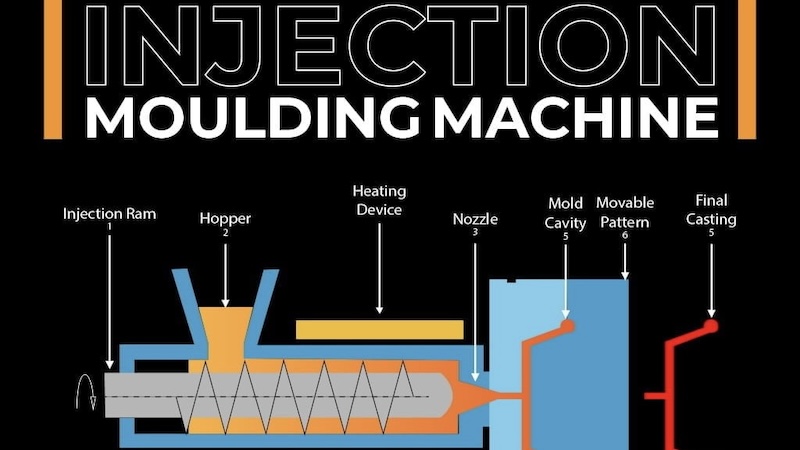
After outlining the main types of molding used in manufacturing, it helps to look at the forces that make any molding process work in practice. For teams choosing a process for a new product, pressure, heat, and mold cavity behavior often determine part quality, repeatability, and how reliable the molding process will be during scale-up.
Before approving injection molding process, compare supplier identity, production capability, payment timing, and defect-handling rules.
Before approving injection molding cycle, compare supplier identity, production capability, payment timing, and defect-handling rules.
Before approving mold process, compare supplier identity, production capability, payment timing, and defect-handling rules.
Pressure moves material through the tool and into the part geometry. In injection molding, it pushes molten resin into thin walls, ribs, and corners before the material cools. In compression or transfer molding, pressure helps the material spread and conform to the cavity. If pressure is too low, the part may show short shots, voids, or weak feature definition. If it is too high, flash, stress, or tool wear can become bigger concerns.
For product development and sourcing, pressure is not just a machine setting. It affects whether your design can be manufactured consistently across different runs and factories. When reviewing a trusted molding process or evaluating a molding process in China, ask how the team handles fill balance, gate location, and pressure control for your specific material and geometry.
Heat changes the material from a solid or more viscous state into one that can flow and fill the mold correctly. The required heat profile depends on the polymer, elastomer, or other material, along with wall thickness and cycle demands. Good temperature control supports smooth flow, proper surface finish, dimensional stability, and more predictable cooling or curing.
Poor heat control can create visible and hidden problems. Material that is too cool may not fill narrow sections well, while excessive heat can degrade some resins or increase variation from part to part. That is why a reliable main topic depends on managing barrel, mold, and cooling temperatures as a system rather than treating heat as a single number.
For buyers comparing a practical approach company or product development company, this is a practical checkpoint. Ask how temperature is monitored during prototyping and production, and whether the team adjusts tooling and process settings as the design evolves.
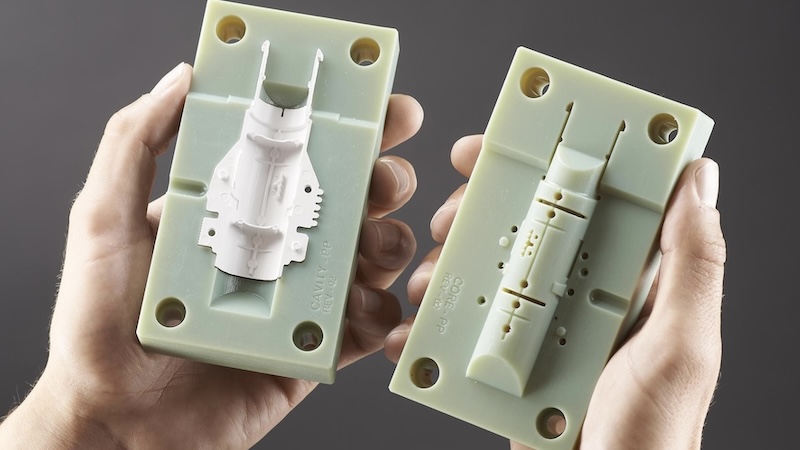
The mold cavity gives the part its shape, but its job goes beyond geometry. Cavity layout, wall transitions, venting, gate design, and runner paths all influence how material fills, packs, and releases. A part that looks simple in CAD can still be difficult to mold if the cavity traps air, creates uneven flow paths, or forces material through abrupt thickness changes.
This is where process choice becomes closely tied to design choice. A cavity suited to one main topic may be inefficient or risky for another. For example, a thin-walled consumer part may favor a different tooling and flow strategy than a thick, durable industrial component. When assessing a China practical approach or any offshore program, confirm that the supplier reviews filling dynamics early, not after defects appear in tooling trials.
These three elements work together. Pressure drives flow, heat keeps the material workable, and the cavity directs how the part actually forms. Understanding that interaction helps you choose a process that fits your product, reduces avoidable tooling revisions, and supports a more dependable path from development to production.
Pressure, heat, and cavity design shape how material behaves inside a mold. Building on those fundamentals, the main process types differ in how they move material, control part geometry, and support production volume, which is why process selection has such a direct effect on quality, lead time, and selection criteria cost.
For injection main topic, the safest starting point is a written specification, a sample standard, and a clear inspection trigger.
Injection molding forces molten material into a closed mold under controlled pressure, making it one of the most common choices for repeatable, detailed parts. It is often used for housings, clips, lids, connectors, and other components that need tight dimensional consistency across medium to high volumes. For product teams comparing options, the main advantage is precision at scale after the tooling is built.
Selection depends on part shape, expected annual demand, surface finish needs, and resin choice. Thin walls, complex features, and multi-cavity production often favor this method, but tooling can be a larger upfront commitment than simpler approaches. If you are evaluating a reliable decision process or reviewing a planning checklist in China, ask about gate placement, draft angles, tolerances, and how the supplier manages first-article approval and ongoing process control.
Blow molding is designed for hollow plastic parts. Instead of filling a solid cavity in the same way as injection molding, the process forms a heated plastic tube or preform and uses air pressure to expand it against the mold walls. This makes it a practical option for bottles, tanks, containers, and duct-like shapes where low weight and internal volume matter.
When choosing between methods, focus on wall thickness consistency, neck or opening requirements, and the final part's strength during shipping and use. Blow molding is efficient for hollow items, but it is not the right fit for every detailed geometry. A trusted comparison method review should compare the part's required shape accuracy, seam location, material behavior, and downstream needs such as trimming, labeling, or leak testing before committing to this route.
Compression molding places a measured amount of material into a heated mold, then closes the tool so the material flows and cures under pressure. It is commonly associated with thermoset materials and can suit parts that need durability, heat resistance, or specific electrical and mechanical properties. Typical applications include seals, gaskets, panels, and certain industrial components.
For product selection, compression molding can make sense when the material itself drives the decision more than extreme geometric complexity. Compared with injection molding, cycle behavior and part detail may differ, but tooling and process setup can be well suited to thicker sections or specialty compounds. If a main topic company proposes this method, ask how they handle flash control, cure consistency, and part-to-part variation so you can judge whether it is the right practical approach for your product rather than simply the most familiar one for the manufacturer.
After comparing injection, blow, and compression methods, material choice becomes the practical filter that narrows the right manufacturing path. In many projects, the best selection criteria is not simply the fastest method, but the one that fits the material’s behavior during forming, curing, and long-term use.
Before approving injection practical approach, compare supplier identity, production capability, payment timing, and defect-handling rules.
Thermoplastics soften when heated and solidify when cooled, which makes them a strong fit for processes such as injection molding and blow molding. Common examples include polypropylene, ABS, polyethylene, and nylon. They are often chosen when a product needs repeatable dimensions, faster cycle potential, or easier design changes during development.
Thermosets behave differently. Once cured, they form a permanent cross-linked structure and do not remelt in the same way as thermoplastics. That makes them useful for compression molding and other applications where heat resistance, dimensional stability, or electrical performance matter more than easy reprocessing. Typical thermoset families include epoxy, phenolic, and certain polyester compounds.
For product teams choosing a reliable decision process, the key question is functional fit rather than material popularity. If your part is a lightweight consumer housing or bottle, thermoplastics often align well with high-volume shaping methods. If your part faces sustained heat, chemical exposure, or structural demands, thermosets may support a more trusted planning checklist despite longer curing considerations. This is also where early discussion with comparison method experts can prevent costly redesigns.
Rubber and silicone materials serve a different class of product needs, especially where sealing, flexibility, compression recovery, or temperature tolerance are central. These compounds are commonly used for gaskets, seals, diaphragms, keypads, medical-style components, and protective covers. Their behavior in the mold is more specialized, so process selection must account for curing profile, flash control, tooling design, and part geometry.
Traditional rubber compounds are often selected when abrasion resistance, oil resistance, or specific mechanical properties are needed. Silicone stands out when a part must remain flexible across a broad temperature range or when cleanliness and stability are priorities. In practice, these materials are often paired with compression molding, transfer molding, or liquid silicone rubber molding rather than standard high-speed thermoplastic methods.
If you are comparing a main topic in China or elsewhere, do not evaluate tooling alone. Ask how the proposed material affects part consistency, secondary finishing, and practical approach cost over the full production run. A trusted selection criteria company should be able to explain why a given elastomer matches your product’s environment, not just confirm that it can be molded. That material-process match is often what separates a workable sample from a dependable production part.
Material choice sets the boundaries, but process choice determines how efficiently that material becomes a sellable part. After narrowing options by thermoplastic, thermoset, rubber, or silicone behavior, compare the manufacturing method against your volume, geometry, and performance needs.
For injection molding methods, the safest starting point is a written specification, a sample standard, and a clear inspection trigger.
A practical starting point is expected production volume. Some methods demand higher tooling investment but lower unit costs at scale, while others are better for prototyping, bridge production, or smaller runs. Injection molding, for example, is often favored for repeatable, high-volume output, whereas compression or rotational methods may suit more specialized or lower-volume parts depending on the material and shape.
Look at total cost rather than tool price alone. A sound planning checklist review should include setup effort, cycle time, scrap risk, finishing needs, and how often the tool may need maintenance or revision. If you are evaluating a comparison method in China, ask potential partners to explain cost drivers clearly instead of focusing only on the initial quote. A trusted main topic partner should help you balance launch speed, quality consistency, and long-term production economics.
Part design can eliminate some process options quickly. Thin walls, fine details, tight tolerances, undercuts, threads, and textured surfaces usually require a more controlled method and careful tooling design. Simple, thick, or less cosmetic parts may allow a wider range of manufacturing choices.
Useful questions include:
Does the part need intricate internal or external features?
Are appearance standards high for visible consumer-facing surfaces?
Will the design require inserts, overmolding, or multi-material construction?
Can the geometry be simplified to reduce tooling complexity and practical approach cost?
A reliable selection criteria is not always the most advanced one. It is the one that can produce your required design consistently without creating unnecessary tooling risk, long lead times, or difficult post-processing.
The final check is performance in real use. Heat resistance, impact strength, chemical exposure, flexibility, electrical insulation, and dimensional stability all influence which process makes sense. Some materials flow well into complex molds, while others need slower compression or transfer-style approaches to protect material properties or achieve the desired cure behavior.
This is especially important when comparing suppliers or planning China product sourcing. A decision process company may be strong in one resin family but less experienced with elastomers or thermoset compounds. For that reason, ask for process-specific experience with your material category and application, not just general molding capability. If you need help comparing options, a product sourcing company or product sourcing agent can also help vet whether a proposed China planning checklist is technically suitable, commercially realistic, and aligned with your product requirements from prototype through production.
After weighing volume, geometry, and material performance, it helps to compare processes side by side. A simple matrix makes tradeoffs easier to see, especially when a product team is balancing launch timing, tooling investment, and long-term unit economics.
Before approving injection molding methods, compare supplier identity, production capability, payment timing, and defect-handling rules.
No single main topic is fastest, cheapest, and most flexible at the same time. In practice, the right choice depends on where your product sits between prototyping, pilot production, and steady-volume manufacturing. For example, injection molding is often favored for repeatable plastic parts at higher volumes, but it usually requires more upfront tooling than thermoforming or blow molding. Compression and transfer molding can suit thermoset or rubber components where material behavior matters as much as part shape.
| Process | Best fit | Relative tooling cost | Relative production speed | Part complexity |
|---|---|---|---|---|
| Injection molding | High-volume plastic parts | High | High | High |
| Blow molding | Hollow items such as bottles or tanks | Medium to high | High | Medium |
| Compression molding | Rubber, silicone, thermosets | Medium | Medium | Medium |
| Transfer molding | Encapsulated or detailed thermoset parts | Medium to high | Medium | Medium to high |
| Thermoforming | Large, thinner-wall plastic parts | Lower | Medium to high | Lower to medium |
Use this kind of matrix as a screening tool, not a final answer. A reliable practical approach for one product may be a poor fit for another if tolerances, surface finish, undercuts, or insert requirements change. When reviewing a selection criteria in China or elsewhere, ask potential partners how they handle tooling lead time, design-for-manufacturing feedback, and secondary operations. That is often where a trusted decision process supplier adds value beyond the machine itself.
Application fit becomes clearer when you map each process to real product categories. Injection molding is widely used for housings, clips, connectors, and consumer product enclosures because it supports detailed features and repeatability. Blow molding is more suitable for containers, ducts, and reservoirs where the part is hollow by design. Compression and transfer molding are common choices for seals, gaskets, vibration-control parts, and certain electrical components made from elastomers or thermoset materials.
For sourcing teams, the business question is not just technical suitability. It is also how well a planning checklist company can support development, sampling, revisions, and scale-up without creating avoidable delays. In product development and sourcing, that may mean starting with a lower-risk process for validation, then moving to a more efficient production method once the design stabilizes. If you are evaluating a China comparison method partner, look for process-specific experience in your product category, clear quality communication, and evidence that the supplier can support both tooling decisions and production planning. That approach keeps the comparison practical and tied to commercial outcomes, not just factory terminology.
Q1: What is the process of molding?
Molding is a manufacturing process that shapes material by forcing it into or around a mold cavity. The material—whether plastic, metal, rubber, or composite—is introduced into the mold where it takes the desired form, then solidifies or cures. The main topic involves preparing the material, filling the mold, allowing the material to set or cure, and then removing the finished part. Different molding processes vary in how material is introduced, what pressures and temperatures are used, and how quickly parts can be produced. The right practical approach depends on the part's geometry, material behavior, production volume, tolerance requirements, and finishing needs rather than a universal approach.
Q2: What are the main types of molding processes?
The main types of molding processes include injection molding, blow molding, compression molding, rotational molding, and thermoforming. Each process suits different applications: injection molding excels at high-volume complex parts with tight tolerances; blow molding creates hollow containers and bottles; compression molding works well for fiber-reinforced composites; rotational molding produces large hollow parts; and thermoforming shapes heated plastic sheets over molds. The selection among these molding processes should be based on your product's specific requirements including geometry, material type, production volume, dimensional accuracy needs, and acceptable cost tradeoffs rather than simply defaulting to the most common method.
Q3: How do I choose the right selection criteria for my product?
Start with the part itself rather than the process. Evaluate your product's geometry, required material properties, production volume, dimensional tolerances, and surface finish requirements. Match these needs against each decision process's capabilities: complex geometries with tight tolerances often need injection molding; large hollow parts may require rotational molding; high-strength composite parts benefit from compression molding. Consider manufacturability and repeatability—how consistently the process can produce parts meeting specifications. Also factor in tooling costs, cycle times, and setup expenses relative to your volume needs. The goal is finding the planning checklist that balances your technical requirements with practical manufacturing constraints before engaging suppliers.
Q4: What are the stages of the comparison method?
The main topic typically involves several key stages: material preparation, mold filling, curing or solidification, cooling, and part ejection. First, raw material is prepared—heated, melted, or mixed depending on the process. Next, material is introduced into the mold cavity through injection, compression, or other means. The material then solidifies, cures, or sets within the mold, taking its final shape. A cooling phase ensures dimensional stability and sufficient strength for handling. Finally, the part is ejected or removed from the mold. Each practical approach may emphasize different stages or use varying techniques, but these fundamental steps apply across most methods. The duration and control of each stage significantly impact part quality, consistency, and production efficiency.
Q5: What factors affect selection criteria selection?
Key factors include part geometry complexity, material behavior, production volume, dimensional tolerances, and surface finish requirements. Geometry determines whether features like undercuts, thin walls, or deep cavities are achievable. Material behavior—how it flows, cures, and shrinks—affects process compatibility and quality outcomes. Production volume influences whether high tooling costs for faster processes like injection molding are justified versus lower-cost, slower methods. Tolerance needs determine required process precision and control capabilities. Surface finish requirements may eliminate processes that leave parting lines or require extensive secondary operations. Additionally, consider manufacturability, repeatability, cycle time, tooling investment, and acceptable cost tradeoffs. The right decision process emerges from systematically evaluating these criteria against your specific product context.
Q6: What is the difference between injection molding and compression molding?
Injection molding forces molten material under high pressure into a closed mold cavity, ideal for complex geometries, tight tolerances, and high-volume production with fast cycle times. Compression molding places material directly into an open mold cavity, then applies pressure as the mold closes, causing the material to flow and fill. Compression molding excels at fiber-reinforced composites and larger parts where fiber orientation matters, typically with slower cycles but lower tooling costs. Injection molding offers better dimensional control and faster production but requires higher initial tooling investment. The choice between these molding processes depends on part size, material type, required strength characteristics, production volume, tolerance specifications, and budget constraints for tooling and per-part costs.
Q7: How does production volume affect planning checklist choice?
Production volume significantly influences comparison method selection because tooling costs, cycle times, and per-part economics vary dramatically. High-volume production justifies expensive precision tooling for fast processes like injection molding, where high upfront costs spread across thousands or millions of parts result in low per-unit costs. Low to medium volumes may favor processes with lower tooling investment like rotational molding or thermoforming, even if cycle times are longer and per-part costs higher. Break-even analysis helps determine when faster, more expensive processes become economical. Additionally, volume affects tolerance consistency requirements—higher volumes demand more repeatable processes to maintain quality. Evaluate your total lifetime volume needs, not just initial orders, when selecting a main topic to avoid costly tool changes or process migrations later.
Q8: What role do tolerances play in selecting a practical approach?
Dimensional tolerances directly determine which molding processes can reliably produce acceptable parts. Tight tolerances require processes with precise control over temperature, pressure, material flow, and cooling rates—typically injection molding or similar high-precision methods. Looser tolerances may allow less controlled processes like rotational molding or basic thermoforming. Tolerance requirements affect tooling design, material selection, and process parameter control, all influencing cost. Critical dimensions may need secondary machining regardless of selection criteria, adding operations and expense. When choosing a decision process, compare your actual tolerance needs against each process's typical capabilities. Over-specifying tolerances unnecessarily limits options and increases costs, while under-specifying risks non-functional parts and quality issues. Match tolerance requirements to genuine functional needs.
Q9: Can the same product be made with different molding processes?
Yes, many products can be manufactured using multiple molding processes, though each approach involves different tradeoffs. A simple container might be injection molded, blow molded, or thermoformed depending on volume, material, and cost priorities. However, design modifications are often necessary when changing processes—wall thickness, draft angles, parting lines, and feature details may need adjustment. Some geometries strongly favor specific processes: complex assemblies consolidated into single parts suit injection molding, while large hollow structures work better with rotational molding. Material choices may also shift between processes. When comparing molding processes for the same product, evaluate not just whether it's technically possible but whether the resulting part meets all functional, aesthetic, cost, and manufacturing requirements within your specific constraints.
Q10: What should I consider regarding tooling when choosing a planning checklist?
Tooling represents a major cost and lead time factor in comparison method selection. Consider initial tooling investment, which varies from relatively low for rotational molding to very high for multi-cavity injection molds. Evaluate tool complexity required for your part geometry—undercuts, tight tolerances, and intricate features increase tooling costs. Assess tool durability and lifespan relative to your production volume; high-volume runs need hardened steel tools, while prototypes may use aluminum or even 3D-printed tooling. Factor in lead times for tool design, fabrication, and validation. Consider maintenance requirements and modification costs if design changes occur. The right main topic balances tooling investment against per-part costs, production volume, and timeline constraints to optimize total cost of ownership throughout your product's lifecycle.
In practice, choosing a reliable selection criteria means narrowing options with a few grounded questions: How complex is the part? What tolerances and surface quality actually matter? How many units are needed now, and how might that change over time? Those answers help you compare tradeoffs more realistically, whether you are evaluating injection molding, blow molding, compression molding, or another method. If you are reviewing a decision process in China or any other manufacturing market, keep the focus on process capability, communication clarity, and proof that the proposed method fits the product instead of relying on broad claims about being a trusted planning checklist provider.
A practical next step is to document your product requirements in a short decision brief that covers material, dimensions, functional demands, annual volume, cosmetic standards, and budget limits. With that in hand, you can ask more precise questions, rule out unsuitable methods earlier, and move toward a comparison method choice with greater confidence. That approach keeps the selection grounded in product needs, which is the most dependable path to a trusted main topic outcome.
 English