What if the biggest risk in your international supply chain isn't finding a great factory, but getting your product from their door to yours? For entrepreneurs, inventors, and small business owners sourcing from overseas, a brilliant product idea can be derailed by a single, avoidable logistics error. The journey from a manufacturing floor in Asia to a warehouse in the United States is a complex puzzle involving international shipping services, customs clearance processes, and the coordination of multiple freight forwarding companies and 3PL logistics partners. It's the critical, often invisible, backbone of your business success.
We understand this challenge intimately. Our mission is to simplify global procurement by acting as your trusted bridge to quality manufacturing. But a bridge is only useful if what crosses it arrives safely, on time, and within budget. That's why a seamless cross-border logistics strategy is not an afterthought; it's a core component of a reliable supply chain. Think of it this way: even the most meticulously inspected product loses all value if it's stuck in a port, damaged in transit, or hit with unexpected fees that erase your profit margin.
This article is designed for you—the boots-on-the-ground professional managing procurement, trade, and operations. We'll move beyond abstract concepts and focus on the actionable framework you need to navigate cross-border logistics with confidence. You'll gain clarity on:
Building a Resilient Network: how to select and manage freight forwarding companies and 3PL logistics providers that align with your business scale and product needs.
Demystifying the Journey: A step-by-step breakdown of the customs clearance process and key documentation, turning a black box into a manageable checklist.
Optimizing for Cost & Reliability: Practical strategies for choosing between air and sea freight, consolidating shipments, and leveraging technology for visibility.
Mitigating Real-World Risks: How to plan for common disruptions, from port delays to tariff changes, ensuring your supply chain remains agile.
Our perspective is that of a partner and advocate. We believe in a professional, reliable, and client-centric approach. By focusing on transparency, efficiency, and risk reduction, we aim to provide the security and clear path to success that growing businesses deserve. Let's build a supply chain that's as innovative as your products.
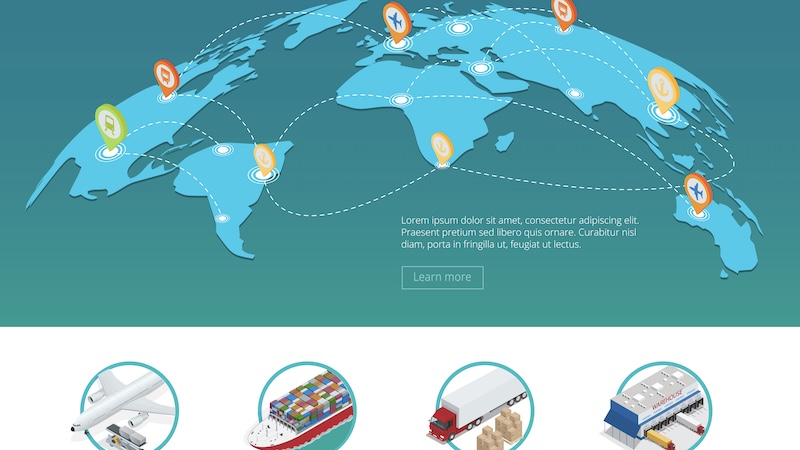
As we've established the importance of a reliable partner for sourcing, the next critical piece of the puzzle is getting your products from the factory floor to your warehouse or customers. This is where a solid grasp of cross border logistics becomes essential. Mastering this complex process is key to protecting your investment, ensuring timely delivery, and maintaining a smooth operation.
Cross border logistics, or international shipping, is the coordinated movement of goods across national boundaries. It's far more than just booking a container on a ship. It's an integrated system involving transportation, documentation, legal compliance, and financial transactions. For businesses sourcing from overseas, effective logistics management directly impacts your bottom line, customer satisfaction, and brand reputation. A delay at customs or a mislabeled shipment can stall your entire launch, while efficient international shipping services ensure you receive quality products on schedule, turning a supplier relationship into a true competitive advantage.
Navigating this system requires a team of specialized experts. Understanding who does what helps you manage the process effectively:
Freight Forwarding Companies: These are your logistics quarterbacks. They don't own ships or planes but act as intermediaries, booking cargo space with carriers, consolidating shipments, and managing the entire journey from origin to destination. A good forwarder is your advocate and problem-solver.
Customs Brokers: Experts in the customs clearance process, they handle the complex paperwork and regulations required by both the exporting and importing countries. They ensure duties and taxes are paid correctly, preventing costly delays at the port.
Third-Party Logistics Providers (3PL): These partners offer outsourced logistics services, which can include warehousing, inventory management, packing, and last-mile delivery within the destination country. Utilizing a 3PL logistics partner can streamline your distribution after goods clear customs.
Carriers: The actual transporters—shipping lines, airlines, and trucking companies—that move your physical goods.
Shipping internationally introduces complexities that domestic moves simply don't have. Being aware of these challenges is the first step to mitigating them.
| Challenge Area | Domestic Shipping | Cross Border Logistics |
|---|---|---|
| Documentation | Standard Bill of Lading, commercial invoice. | Extensive: Commercial Invoice, Packing List, Certificate of Origin, possibly permits (e.g., FDA, FCC), and more. |
| Regulations & Compliance | Relatively uniform national regulations. | Must comply with export laws of the origin country and import regulations (tariffs, product standards, labeling) of the destination country. |
| Transit Time & Visibility | Predictable, with high visibility via major carriers. | Longer, multi-modal journeys (ship/plane + truck). Tracking can be fragmented across different carriers and handlers. |
| Cost Structure | Simple, often based on weight/dimensions and distance. | Complex: Includes freight charges, fuel surcharges, customs duties, taxes, brokerage fees, and port handling charges. |
| Risk Factors | Lower risk of damage, loss, or major delay. | Higher exposure to port congestion, customs holds, currency fluctuation, and political/trade policy changes. |
The goal isn't to navigate this maze alone. By understanding these fundamentals and partnering with experienced professionals who manage these complexities daily, you can transform cross border logistics from a daunting risk into a reliable, streamlined component of your supply chain.
While understanding the fundamentals of cross border logistics sets the stage, the real test comes at the border. Successfully navigating customs, duties, and a web of international regulations is critical for a smooth and cost-effective supply chain. A reliable partner can transform this complex process from a major hurdle into a predictable step. Here’s what you need to know to ensure your goods move seamlessly across borders.
The customs clearance process is a paperwork-intensive endeavor. Missing or incorrect documents are the leading cause of delays, storage fees, and even shipment seizures. To ensure a smooth flow, you must prepare a precise set of documents. Your freight forwarding companies or 3PL logistics partners will typically handle the filing, but you are responsible for providing accurate information.
Key documents almost always required include:
Commercial Invoice: The most critical document, detailing the seller, buyer, description of goods, quantity, and most importantly, the declared value for duty assessment.
Packing List: Specifies the contents of each package, including weight, dimensions, and packaging type. This must match the commercial invoice.
Bill of Lading (Ocean) or Air Waybill (Air): The contract of carriage and title document issued by the carrier.
Certificate of Origin: Often required to determine eligibility for preferential duty rates under trade agreements (like USMCA).
For specific products, additional certifications may be needed, such as FDA approvals for food, drugs, or cosmetics entering the United States, or FCC declarations for electronics. Proactively identifying and preparing these documents is a cornerstone of professional international shipping services.
Import duties and taxes are unavoidable costs in cross border trade, but they can be managed with proper planning. The cost is primarily determined by three factors:
The product's Harmonized System (HS) Code: This internationally standardized classification code dictates the duty rate.
The declared value of the goods: Usually the cost of the goods, insurance, and freight (CIF value).
The country of origin and destination: Trade agreements can reduce or eliminate duties.
To estimate landed cost, you must factor in these charges from the start. For example, importing ceramic pizza stones (HS code 6912.00.00) into the US currently has a 5.5% duty rate. If your CIF value is $10,000, you can expect approximately $550 in duty, plus any applicable merchandise processing fees (MPF) and harbor maintenance fees (HMF). A good 3PL logistics partner will provide a transparent cost breakdown, helping you avoid budget surprises and maintain competitive pricing.
Every country has its own unique set of regulations, which can change frequently. Compliance is non-negotiable. For US importers, common considerations include:
Product Safety Standards: Adherence to regulations from agencies like the Consumer Product Safety Commission (CPSC) for toys or UL standards for electrical items.
Labeling Requirements: Mandatory information in English, country of origin marking (e.g., "Made in China"), and specific warning labels.
Restricted or Prohibited Items: Certain materials, plants, animal products, and medications are heavily restricted.
Anti-Dumping/Countervailing Duties: Additional tariffs applied to specific products from certain countries to offset unfair pricing.
Non-compliance can result in refused entry, fines, or destruction of goods. Working with experienced freight forwarding companies that have deep knowledge of both the export country's rules and the US import landscape is the most effective way to mitigate this risk. They act as your guide, ensuring every shipment meets all legal requirements for a clean and timely release.
Having a firm grasp on the customs clearance process is crucial, but it's only one part of the journey. The physical movement of your goods is the next critical decision point, where choosing the right combination of transportation mode and logistics partner directly impacts your cost, speed, and reliability.
The best mode depends on your product's value, volume, weight, and urgency. Here’s a quick comparison to guide your decision:
| Mode | Best For | Key Considerations |
|---|---|---|
| Air Freight | High-value, low-volume, or time-sensitive goods (electronics, prototypes, fashion). | Fastest option (3-7 days), but most expensive per kg. Ideal for maintaining lean inventory. |
| Ocean Freight (FCL/LCL) | High-volume, heavy, or non-urgent shipments (furniture, bulk raw materials, seasonal inventory). | Most cost-effective for large volumes. Transit times are longer (20-40+ days). Requires planning for lead times and port schedules. |
| Rail Freight | Cost/Time balance for inland routes (e.g., China to Europe via rail). | Faster than ocean, cheaper than air for certain corridors. Gaining popularity for its reliability and reduced carbon footprint. |
| Road Freight | Final-mile delivery and regional cross-border transport (e.g., within North America or the EU). | Flexible for door-to-door service. Subject to traffic, driver regulations, and border crossing queues for international trips. |
Many shipments use a combination, known as intermodal shipping, such as ocean freight to a port followed by trucking to a final warehouse.
Unless you have an in-house logistics team, partnering with expert freight forwarding companies or a 3PL logistics provider is essential. They act as your single point of contact, managing carriers, documentation, and tracking across different international shipping services. When evaluating a partner, look for:
Proven Expertise & Network: Do they have strong relationships with reputable carriers and deep experience in your specific trade lanes (e.g., China to the US)?
Transparency in Pricing: Avoid hidden fees. A reliable partner provides clear, all-inclusive quotes breaking down ocean/air freight, fuel surcharges, terminal handling, and customs brokerage.
Communication & Technology: Can you easily track shipments and get timely updates? Proactive communication is key to avoiding surprises.
Problem-Solving Ability: How do they handle delays, port congestion, or documentation errors? A good partner advocates for you and finds solutions.
We view our role as your trusted partner on the ground, helping you navigate these choices to build a cost-effective and resilient supply chain.
Modern 3PL logistics providers leverage technology to bring unprecedented visibility and control to your shipments. Key tools include:
Online Tracking Portals: Provide real-time, GPS-level visibility of your container or pallet from origin to destination.
Digital Documentation: Streamlines the customs clearance process by reducing manual errors and speeding up data submission.
Data Analytics: Offers insights into shipping performance, carrier reliability, and cost trends, helping you make smarter decisions for future shipments.
By choosing a tech-enabled partner, you move from reactive problem-solving to proactive supply chain management, ensuring greater reliability and peace of mind.
Having selected the right transportation mode and a reliable partner, the next critical step is to actively manage the financial and operational risks inherent in every cross-border shipment. A strategic approach to cost optimization and risk mitigation is what separates a smooth, profitable supply chain from a costly logistical nightmare.
While freight forwarding companies and 3PL logistics providers handle the operational complexities, you can significantly influence your bottom line with smart planning. Here are key strategies:
Consolidate Shipments: Instead of sending multiple small parcels, work with your supplier to consolidate goods into full container loads (FCL) or use Less than Container Load (LCL) services. This dramatically reduces the per-unit shipping cost.
Optimize Packaging: Work with your supplier to design packaging that protects your product while minimizing dimensional weight (DIM weight), a critical pricing factor for air freight. Lighter, more compact packaging directly lowers costs.
Plan for Lead Time: Rushed shipments via air are exponentially more expensive than planned sea freight. Building realistic lead times into your procurement schedule allows you to default to the most cost-effective international shipping services.
Leverage Partner Networks: A proficient 3PL logistics partner often has negotiated bulk rates with carriers and can pass those savings on to you, offering more competitive prices than you could secure independently.
Risk in global shipping extends far beyond the price tag. Proactive management is essential for a reliable and efficient supply chain.
Physical Damage & Loss: Ensure your chosen carrier has a strong track record for handling your type of goods. Proper packing, labeling ("Fragile," "This Side Up"), and choosing the right transport mode (e.g., air for high-value electronics) are your first lines of defense.
Documentation Errors: A single mistake on a commercial invoice or packing list can halt your entire shipment at customs. Partnering with experts who manage the customs clearance process daily is the best way to achieve zero risk from paperwork.
Geopolitical & Port Delays: Events like port strikes, weather disruptions, or new trade regulations can cause unforeseen delays. A good partner provides transparency through real-time tracking and proactive communication about potential disruptions, allowing you to adjust plans and manage customer expectations.
Even with the best planning, unforeseen events happen. Cargo insurance is not an optional expense; it's a critical component of risk management. Most carrier liability is limited by weight (e.g., $2.00 per pound) and excludes many common causes of loss, leaving you financially exposed.
Comprehensive cargo insurance protects the full value of your goods against:
Physical damage during transit (storms, accidents, handling).
Theft or pilferage.
Total loss (e.g., container lost overboard).
Certain geopolitical events.
When arranging insurance, work with your freight forwarding company or a specialized insurer to understand the coverage terms, ensure the insured value is correct (typically cost of goods + shipping + insurance + 10%), and that the policy is activated from the point of origin. This final layer of protection ensures that a single incident doesn't derail your business, solidifying your role as a trusted partner to your own customers.
While robust cost and risk management strategies form a solid foundation, the true key to mastering cross-border logistics lies in leveraging modern technology. In today's fast-paced global market, manual processes simply cannot keep up. The right digital tools transform your supply chain from a reactive cost center into a proactive, transparent, and efficient competitive advantage.
Modern freight forwarding companies and 3PL logistics providers are powered by sophisticated software platforms that integrate every step of the journey. These platforms act as a central command center, allowing you to:
Compare and Book: Instantly compare rates, transit times, and services from multiple carriers in one dashboard.
Manage Shipments: Create, manage, and track all your shipments from a single interface, eliminating the need for endless email threads and spreadsheets.
Centralize Communication: Keep all documentation, updates, and messages related to a shipment in one accessible place for your team and your partners.
This integration drastically reduces administrative overhead, minimizes human error, and accelerates decision-making, making your entire operation more agile.
"Where is my shipment?" is perhaps the most common and stressful question in international shipping services. Gone are the days of relying on weekly status updates. Advanced tracking technology now provides:
End-to-End Visibility: Monitor your cargo's location and status from factory pickup to final delivery, often with GPS-level precision for land and air freight.
Proactive Alerts: Set up automated notifications for key milestones (e.g., vessel departure, customs hold, out for delivery) or unexpected delays, allowing you to manage exceptions before they become crises.
Dashboard Analytics: Gain insights into carrier performance, average transit times, and common delay points, enabling data-driven decisions for future shipments.
This level of transparency builds trust with your end customers and allows your internal team to plan with greater confidence.
The customs clearance process is a notorious bottleneck, often stalled by incorrect or missing paperwork. Technology provides powerful solutions here:
Digital Document Hubs: Securely upload, store, and share essential documents like commercial invoices, packing lists, and certificates of origin. Many systems can auto-populate recurring fields to save time.
Compliance Databases: Integrated software can screen your shipment details against constantly updated global trade regulations, tariff codes, and sanctioned party lists, flagging potential issues before submission.
Automated Filing: Some platforms can directly submit electronic documentation to customs authorities, speeding up the clearance process and reducing manual data entry errors.
By automating these complex and tedious tasks, you not only accelerate the clearance process but also significantly reduce the risk of costly fines, seizures, or delays due to compliance failures. Embracing these technologies is no longer optional for businesses that rely on efficient, reliable cross-border supply chains.
While technology streamlines operations, a truly robust international supply chain requires a forward-looking strategy. This means building a system that can adapt to disruptions and grow with your business. A scalable and resilient strategy is your ultimate safeguard, ensuring your products reach customers reliably, no matter what the global market throws your way.
Disruptions are not a matter of if, but when. A proactive contingency plan is essential. This goes beyond simply having a backup freight forwarding company. A robust plan should address multiple failure points in your international shipping services.
Diversify Your Routes and Ports: Relying on a single shipping lane or port is risky. Work with your logistics partner to identify and qualify alternative routes. For example, if your primary ocean freight route from Shanghai to Los Angeles faces congestion, a pre-approved alternative via a Canadian port like Vancouver, with established trucking routes to the US, can keep goods moving.
Qualify Backup Suppliers and Carriers: Your main supplier's factory shuts down. Your primary carrier has a strike. Your plan should include vetted, secondary options for both manufacturing and transportation to minimize downtime.
Buffer Stock and Safety Lead Times: For critical components or finished goods, maintaining strategic buffer inventory in a destination country warehouse, managed by a reliable 3PL logistics provider, can protect against delays. Similarly, building extra time (safety lead time) into your production and shipping schedules creates a cushion.
Clear Communication Protocols: Define exactly how and when your team, suppliers, and freight forwarding companies will communicate during a disruption. Who needs to be notified first? What is the escalation path? Clarity prevents panic and enables swift, coordinated action.
Expanding into a new country is exciting, but its logistics shouldn't be a guessing game. Scaling successfully requires methodical planning.
Conduct a Logistics Audit for the New Market: Before your first shipment, understand the landscape. What are the import regulations, duty rates, and required documentation for the customs clearance process? Are there product-specific standards or labeling requirements? Partnering with a forwarder experienced in that region is invaluable here.
Start with a Pilot Shipment: Test the entire logistics chain with a smaller, less critical shipment. This pilot run will validate your chosen partners, reveal hidden costs or paperwork hurdles, and allow you to refine the process before committing to larger volumes.
Evaluate and Adjust Your Partner Network: Your current 3PL logistics or freight forwarder may not have the same strength in the new market. Be prepared to evaluate new partners or require your existing one to demonstrate their capability and local agent network in the target country.
Plan for Cost Structure Changes: International shipping services, duties, and local trucking costs will differ. Build these new costs into your product's landed cost model from the start to maintain profitability.
Staying ahead means keeping an eye on the horizon. Several trends are poised to further transform cross-border logistics:
Increased Data Integration and AI: Beyond basic tracking, AI will be used for predictive analytics—forecasting delays, optimizing routes in real-time, and automating more complex aspects of the customs clearance process.
Sustainability as a Core Requirement: "Green" logistics is shifting from a nice-to-have to a business imperative. Buyers and regulators are increasingly demanding carbon footprint transparency. Forward-thinking companies will partner with logistics providers offering sustainable fuel options and optimized routing to reduce emissions.
The Growth of Nearshoring and Regional Hubs: While global sourcing remains vital, some companies are diversifying by establishing manufacturing or fulfillment hubs closer to key consumer markets (like Mexico for the US or Eastern Europe for the EU). This trend impacts logistics strategies, favoring more regional transportation networks alongside traditional long-haul routes.
Building a strategy that incorporates contingency planning, scalable processes, and an awareness of future trends transforms your logistics from a cost center into a competitive advantage. It's the foundation for reliable growth in the global marketplace.
Building a scalable and resilient cross-border strategy is essential, but its success ultimately depends on mastering the core operational principles we've covered. Let's consolidate the most critical lessons to ensure your international shipping and customs clearance process is reliable, efficient, and cost-effective.
Your choice of logistics partners is the single most impactful decision you can make. Reliable freight forwarding companies and 3PL logistics providers act as your operational backbone, translating complex regulations into smooth workflows.
They manage the heavy lifting: From booking cargo space and preparing documentation to navigating the customs clearance process, a trusted partner handles the intricacies so you can focus on your business.
They provide critical visibility: Modern partners offer technology platforms that give you real-time tracking and data, transforming a black-box shipment into a transparent, manageable asset.
They mitigate risk: Experienced partners anticipate common pitfalls—from port congestion to documentation errors—and have contingency plans in place.
Efficiency in cross-border logistics isn't accidental; it's engineered through smart processes and the right tools.
Documentation is non-negotiable: Incomplete or incorrect paperwork is the leading cause of customs delays. Standardize your commercial invoice, packing list, and certificate of origin processes.
Leverage technology proactively: Use logistics software not just for tracking, but to automate compliance checks, generate documents, and analyze shipping data for cost-saving opportunities.
Choose the mode strategically: Align your transportation choice (air, ocean, rail) with product value, urgency, and budget. Don't default to the fastest option if a multimodal solution saves significant cost without impacting your timeline.
True cost optimization goes beyond finding the lowest freight rate. It's about building a system that avoids expensive delays and losses.
Insure your shipments: Cargo insurance is a critical component of international shipping services, protecting your financial investment against damage, loss, or theft in transit.
Plan for volatility: Build buffers for potential delays and factor fluctuating fuel costs and duties into your total landed cost calculations from the start.
Develop a contingency plan: Identify alternative shipping routes, ports, and modes of transport before a disruption occurs. A resilient strategy is a cost-effective one.
By internalizing these takeaways—partnering wisely, systematizing operations, and proactively managing cost and risk—you transform cross-border logistics from a daunting challenge into a competitive advantage for your global supply chain.
Building a reliable cross-border logistics strategy is a journey, and questions are a natural part of the process. Here are answers to some of the most common questions we encounter from businesses scaling their international operations.
What is the difference between a freight forwarder and a 3PL logistics provider?
While both are essential partners, their core functions differ. A freight forwarding company primarily focuses on the physical movement and documentation of goods across international borders. They act as your agent, booking cargo space, arranging transportation, and managing the customs clearance process. A 3PL (Third-Party Logistics) provider offers a broader suite of services, which often includes warehousing, inventory management, order fulfillment, and domestic distribution, in addition to freight forwarding. Think of a freight forwarder as your expert in the journey, while a 3PL can manage the journey and the storage and delivery at both ends.
How can I ensure my goods clear customs without delays?
A smooth customs clearance process hinges on accuracy and preparation. The most critical step is providing complete and correct documentation. This includes a commercial invoice with a precise description and value of goods, a packing list, and any required certificates (like for FDA-regulated products). Partnering with an experienced freight forwarder or customs broker is invaluable. They stay current on tariff codes and country-specific regulations, ensuring your paperwork is compliant from the start, which prevents costly inspections and storage fees at the port.
What are the hidden costs in international shipping services?
Beyond the base freight charge, several ancillary fees can impact your total landed cost. Being aware of these helps with accurate budgeting:
Fuel Surcharges (BAF/FAF): Fluctuating fees added by carriers to offset fuel costs.
Terminal Handling Charges (THC): Fees for moving containers at origin and destination ports.
Customs Duties and Taxes: Calculated based on your goods' declared value and harmonized tariff code.
Demurrage and Detention: Penalty fees incurred if your container is not picked up from the port or returned to the carrier within the allotted free time.
Insurance: While optional, cargo insurance is highly recommended to protect against loss or damage during transit.
When should I consider using a 3PL instead of managing logistics myself?
Managing international shipping services in-house can be feasible for very simple, low-volume shipments. However, partnering with a 3PL logistics provider becomes advantageous when:
Your shipment volume or frequency increases.
You are entering a new market with unfamiliar regulations.
You need integrated warehousing and fulfillment services.
You lack the internal expertise or time to manage complex logistics, compliance, and carrier relationships. A 3PL provides scalability, expertise, and technology, allowing you to focus on your core business.
How do I choose the right freight forwarding partner?
Selecting a freight forwarding company is a strategic decision. Look for partners who demonstrate:
Proven Expertise: Specific experience in your industry and target trade lanes.
Transparency: Clear communication and detailed, all-inclusive quotes that break down costs.
Technology: Access to a portal for real-time tracking and document management.
Network Strength: A robust global agent network to handle issues locally at destination ports.
Responsiveness: A proactive communication style to address issues before they become problems.
The right partner acts as an extension of your team, providing reliable, professional support to ensure your supply chain remains efficient and resilient.
Having addressed the most common questions, we can now consolidate the journey we've taken together. Mastering cross-border logistics is not a one-time task but an ongoing strategic endeavor that directly impacts your bottom line and your reputation as a reliable supplier. From understanding the fundamentals to building a resilient strategy, each step you take to optimize your international shipping services strengthens your competitive edge.
To recap, a successful global supply chain rests on three interconnected pillars:
Expert Partnership: The right freight forwarding companies and 3PL logistics providers are more than vendors; they are strategic allies. They navigate the complexities of the customs clearance process, manage multi-modal transportation, and provide the technology and expertise that turns logistical challenges into routine operations.
Proactive Management: Cost optimization, risk mitigation, and compliance are not passive activities. They require active planning, from proper packaging and cargo consolidation to securing comprehensive insurance and staying ahead of regulatory changes.
Technological Integration: Leveraging modern logistics platforms for real-time tracking, document automation, and data analytics transforms opacity into transparency, giving you the control and visibility needed to make informed decisions and assure your customers.
For procurement professionals and business leaders in the United States, building this capability means moving beyond viewing logistics as a mere cost center. It becomes a core component of your value proposition—a promise of reliability, efficiency, and professionalism that resonates with overseas buyers. When your products move seamlessly from factory floor to customer door, supported by a robust and transparent logistics framework, you build the trustworthy supplier image that secures long-term partnerships and drives sustainable growth.
Ultimately, the goal is to make the complex simple and the uncertain predictable. By applying the insights from this guide and partnering with experienced professionals who prioritize your success, you can transform cross-border logistics from a daunting obstacle into a reliable engine for your international business.
 English