



In the modern era of global commerce, the linear, siloed approach to moving products from concept to customer is no longer sufficient. Businesses facing volatile markets, shifting consumer demands, and complex geopolitical landscapes are turning to a more robust, cohesive model: the Integrated Supply Chain Management (ISCM) system. This comprehensive guide explores the depths of supply chain integration, offering actionable strategies for businesses—particularly those sourcing from manufacturing powerhouses like China—to optimize their operations, reduce costs, and enhance agility.
At its core, integrated supply chain management is the seamless synchronization of all activities involved in the flow of goods, information, and funds from the raw material supplier to the final consumer. Unlike traditional management models where procurement, manufacturing, logistics, and sales operate in isolation (silos), ISCM unifies these functions into a single, cohesive organism.
The goal is to maximize total value, not just for the individual firm, but for the entire supply chain network. This involves a strategic shift from “me against my suppliers” to “us against the market.”
To appreciate ISCM, one must understand its evolution.
* 1960s-70s: Focus was on physical distribution and warehousing. “Logistics” was the buzzword. The primary goal was to move goods from point A to point B without breaking them.
* 1980s: The focus shifted to cost reduction and the emergence of “Materials Management.” Companies began to look at inbound logistics and inventory control.
* 1990s: The term “Supply Chain Management” was coined, emphasizing the link between suppliers and customers. The focus broadened to include the entire value chain.
* 2000s-Present: The era of Integrated Supply Chain Management. Technology (ERPs, internet) allowed for real-time visibility, transforming the chain into a network or “ecosystem.” Now, we talk about “Demand Networks” where information flows in all directions.
To fully understand supply chain integration, we must look at it through three distinct dimensions:
Information Integration: This is the nervous system of the supply chain. It involves the real-time sharing of data regarding demand forecasts, inventory levels, production schedules, and logistics status. When a retailer scans a product at checkout, that data should ideally ripple back to the manufacturer and even the raw material supplier, triggering replenishment. Without this, the “Bullwhip Effect” occurs, where small fluctuations in demand cause massive inefficiencies upstream.
Coordination Integration: This refers to the alignment of physical and financial flows. It involves synchronizing the movement of materials with the capacity of the production lines and the availability of transport. It also encompasses the alignment of financial objectives, ensuring that cost-saving measures in one area (e.g., bulk purchasing) don’t create excess costs in another (e.g., warehousing holding costs).
Organizational Linkage: This is the human element. It involves cross-functional teams, shared KPIs, and collaborative decision-making processes. It breaks down the “us vs. them” mentality between departments and between partner companies. It requires a culture where a logistics manager and a sales manager view a problem through the same lens of “customer satisfaction” rather than “shipping costs” vs. “sales volume.”
The necessity for supply chain operations to be integrated has never been greater. Several factors drive this urgency:
Globalization: Sourcing raw materials from one continent, manufacturing in another, and selling in a third requires precise coordination. The sheer distance introduces variables (weather, customs, politics) that only a tightly integrated system can manage.
Customer Expectations: Today’s consumers demand speed, transparency, and customization. Meeting these demands without excessive inventory requires a highly responsive chain. The “Amazon Effect” means 2-day delivery is the standard, not the exception.
Risk Mitigation: From pandemics to trade wars, disruptions are the new normal. An integrated system provides the visibility needed to identify risks early and pivot quickly.
An integrated supply chain begins long before a purchase order is raised. It starts with strategic sourcing—the process of identifying, evaluating, and engaging with suppliers who can act as true partners in your supply chain planning.
Strategic sourcing is a cyclical process, not a one-time event.
1. Profile the Category: Understand exactly what you are buying. Is it a commodity or a custom part? What are the market dynamics?
2. Select the Sourcing Strategy: Will you single source to build a deep partnership, or multi-source to spread risk? Will you source locally or globally?
3. Generate the Supplier Portfolio: Research potential partners. Use databases, trade shows, and referrals.
4. Select Implementation Path: Issue RFPs (Requests for Proposal) and RFQs (Requests for Quotation). Be specific about your integration requirements (e.g., “Must be able to receive EDI orders”).
5. Negotiate and Select: Finalize the partnership based on Total Cost of Ownership (TCO), not just price.
6. Operationalize: Integrate the supplier into your ordering systems. Set up the communication channels.
7. Benchmark: Continuously measure performance against the market.
For many global businesses, the supply chain starts in China. The country remains the world’s factory, offering unparalleled manufacturing scale and ecosystem depth. However, integrating a Chinese supplier into a Western supply chain requires due diligence and cultural understanding.
The first step is identifying manufacturing hubs relevant to your industry. For instance, electronics are concentrated in Shenzhen, while textiles are often found in Zhejiang and Jiangsu provinces. Understanding these regional specializations can significantly streamline your sourcing process. For a deeper understanding of these regions, read our guide on the introduction to key manufacturing hubs of China.
A critical decision in integrated supply chain management is choosing between direct and indirect sourcing models.
Direct Sourcing: You buy directly from the manufacturer. This offers better control over price and quality but requires more internal resources to manage the relationship and logistics. It is the preferred route for mature ISCM systems.
Indirect Sourcing: You purchase through an intermediary, such as a trading company or a sourcing agent. This can simplify operations for smaller companies but may reduce margin and visibility.
Choosing the right model depends on your internal capabilities and volume. To help weigh these options, we have analyzed the difference between direct and indirect sourcing to help you decide which fits your integration strategy best.
For Small and Medium Enterprises (SMEs) lacking a dedicated procurement office in Asia, a sourcing agent acts as the bridge, facilitating integration. They serve as your eyes and ears on the ground, translating your requirements not just linguistically, but operationally. They can handle supplier vetting, negotiation, and quality control, effectively becoming your remote supply chain department. If you are considering this route, it is vital to understand everything you need to know about China sourcing agent services to ensure you select a partner that adds value.
You cannot have an integrated supply chain with adversarial supplier relationships. Supply chain integration demands a shift to Supplier Relationship Management (SRM)—a strategic approach to managing interactions with the organizations that supply the goods and services you use.
In a traditional setup, the relationship is transactional: “I send a PO, you send the goods.” In an ISCM framework, the relationship is collaborative. Suppliers are involved in the design phase (Early Supplier Involvement), helping to optimize products for manufacturability. They are privy to your long-term sales forecasts, allowing them to plan their own capacity and raw material purchases more efficiently.
This level of trust takes time to build. It requires a structured approach to SRM. For a comprehensive overview of how to build these frameworks, refer to our article on the knowhow about supplier relationship management.
Even in the best integrated systems, conflicts arise. A shipment is late; a quality spec is missed; raw material prices spike.
* The Traditional Approach: Assess penalties, threaten to switch suppliers, legal action. This destroys trust.
* The Integrated Approach: Root cause analysis. Why was the shipment late? Was it a capacity issue we could have predicted? How can we help the supplier fix it? This “joint problem solving” approach strengthens the bond. It requires open books and honest communication.
Not all suppliers require the same level of integration. A strategic partner supplying critical components requires deep integration, while a supplier of office stationery does not. Segmenting your suppliers allows you to allocate resources effectively. To understand the nuances of these categories, explore the different types of supplier relationships you need to know.
Negotiation in an integrated system isn’t just about beating the supplier down on price. It’s about finding terms that allow both parties to succeed. This might mean negotiating for better payment terms to improve cash flow, or agreeing to larger MOQs in exchange for priority production scheduling. It requires a distinct skill set. For tactical advice, see our guide on how to negotiate with suppliers for better price and terms.
In an integrated supply chain management system, quality control (QC) is not a gate at the end of the production line; it is a continuous process embedded throughout the chain. A defect found at the final inspection is a failure of the system. It means resources were wasted producing, processing, and inspecting a bad part.
The goal of integration is to push quality upstream. The earlier a defect is found, the cheaper it is to fix.
* Defect in Design: Cost = $1
* Defect in Production: Cost = $10
* Defect at Customer: Cost = $100 (plus brand damage)
This logic drives the need for “Quality at Source.”
For importers, the physical distance from the factory is the biggest challenge to quality integration. You cannot walk the floor every day. This is where Third-Party Inspection (TPI) services become a critical node in the network. They act as an independent auditor, verifying that your standards are met.
Pre-Production Inspection (PPI): Checks raw materials and machinery setup. Crucial for verifying that the factory isn’t subbing in cheaper materials.
During Production Inspection (DUPRO): Identifies issues while there is still time to fix them. If 20% of the goods are made and they are all wrong, you can stop the line.
Pre-Shipment Inspection (PSI): The final check before goods leave the factory. This is often the trigger for final payment.
Understanding how to select the right partner for this is crucial. We offer a detailed guide on how to choose third party quality control services.
Before you even place an order, an audit integrates the supplier’s capabilities into your risk assessment model. A factory audit verifies not just that the machinery exists, but that the quality management systems (like ISO 9001) are actually being followed. It prevents the “bait and switch” where a trading company pretends to be a factory. Learn more about why factory audits are key to your success.
For a broader understanding of the various inspection types available to integrate into your workflow, read about the types of inspection in production management.
Supply chain coordination is perhaps most visible in the logistics sector. This is where the digital plan meets physical reality. Integrating logistics means ensuring that the movement of goods is synchronized with market demand and inventory capabilities.
International Commercial Terms (Incoterms) define the responsibilities of buyers and sellers. Choosing the right Incoterm is a strategic decision that affects control, risk, and cost.
EXW (Ex Works): The buyer picks up goods at the factory. Maximum control for the buyer, but maximum work. You handle export clearance, transport, insurance, etc. Good if you have a strong logistics network.
FOB (Free On Board): The supplier handles everything until the goods are on the ship. The industry standard for many importers. It balances risk and control effectively.
CIF (Cost, Insurance, and Freight): The supplier pays for freight and insurance to your port. Convenient, but you lose control over the shipping line and potentially the costs at the destination port.
DDP (Delivered Duty Paid): The supplier delivers to your door, tax paid. Easiest for the buyer, but often the most expensive as the supplier pads the price to cover their risk.
The choice of Incoterm dictates how deeply you need to integrate with freight forwarders. For detailed comparisons, look at FOB vs. EXW or are FCA freight terms favorite for SMEs importing from China?
A key decision in logistics integration is the trade-off between speed and cost.
* Air Freight: Fast but expensive. Best for high-value, low-volume items or emergency stock replenishment.
* Sea Freight: Slow but economical. The backbone of global trade.
Understanding the economics of these choices is vital. For instance, many importers are surprised by the magnitude of difference; read why sea freight is cheaper than air freight for a strategic breakdown.
Integration also means optimizing the space you pay for.
* FCL (Full Container Load): You rent the entire container. Generally safer and faster as there is no consolidation/deconsolidation process.
* LCL (Less than Container Load): You share space with other shippers. Good for smaller volumes but higher risk of damage and delay.
Making the right choice affects your landed cost and inventory planning. Consult difference between FCL and LCL for a detailed comparison.
In an integrated system, your freight forwarder is a strategic partner, not just a vendor. They provide the visibility needed to track shipments in real-time. Modern forwarders offer digital platforms that integrate with your ERP, giving you a dashboard view of your inventory in transit. For specific shipping routes, like the popular China-US lane, understanding options like what is 4PX shipping and how long does it take can provide competitive advantages for e-commerce sellers.
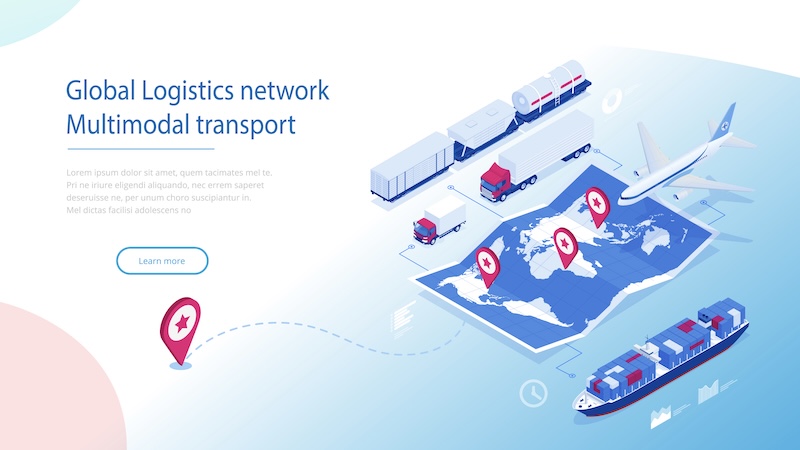
A truly integrated supply chain also integrates financial flows. If your suppliers are starved of cash, their risk becomes your risk. Financial integration ensures that liquidity exists where it is needed.
Telegraphic Transfer (T/T): The most common method. Usually 30% deposit, 70% balance before shipment. This puts strain on the buyer’s cash flow.
Letters of Credit (L/C): A bank guarantee. Very secure for both parties but comes with bank fees and paperwork.
Open Account: The supplier ships goods, and you pay 30/60/90 days later. This is the holy grail for buyers but requires immense trust from the supplier.
For smaller transactions or sample payments, speed is key. Traditional banks can be slow and expensive. Fintech solutions have bridged this gap, allowing for near-instant transfers. Integrating these platforms into your procurement process can shave days off your lead time. For a review of options, see the best online payment processors for small business.
SCF creates a win-win. A financial institution pays your supplier early (for a small fee), while you pay the financial institution later. The supplier gets liquidity; you get working capital. This requires a high level of integration between the buyer, the supplier, and the bank.
A tightly integrated supply chain is efficient, but it can also be fragile. If one link breaks, the shockwave travels instantly throughout the system. Therefore, integrated supply chain management must include a robust risk management protocol.
The primary benefit of integration is visibility. When you can see your supplier’s inventory levels and your logistics provider’s capacity, you can predict bottlenecks before they become crises.
* Supply Disruptions: If a raw material shortage hits your primary supplier, do you know immediately?
* Demand Spikes: If a product goes viral, can your supply chain ramp up production fast enough?
For a full analysis of the landscape, read our article on risk management in sourcing: opportunities and challenges.
One of the most effective strategies for risk mitigation is diversification. The “China Plus One” strategy involves maintaining a primary manufacturing base in China while developing a secondary base in another country (like Vietnam or India) to hedge against geopolitical risks or tariffs. This adds complexity but significantly increases resilience. Explore the mechanics of this in our guide: diversified supplier base - China +1 supply chain strategy.
In an integrated relationship, you share sensitive designs and data. Protecting this IP is paramount. This involves legal frameworks (NNN agreements) and practical steps (compartmentalizing manufacturing). Learn how to protect your product idea when you outsource from China.
Supply chain planning is increasingly being driven by advanced technology. We are moving from spreadsheets to cognitive supply chains powered by Artificial Intelligence (AI) and Machine Learning (ML).
AI allows for predictive rather than reactive management. Algorithms can analyze vast amounts of data—historical sales, weather patterns, economic indicators—to forecast demand with high accuracy. In procurement, AI can analyze spending patterns to identify savings opportunities or flag potential supplier risks. We have compiled case studies of artificial intelligence in procurement practice to demonstrate how these technologies are being applied today.
Consumers and regulators are demanding to know the journey of a product. Traceability systems allow a company to track the provenance of every component. Blockchain technology is emerging as a powerful tool here, creating an immutable record of transactions across the supply chain. This is crucial for verifying claims about sustainability or authenticity. Learn more about supply chain traceability solutions in global sourcing.
Enterprise Resource Planning (ERP) systems (like SAP, Oracle, or cloud-based alternatives for SMEs) are the backbone of ISCM. They connect the finance department with the warehouse, and the sales team with procurement. An integrated supply chain cannot exist without a functioning ERP.
Modern integrated supply chain management includes sustainability as a core performance metric. It is no longer an optional “nice-to-have”; it is a requirement for doing business with major retailers and appealing to conscious consumers.
Environmental, Social, and Governance (ESG) criteria are becoming standardized. Integrating ESG means ensuring your suppliers adhere to labor laws, minimize environmental impact, and operate ethically. This requires deep visibility into Tier 2 and Tier 3 suppliers. For insights into the regulatory landscape, particularly in strict markets, read our introduction to ESG compliance standards in Europe.
This involves selecting materials and manufacturing processes that are environmentally friendly. It might mean sourcing organic cotton, using recycled packaging, or choosing factories powered by renewable energy. This shift is documented in our article on the unwavering rise of sustainable sourcing in supply chain management.
Furthermore, ethical procurement ensures that your pursuit of low costs does not come at the expense of human rights. Understanding the requirements of ethical and sustainable procurement is essential for any modern brand.
For many businesses, the ultimate expression of supply chain integration is the creation of a private label brand. This involves working directly with a manufacturer to create a unique product that is sold exclusively under your brand name.
Understanding the difference between Original Equipment Manufacturing (OEM) and Original Design Manufacturing (ODM) is vital here.
* OEM: You provide the design; the factory makes it. You own the IP. This requires the highest level of integration as you must transfer technical specs and manage quality on a granular level.
* ODM: The factory provides the design; you slap your brand on it. Faster, but less unique. The integration here is more about branding and packaging.
Choosing the right path depends on your design capabilities. Read about the difference between OEM and ODM manufacturing to decide which fits your business model.
Locating a factory capable of high-quality private label manufacturing can be difficult. It requires a different vetting process than buying “off-the-shelf” goods. You need to assess their R&D capabilities, not just their assembly lines. For specific advice on this, refer to our guide on how to find private label manufacturers in Asia. Also, differentiating between these models is crucial; check out the difference between white label and private label for more clarity.
The final hurdle in the international supply chain is customs. An integrated system has compliance baked in. Documentation is prepared accurately and in advance to ensure smooth clearance.
Tariffs can change overnight, destroying profit margins. An integrated supply chain team monitors trade policy changes constantly. For those exporting to the US, understanding the latest landscape is critical. We offer guidance on how to import goods from China to USA under new tarriff policy.
The most common cause of customs delays is incorrect paperwork. The Commercial Invoice, Packing List, and Bill of Lading must match perfectly. Automation tools within an ISCM system can generate these documents directly from the purchase order and packing data, reducing human error.
Just as you integrate freight forwarders, you should integrate your customs broker. They should have access to your product database to ensure correct HS Code classification. Incorrect classification can lead to fines or seizure of goods.
While the benefits are clear, the path to supply chain integration is paved with obstacles.
Data Silos: Legacy systems often don’t talk to each other. Sales data sits in Salesforce, while inventory data sits in an old on-premises server. Breaking these silos is a technical and political challenge.
Lack of Trust: Sharing sensitive data with suppliers feels risky. “What if they use my sales data to negotiate higher prices?” Overcoming this requires a cultural shift and strong legal agreements.
Cost of Implementation: Integrating systems costs money. ERPs are expensive. Training staff is expensive. The ROI is long-term, which can be a hard sell to short-term focused shareholders.
Change Management: People resist change. A warehouse manager used to paper checklists might fight the move to digital scanners. Successful integration requires strong leadership and change management strategies.
You cannot manage what you do not measure. In an integrated supply chain, KPIs (Key Performance Indicators) must evolve from measuring functional silos to measuring system-wide health.
This is the number of days between paying for materials and getting paid by your customer.
* Formula: Days Inventory Outstanding + Days Sales Outstanding - Days Payables Outstanding.
* Why it matters: It is a pure measure of how efficiently capital flows through your integrated chain. World-class companies often have negative cash-to-cash cycles (e.g., Apple).
This measures the percentage of orders that proceed through the supply chain without a single error.
* Criteria: On time, complete, undamaged, and with correct documentation.
* Why it matters: It forces all functions (logistics, production, documentation) to work together. A failure in any one area ruins the “perfect order.”
This measures how quickly the supply chain can respond to an unpredictable change in demand (e.g., a 20% increase).
* Why it matters: In today’s volatile market, agility is often more valuable than pure low cost. Integration provides the speed needed to pivot.
This aggregates all costs: procurement, manufacturing, warehousing, and transportation.
* Why it matters: It ensures that a saving in one area (e.g., cheaper ocean freight) isn’t causing a cost blowout in another (e.g., higher inventory holding costs due to slower transit).
By focusing on these holistic metrics, businesses can ensure their ISCM efforts are driving real value.
The journey toward a fully integrated supply chain management system is not a sprint; it is a marathon. It requires a fundamental shift in mindset—from viewing the supply chain as a series of cost centers to viewing it as a strategic asset.
By integrating information, coordinating physical flows, and aligning organizational goals, businesses can achieve a level of agility and efficiency that is impossible in a siloed model. Whether it is through leveraging advanced AI for supply chain planning, building deep partnerships with suppliers in China, or adopting rigorous quality control and risk management protocols, the path to integration is the path to resilience.
For businesses looking to embark on this journey, the complexities of global sourcing can be a barrier. This is where a partner like Maple Sourcing adds immense value. We function as the integrated sourcing arm for our clients, handling everything from supplier identification to logistics coordination. We invite you to learn more about our comprehensive sourcing services and how we can help you build a world-class, integrated supply chain.
In a world where change is the only constant, an integrated supply chain is not just a competitive advantage; it is a survival mechanism. Start building yours today.
 English