
Hardware Import from China: What to Check First
Hardware fails on the things you cannot see in a photograph: the steel grade, the plating thickness, and the tolerance. Get those three written down and verified and the rest of the order is ordinary.
| Check | Why it matters |
|---|---|
| Material grade | 304 and 201 look identical |
| Manufacturing hub | Category decides the region |
| Factory or trader | Changes your leverage |
| Coating thickness | Decides rust resistance |
| Certifications | Depends on product, market |
| Sample testing | Catches invisible defects |
| First order size | Small, verified, then scaled |
Every row is cheap to settle before the order and expensive to argue after the container lands.
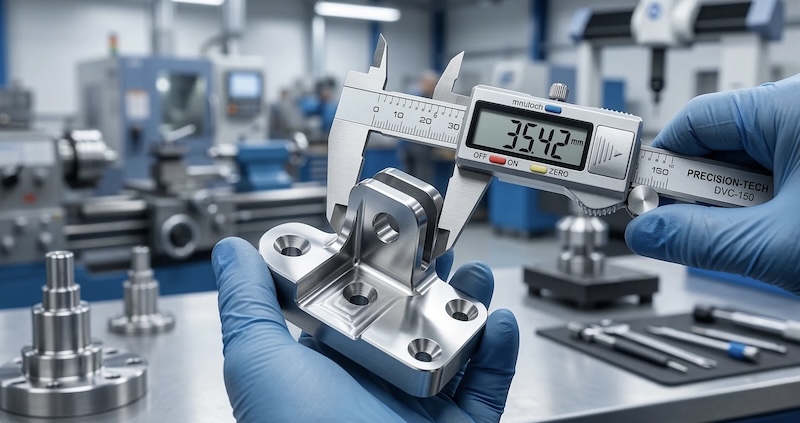
Write the Specification Before You Ask for Prices
The most common hardware problem is not a dishonest supplier but an incomplete specification. A bracket described as “steel, 3mm thick” leaves the factory free to use mild steel, high-carbon steel, or galvanized steel, and all three are technically what you asked for.
Stainless is the word that costs buyers the most money. It names a family rather than a material, and the grades inside that family behave nothing alike. Name the grade you need, not the family.
Five lines cover most hardware. Material grade or alloy, surface finish with a minimum thickness, dimensions with tolerances on a drawing, mechanical requirements such as load or hardness, and the standard the product will be tested against. Anything you leave out is a decision the factory makes at its own cost level.
Three quotes can only be compared when all three are for the same part, and building that specification is where hardware sourcing from China starts.
Custom parts need one more decision first. How a part is made changes what you can specify, which is why choosing the manufacturing process comes before you ask anyone for a price. A drawing that suits a machined part often cannot be pressed or moulded without changes.
If the design is not settled yet, prove it in low volume first. Prototype manufacturing puts a physical part in your hands in days, and the gap between an approved sample and a repeatable run is covered in prototype to mass production.
Source from the Right Cluster
Chinese hardware manufacturing is organized by category, not by city size. Hand and power tools cluster around Yongkang in Zhejiang. Hinges, locks, and fasteners sit in Haiyan, Wenzhou, and Ningbo. Fittings, brackets, and connectors come out of Foshan, while stamped and machined parts concentrate in Dongguan and Shenzhen.
Sourcing outside your product’s cluster adds distance to every decision. A change request travels further, a technical answer takes longer, and the price carries the extra handling. The manufacturing hubs guide maps which category sits where.
Know Which Process Makes Your Part
The process behind a part decides its price, its tolerance, and its minimum order. Two quotes on the same drawing can differ by half simply because one factory presses the part and the other machines it. Ask which process a supplier is quoting before you compare numbers.
Flat and formed parts split between two routes. Brackets, panels, and enclosures usually come from sheet metal fabrication, while profiles, gaskets, and thin plate are often cut on laser cutting services when the volume does not justify a press tool.
Solid and precision parts go elsewhere. Tight tolerances and complex geometry point to CNC machining, and low volumes or design checks run faster through 3D printing, which costs more per unit but needs no tooling at all.
High volumes justify a mould. Plastic housings run on injection molding and metal parts with fine detail run on die casting, and both trade a large tooling bill up front for a unit price nothing else can match.
Find Out Who Actually Makes It
A trading company and a factory look identical on a sourcing platform. Both have professional listings, verified badges, and competitive prices, and the label on the company matters far less than what sits behind it.
What you actually need is visibility. Can they name the plant, answer a technical question without going away for two days, and show you how quality is checked on the line. A good trading company that is open about all three is more useful than a factory that hides its subcontracting.
Three questions get you there. Ask to see the business license and read what the registered scope covers. Request a video call from the production floor rather than a showroom, and ask which processes run in-house versus subcontracted. A supplier quality audit answers all three properly once the order justifies it.
Material and Finish Are Where Substitution Happens
Material substitution is the most common defect in hardware imports. Grades of steel and thicknesses of zinc look the same on arrival and behave completely differently after six months outdoors.
Steel grade decides what the part can survive, and the answer depends on the job. Q235 mild steel is the common low-cost structural choice and works outdoors too, provided the load, the section, and the coating were designed for it. Among stainless grades, 304 outlasts 201 in ordinary damp conditions, while salt spray and coastal air can pit both, so those applications usually call for 316 or higher.
Plating thickness is a number, so put the number in the order. Standard zinc electroplating runs around 5 to 8 microns, outdoor use typically calls for 12 to 25, and hot-dip galvanizing reaches 45 to 85.
Treat those as starting points rather than specifications, since the base metal, the pretreatment, and your customer’s own standard all move the figure. Specify a minimum and check it with a coating gauge at inspection.
Powder coating needs four figures, not a color. Color, gloss level, minimum film thickness, and the adhesion standard. Interior work often runs 60 to 80 microns and exterior 80 to 120, though the coating system and the environment decide the real number. A tape adhesion test and salt spray exposure tell you whether the finish holds.
Certifications Depend on Your Market, Not Your Supplier
Chinese factories do not automatically hold the paperwork your market requires. Power tools sold in Europe need CE marking under the applicable rules, and the EU machinery regulation applies from January 2027. Ask for the declaration of conformity and the technical file rather than accepting a mark printed on a box.
Electrical hardware for the United States often needs a listing your retailer will ask for. UL or ETL requirements come from buyers, electrical codes, or insurers rather than from customs, so confirm before you order.
Substance rules reach further than most buyers expect. Anything with electrical or electronic content sold into Europe falls under restricted substance rules. Coatings, lubricants, plastic parts, and packaging can all pull a product into chemical regulations too.
The route through both is set out in electrical product compliance. For the edge cases, ask a compliance consultant or a test lab, since a customs broker handles classification and entry rather than product rules.
Test the Sample, Then Inspect the Run
Never skip samples on hardware, because the defects that matter are invisible. A cosmetic flaw on a consumer product is obvious in a photo. A wrong steel grade, a thin coating, or an out-of-tolerance hole announces itself when the hinge rusts or the bolt shears.
Order three to five and test them against the specification. Measure the dimensions, check coating thickness with a gauge, and run a salt spray test for corrosion. Add a hardness or load test where the part carries weight. Match the salt spray duration to your customer’s standard rather than to a number you saw online.
Then check the run rather than the sample. A pre-shipment inspection that samples across multiple cartons, measures against the approved drawing, and gauges the plating catches the drift that a single good sample hides.
What Substitution Looks Like in Practice
A buyer importing outdoor stainless fittings had a clean first order and a rusting second one. Spots appeared within weeks of installation, and lab testing showed the supplier had moved from 304 to 201 without telling anyone.
The purchase order never named a grade. Nothing in the paperwork said the second batch was wrong, so there was nothing to argue with.
The fix was not a new supplier. The order was rewritten to name the grade, require a mill certificate per batch, and test one part from each delivery, and the problem stopped. A second supplier would have shipped the same wrong steel if nobody had written down which grade the part needed.

FAQ
Q1: How many suppliers should I quote before choosing one?
Three is usually enough if all three are quoting the same written specification. More than that adds work without adding information, since the differences you care about come from the specification rather than the shortlist length.
Q2: Is a cheap quote always a warning sign?
No. A factory in the right cluster with the right equipment can be genuinely cheaper than one buying the work in. It becomes a warning when a low price arrives with vague answers on grade and finish, because that combination usually means something was substituted.
Q3: Is it acceptable when a supplier says the steel is equivalent to 304?
Not without knowing what it actually is. Equivalent is a sales word, so ask for the grade designation and the certificate, then decide whether the substitution suits your application.
Q4: Can I ask for a mill certificate, and what does it prove?
Ask on any order size, but availability depends on how the supplier buys material, and a small shop working through a steel dealer may not hold traceability on every batch. What matters is whether the certificate matches your batch and what a tested sample says, since the document only covers the material as it left the mill.
Q5: How do I check plating thickness without a lab?
A handheld coating thickness gauge reads it in seconds and costs less than one rejected shipment. Take readings at several points on several parts, since plating is often thinner on edges and recesses than on flat faces.
Q6: Should a first order cover one product or several?
One, until that product has shipped correctly twice. Several products at once means several specifications, several samples, and no clear read on whether the supplier is reliable or lucky.
Q7: Does packaging need specifying for heavy hardware?
Yes, more than for most goods. Dense parts tear through light cartons and shift in transit, so state the carton weight limit and the inner packing in the order, or you pay freight on parts that arrive damaged.
Q8: What can I actually do once the goods arrive in the wrong grade?
Test a sample independently, document it against the written specification, and put the claim in writing with the evidence attached. Most of your leverage by then is the next order rather than this one, which is why the checks before shipment are worth what they cost.
Conclusion
Hardware sourcing works in order: settle the specification and the supply chain before production, approve the sample before the run, and inspect the run before the balance is paid. Each of those costs a fraction of one rejected container, and each one only works if it happens at its own point rather than after the goods land.
Hardware punishes buyers who check the photo and skip the material. Our hardware sourcing from China work breaks quotes down to steel grade and plating before you order, then measures the goods before they ship.