What actually happens when an inspector walks into a factory and starts asking for records, interviewing staff, and checking production floors against written policies? For many teams, a factory compliance audit feels like a black box until the audit begins. That uncertainty creates risk, especially when product timelines, customer relationships, and brand trust depend on a clean result.
This guide breaks down the process step by step so you can understand what auditors review, why certain findings recur, and how preparation changes outcomes. Rather than treating audits as a last-minute hurdle, it helps to see them as a structured test of whether daily operations match legal requirements, customer standards, and internal controls.
In practice, organizations often approach this topic through four core questions:
What are the main types of compliance audit, and when is each used?
How do audit teams collect evidence across documents, site observations, and interviews?
Where do non-conformities usually appear, from labor records to safety procedures?
How should teams evaluate compliance audit cost without overlooking remediation effort?
You will also see where compliance audit services fit into the broader process. Some companies rely on internal teams for readiness checks, while others use third-party specialists for independent verification. Either approach can work, but the right model depends on complexity, risk exposure, and buyer expectations.
Importantly, this article is designed for informational research. It does not assume you are buying services today, and it does not treat every facility as identical. Audit scope varies by product category, customer code of conduct, and applicable regulations, so outcomes depend on context rather than a single checklist.
By the end, you should have a practical map of how a compliance audit unfolds from planning to corrective actions, what evidence matters most, and how to interpret findings without guesswork. With that foundation, the detailed sections that follow will make the audit process more predictable, manageable, and useful for long-term operational control.
With the basics now in place, it helps to define exactly what this part of the process covers. In practical terms, a compliance audit in China is a structured review of whether a factory’s operations match legal requirements, buyer standards, and contractual obligations before or during production.
For importers and brand teams, this is not a paperwork exercise. A factory compliance audit checks the conditions that can disrupt quality, delivery, and reputation if left unverified. The goal is to identify gaps early, document risk clearly, and decide whether corrective action is realistic.
A typical compliance audit looks at core operating areas, including:
Legal and business registration status, licenses, and scope of operations.
Labor practices, working hours, wage records, and basic worker protections.
Health and safety controls such as fire exits, PPE use, and emergency readiness.
Environmental handling, including waste, emissions controls, and storage practices.
Management systems, recordkeeping discipline, and traceability of key processes.
These checkpoints explain why there are different types of compliance audit engagements. Some buyers need a broad social and legal review; others need targeted checks tied to product risk, customer codes of conduct, or regulated categories. In many programs, audit depth is adjusted by order value, product complexity, and prior factory history.
From a business perspective, the value is straightforward: better decisions before commitments get expensive. A compliance audit can inform supplier onboarding, negotiate realistic corrective action plans, and reduce late-stage surprises that lead to shipment holds or urgent supplier switches. It also gives procurement and quality teams a shared fact base rather than relying on factory self-reporting.
Many sourcing teams compare compliance audit services by scope, auditor credentials, and reporting quality. The most useful reports do more than assign a pass or fail. They show evidence, classify findings by severity, and explain what must be fixed first. This is especially useful when coordinating with a China factory audit service provider that can combine compliance findings with broader factory audits.
Cost is another common concern. Compliance audit cost varies based on location, audit duration, facility size, and whether follow-up verification is included. Instead of chasing the cheapest day rate, experienced teams evaluate total decision value: Will the audit reduce risk enough to justify production approval, conditional approval, or disqualification?
Approach this stage as a decision tool, not a checkbox. Define your must-meet standards before the visit, align internal stakeholders on risk tolerance, and use findings to drive clear next actions with deadlines. That approach keeps the audit aligned with the central question of this guide: what actually happens during a China compliance audit, and how those steps protect your supply chain outcomes.
After understanding why a compliance audit matters, the practical question is what the process actually looks like on the ground. A structured review helps buyers, brand owners, and sourcing teams set clear expectations on scope, timing, evidence quality, and follow-up accountability.
Before any site visit, auditors request core records and align the audit plan with your risk profile. This step usually includes business licenses, labor policies, payroll samples, working-hour logs, safety procedures, and prior corrective actions. It also clarifies the types of compliance audit required, such as social, ethical, or environmental checks. Solid preparation reduces surprises, shortens field time, and makes factory compliance audit findings more defensible for internal decision-making.
During the on-site phase, auditors inspect production areas, warehouses, dormitories if applicable, canteens, and emergency infrastructure. They verify whether actual operations match declared procedures, including machine safety, fire exits, chemical storage, PPE use, and housekeeping standards. This walkthrough is central to most factory audits because visual conditions often reveal practical gaps not visible in paperwork. For buyers comparing compliance audit services, inspector experience at facility level directly affects report quality.
Private worker interviews test whether policies are implemented in daily practice. Auditors typically speak with managers and frontline staff across shifts to assess contracts, wages, overtime, rest days, grievance channels, and disciplinary practices. Confidential conversations help surface issues that records may not show, including coercion risks or inconsistent supervision. For business users, this stage is critical because workforce conditions can trigger legal, reputational, and supply continuity concerns if left unresolved.
After observations and interviews, auditors cross-check records for consistency. They compare attendance logs with payroll, production output with overtime patterns, and training records with observed behavior. Discrepancies are flagged by severity and tied to specific clauses in the audit protocol. This evidence-based analysis is where many decisions about supplier approval or remediation are made. It also influences compliance audit cost, since broader sampling and deeper forensic checks require more auditor time.
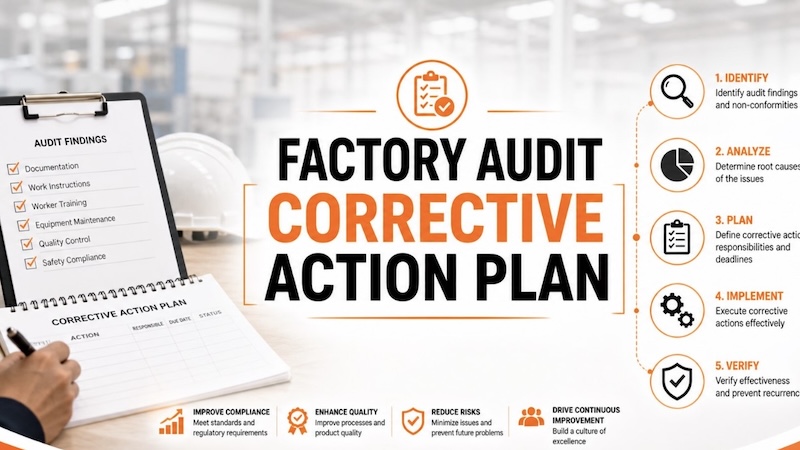
The final report organizes findings into major, minor, and observation-level issues, with objective evidence and clear language for procurement and compliance teams. A corrective action plan then assigns owners, deadlines, and proof requirements for closure. Strong plans focus on root causes, not quick fixes, and include realistic re-audit checkpoints. If you use a China factory audits and evaluation service provider, ask how they track closure quality, not only report delivery speed.
After the five audit stages are complete, the findings are usually grouped by audit type so buyers can act faster. This classification matters because each factory compliance audit type addresses different business risks, from labor disputes to product defects and operational shutdowns.
Social audits focus on how people are hired, managed, paid, and protected at work. In practice, auditors review contracts, wage and time records, age verification, grievance channels, dormitory conditions, and emergency readiness, then compare documents with worker interviews and floor observations. For importers, this is often the most sensitive of the types of compliance audit because reputational damage can spread quickly if labor issues surface post-shipment. A useful approach is to treat findings by severity, define corrective deadlines, and require proof of closure before scaling orders. This keeps compliance audit services tied to real sourcing decisions instead of paperwork.
A quality management system audit tests whether production is controlled, repeatable, and traceable, not just whether one sample passed inspection. Auditors check process maps, incoming material controls, in-line checks, final inspection criteria, calibration logs, nonconformance handling, and corrective action records. This helps buyers see whether defects are random or systemic. When planning a factory compliance audit, ask for clarity on scope: product-specific controls, subcontracting oversight, and change management are common failure points. Strong QMS results usually reduce rework, chargebacks, and delivery surprises. They also make factory audits easier to compare across facilities when evaluating long-term manufacturing partners.
Environmental and safety audits examine whether a factory manages hazardous materials, waste streams, emissions controls, machine guarding, fire systems, and worker safety training in daily operations. The goal is not only legal alignment, but business continuity: weak controls can trigger stoppages, shipment holds, or sudden remediation costs. If you are budgeting compliance audit cost, include likely follow-up work such as equipment upgrades, recordkeeping fixes, and supervisor retraining. For many buyers, this is where a China factory audits & evaluation service provider adds value by translating technical findings into practical action plans. Used well, these audits turn risk signals into measurable improvement before orders increase.
After comparing the types of compliance audit, the practical question is who should perform them and how to judge quality before the visit starts. Your audit partner directly affects what risks are found, how clearly they are documented, and whether findings are useful for supplier decisions.
Start with scope fit, not just brand recognition. A reliable team should show experience with your product category, factory size, and risk profile, because a factory compliance audit for apparel differs from one for electronics or machinery. Ask for lead auditor qualifications, audit methodology, and sample report structure so you can see whether findings are evidence-based and actionable.
Also confirm independence and local execution strength. Some firms outsource fieldwork, which can reduce consistency if oversight is weak. For compliance audit services, request clarity on who performs on-site work, how interviews are conducted, and how nonconformities are graded. If you need continuity across suppliers, choose a provider that can align checklists and scoring across multiple facilities.
A low quote can look attractive, but compliance audit cost should be evaluated against reporting depth and follow-up value. Pricing usually reflects audit scope, factory location, workforce size, required auditor days, language support, and whether the service includes corrective action review. If your team needs both social and quality checks, bundled audits may reduce duplicate travel and coordination.
Request itemized proposals so comparisons are fair. A useful quote separates pre-audit planning, on-site assessment, report drafting, and optional re-audit. This helps procurement teams avoid hidden charges and lets operations teams match budget to risk priorities. In business terms, better scoping often prevents expensive surprises later, such as repeat visits caused by incomplete first-round findings.
Reviews are most useful when you screen for relevance and consistency, not just star ratings. Look for feedback from buyers with similar supply-chain complexity, then ask references how quickly the auditor escalated critical issues and how usable the final report was for corrective action plans. Strong references usually describe clear communication, objective evidence, and practical recommendations.
During reference checks, ask what happened after the report. Did findings support vendor approval, remediation timelines, or contract decisions? That answer tells you whether the provider functions as a true China factory audits & evaluation service provider rather than a box-checking vendor. If needed, run a pilot factory audit first and compare output quality before awarding broader audit coverage.
After you vet auditor credentials, pricing logic, and client feedback, the practical question is what those auditors typically uncover on-site. In a factory compliance audit, recurring findings often cluster around labor records and workplace safety controls, and these two areas usually drive both remediation scope and compliance audit cost.
Labor findings are often less about one dramatic breach and more about a pattern of documentation and control gaps. Auditors usually compare payroll, timecards, attendance logs, production schedules, and worker interviews to test whether reported hours match actual practice. Mismatches can include unrecorded overtime, missing rest-day records, incomplete wage calculations, or inconsistent treatment of temporary workers.
For buyers, this matters because labor discrepancies can disrupt delivery planning and raise reputational risk if corrective action is delayed. During different types of compliance audit engagements, labor checks may be expanded when peak-season output is high, since overtime pressure tends to expose weak timekeeping systems. A useful takeaway is to treat labor compliance as an operating process, not a one-time file review. Facilities that standardize shift approvals, wage formulas, and supervisor sign-off procedures generally resolve findings faster and with less re-audit friction.
Health and safety findings are similarly common and highly visible during walkthroughs. Auditors typically inspect machine guarding, emergency exits, fire equipment access, chemical storage, PPE use, electrical panels, and incident logs. Even when equipment appears adequate, weak implementation can still trigger nonconformities, such as blocked egress routes, expired inspection tags, unclear evacuation maps, or training records that do not match observed practice.
From a business perspective, these deficiencies affect continuity as much as compliance. Safety failures can cause stoppages, corrective spending, and shipment instability, which is why experienced compliance audit services prioritize evidence that controls work in real operations, not only on paper. For audit readiness, facilities should align maintenance schedules, drill routines, and supervisor accountability so daily behavior supports documented policy. In the full breakdown of what happens during a compliance audit, this is the point where operational discipline becomes measurable and where preventive fixes usually deliver the fastest risk reduction.

When your audit identifies issues like timekeeping gaps or unsafe work conditions, the report becomes an action document, not a checkbox. The strongest outcome comes from turning findings into a clear correction plan with owners, deadlines, and verification steps.
Start by ranking every nonconformity by business risk and legal exposure. Critical items that can stop production, delay shipments, or create liability should move first. Lower-risk process gaps can follow in a staged plan. This approach keeps your factory compliance audit tied to operational continuity and customer requirements, rather than treating all findings as equal.
Use this practical post-audit workflow:
Validate findings internally: Review evidence with your sourcing, quality, and legal teams. Confirm whether each issue reflects a one-time mistake or a systemic control failure.
Issue a CAPA plan: Define corrective and preventive actions for each finding, assign responsible roles at the factory, and set realistic due dates.
Request proof of closure: Ask for updated records, photos, training logs, maintenance reports, and revised procedures before accepting closure.
Schedule follow-up checks: Run a focused re-audit for critical gaps and remote document checks for minor items.
Update supplier scorecards: Reflect results in supplier risk ratings, allocation decisions, and contract terms.
A simple priority matrix helps teams avoid delays:
| Priority | Typical issue type | Target response window | Verification method |
|---|---|---|---|
| High | Legal or safety nonconformity | Immediate to 30 days | On-site follow-up audit |
| Medium | Process control weakness | 30 to 60 days | Document review + sampling |
| Low | Administrative/document gap | 60 to 90 days | Remote evidence review |
Budget planning should also continue after the initial visit. Your total compliance audit cost often includes remediation support, re-audits, and internal monitoring time. If you are comparing compliance audit services, confirm whether post-audit verification is included or billed separately. That detail affects true cost and timeline more than headline pricing.
It also helps to align remediation with the types of compliance audit you run across the year. For example, social compliance findings may require policy and training changes, while technical or environmental findings may require equipment, process, or permit updates. Matching corrective actions to audit type improves closure quality and prevents repeat findings.
For teams managing multiple factories, standardize templates for CAPA tracking and escalation. If internal bandwidth is limited, a China factory audits & evaluation service provider can coordinate follow-ups and evidence checks while your team retains final approval. Keep the process practical: close critical risks first, verify with evidence, and only mark completion when controls are stable in day-to-day operations.
This is how post-audit work supports the full audit lifecycle: findings become measurable improvements, supplier risk becomes easier to manage, and future factory audits become faster and more predictable.
After defining post-audit actions, the most useful final lens is how each stage of the audit process supports better decisions before, during, and after site verification. In practice, strong outcomes start with planning discipline and carry through the full five-stage flow.
Pre-audit documentation review and planning sets the direction. This stage confirms scope, applicable standards, records to examine, and interview priorities, so the factory compliance audit is not reactive. It also aligns internal teams on what constitutes critical versus minor findings, reducing confusion when results arrive.
Document readiness affects audit depth and efficiency. When licenses, payroll records, training logs, and safety procedures are organized in advance, compliance audit services can spend more time validating real conditions instead of resolving missing files. Better preparation improves issue traceability and makes follow-up actions more practical.
On-site inspection validates whether documented controls work in reality. The facility walkthrough, worker interviews, and process observations test if policies are implemented consistently. This is where gaps between paper compliance and operational practice become visible, which is central to understanding the types of compliance audit outcomes a buyer may receive.
Findings are most valuable when prioritized for business impact. The report should distinguish immediate legal or safety risks from medium-term process weaknesses, helping procurement and quality teams sequence corrective actions. This keeps compliance decisions tied to continuity, reputation, and supply reliability rather than checklist completion alone.
Cost and provider choice should be evaluated through decision quality, not price alone. Compliance audit cost matters, but the better question is whether the audit design, evidence quality, and reporting clarity support confident supplier decisions. A capable China factory audits & evaluation service provider adds value by turning observations into actionable risk controls.
Taken together, the five stages explain what happens during a compliance audit as a structured risk-management workflow. For readers comparing options, the key is to judge planning rigor, on-site verification quality, and reporting usability as one connected system.
Q1: How long does a typical compliance audit take in a Chinese factory?
Most on-site compliance audits in China last between 1 to 2 days, depending on factory size, workforce count, and audit scope. A small facility with under 100 workers may complete in 6-8 hours, while larger operations with multiple production lines, dormitories, or complex supply chains can require a full 2-day assessment. Pre-audit document reviews add another 1-2 weeks for preparation. Semi-announced audits follow similar timelines, while unannounced visits typically focus on critical areas and may finish faster. Remote pre-assessments or desktop audits can reduce on-site time but aren't suitable for verifying physical working conditions or interviewing employees confidentially.
Q2: What documents do auditors request during a China compliance audit?
Auditors typically request business licenses, environmental permits, fire safety certificates, and labor contracts as foundational documents. Payroll records, time attendance logs, social insurance proof, and employee training records verify labor practices. Production-related documents include quality control procedures, chemical inventories, waste disposal records, and equipment maintenance logs. If auditing against specific standards like BSCI, SA8000, or customer codes of conduct, auditors also review grievance mechanisms, collective bargaining agreements, and corrective action reports from previous audits. Having these organized in both Chinese and English, covering the past 12 months minimum, significantly accelerates the audit process and demonstrates operational transparency.
Q3: Can a factory fail a compliance audit in China?
Yes, factories can receive failing grades, typically classified as critical non-compliance or zero-tolerance violations. Common reasons include underage labor, forced labor, fraudulent records, serious safety hazards, or environmental violations. Most audit protocols use tiered ratings: pass, conditional pass with minor issues, fail requiring immediate corrective action, or zero-tolerance termination. A conditional pass allows factories to remediate findings within 30-90 days through corrective action plans verified by follow-up audits. Repeated failures or unwillingness to address violations can result in buyers terminating contracts. However, many failures are preventable through pre-audit gap assessments, proper documentation, and employee training on audit protocols.
Q4: Who typically conducts compliance audits in Chinese factories?
Compliance audits are conducted by third-party audit firms accredited by international bodies like APSCA or SAAS, brand-employed audit teams, or industry associations. Major firms include Intertek, SGS, Bureau Veritas, TÜV, and UL, which provide independent verification against standards like BSCI, SMETA, SA8000, or custom buyer codes. Some large retailers and brands maintain internal audit teams for direct supplier oversight. Chinese government agencies conduct separate regulatory inspections for labor, environmental, and safety compliance. Multi-stakeholder initiatives like Fair Labor Association or amfori also coordinate audits. The choice depends on customer requirements, industry standards, and whether the audit serves certification, monitoring, or due diligence purposes.
A strong close to this process is simple: define your audit objective, lock scope, and assign owners before fieldwork begins. If your priority is market access, your checklist, documents, and sampling logic should reflect that. If your priority is risk reduction, focus on repeat nonconformities, corrective action closure, and management controls that prevent recurrence.
To move from research to action, finalize these choices in writing:
Audit type and depth: Select the relevant types of compliance audit for your situation, such as legal, social, quality, or environmental coverage, then set whether this is a baseline or follow-up review.
Evidence package: Prepare licenses, payroll and hour records, training logs, SOPs, maintenance files, and corrective action history in one shared repository.
Cost model: Estimate compliance audit cost using scope, site size, worker count, document readiness, and travel complexity, then include a contingency for re-audit work.
Execution timeline: Set dates for pre-audit document review, on-site verification, report delivery, and corrective action deadlines.
Decision threshold: Define what constitutes pass, conditional approval, or escalation so stakeholders can act quickly when findings arrive.
If you need external support, evaluate compliance audit services by method and deliverables, not by price alone. The best option is the one that gives transparent sampling, clear finding severity, and realistic corrective action expectations your team can maintain after the audit ends.
The practical next step is to schedule a pre-audit alignment meeting this week with operations, HR, EHS, and quality leads, then issue a one-page audit charter. That charter should state scope, chosen audit standard, evidence owners, and remediation deadlines. With that in place, your compliance audit becomes a controlled business process rather than a last-minute inspection event.
 English