
Custom Packaging MOQ for Small Business: Cut It 4 Ways
Part of a packaging minimum is setup cost somebody has to pay, and part is simply the order size that supplier wants to book. Printing plates, cutting dies, and material runs are billed once, so a small order carries that whole bill alone. Separating the fixed cost from the commercial floor tells you whether to change the format or press the quote.
| Way to cut it | What it removes | Result |
|---|---|---|
| 1. Stock box, printed label | Plates and dies | Hundreds, not thousands |
| 2. Digital printing | Plate setup | Short runs quotable |
| 3. Existing die and board | Tooling minimums | Artwork still custom |
| 4. Bundle with the product | A second negotiation | Minimum shifts, not gone |
The top row suits most unproven launches, and the last works only when the product factory is willing to manage the packaging order.
Why Packaging Minimums Run So High
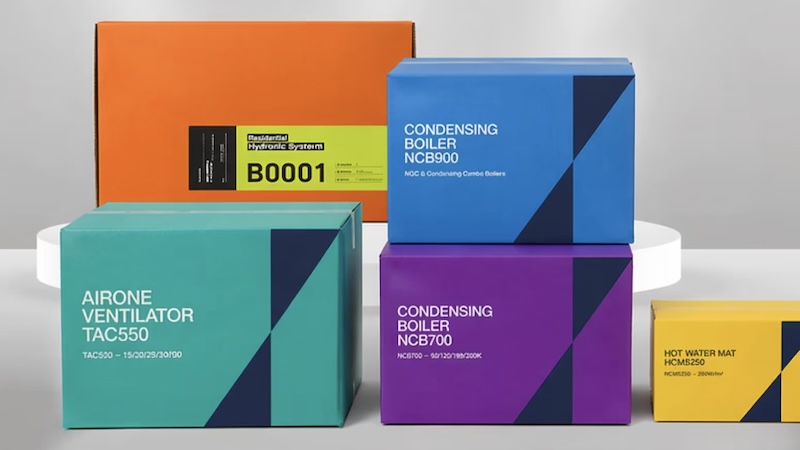
Three fixed costs set the floor, and none of them shrink because your order is small. Working out which one is driving a quote tells you what will move it, the same setup arithmetic behind every other decision about custom products from China.
Plates and dies. Conventional presses need a printing plate for each color in your design plus a cutting die for the box shape, and that tooling is billed once whatever the quantity.
Material runs. Board, coatings, and specialty papers are bought in bulk, so a short order can leave the supplier holding the rest of a roll, and that waste gets priced into your minimum.
Line setup. Mounting plates, mixing inks, and matching color takes hours whether the run is 300 boxes or 30,000.
Finding printers whose normal run size is already close to yours, instead of asking a big one for an exception, is where supplier sourcing saves the most on this category.
4 Ways to Cut the Minimum
These are alternatives, not steps, so start with the one that removes whichever fixed cost is driving your quote. None of the four asks a printer to absorb a bill that has to be paid, which is why they work where negotiation does not. Where the quote is built on a commercial floor rather than a fixed cost, negotiation is exactly what moves it.
Way 1: Start with a stock box and a printed label. A rectangular label printed digitally needs no plate and no die, while a custom shape or a window puts the tooling straight back. It is the packaging version of the choice private label vs white label sets out.
Way 2: Ask for digital printing by name. Digital presses skip the plate step entirely, so a short custom run stops being a special favor. Many suppliers quote conventional printing by default because it wins on cost at volume, and they will not raise the digital option unless you ask for it directly.
Way 3: Use an existing die and a standard board. The first removes a tooling charge and the second avoids a separate material minimum, while your artwork stays fully custom. Ask which box sizes and board grades are already running on the floor, then draw your design to fit one of them.
Way 4: Put the packaging on the product order. A China OEM factory already building your product still buys the boxes from a printer, so the packaging minimum does not vanish. It gets absorbed, carried as surplus, or folded into your unit price. Ask who the printer is and who owns the leftover boxes, then list the pre-approved equivalents in the purchase order so anything else needs your sign-off.
If all four still leave you above what you can use, the format has a floor your volume cannot reach. Quote a short-run specialist or simplify the format before you treat it as something to negotiate a lower minimum over.
Approve a Physical Sample Before the Run
Never sign off custom packaging on a screen, because color, board thickness, and print sharpness all shift between the design file and the finished box. Ask for a pre-production sample on your real artwork and your real material before anything is approved.
Ask which process made the sample. A sample is often printed digitally or assembled by hand while the production run goes on a different press. Where the two differ, the sample confirms structure, size, and rough appearance only. Production color must still be signed off on the press that will run the job.
Expect to pay for the sample and treat the charge as cheap insurance. Packaging samples are normally billed, unlike the free samples from China you can often get on a stock product, though the fee is frequently credited back once the order is placed.
Then test it properly. Check the color in daylight against your brand, press on the corners, and pack your actual product inside before you approve anything.
Packaging Built for the Trip, Not the Shelf
A box that photographs beautifully and crushes in transit costs more than it saves. Board strength, the padding around the product, and how the carton stacks decide your damage rate far more than the finish does.
Test a packed unit the way it will actually travel. Stack weight on it, drop it from waist height, and ship one to yourself while the design can still change. That is a rough screen, and a fragile or high-value product needs a procedure matched to its weight and route, with the drop heights, orientations, and vibration set for you.
Freight is where good packaging quietly pays you back. Cartons sized to a pallet rather than to a designer’s eye fit more units into the same space. That space is exactly what an ocean carrier bills you for when you calculate CBM.
When Small Runs Stop Paying
Paying a premium on a first run is the price of proving demand before real money goes in. Reordering the same packaging two or three times without changing it is the signal to check whether that premium is still worth paying.
Then run the arithmetic, not the instinct. Ask what the same box costs at the next quantity break, multiply the saving by a year of usage, and set that against the cash the bigger order ties up. When the saving wins, conventional printing and better construction start protecting the margin you defend everywhere else.
FAQ
Q1: How much more does each box cost on a small run?
The premium behaves differently on a label than on a rigid box, so ask every printer to quote the same specification at 250, 500, 1,000, and 3,000 units.
Q2: Can I buy packaging from a different supplier than my product?
Yes, and it is common when the packaging is specialized. The cost is coordination: someone has to get the boxes to the packing line on time.
Q3: How do I compare two packaging quotes fairly?
Put both on the same board, print method, and quantity before you look at the price, since suppliers quietly substitute a thinner grade to win. Ask each to itemize the one-time setup apart from the per-box price.
Q4: Does packaging affect what I pay in import duty?
Retail packaging is normally classified with the product it holds, so it does not carry its own rate. The containers, the materials, and the packing labour usually go into the customs value, which raises the duty on a percentage rate and changes nothing on a zero or per-unit rate.
Q5: How many spare boxes should I order beyond my product count?
Buy them deliberately, because most printers bill every box. Write into the purchase order how far over or under the printer may deliver and the lowest count you will accept.
Q6: Should I reject boxes that arrive in a different shade from the sample?
Print color drifts slightly between runs, so a small shift is normal and a visible one is not. Agree the accepted range against the signed sample before production, or you argue about taste instead of a specification.
Q7: What happens to unused packaging if I change the product?
Printed boxes tied to a specific model become scrap the moment the specification changes. That is the strongest argument for keeping product-specific detail on a label instead of the box.
Q8: When is it cheaper to print packaging locally instead of in China?
Boxes take far more space than they are worth, so freight can wipe out the unit saving once packaging travels alone. Compare the price with freight included whenever the boxes are not riding inside your product cartons.
Conclusion
The expensive mistake is not paying too much per box but buying elaborate packaging for a product that has not sold yet. Start on the cheapest route that still looks professional, prove the product moves, and let the volume fund the upgrade.
Telling those two apart is the first thing we do, then we shortlist the presses built for your volume through supplier sourcing, and check the first sample before you commit to a run.