For millions of entrepreneurs worldwide, “Fulfillment by Amazon” (FBA) is the golden ticket. It is the infrastructure that allows a small business run from a laptop in a coffee shop to compete with retail giants. By leveraging Amazon’s vast network of warehouses and logistics wizardry, you can offer 2-day Prime shipping to millions of customers. However, the path to the “Buy Box” is paved with complex logistical challenges. Shipping to Amazon FBA is not merely about moving a box from Point A to Point B; it is a precision sport involving strict compliance standards, intricate customs regulations, and a constant battle to optimize costs.
This comprehensive guide serves as your playbook. We will dissect the entire supply chain, from the factory floor in China to the shelves of an Amazon FBA warehouse. We will explore the critical nuances of FBA inventory management, demystify the complex web of Amazon FBA shipping fees, and provide actionable strategies for sourcing, prepping, and shipping your products. Whether you are launching your first private label product or scaling a 7-figure brand, mastering these best practices is the difference between profit and loss.

Before we book a container, we must understand what we are shipping into. Amazon’s fulfillment centers are marvels of automation, but they operate on rigid rules designed to maximize efficiency for Amazon, not necessarily for the seller. A single misplaced barcode or an oversized box can result in refusal of delivery, hefty fines, or the dreaded “stranded inventory” status.
The allure of FBA is simple: You sell it, Amazon ships it. But the “hidden” value is the Prime badge. Prime members spend significantly more than non-Prime members. By using FBA fulfillment by Amazon, you gain access to this high-spending demographic. Furthermore, Amazon handles customer service and returns, freeing you to focus on growth and sourcing. However, this convenience comes at a cost—storage fees, fulfillment fees, and strict inbound performance metrics.
Amazon tracks your “Inbound Performance” rigorously. This is a scorecard that measures your ability to ship correctly.
* Defect Rates: If you send 100 units but the box only contains 98, or if you send a box labeled “Blue” but it contains “Red,” you get a defect strike.
* Consequences: If your defect rate gets too high, Amazon can block your ability to create new shipments or even suspend your FBA privileges. Therefore, your shipping strategy must prioritize accuracy over speed. Every shipment is a test.
Amazon distributes inventory across a network of Fulfillment Centers (FCs), Sortation Centers, and Last-Mile Delivery stations. When you ship to FBA, you aren’t just shipping to a warehouse; you are injecting inventory into a living algorithm. This is why Amazon often asks you to split shipments—to position stock closer to predicted demand, reducing their last-mile shipping costs.
Many sellers make the mistake of thinking logistics starts when the goods are ready. In reality, it starts when you select your supplier. Not all factories are created equal. Some are “Amazon-savvy,” while others will leave you with a logistical nightmare.
When sourcing from China, you need a supplier who understands the specific requirements of e-commerce. A factory that traditionally ships bulk orders to Walmart distribution centers might not understand the nuance of individual FNSKU labeling for FBA.
* Vetting Questions: Ask potential suppliers if they have experience shipping to FBA. Do they know how to apply FNSKU labels? Can they palletize according to Amazon’s height restrictions (usually 72 inches)? Do they have a printer capable of 300 DPI thermal labels?
* Verification: Always verify your supplier’s capabilities. A “trading company” might promise the world but lack control over the packing process. For a deep dive into finding the right partners, read our guide on how to find trusted wholesale suppliers on Alibaba.
Don’t just negotiate the unit price; negotiate the packaging.
* Master Carton Specs: Specify that you want double-wall corrugated cartons (5-ply). Standard single-wall cartons often crush in transit, damaging the retail packaging inside.
* Labeling Costs: Most suppliers will apply FNSKU stickers for free or a nominal fee ($0.05). Negotiate this upfront. If you wait until the order is finished, they may charge a premium.
* Palletization: If your goods are heavy, ask if they can palletize at the factory. This is often cheaper than paying a forwarder to do it at the port.
Your Incoterm determines who is responsible for what.
* EXW (Ex Works): You are responsible for picking up the goods from the factory door. This gives you maximum control but maximum liability. You must arrange the truck to the port, export customs clearance, etc.
* FOB (Free on Board): The supplier handles the transport to the port in China and clears Chinese customs. This is generally the preferred term for FBA importers as it balances cost and risk. The supplier is responsible until the goods cross the ship’s rail. To understand which term suits your business model, consult our comparison of FOB vs. EXW.
The most critical phase of shipping to Amazon FBA happens before the goods ever leave the factory. This is the “Prep” phase. If you get this wrong, Amazon will charge you exorbitant “unplanned prep fees” or simply reject your shipment at the dock.
Every unit sent to FBA must have a scannable barcode. While you can use the manufacturer’s UPC code (commingled inventory), it is highly recommended to use the Amazon FNSKU (Fulfillment Network Stock Keeping Unit). This unique code identifies the product as yours.
* Placement: The label must be on the outside of the packaging, on a flat surface, and scannable. It should not be around a corner or on a curve. If the product is in a polybag, the label goes on the bag, not the product inside.
* Covering Up: If the retail box has an existing manufacturer UPC barcode, the FNSKU must cover it completely. Two visible barcodes will confuse the scanner robot, leading to inventory errors.
* Print Quality: Use a thermal printer. Inkjet labels can smear with moisture. The barcode must be crisp and high-contrast.
Amazon has strict rules to ensure safety and efficiency.
* Polybag Warnings: Any polybag with an opening of 5 inches or larger must have a suffocation warning printed on it. “WARNING: To avoid danger of suffocation, keep this plastic bag away from babies and children.” Failing to have this can result in a massive re-bagging fee.
* Sold as Set: If you are selling a bundle (e.g., shampoo and conditioner), they must be securely shrunk-wrapped together and labeled “Do Not Separate; Sold as Set.” Otherwise, Amazon will receive them as two separate units and your customer will only receive half the bundle.
* Box Standards: Master cartons should not exceed 50 lbs (22.6 kg) unless the single unit inside weighs more than that. If a box is over 33 lbs (15 kg), it requires a “Team Lift” sticker on multiple sides.
Amazon is pushing for sustainability. If your product is larger (like a blender or a small furniture piece), aim for SIOC certification (Tier 1 or Tier 2). This means the product can be shipped to the customer in its original packaging without an Amazon “smiley box.”
* Benefit: Lower FBA fulfillment fees.
* Requirement: The packaging must pass ISTA 6-Amazon.com testing (drop tests, vibration tests).
If you are shipping LCL (Less than Container Load) or FTL (Full Truckload), your goods must be palletized.
* Standard: Amazon US requires 40x48 inch wooden pallets, 4-way access, GMA standard B grade or higher. Plastic pallets are generally rejected.
* Height: Pallets must not exceed 72 inches in height (including the pallet itself). This is crucial. A 73-inch pallet might be turned away.
* Labeling: Each of the four sides of the pallet needs a unique shipment label generated in Seller Central.
* Stretch Wrap: Clear plastic stretch wrap must hold the boxes to the pallet. Do not use black or opaque wrap.
Choosing the right shipping method is a balancing act between the speed of FBA inventory replenishment and profit margins.
Carriers: DHL, UPS, FedEx.
Pros: Fastest (3-5 days), door-to-door, customs clearance often included for low value. Tracking is granular.
Cons: Most expensive. Charges based on volumetric weight (Length x Width x Height / 5000).
Best For: Samples, first test batch, or emergency restocking when you are about to stock out during a sales spike.
Process: Cargo moves on commercial or cargo planes to a major airport (like LAX or JFK), then by truck to Amazon.
Pros: Fast (7-12 days), cheaper than courier for shipments over 100kg.
Cons: Complex. Requires a freight forwarder. Strict height restrictions for aircraft pallets.
Best For: High-value, low-weight electronics or fashion items where speed to market justifies the cost. To understand cost factors, read why sea freight is cheaper than air freight.
FCL (Full Container Load): You rent the whole container (20ft, 40ft, 40HQ). This offers the cheapest per-unit cost and the lowest risk of damage since only your goods are inside.
LCL (Less than Container Load): You share a container with other shippers. Good for volumes between 2cbm and 15cbm.
Pros: Most economical. Scalable.
Cons: Slow (25-45 days). Risk of “container rain” or damage if not packed well. LCL pricing can have hidden destination fees.
Best For: Bulk orders, heavy items, mature products with predictable demand. For a detailed comparison, see our definitive guide on FCL vs. LCL.
A hybrid option popular for US importers. Fast boats (like Matson clippers) ship from Shanghai/Ningbo to Long Beach in ~11 days.
* The Workflow: Goods arrive at Long Beach, are quickly unloaded (Matson has its own terminal, avoiding congestion), and picked up by truck for delivery to FBA.
* Transit Time: 15-20 days door-to-door.
* Cost: More than regular sea freight but ~50% cheaper than air freight.
* Verdict: This is the “Goldilocks” solution for many FBA private label sellers.
Don’t just pick the cheapest quote.
* Experience: Do they specialize in FBA? Do they know how to book delivery appointments with Amazon’s CARP system?
* Transparency: Do they offer online tracking?
* Hidden Fees: Ask for an “All-in” quote. Unscrupulous forwarders quote low freight but hit you with “Document Fees,” “Handling Fees,” and “Chassis Split Fees” at the destination.
When shipping to Amazon FBA, Amazon will never act as the importer of record (IOR). They will not pay duties, taxes, or speak to customs agents on your behalf. If a shipment arrives with duties unpaid, Amazon will refuse it, and it may be returned to China at your expense.
How it works: Your freight forwarder pays all duties, taxes, and fees upfront. The price you pay the forwarder is the final price to get goods to Amazon’s door.
Pros: Simplicity. No surprise bills. The forwarder acts as the consignee for customs purposes.
Cons: The forwarder adds a markup on the tax. You have less visibility into the actual tax rate.
Verdict: Highly recommended for new FBA sellers or smaller shipments.
How it works: You are the importer of record. You pay the forwarder for freight, but you pay customs duties directly to the government via a customs broker.
Pros: Transparency. You pay the exact duty rate. You can reclaim import VAT (in Europe/UK). Lower overall cost for large volumes.
Cons: Complexity. You must have a Customs Bond (in the US) and a Power of Attorney with a broker.
Verdict: Essential for high-volume sellers and large brands scaling up.
For US importers, products from China may be subject to additional Section 301 tariffs (often 25%).
* HTS Classification: The Harmonized Tariff Schedule code determines your duty rate. Misclassifying your product to get a lower rate is fraud. Misclassifying it higher wastes money.
* Strategy: Work with a licensed customs broker to classify your goods correctly before you ship. A small change in the product description or material can sometimes change the HTS code to a lower tier legally.
Even if your paperwork is perfect, your shipment might be flagged for a random customs exam. This is a reality of global trade that you must budget for (both in time and money).
* VACIS / NII Exam (X-Ray): The container is driven through a giant X-ray machine. It’s non-intrusive and usually causes a delay of 2-3 days. Cost: ~$300.
* Tail Gate Exam: A customs officer breaks the seal and opens the back doors to peek inside. If everything looks consistent with the paperwork, they release it. Delay: 3-5 days. Cost: ~$350.
* Intensive Exam: The nightmare scenario. The container is hauled to a specific Customs Examination Station (CES) and fully unloaded. Every box is counted and inspected. This can damage goods if repacked poorly. Delay: 1-3 weeks. Cost: $1,000 - $3,000 (storage + labor fees).
* Mitigation: You cannot prevent exams, but you can reduce the risk by being a “low risk” importer: consistent paperwork, accurate HTS codes, and using a reputable freight forwarder. Always budget an extra 7 days of lead time for potential exams.
This is the digital side of logistics. Before you ship, you must tell Amazon what is coming.
Send/Replenish Inventory: Select the SKUs and quantities.
Prep Guidance: Amazon will tell you if your products need polybagging or bubble wrap. You can choose to do it yourself (cheaper) or pay Amazon to do it (expensive).
Labeling: Choose “Merchant Label” if your supplier applied FNSKU labels. Choose “Amazon Label” if you want to pay Amazon to stick labels (not recommended for volume).
Box Content Information: You must provide the exact weight and dimensions of every master carton, and which SKUs are in which box. Amazon prefers this via a web form or 2D barcode. Providing accurate box content data speeds up the receiving process at the warehouse (getting your stock live faster).
Shipment Splitting: This is a major pain point. Amazon might split your 1000 units into three shipments: 200 to California, 300 to Texas, and 500 to New Jersey. This triples your shipping complexity and cost.
Solution: You can use the “Inventory Placement Service” (for a fee) to send everything to one hub, and Amazon redistributes it. Or, use a 3PL in the destination country to receive one bulk shipment and split it for you.
Amazon has entered the freight forwarding game. AGL allows you to book sea or air freight directly from China to the FBA warehouse within Seller Central.
* Pros: Seamless integration. You can lock in “Ship to” destinations earlier. Customs clearance is integrated. Often competitive pricing for FCL.
* Cons: Customer support can be disjointed (ticketing system). Less flexibility if you want to route goods to a non-Amazon warehouse first. Strict compliance; they will reject non-compliant paperwork instantly where a private forwarder might help you fix it.
* When to Use: Once you have a mature, predictable supply chain and your supplier is perfect at compliance.
Shipping is not a one-time event; it’s a flow. Managing your FBA inventory levels is critical to maintaining profitability.
Amazon grades your inventory health on a scale of 0-1000.
* Factors: Sell-through rate, excess inventory, stranded inventory, and in-stock inventory.
* Consequence: If your IPI drops below a certain threshold (often 400-450), Amazon imposes storage limits. You won’t be able to send in more stock, potentially killing your Q4 sales.
* Fix: Avoid overstocking slow-moving items. Run promotions to clear dead stock. Fix stranded inventory listings immediately.
Storage Limits: Based on volume (cubic feet). Determined by IPI.
Restock Limits: Based on units. Determined by your sales velocity and seasonality.
Strategy: You cannot dump 6 months of inventory into FBA anymore. You must drip-feed. This gives rise to the “3PL Strategy” – storing bulk inventory in a cheap 3rd party warehouse and sending weekly trucks to Amazon FBA.
Amazon’s warehouses get clogged in Q4 (October-December).
* Deadlines: Amazon publishes “cut-off dates” for inventory to arrive for Black Friday/Christmas. Usually, this is early November.
* Risk: If you ship late, your goods might sit in a trailer in the Amazon yard for 3 weeks waiting to be unloaded, missing the holiday rush.
* Best Practice: Ship early. Aim to have Q4 stock landed by September.
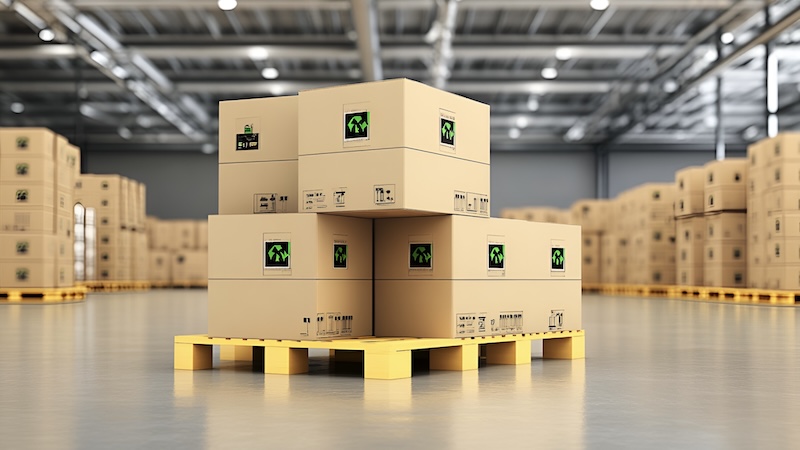
Different products require different handling. One size does not fit all.
Shipping anything with a lithium-ion battery requires specific hazard labels (UN3481 or UN3091).
* Documentation: You must provide a Material Safety Data Sheet (MSDS) and a UN38.3 test report. Failure to do so will result in the shipment being seized by customs or rejected by airlines.
* Hazmat Review: When you create a listing, Amazon will trigger a Hazmat review. Upload your documents immediately. Do not ship until the review is passed. See our insights on consumer electronics trends.
Apparel is often lightweight but bulky.
* Vacuum Sealing: To reduce volumetric weight, ask your supplier to vacuum seal the products. This can reduce shipping volume by 50%, slashing your Amazon FBA shipping fees.
* Variations: Ensure that Size S and Size M have clearly distinct packaging or labels. It is very easy for warehouse workers to mix them up if they look identical. Sourcing apparel requires specific expertise; read how to find clothing manufacturers in China.
The US (CPSC) and EU have extremely strict safety standards for toys.
* CPC (Children’s Product Certificate): You must have a valid CPC based on lab tests. Amazon will ask for this document. If you cannot provide it, they will suppress your listing and destroy your inventory.
* Tracking Label: Permanent tracking information must be printed on the product and packaging (Manufacturer name, location, date of production, batch number). For trending items, check our list of toys imported from China.
Expiration Dates: Any consumable product must have an expiration date printed on the master carton and the individual unit. The date format must be MM-DD-YYYY.
Meltable Inventory: Amazon does not accept “meltable” products (like chocolates or certain creams) between April 15 and October 15. Plan your shipments accordingly.
Sealing: Liquids must be double-sealed (foil seal + cap) to prevent leaking. Amazon requires drop-testing for liquids.
Shipping furniture to FBA is expensive due to storage fees and “Oversize” handling fees.
* The Strategy: Often, FBA is not the best model for sofas or large tables. Many sellers use FBM (Fulfillment by Merchant) or a 3PL for storage and only drip-feed inventory into FBA.
* Packaging: Must be ISTA 3A tested to survive the drop test. Amazon’s conveyor belts are not gentle. Learn more about sourcing heavy goods in our guide on buying furniture from Foshan.
Learning from others’ failures is cheaper than learning from your own.
The “Commingled” Nightmare: A seller chose “Manufacturer Barcode” (commingled). Amazon mixed their inventory with a counterfeiter’s stock. Customers got fakes, and the honest seller got banned. Lesson: Always use FNSKU.
The Pallet Overhang: A seller shipped pallets where the boxes stuck out 1 inch over the edge. Amazon refused the delivery. The carrier had to take it back, repalletize, and redeliver. Cost: $1,200 and 2 weeks delay. Lesson: Boxes must not overhang the pallet edge.
The Customs Hold: A seller undervalued their commercial invoice to save taxes. US Customs flagged it, audited the shipment, and fined them. Lesson: Always declare the true transaction value.
Should you have your Chinese supplier do the prep, or ship to a “Prep Center” in the US/UK?
Pros: Cheapest labor cost. Any defects found can be fixed immediately at the factory.
Cons: Communication barriers. If they mess up the labeling, the goods arrive at Amazon wrong, and fixing it there is incredibly expensive.
Best For: Simple prep (labeling, polybagging) for mature products.
Pros: Quality control firewall. They inspect goods before they go to Amazon. They can bundle items, insert marketing materials, and fix shipping damages. They act as a buffer for restock limits.
Cons: Double shipping (China -> Prep Center -> Amazon). Higher labor cost.
Best For: Complex kitting, high-value items, or sellers who want a final quality check on US soil.
Navigating this maze alone is daunting. A sourcing agent acts as your localized supply chain manager.
Quality Control: They perform the pre-shipment inspection to ensure FNSKU labels are correct and readable. They can simulate Amazon’s receiving process.
Consolidation: If you buy from three different factories, an agent can combine them into one container, saving you thousands in separate LCL fees and clearance charges.
Logistics Management: They select the best freight forwarder and manage the customs paperwork.
Crisis Management: If customs holds your container, your agent is the one fighting to release it.
At Maple Sourcing, we specialize in helping FBA sellers streamline this process. From sourcing the product to ensuring it meets Amazon’s strict compliance standards, we act as your boots on the ground. Learn about our full range of capabilities on our services page.
Your profitability depends on controlling costs.
Amazon’s fulfillment fees are tiered based on size and weight. A product packaging that is 0.1 inches over the limit can jump to the next fee tier, costing you an extra $1-$2 per unit sold.
* The Audit: Regularly audit your product dimensions in Seller Central. Amazon’s “Cubiscan” machines sometimes measure loosely (e.g., counting a loose flap of tape as part of the dimension). Request a remeasurement if you think they are wrong.
* Design for FBA: Design your packaging specifically to fit within the lower tier brackets. Shave off 2mm if it moves you from “Large Standard” to “Small Standard.”
Weigh the cost of the Inventory Placement Service fee against the cost of shipping three small LCL shipments to different warehouses. Often, for large shipments, it is cheaper to let Amazon split it and pay the multiple freight bills than to pay the per-unit placement fee.
Amazon is not a storage warehouse; it is a distribution center. Inventory sitting for more than 365 days incurs massive “Aged Inventory Surcharges.” * Strategy: Maintain a “lean” supply chain. Aim for 60-90 days of stock coverage. Use a cheaper 3PL for overflow storage and replenish FBA as needed.
Shipping to Amazon FBA is a discipline that rewards precision and punishes carelessness. It requires a holistic view of the supply chain, where sourcing, packaging, and logistics are interconnected gears. The decisions you make at the factory level—about box thickness, label placement, and packaging dimensions—ripple through the entire system, impacting your Amazon FBA shipping fees and your FBA inventory health.
By choosing the right sourcing partner, optimizing your packaging, understanding the “math of freight,” and staying compliant with customs and Amazon policies, you turn your supply chain into a competitive advantage. You ensure that when a customer clicks “Buy Now,” your product is there, ready to be delivered with the speed and reliability that the Prime badge promises.
Don’t let logistics be the bottleneck of your growth. Plan ahead, stay compliant, and leverage the expertise of partners who understand the FBA landscape. To start building a resilient FBA supply chain today, explore our sourcing solutions.
 English