
CNC Machining in China: Costs, Tolerances, and Quality
A CNC quote is a time estimate wearing a price tag, and three things you control decide it: the shape, the precision, and the material. No mold is involved, so the first piece can be ready within days, though the shop still bills a one-time setup before anything is cut.
| Method | Upfront cost | Sweet spot | Design changes |
|---|---|---|---|
| CNC machining | Setup and programming | One to a few hundred | Edit the file |
| 3D printing | None | Concept models | Edit the file |
| Die casting | Mold, per shape | 5,000 and up | Modify the die |
CNC sits between a printed model and tooled production, which is where most pilot runs live.
When CNC Is the Right Process
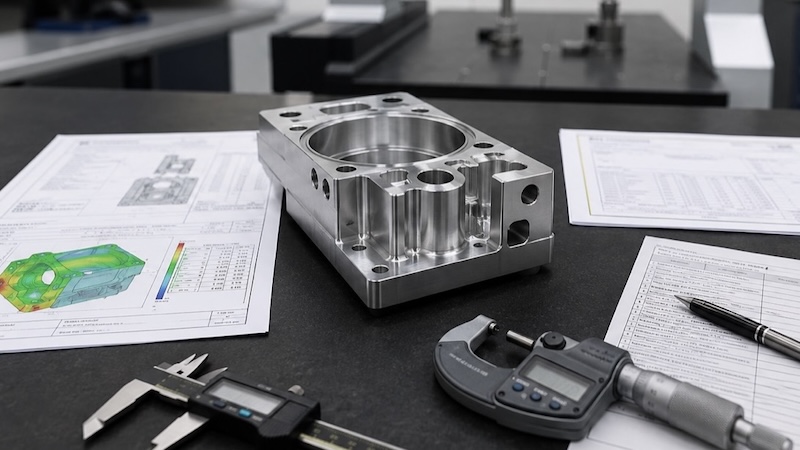
A 3D print proves the shape, while a CNC part tests the product. It is cut from real aluminum, steel, or tough plastic with dimensional control most printers cannot match, so it tells you whether the thing fits, seals, rotates, or holds load.
Match the process to the part rather than to habit. Flat sheet metal is usually cheaper through laser cutting services, and a one-off shape check with no strength requirement is faster as a print. Once a stable design sells in the thousands, casting or molding wins on unit price.
Choosing that process for you, before a factory quotes the one it happens to prefer, is part of our prototype and hardware sourcing work.
The comparison is worth making before you commit to any of them. A full view of which method suits which part sits in how to choose a manufacturing process. Many teams that start with rapid prototyping in China stay on CNC through their pilot runs.
What You Actually Pay For
Ask for prices at one, ten, and a hundred pieces on the same drawing, because the shape of that curve tells you more than any single quote does. Programming and workholding are charged once, so the per-part price normally falls as the quantity rises.
How steeply it falls tells you how much of your cost is setup and how much is cutting, which is the number you actually need before choosing an order size. A steep curve means order more at once, and a flat one means the quantity barely matters.
Get a benchmark before you talk to anyone. Western instant-quote platforms will price your own file in minutes from the same inputs a Chinese shop uses: geometry, material, tolerances, finish, and quantity. That number is not what you should pay, but it shows which of your features are expensive and gives you something to hold a quote against.
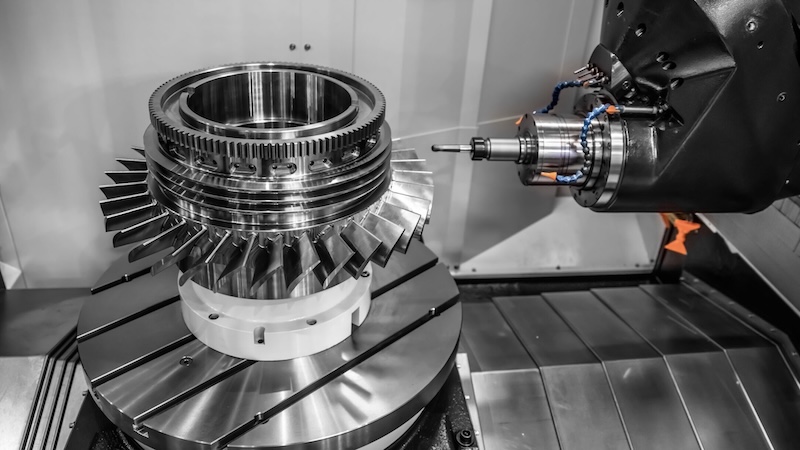
Machine hours drive the price, and the shape of the part drives machine hours. Deep pockets, thin walls, and small inside corners all force slower cutting and more tool changes. Material and surface finish add their share, and tight tolerances add measuring time on top of cutting time.
The costs that decide the outcome sit outside the machining price. Freight, duties, export packing, and revision cycles move the real number more than the quote does, and one air-freighted rework erases the saving that made you choose the cheap supplier. Those are the same costs that decide any hardware import from China.
Quotes only compare when the assumptions match. One factory includes edge smoothing, thread checks, and export packing while another quotes cutting alone. Ask every supplier to split the price into material, machining, finishing, inspection, and packing, because a single lump sum hides assumptions you will meet after payment.
Tighten Only the Tolerances That Matter
Precision is bought by the digit, so spend it where the part needs it. A tolerance is how much a size is allowed to vary. Ordinary machined dimensions often hold around 0.1 mm either way, roughly the thickness of a sheet of paper, and capable factories can hold 0.02 to 0.05 mm on selected sizes.
Every extra digit costs cutting time, measuring time, and scrap. A mounting bracket shows how the money works: its outer edges can vary without harm, while the screw holes that line up with another part need real control.
Mark the whole drawing critical and you pay for precision the part never uses. Mark only the holes that matter and the same bracket performs identically at a noticeably lower price.
Write tolerances as numbers, never as adjectives. A note saying “tight tolerance” means something different in every factory and becomes a dispute after shipment. Put figures on the sizes that affect fit, sealing, or alignment, and state which face each is measured from. Require the first finished part to be checked against the drawing before the batch runs.
Name the Grade, Not the Family
Stainless steel is not a material, 304 is. A drawing that says only stainless invites each factory to assume a different grade, so quotes for 303, 304, and 316 arrive looking comparable when they are not.
Aluminum carries the same risk. 6061 and 7075 differ in strength, cutting behavior, and price, so name the grade on the drawing and require any substitution to be agreed in writing. Unannounced swaps are the main reason a good sample fails at prototype to mass production.
Use a cheaper grade only while it still tests what you need tested. Early prototypes can run in 6061 aluminum to confirm shape and assembly. Anything depending on strength, weight, corrosion resistance, or finish has to be tested in the production grade before the design is approved.
Cosmetic finishes need a reference, not a description. Anodizing, the colored coating used on aluminum, drifts between batches, and black is not one color. Approve a finished sample, keep it sealed as the reference, and check each batch against it rather than against memory.
Read the Factory from Its Quote
A quote that comes back with comments tells you the factory read the drawing. Flagging your thin walls, deep cavities, or a long slender part that will bend during cutting shows it understood the part before making it.
Silence only means something when the part has awkward features. A simple part on a complete drawing needs no questions, but a difficult one quoted without a single query has usually been priced on the easy interpretation.
A good first piece proves one part, not a system. For orders that matter, a supplier quality audit shows whether the factory controls tool wear, work instructions, and measurement records. It also pays to check factory capacity against the delivery dates you are about to promise. A pilot run between the sample and the full order catches most of what is left.
FAQ
Q1: Is CNC machining in China cheaper than at home?
Factory rates are often lower, especially on parts needing several operations, but freight, duty, and time can erase the gap on a single urgent piece. Local shops usually win the one-off, and China gets more competitive as quantity and complexity grow.
Q2: Can a factory quote from a sample if I have no drawing?
Often yes, since the factory can measure the sample and turn it into a working drawing. Confirm the sizes that matter yourself, because a measured drawing records what the sample is rather than what it needs to be.
Q3: Does the same factory do the finishing, or is it subcontracted?
Anodizing and plating are usually sent out, which is normal but adds days and puts one step outside the factory’s direct control. Ask who does it and who carries the cost if the finish comes back wrong.
Q4: Can I order a single piece?
Yes, and it is a normal request. Setup and programming dominate the cost of one piece so it is expensive per part, but no mold forces a minimum quantity on you.
Q5: Do I have to hand over my CAD file, and what happens to it?
The factory needs the model to program the job, so ask what it keeps afterwards and put confidentiality in the order. Sending a step file rather than your native design file limits what can be reused later.
Q6: How should cosmetic and functional defects be treated differently?
Agree before production which surfaces are visible, what marks are acceptable, and which sizes affect function. Inspection effort then lands where it protects the product instead of on faces nobody sees.
Q7: Should I pay for a first article check on a small batch?
Yes, because it catches setup and programming errors while they are still cheap to correct. It does not cover tool wear or drift later in the run, so pair it with a check during production or before shipment on anything larger than a trial batch.
Q8: What should I do when the first batch comes back with problems?
Document it with photos, measurements, and a marked drawing, and separate critical defects from minor ones. Ask what caused it and how it will be prevented, because the quality of that answer predicts reliability better than the mistake itself.
Conclusion
Most of a CNC part’s cost is decided before any machine starts. Choose the right process, tighten the tolerances the function actually needs, and name the material grade instead of describing it, because the cheapest reliable part is designed rather than negotiated.
Running that discipline with a factory you cannot visit is the harder half, and it is where we spend our days. Our prototype and hardware sourcing work covers the drawing review, the factory match, and the first-piece check. The part that reaches your warehouse is then the one on your drawing.