
Factory Capacity vs Capability: Check Before You Order
A factory agreeing to your order says yes to two different questions at once. Capacity is whether they can make enough, and capability is whether they can make yours. A plant can pass one and fail the other, and from your desk both look identical until the goods arrive.
| The Question | Capacity | Capability |
|---|---|---|
| It asks | How much they make | Whether they make yours |
| It fails as | Late or missing goods | Defective goods |
| You prove it by | Floor visit, output records | Audit, sample, category history |
The two need different evidence, which is why one supplier check almost never settles both.
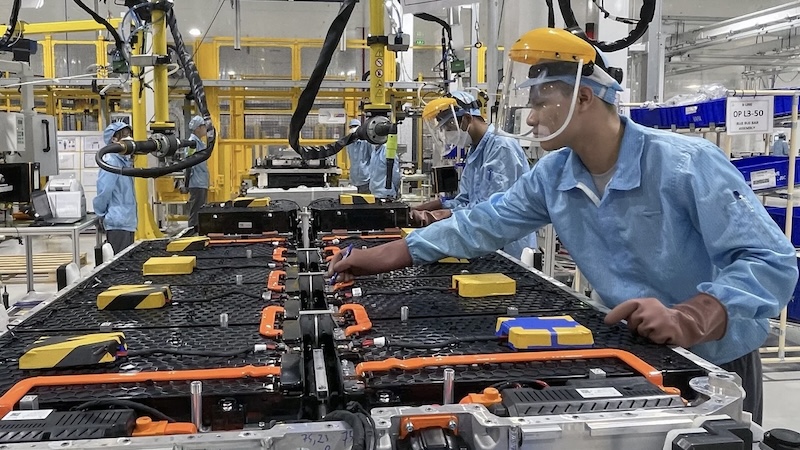
Two Different Questions Behind One Yes
Most buyers check one of the two and quietly assume the other. A factory with a huge floor and idle lines still cannot deliver a product it has never built to spec. A factory with perfect expertise still fails if it is already running flat out.
Both failures land in the same place: late, defective, or missing goods. A high-capacity plant with the wrong capability takes your order and solves the gaps mid-production. A high-capability plant with no room takes it and then delays, runs rushed shifts, or quietly subcontracts to fit you in.
Separating the two questions before a deposit moves is the whole job of manufacturing control.
Most of this is decided earlier than buyers think. A shortlist built to find Chinese suppliers already making your product category rarely springs a capability surprise, which leaves capacity as the question you still have to ask.
How to Read Capacity
Ask for the numbers, then verify them. A professional factory answers with specifics and a weak one answers with estimates, so ask for current monthly output, existing client load, and how much of the schedule is open in your window. Then ask for recent production records to back it up.
A floor visit confirms the plant is real and running at roughly the scale it claims. What it cannot show is next quarter, because active lines and stacked cartons describe today only. Read what you saw against the order book, and on a large order get your slot in writing.
Then ask about the calendar, because every capacity figure has a date attached. A plant at 60% in March can be at 95% before peak retail season or Chinese New Year, which is often exactly when your slot falls, and the number you were given in spring will not hold.
How to Read Capability
This is the harder question, and where more buyers get it wrong. Twenty injection-molding machines mean nothing if your product has to be cut from metal, and an upholstery specialist cannot automatically handle custom metalwork. Ask what else they have made like it, for how long, and for which markets.
An on-site factory audit is the most reliable read you can buy. It checks the condition of the machines, who signs off each stage, and whether the written procedures are the ones the floor actually follows. Treat certificates as a starting point and confirm each one covers the specific site and product.
A paid sample answers a narrower question. It shows whether the factory understood your spec and could hit it once, and the audit shows whether the equipment and the checks exist to hit it again. Neither settles the full run, and even a pre-shipment inspection checks only a sample of it, so each step narrows the risk rather than removing it.
Two Ways It Goes Wrong
It is easier to see why both matter when you watch each one fail on its own. Same city, same confident yes, opposite outcomes.
An importer sources promotional bags and checks only capacity. The factory makes 30,000 units a month at 60% utilization, so the order goes in. The bags arrive with handles that detach under light load, because that plant had never produced load-bearing handles at that spec and its own checks never caught it.
One question would have redirected that order: “Have you made this handle at this thread spec?” The capacity was never the problem, and no floor tour would have shown the gap either, because the gap sat in what the factory had never been asked to do.
The reverse case is a trusted kitchenware factory scaling from 3,000 units to 15,000. Years of capability on the product make the larger order look safe, but the plant is already supplying three brands at full capacity and covers the run with double shifts and delayed maintenance.
Delivery lands two weeks late, and the final 4,000 units carry finish and assembly defects from the rushed final push. The capability was fine and the capacity was not.
Red Flags While You Evaluate
A few signals reliably separate a factory that can deliver from one that only says it can, and every one of them shows up while you are still choosing.
| Red Flag | What It Usually Means |
|---|---|
| No capacity evidence at all | Nothing you can verify |
| A catalog covering everything | Trader or heavy subcontracting |
| Slow on a small sample | Low capacity or deprioritized |
| Price far below market | Cut materials or steps coming |
| Cannot explain the process | Capability probably absent |
The last row is the fastest of the five to test.
Ask the technical contact to walk you through how your product gets made, machine by machine. A factory with real capability answers in detail. One without it cannot, no matter how smooth the sales reply was.
Where This Fits in Your Sourcing
Neither check stands on its own, and both come after a more basic one. Start upstream by verifying the company, since a supplier registered mainly as a trading company needs a harder look at the real production site.
How a factory handles detail previews how it handles your order. A technical quote request is itself a capability test, because a plant with genuine product experience answers precisely while a vague one keeps asking you to simplify the brief. The same read comes from how they reply to technical questions before any formal quote.
Once the order is placed, a pre-shipment inspection checks a sample of the finished goods against the unit you signed off, which is the closest you get to checking the promise. When you are weighing two factories, these are two of the columns you compare shortlisted suppliers on.
FAQ
Q1: Does a bigger factory always mean more reliable capacity?
No, and it often means the opposite for a small buyer. A large plant tuned for volume may have less open capacity and put your modest order behind its big accounts, while a right-sized factory has more room and more reason to prioritize you.
Q2: The factory shows me a big client’s logo. Does that prove capacity?
It proves somebody else once ordered, not that room exists for you now. Ask what that client’s monthly volume is and when they last ran, because a logo on the wall is often three years old.
Q3: What is a healthy capacity utilization rate to look for?
A plant running short custom jobs and a plant making the same item all year are healthy at completely different rates, so there is no universal number. Ask what buffer they hold and what happens to your run when a bigger customer moves a date, because that answer tells you more than the ratio does.
Q4: The factory has the capability but says it is too busy. Now what?
Take that as an honest signal, not a dead end. Ask whether they can hold a slot, what the realistic lead time is, or whether part of the order can run earlier, since a factory that admits its limits is usually more trustworthy than one that takes everything.
Q5: Can a factory build capability for my product if it lacks it?
Yes, but someone pays for it, usually you, through higher pricing, longer lead times, or more risk on the first run. Developing new capability is riskier than sourcing from a factory that already has proven experience with your product type.
Q6: How far ahead should I lock a production slot before peak season?
Eight to twelve weeks ahead for a normal run, and closer to four months if your window lands before Chinese New Year or the Q4 retail rush. Book earlier than the lead time suggests, because you are competing for the slot rather than for the production days.
Q7: I need to push my order back a few weeks. Do I lose the slot?
Usually, unless you say so early. A slot is a block of line time somebody else wants, so tell the factory the moment your date slips and ask what it costs to hold the window rather than assuming it waits for you.
Q8: I misjudged the capacity and the order is running late. What now?
Get the revised date in writing with the reason behind it, then decide whether to split the shipment or move part of the run elsewhere. A daily chase changes nothing, while knowing exactly which units exist today changes what you can promise your own customers.
Conclusion
The checks cost a paid sample and a day or two of somebody’s time on the ground. Skipping them costs a season, which is why experienced buyers ask the boring questions before the impressive factory tour rather than after it.
None of this survives a video call. Reading a factory’s real load, and getting a straight answer out of the person who runs the line rather than the person who sells, both need somebody in the building on an ordinary working day. We do that through manufacturing control, before your deposit moves and after it does.