



Have you ever watched a delivery date slip by and realized you have no idea where your shipment from China actually is? That uncertainty is frustrating for online shoppers, small businesses, and operations teams alike. Real-time shipment tracking solves this by turning a vague timeline into a clear, step-by-step view of movement, delays, and expected arrival.
When a package crosses borders, it moves through multiple checkpoints, carriers, and customs processes. Each handoff can create tracking gaps if you rely on only one source. This article is designed for readers doing informational research who want a practical, easy method to track a shipment from China in real time without getting lost in logistics jargon.
The stakes are higher than convenience. Better visibility helps you plan inventory, update customers, avoid missed delivery attempts, and react quickly when a package stalls. Instead of repeatedly refreshing random tracking pages, you can follow a structured process that shows where to look, what each status usually means, and when to take action.
To set expectations, real-time tracking does not always mean second-by-second GPS movement. In international shipping, it typically means frequent status updates at key events, such as export scans, flight departures, customs clearance, and local carrier handoff. Understanding this difference prevents unnecessary worry and helps you interpret updates correctly.
In the sections ahead, we will break down:
How tracking numbers from China are formatted and why that matters.
Which tracking tools provide the clearest cross-carrier visibility.
How to read common shipment statuses without guesswork.
What to do when tracking stops updating or appears inconsistent.
How to set simple alerts and routines so you stay informed with less effort.
By the end of this guide, you will have a reliable framework for tracking shipments in real time, reducing uncertainty from dispatch to delivery. First, we will start with the foundation: identifying the right tracking number and validating it before you monitor anything else.
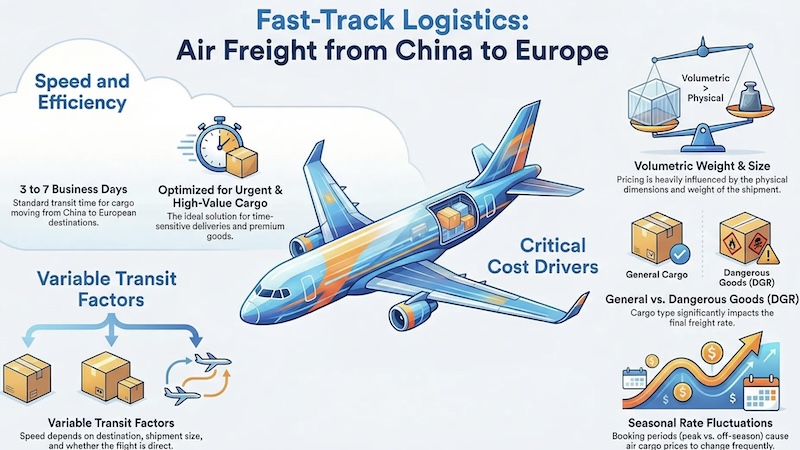
With the basics in place, real-time tracking becomes much easier when you treat it as a process, not a one-time status check. The goal is to build a simple monitoring routine that gives you fast visibility and fewer surprises while your goods are in transit.
Start by collecting the right tracking details before the shipment leaves origin. Ask for the shipment mode, carrier name, tracking number, and key milestone dates in one shared record. If you order products from China regularly, this single step prevents the common problem of searching across chat threads and spreadsheets when a delay appears.
A practical approach is to track by transport type:
Express courier shipments: Use the courier tracking number directly in the carrier portal. Updates are frequent, and event logs are usually clear enough for day-to-day order monitoring.
Air freight shipments: Track with the air waybill and flight milestones. You may see fewer updates between airport events, so set expectations for timing gaps.
Sea freight shipments: Track container or bill of lading milestones. Ocean moves often have slower status refreshes, so monitor port departure, transshipment, and arrival checkpoints.
To make monitoring truly real time for business use, define alert triggers instead of checking manually all day. For example, create notifications for no movement beyond your expected window, customs hold events, missed transshipment, or last-mile handoff delays. This keeps your team focused on exceptions rather than routine scans.
A simple workflow for consistent order monitoring:
Keep one shipment dashboard per purchase order with carrier, route, and milestone status.
Assign one owner to review updates at fixed times and escalate exceptions quickly.
Log status changes in plain language so procurement, sales, and operations read the same facts.
Compare planned vs. actual milestone dates to catch recurring bottlenecks.
Record final delivery performance to improve future China order planning.
If you manage multiple orders, centralization matters more than any single tracking page. A dedicated order monitoring setup can combine updates, highlight delays automatically, and reduce manual follow-up with suppliers and freight partners. That structure is especially useful when you order products on tight replenishment schedules and need reliable ETA visibility for downstream commitments.
When a status appears unclear, verify three points before escalating: the latest timestamp, location scan consistency, and whether the event reflects a true delay or normal transit lag. This avoids false alarms and helps you communicate accurate updates internally.
Used this way, real-time tracking is less about refreshing a page and more about operational control. You get earlier warning on risk, better delivery predictability, and cleaner coordination across purchasing and fulfillment, all from a repeatable process you can scale.
After you learn how to track a shipment from China in real time, that visibility becomes more than a convenience. It turns into a practical way to compare suppliers on execution, not just price sheets and promises.
Small test orders are useful, but real-time tracking makes those tests meaningful. Instead of judging a supplier by one delivery date, you can watch how each shipment moves through pickup, export processing, line-haul, customs handoff, and final delivery.
Use that timeline to spot patterns that increase risk before you commit to larger volume. For example, repeated origin scan delays, frequent route changes, or long inactive periods can signal weak handoff coordination. A supplier may still offer a low unit price, but unstable transit behavior can create stockouts, expedited replenishment costs, and customer service strain. In practice, tracking history helps you choose the supplier with more predictable fulfillment, which protects margin as order size grows.
Two suppliers can ship the same product but use different carrier mixes, and that difference often determines your real delivery performance. Real-time tracking helps you compare reliability across express, air freight, and ocean-linked parcel flows using observable milestones.
Focus on consistency, not isolated exceptions. A useful comparison framework is:
Milestone accuracy: Do pickup, departure, and arrival events appear on time and in logical sequence?
Update frequency: Are tracking events refreshed regularly, or do they appear in large delayed batches?
Exception handling: When delays happen, does the carrier provide clear status updates and recovery progress?
Final-mile completion: Are delivery confirmations timely and complete, including attempted delivery events when relevant?
This method keeps supplier evaluation grounded in operational proof. It also prevents overvaluing fast quoted transit times that are not consistently achieved.
Reliable ETA signals directly improve purchasing decisions. When tracking data is timely and realistic, you can place reorders based on expected arrival windows rather than guesswork, which lowers both overstock risk and emergency buying.
For buyers managing multiple SKUs, this matters at the schedule level. Better ETA confidence supports cleaner inbound planning, more stable safety stock targets, and fewer urgent shipping upgrades. It also helps internal coordination with sales and warehouse teams because arrival expectations are based on live movement, not static lead-time assumptions.
In short, real-time tracking supports smarter supplier comparison by connecting transit behavior to business outcomes: inventory stability, service reliability, and total landed cost control.
Reliable ETA signals are only useful when the tracking details are correct from the start. If you want real-time visibility without confusion, begin by confirming two basics: the right tracking number and the right carrier name.
If you order products from China regularly, this is where many tracking problems begin. Buyers often copy the order number from a marketplace and assume it is the shipment ID. In practice, you need the actual logistics tracking number, which is assigned when the seller creates the shipping label and hands the parcel to a carrier.
Use this quick process to avoid false updates and dead-end tracking pages:
Pull the tracking number from the shipping notice, not the invoice. Check the order details page, shipping confirmation email, or supplier message thread for a field labeled tracking number, waybill number, or consignment number.
Confirm the carrier name in the same record. A number may look valid but fail if you enter it on the wrong carrier site. Ask for the first-mile carrier and the final-mile carrier when available.
Check number format before you track. Many IDs follow recognizable patterns, such as letters plus digits or all digits. If the string is unusually short, contains spaces, or changes between messages, request clarification.
Verify handoff status timing. A seller can generate a label before the package enters the carrier network. If no movement appears within a reasonable window, ask whether the parcel was physically picked up.
Store both fields in your order monitoring log. Keep tracking number, carrier, dispatch date, and promised delivery window in one place so your team can follow exceptions quickly.
For business buyers, this step-by-step check improves procurement control. It prevents internal teams from escalating “lost shipment” issues that are actually data-entry mistakes, and it helps you compare delivery consistency across repeated order products. It also supports cleaner communication with suppliers because you can reference a specific number-carrier pair instead of a broad complaint.
When shipments involve consolidators, expect at least two tracking references during transit. The first number may cover export movement, while a second number appears after destination handoff. Request both early and note which one is currently active. That habit makes your order monitoring workflow faster and reduces blind spots during customs clearance or local delivery transfers.
As a practical operating rule, treat tracking data as part of purchase documentation, not an afterthought. The same discipline you use for product specs and payment terms should apply to shipment identifiers. Once your team standardizes this check, tracking a package from China becomes predictable, faster, and much easier to manage at scale.
After you have the right tracking number and carrier name, tool selection becomes the deciding factor for real-time visibility. The best setup combines three layers so you can monitor handoffs, reduce blind spots, and keep purchase timelines stable when you order products from China.
Global tracking platforms are useful when one shipment moves through multiple carriers, which is common in cross-border fulfillment. Instead of checking separate sites repeatedly, you can view status events in one dashboard and compare movement patterns across lanes. For commercial buyers, the practical value is exception handling: delayed scans, customs holds, or stalled handoffs are easier to spot early.
When evaluating a platform, focus on business workflow fit rather than extra visual features. Prioritize tools that support batch tracking, status alerts, and exportable shipment histories for order monitoring. If your team manages many POs at once, filtered views by supplier, route, or promised delivery window help procurement and operations stay aligned.
Third-party platforms are efficient, but official carrier portals remain the reference source when status details conflict. Carrier sites and apps often publish the most current scan language for pickup, transit transfer, customs processing, and last-mile delivery attempts. In practice, this helps buyers verify whether a delay is carrier-side or caused by upstream dispatch timing.
For day-to-day use, set up app notifications only for critical milestones, such as departure scan, destination arrival, and delivery exception. Too many alerts create noise and slow response time. Keep a simple internal rule: when a high-value shipment shows no movement beyond your normal threshold, confirm directly in the carrier portal before escalating with your supplier or logistics partner.
If you ship consolidated cargo, freight forwarder dashboards fill the gap between supplier dispatch and final carrier visibility. They can show container loading progress, split-shipment updates, and milestone checkpoints before parcel-level scans appear. That context is especially important when multiple orders share one booking and need coordinated ETA planning.
For business use, choose dashboards that map each leg clearly and tie tracking events to PO or SKU references. This makes order monitoring more actionable because teams can estimate downstream receiving schedules, warehouse labor needs, and customer commit dates from one operational view. A practical routine is to review forwarder milestones first, then validate parcel-level scans in carrier systems for the most reliable real-time picture.
Given the weak alignment between tracking-focused content and a commercial offer in this case, the core lesson is to treat real-time shipment tracking from China as a practical informational topic, not a conversion lever. The strongest outcomes come from clarity, process, and expectation setting rather than promotional framing.
Start with the right tracking identifier and carrier context. Real-time visibility depends on matching the shipment to the correct tracking number format and transport stage. If a package changes hands between origin carrier, line-haul partner, and local last-mile carrier, tracking methods should follow that handoff path.
Use a layered tracking workflow instead of a single source. Reliable monitoring typically combines carrier portals, multi-carrier platforms, and forwarder updates for consolidated freight. This structure reduces blind spots when updates lag on one channel or when status labels differ across systems.
Interpret status updates as operational signals, not exact movement logs. Events such as export processing, customs review, in-transit transfer, and out-for-delivery are useful for decision-making, but timestamps can post in batches. Practical tracking means reading trends and sequence, not assuming every scan reflects real-time physical location.
Set realistic timing expectations around checkpoints that commonly create delays. International handoffs, customs processing, and final-mile injection can slow visible progress even when shipments are moving normally. A clear understanding of these checkpoints helps reduce unnecessary escalations and improves communication with stakeholders.
For content strategy, prioritize topic-to-offer alignment before publishing tracking articles. If the workflow intent is informational and disconnected from your core service path, treat this topic as support content only, or deprioritize it in favor of subjects that better match buyer decisions and business goals.
Q1: How do I track a shipment from China in real time?
Start with your tracking number from the seller, marketplace order page, or shipping confirmation email. Enter it into the original carrier’s tracking page and also into a universal tracking platform that supports cross-border handoffs. Real-time visibility improves when you check both, because parcels from China often move through multiple logistics partners. Turn on status alerts by email or SMS so you are notified of scans, customs events, and delivery updates. If no update appears for several days, contact the seller with your order ID and tracking number to verify the latest carrier handoff.
Q2: Why is my tracking from China not updating for days?
This is common during export processing, flight transfer, customs clearance, or when the parcel is between carriers and not yet rescanned. Tracking may look stalled even though the shipment is moving. First, confirm the number format is correct and check both the carrier site and a multi-carrier tracker. Then wait 48–72 hours for the next scan, especially around weekends or holidays. If there is still no movement after about 7 business days, ask the seller to open a carrier inquiry and confirm whether the package has cleared customs or been handed to the local delivery partner.
Q3: Can I track a shipment from China after it reaches my country?
Yes. Once the package arrives in your destination country, final-mile delivery is often handled by a local postal service or courier. Use the same tracking number first; many systems automatically map it to the domestic partner. If it does not, check the latest event details for the new carrier name and track directly on that carrier’s website. Universal tracking tools are useful here because they often detect partner transitions faster. Monitoring both sources helps you catch local delivery attempts, pickup notices, and updated estimated delivery dates.
Q4: What information do I need to track my package from China accurately?
At minimum, you need the tracking number and seller/order details. It also helps to know the shipping method (express, postal, economy), the original carrier, and destination postal code. With this information, you can verify whether events like ‘accepted,’ ‘exported,’ ‘arrived at customs,’ or ‘out for delivery’ match expected transit stages. Keep your order date and promised delivery window handy for escalation. If delays occur, these details let support teams quickly investigate, confirm handoff points, and provide realistic next steps instead of generic delay messages.
The strongest approach is to move from passive checking to active workflow. Instead of refreshing a tracking page and reacting late, define what each status means for your timeline, inventory, and risk tolerance. A scan event, a customs hold, or a handoff to a last-mile carrier should trigger a clear action, even if that action is simply "wait 24 hours before escalating. Use this simple decision framework to keep tracking actionable:
Set shipment priorities before dispatch. Classify orders by urgency, margin impact, and customer commitment date. High-priority shipments deserve tighter monitoring windows and earlier intervention thresholds.
Map status milestones to decisions. For each milestone, decide in advance whether to notify customers, update ETA, adjust warehouse scheduling, or prepare contingency stock.
Create exception rules, not constant alerts. Most shipments move normally. Focus alerts on meaningful exceptions such as no movement beyond your tolerance window, route deviations, or repeated delivery failures.
Standardize communication. Use consistent internal notes and customer-facing updates so teams do not interpret tracking events differently across orders.
Review outcomes monthly. Compare promised versus actual delivery windows, then refine buffers, carrier choices, and reorder timing based on recurring delay patterns.
This matters for buying decisions because tracking quality affects total landed outcomes, not just visibility. Better tracking discipline helps you place reorders earlier when risk rises, avoid overstock when ETAs improve, and reduce avoidable support volume caused by vague delivery expectations. In a business context, that means fewer costly surprises and more confident purchasing cycles.
As you close this guide, make one concrete operational change: build a one-page tracking playbook for your next three shipments from China. Include priority level, milestone actions, exception thresholds, and message templates. Run it for one cycle, then adjust based on what actually happened. That single step turns tracking from information into an advantage you can use on every future order.
 English