



Have you ever stared at a Chinese supplier’s MOQ (Minimum Order Quantity) requirement and thought: “This number will sink my budget” or “I can’t move that much inventory—am I stuck?” You’re not alone. For global buyers, wading through order minimums with overseas manufacturers can feel like navigating a maze: confusing, frustrating, and easy to hit a dead end. A minimum order that’s too high will drain your cash flow and leave your warehouse stuffed with unsold goods. Push for an order size that’s too small, though, and you might lose the deal entirely or end up paying far more per unit.
Today’s cross-border ecommerce space is filled with DTC (Direct-to-Consumer) brands, startups and small retailers, all eager to test new products without huge upfront risks. This shift has pushed Chinese manufacturers to offer far more flexible production terms, and learning how to work with their rules will set your sourcing journey up for success.
Here’s one key insight most new importers miss: MOQs are never set in stone. As one of the world’s top manufacturing hubs, China’s factories operate with impressive flexibility, especially when you frame conversations around production realities, mutual trust and long-term business growth. Before jumping into price haggling, take a moment to understand why suppliers establish minimum order rules in the first place. Mastering this background knowledge is the foundation for smooth Chinese factory MOQ negotiation, and we’ll walk you through every detail right here.
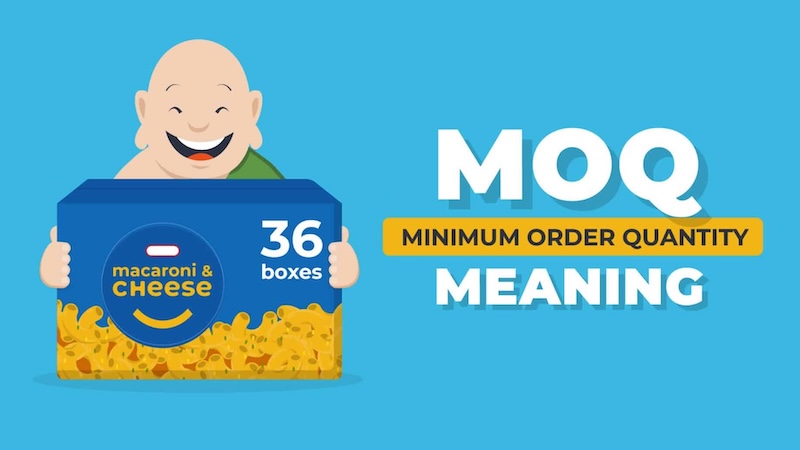
To negotiate well, you first need to understand what a factory’s minimum order quantity is designed to protect. Beyond the printed number on quotes and listings, every MOQ ties back to daily production workflows, raw material costs and overall operational efficiency. Once you grasp these core reasons, evaluating small batch China supplier MOQ across different product categories becomes far less confusing. Before locking in terms for small-lot orders, always run a quick check on a supplier’s background, production capacity, payment schedules and their process for handling defective items. This simple step helps you avoid disputes and headaches down the line.
MOQ is not just a random number a sales team picks out. For Chinese factories, it represents the smallest order volume that keeps a production run financially viable. This baseline covers all kinds of essential overhead: raw material purchases, machine setup time, tool usage, dedicated packaging runs, labor scheduling and ongoing quality checks. In most cases, MOQ applies across multiple parts of your order too — you’ll see separate minimums per product style, color, size, packaging type, or even based on your total order value.
This distinction is incredibly important for buyers. A factory might agree to a low total order volume, yet still enforce strict minimums for each individual product variation. When you’re vetting flexible MOQ Chinese manufacturers, always ask whether the listed MOQ applies to finished goods, separate product variants, or your entire purchase order. This small clarification prevents costly misunderstandings during sampling and quoting stages, and it’s a core part of professional sourcing services for cross-border importers.
It’s vital to tell apart a supplier’s official MOQ and their practical MOQ. The official figure is what you’ll see on product listings, quotation sheets and standard sales materials. The practical MOQ refers to the real order volume a factory can produce when you adjust certain details — for example, using pre-stocked raw materials, simplified packaging, or combining your order with other ongoing production runs.
Lots of buyers miss out on great opportunities because they assume the official published number is non-negotiable. Instead of writing off a high MOQ immediately, ask what changes would let the factory complete a smaller production run efficiently. For example, a supplier might quote 1,000 units for a fully customized product, but happily accept 300 units if you choose in-stock colors, plain packaging and a single logo printing style. In this scenario, the limit comes from production complexity, not total quantity. This mindset is one of the most powerful tools to negotiate MOQ with Chinese suppliers.
MOQ standards change drastically from one manufacturing sector to another. Industries that rely on custom molds, printed packaging, specialty raw materials or lengthy machine changeovers almost always come with higher minimum orders. On the flip side, product lines with pre-stocked materials and standardized production setups offer much more flexibility for small-scale buyers. Let’s break down common industry trends for small batch China supplier MOQ:
Apparel and textile production ties minimum orders closely to fabric stock, dye batches and how you split sizes or colors. Small workshops focused on online sellers usually offer lower MOQs than large factories that serve major international fashion brands.
For consumer electronics, custom components, product certifications and branded packaging push base minimum orders higher. Standard electronic accessories made with off-the-shelf parts, however, typically have relaxed rules.
Packaging and printed goods base their MOQs on plate setup fees, material waste and batch printing efficiency. Simple, unprinted packaging almost always allows for smaller orders.
Home goods and accessories are very flexible when you choose ready-made designs and standard components. Fully customized pieces will require much larger order commitments.
You’ll find reliable flexible MOQ Chinese manufacturers most easily in sectors with modular production, readily available materials and semi-custom design options. Always compare MOQ requirements by looking at both the supplier and how much customization your products need.
Even within a single industry, a supplier’s business model creates big gaps in minimum order rules. In the apparel space, large factories working with well-known Western brands will demand large fabric orders, while local small workshops with stocked fabrics specialize in mixed-size small batches. For electronics, trading companies may advertise low MOQs by sourcing goods from multiple assemblers, but this often leads to inconsistent product quality and limited traceability. When it comes to packaging producers, they may be flexible on box quantities but firm on custom inserts, since inserts need separate cutting tools and extra manual work.
A smart way to evaluate any supplier is to look at three factors together: your product, the production process, and the factory’s overall business model. A low MOQ from an unvetted supplier can end up costing you more in the long run thanks to poor quality and delayed shipments. A slightly higher MOQ from a capable factory, meanwhile, delivers steady materials, consistent quality and predictable reorder cycles.
More and more global buyers are choosing flexible MOQ Chinese manufacturers, and this trend goes hand in hand with the rise of DTC (Direct-to-Consumer) brands, startups and small retail businesses. These teams all want to test new products without taking on massive inventory risks. Most Chinese export factories have decades of experience working with international clients of all sizes, and their impressive flexibility stems from the country’s mature, interconnected industrial ecosystem.
China’s tightly connected manufacturing clusters are a huge reason suppliers can comfortably handle small orders. Factories share upstream resources across the board: packaging vendors, raw material markets, subcontract teams and logistics partners. This integrated network means manufacturers don’t have to source every single material or component from scratch for each new order.
If you’re sourcing everyday items like stainless steel drinkware, cotton tote bags, phone accessories or household organizers, you’ll benefit from materials and components that already circulate widely within local supply chains. This setup makes low MOQ China product sourcing both accessible and budget-friendly.
Fierce competition inside industrial clusters pushes factories to adapt their MOQ policies to attract all types of buyers. Large-scale production plants focus on bulk orders for major brands, while mid-sized and small factories tailor their services specifically for startups and small businesses. This tiered market structure gives importers tons of choices, whether you need mass production or small trial batches to test market demand.
Flexibility does not mean suppliers will agree to every request without limits. Some factories will accept an unrealistically low MOQ just to win your order upfront, then make up for lost profits later with inflated unit prices, looser quality standards, delayed shipments or unexpected change fees. This is why successful low-volume sourcing requires clear rules and process discipline alongside your MOQ agreement.
A truly viable low minimum order needs to stay reliable through every stage: sampling, full production, quality inspection, and final delivery. Never prioritize the smallest possible order size over consistent product quality and transparent pricing.
Since MOQ rules are built around a factory’s daily operations, your negotiations will work best when your requests align with their real operational limits. Buyers partnering with flexible MOQ Chinese manufacturers get far better results by offering practical trade-offs, rather than simply demanding lower order numbers. Below are seven field-tested strategies to adjust minimum orders while protecting both your budget and your supplier’s profitability.
Small and mid-sized factories are far more willing to accept small opening orders than large facilities built for non-stop mass production. Before you start negotiating, ask suppliers about their standard batch sizes, machine setup requirements and any idle production capacity they have available. When your order volume fits their regular workflow, your request comes across as reasonable, not risky.
An order of 500 units might mean nothing to a factory that regularly runs batches of 50,000 units for big brands, but it is a valuable order for a small workshop focused on mixed production runs. Targeting factories that match your order scale cuts down negotiation friction and locks in better MOQ terms right from the start. Completing a thorough factory audit will help you accurately assess a facility’s production scale and available idle capacity.
If a single product style cannot meet the required MOQ on its own, combine multiple colors, sizes or minor design variations that use the same raw materials and tooling. Most suppliers are happy to accept a combined total order volume, instead of tiny standalone orders for each variant. This approach lets you work with reputable flexible MOQ Chinese manufacturers without overcommitting to just one product version.
For example, an apparel buyer can split a 600-unit order across three sizes and two colors, using the exact same fabric and construction methods. A buyer sourcing home goods can order one core design in several neutral finishes, rather than placing separate orders for fully custom builds. This strategy works best when your variations do not require new tooling, separate material purchases or complicated packaging workflows.
Factories are quick to lower MOQs when they see potential for repeat business. Instead of asking for a one-time exception to their rules, share a realistic purchasing plan for future orders — even if your initial order volume is small. A believable sales forecast, clear reorder timelines and prompt, reliable communication will make flexible MOQ Chinese manufacturers eager to support your product launch.
Honesty goes a long way here. Experienced suppliers can easily spot overblown promises about future sales. A simple forecast for your next two or three orders is much more persuasive than an overly ambitious annual projection. Sharing details about your sales channels, pre-orders, distributor partnerships or past sales data for similar products adds extra credibility to your request, which is a key step for anyone focused on small business China MOQ sourcing.
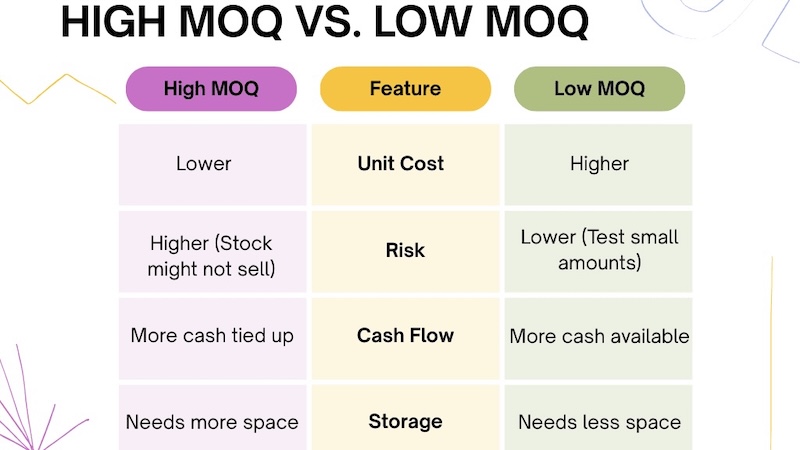
Lower MOQs almost always come with higher costs per unit. Fixed expenses like machine setup, labor and material sourcing get spread across fewer products, which drives up individual pricing. In most cases, accepting this trade-off is the simplest way to place a smaller first order. Think of the slightly higher unit cost as a risk-management fee: it protects your cash flow while you test market demand before scaling up production.
This tactic is especially smart for brand-new products. Spending a bit more per unit for 300 units is far safer than investing in 3,000 units at a lower price before you confirm customer interest. Many buyers fixate only on direct production costs and overlook hidden expenses like inventory storage fees, product markdown losses and the cost of reworking flawed packaging after launch.
Factories become much more flexible with MOQs when their production lines are not fully booked. If your product launch timeline is adjustable, schedule trial orders during slow seasons to fill empty production slots. Suppliers will often reduce minimum order requirements to keep their machinery and staff busy during quiet periods.
Seasonal demand shifts across different industries. Apparel factories get swamped ahead of major retail seasons, while gift and decoration manufacturers see huge order surges before global holidays. Placing orders during slower months not only improves MOQ flexibility, it also speeds up overall communication and production timelines, since sales and production teams have more bandwidth to focus on your project.
Many buyers reach their target order volumes by grouping related products together, or teaming up with third-party partners to combine orders from multiple importers. This is one of the most reliable ways to cut MOQ via sourcing agent. The main rule here is operational compatibility: all combined products need to use similar materials, shared production processes and aligned quality standards. Order consolidation lowers overall costs without forcing excess inventory into your warehouse.
A common real-world example is private-label accessories. You can group several small items from the same factory into one unified order, helping the supplier hit their overall production target even if each individual item falls below their standard MOQ. Just be sure to keep tight control over packaging details, carton markings and inspection rules, so one problematic product does not delay your entire shipment.
Whenever possible, discuss MOQ adjustments with factory owners or production managers, rather than only speaking with sales representatives or trading company intermediaries. On-site decision-makers have full authority to approve exceptions, adjust production schedules and negotiate margin trade-offs. This is a critical tip for effective Chinese factory MOQ negotiation.
Trading companies do offer value for startup buyers, as they combine products from multiple factories and simplify group orders. That said, if high MOQs are your biggest challenge, direct communication with the factory itself will give you a clear picture of what is truly negotiable, and what production limits cannot be changed.
Navigating complex MOQ rules across hundreds of Chinese factories takes a lot of time for independent importers. That’s why professional third-party sourcing support has become a staple of modern cross-border sourcing. Experienced sourcing teams leverage long-standing industry connections and order consolidation to create opportunities individual buyers cannot access on their own, and sourcing agents reduce supplier MOQ for clients of all business sizes.
Trusted sourcing agents maintain long-term partnerships with hundreds of verified manufacturers across China. By pooling orders from multiple clients, they regularly meet factories’ standard MOQ thresholds, while still fulfilling each buyer’s request for small-batch production. This business model has made low MOQ China product sourcing accessible to startups, solo entrepreneurs and small retailers who cannot meet factory minimums on their own.
To keep this process smooth and error-free, finalize all product specifications, design details and product development requirements upfront. Clear inspection criteria and quality standards also prevent mistakes when handling consolidated production runs.
Before working with an agent to adjust your minimum orders, organize all your product documentation: design files, material requirements, packaging rules and quality benchmarks. Define your maximum acceptable unit price, target delivery timeline and future reorder plans. The more detailed your requirements are, the better your agent can negotiate favorable terms with manufacturers.
Small business China MOQ sourcing comes with unique challenges: limited startup capital, unpredictable customer demand and little to no in-house sourcing experience. Specialized sourcing agencies offer lower MOQ China sourcing help tailored for small-scale operations, bundling supplier screening, MOQ negotiation, production monitoring and logistics coordination into one complete service package. These services remove the guesswork from working with Chinese factories and cut down the risk of costly mistakes for new importers.
Once you’ve learned how to negotiate better order minimums, the next step is finding manufacturers who are open to small opening orders. Picking the right suppliers cuts down negotiation time significantly, and ensures your agreed MOQ terms translate to consistent quality and on-time delivery. Always evaluate a supplier’s background, production capacity, payment policies and process for resolving defective goods before you finalize any cooperation.
Alibaba remains the most popular starting point for overseas buyers, but the low MOQs listed on product listings do not always reflect real-world flexibility. Treat platform listings as an initial screening tool, then verify whether the supplier supports pilot orders, mixed product styles and a smooth transition from sampling to bulk production.
1688, China’s domestic wholesale platform, hosts a larger number of direct factories and small workshops that regularly handle small batch China supplier MOQ. The main downside is the platform operates primarily in Chinese, so foreign buyers will need translation support or local representation to communicate effectively. When reaching out to suppliers on either platform, send specific requests including product specs, target quantity, color or size combinations and your future reorder plans. Detailed inquiries help you spot reliable partners much faster than simply asking “what is your MOQ?” A supplier that answers your questions clearly, clarifies ambiguous details and explains MOQ constraints is always more trustworthy than brands that only send generic catalogs and vague promises.
Online research is efficient, but in-person visits to manufacturing clusters help you discover quality producers that do not have polished online storefronts. Industrial zones like Guangzhou’s apparel manufacturing districts let you tour workshops, inspect raw materials and observe daily production workflows in person. This approach works perfectly for fashion items, accessories and fast-moving consumer goods with frequent design updates.
Always bring complete design documents, physical samples or detailed product briefs when visiting sourcing hubs. Without clear product requirements, site visits turn into casual browsing instead of productive negotiation opportunities.
General wholesale platforms cast a wide net, but niche supplier directories save you time by curating factories that specialize in small-batch production and supporting startup businesses. These resources pre-screen manufacturers who are used to product testing, low-volume private label orders and gradual business scaling.
Use a simple evaluation checklist for every potential partner: confirm their real production MOQ (not just the number quoted by sales teams), check if mixed product variants count toward the minimum order, see if using in-stock components lowers order requirements, review their sampling and lead time policies, and assess how reliable their reorder process is. Compare three to five suppliers before locking in a partnership. The best manufacturers will explain their operational limits openly and propose practical solutions, instead of just giving a quick yes or no to your MOQ requests.
A low MOQ only delivers value if the supplier can provide consistent, compliant products. Run thorough supplier verification to confirm a factory’s legal registration, business scope and official production authorization. Some suppliers market themselves as direct factories while actually operating as trading companies, which can impact lead times, communication quality and your leverage during Chinese factory MOQ negotiation.
Request valid business licenses, production certifications and compliance documents, and double-check that all paperwork matches the factory’s legal name, product category and physical production site. For regulated goods, ask for product-specific compliance certificates, instead of general company documentation. A full review should include factory photos, quality management certifications and a proven track record of exporting products similar to yours. Verified credentials strengthen your position during MOQ discussions, as legitimate factories are far more open to pilot orders and staged production runs.
Samples are not just a formality — they are your first real test of a supplier’s capabilities before you agree to any MOQ terms. Request samples made to match full bulk production standards, using the exact same materials, workmanship and packaging you plan to use for your main order. For products with multiple variants, ask for a full set of samples covering key colors, sizes and finishes.
Use the sampling stage to test communication and process control too. Notice if the factory confirms your specs in writing, points out unclear details and revises samples quickly after you share feedback. Turn your approved samples into a formal reference package, including photos, measurements, packaging rules, labeling instructions and quality acceptance criteria. This documentation removes ambiguity for small-batch orders and protects your interests for long-term cooperation.
After you verify factory credentials and approve samples, conversations naturally shift to pricing and payment structures. Smaller order volumes cut down upfront inventory risk but raise per-unit costs, so your financial analysis needs to be just as thorough as your supplier screening work. Mastering MOQ payment terms negotiation is a key leverage point to balance order size, overall cost and business risk.
Flexible MOQs let you test market demand and refine product designs before scaling up production. That said, small production runs spread fixed operational costs across fewer units, which pushes up individual item prices. When negotiating, treat unit price as just one part of your overall commercial agreement, not the only deciding factor.
Ask suppliers for tiered quotes covering two to four different order volumes. This makes it easy to compare pricing for trial orders against future larger reorders, and see exactly where volume discounts create meaningful savings. Reliable manufacturers will break down fixed costs, volume-sensitive expenses, and explain how future bulk orders can offset initial production fees.
Low MOQ quotes often look budget-friendly at first glance, until unexpected extra charges appear. Common hidden fees include mold and tooling costs, custom packaging fees, color matching charges, labeling expenses, third-party quality inspection fees and higher shipping rates for small shipments. Some factories also charge fees for leftover raw materials if your order cannot use up their standard bulk material purchases.
Always ask for a full written breakdown of all costs. Trusted suppliers clearly separate one-time fees, recurring charges and fees that can be credited back to you on future orders. Transparent pricing is always more valuable than the lowest headline price on a quote.
A factory’s quoted unit price never represents your total final expenditure. Calculate your full landed cost by adding unit pricing, setup fees, packaging, inspection, freight, import duties, taxes, payment processing fees and the potential cost of replacing defective goods. For small orders, shipping and handling expenses have an outsized impact on profitability, so a cheap ex-factory price can still turn into an expensive final product.
Work with experts at payment consulting to structure payment terms that fit your cash flow while meeting the factory’s requirements. Before you send a counteroffer, define your target landed cost. This lets you negotiate targeted concessions, such as reduced tooling fees or bundled inspection services, instead of chasing unrealistic unit prices.
It’s also wise to plan for potential risks. Run the numbers on what it would cost to replace defective units, pay for express shipping for replacements or issue customer refunds if quality issues pop up. This exercise helps you redefine what makes a great MOQ deal. The best initial order is not always the smallest one, but the one with controlled risk and predictable total costs for low MOQ China product sourcing.

Q1: What does MOQ mean in Chinese manufacturing?
MOQ stands for Minimum Order Quantity, which refers to the smallest number of units a supplier will produce or sell in a single order. Within Chinese manufacturing, this number reflects real production costs including raw material purchases, machine setup work, labor and packaging. Understanding MOQ rules helps you plan budgets, streamline negotiations and avoid unexpected issues during low MOQ China product sourcing across all manufacturing sectors.
Q2: Can you negotiate MOQ with Chinese suppliers?
Absolutely. MOQ is nearly always negotiable with Chinese suppliers. Successful efforts to negotiate MOQ with Chinese suppliers rely on collaborative business talks, rather than one-sided demands. Suppliers respond best to clear sales forecasts, simplified product specs, fewer variants and staged order plans that reduce their operational risk. Using structured negotiation skills keeps you away from blind haggling and builds mutually beneficial terms for both sides.
Q3: Why do manufacturers set minimum order quantities?
Factories set MOQs to cover fixed production costs for raw materials, machine changeovers, labor scheduling and packaging setup. These numbers are not random rules — they reflect a factory’s daily production rhythm and profit thresholds. Understanding these core reasons helps you negotiate realistic terms with flexible MOQ Chinese manufacturers.
Q4: What’s the best strategy to lower MOQ with a Chinese factory?
Top tactics include sharing realistic sales forecasts, cutting down product complexity and variants, offering larger upfront deposits, and proposing phased order schedules with gradually growing volumes. Using factual data and clear business reasoning instead of pressure delivers the best results for small business China MOQ sourcing and all cross-border procurement work.
Q5: How can buyers reduce minimum order limits via third-party resources?
Professional sourcing agents combine orders from multiple buyers to meet factory minimum requirements, and this is exactly how sourcing agents reduce supplier MOQ. Global merchants regularly cut MOQ via sourcing agent to simplify order setup and access small-batch production without hitting individual factory thresholds on their own.
Q6: Can foreigners buy directly from Chinese manufacturers on 1688?
Yes, foreign buyers can purchase goods directly from manufacturers on 1688, Alibaba’s domestic wholesale platform. This site often features more flexible small batch China supplier MOQ. Since the platform is mainly in Chinese, most overseas buyers work with sourcing agents or translation tools for smooth communication. These platforms remain core channels for stable low MOQ China product sourcing.
Q7: Are flexible minimum-order manufacturers suitable for startups?
They are an excellent fit. Flexible MOQ Chinese manufacturers let startups test product-market fit without committing to large inventory stocks. Startups get the best results by sharing realistic growth plans and offering trade-offs like simplified product designs. New importers can also access professional lower MOQ China sourcing help to avoid common sourcing mistakes and pitfalls.
Q8: What tradeoffs can buyers offer to get a lower MOQ from Chinese suppliers?
You can offer simplified product specifications, fewer product styles, colors or sizes, standard packaging instead of fully custom designs, larger upfront deposits, or staged orders with defined future order volumes. Every one of these adjustments reduces factory risk and makes small production runs financially viable, solving the most common pain point of small batch China supplier MOQ for global importers.
Q9: How important is a sales forecast when negotiating MOQ with Chinese manufacturers?
A clear, credible sales forecast is one of your strongest negotiation tools. Factories prioritize buyers who show clear potential for repeat business and long-term growth. Documented demand data and existing customer commitments position you as a low-risk partner, making factories more willing to accept lower minimum orders. Detailed forecasts also serve as key leverage during MOQ payment terms negotiation and quantity adjustment conversations.
Q10: What should importers know before starting formal factory talks?
Importers need to understand that MOQ is rooted in real production economics, not rigid company policies. Before reaching out to manufacturers, define your target order size, budget, product specs and sales plans. Being open about your business stage builds trust and improves outcomes for Chinese factory MOQ negotiation. Preparing complete product documentation and budget details creates a solid foundation for smooth long-term cooperation.
The best outcome from MOQ negotiation is not securing the tiniest possible initial order. It is locking in a practical first production run with clear unit pricing, fixed lead times, agreed quality standards and a clear path for future reorders. When you evaluate manufacturing partners in China, focus on consistent communication, transparent cost explanations and stable contract terms that stay the same from initial quotes to final invoices. Reliable suppliers will clearly outline their operational limits, giving you a firm foundation for negotiation instead of empty promises.
Treat your first small-batch order as a full test of the entire supplier relationship, not just a check for product quality. Confirm that documentation stays consistent between sampling and mass production, finished goods match your approved samples, all costs remain transparent, and the supplier addresses your feedback openly and efficiently. These long-term partnership indicators matter far more than minor differences in MOQ, as they determine whether scaling your business will be smooth or full of disruptions.
To take actionable next steps, pick one product you are currently sourcing and put together a concise MOQ negotiation brief. Include your target order size, acceptable design simplifications, packaging preferences, quality rules and future reorder plans. Share this document with a shortlist of three to five suppliers and compare their responses side by side. This simple process helps you judge manufacturers based on transparency and overall fit, not just upfront pricing, and sets your small business up for sustainable low-volume sourcing success in China.
 English