
Famous Products Made in Shenzhen: What the City Builds
Shenzhen builds almost anything with a circuit board or a battery in it. DJI and BYD are Shenzhen companies, though a famous brand having its head office here tells you nothing about where your own order would be built.
| Category | Shenzhen is known for |
|---|---|
| Consumer electronics | Phones, earbuds, chargers |
| Drones and robotics | Camera drones, robot vacuum cleaners |
| Smart home | Cameras, doorbells, smart plugs |
| Wearables | Smartwatches, fitness trackers |
| Battery and mobility | Power banks, e-bikes, storage |
Every one of those categories is open to a small buyer, and each carries a different entry cost and approval burden.

Why Shenzhen Makes So Much
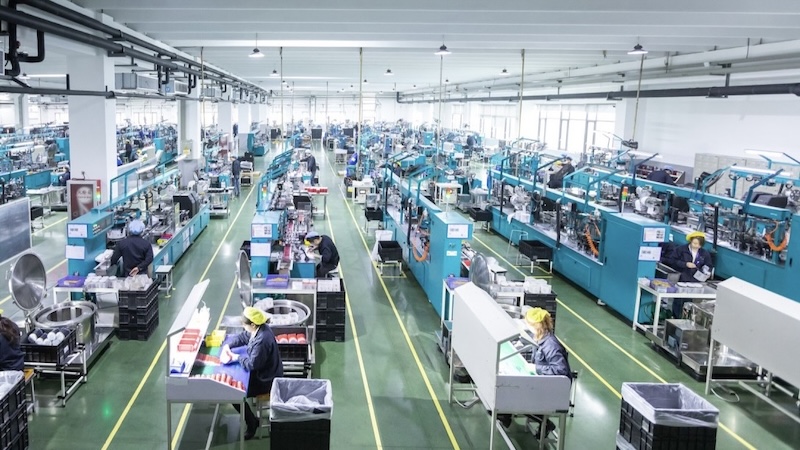
Component makers, circuit-board shops, tooling suppliers, and assembly lines are packed into one region, so a product needing dozens of parts never leaves it half-built. The big brands built their supply chains on that density, and the way large buyers qualify factories scales down further than most importers expect.
The practical effect is speed rather than price. Shenzhen is rarely the cheapest place for basic assembly, and for simple goods other regions usually win on price. Where it wins is any product that changes fast and needs many parts close together, which is the trade that decides manufacturing in China at every scale.
Working out which corner of that cluster actually suits your product, before you start collecting quotes, is where consumer electronics sourcing starts.
Consumer Electronics Is the Core
Phones, audio, charging, and accessories are the categories Shenzhen is built on, and they run from excellent to unsellable inside the same market. Complete handsets sit alongside cases, screen protectors, cables, and stands, with an accessory chain few places can match for breadth, and an audio range that turns over faster than most buyers reorder.
Charging and power is where certification separates the real suppliers. What applies depends on the product and the destination, and some of it is law while some is what buyers and platforms expect anyway. A plain cable and a power bank are not in the same position, so ask which rule the supplier is meeting.
Then check that the report’s scope actually covers the model you are buying. A series certificate may not name your SKU, and a document that does name it can still cite the wrong standard, the wrong applicant, or an older version.
The market floor makes this category look easier than it is. Stalls sell almost anything in small quantities, which is why the Huaqiangbei market risks catch buyers who mistake availability for a supply chain.
Drones, Robotics, and Wearables
Shenzhen holds one of the world’s strongest consumer drone supply chains, and robotics and wearables grew out of the same component base. On drones, swapping a motor or camera pulls in structure, power, and firmware, so a parts change is never only a parts change.
Robotics moves fastest of the three, and last year’s model is usually gone, so expect suppliers to push you to the current version rather than the one you found. Wearables look alike on a spec sheet and only separate after a month of use, in sensor accuracy and in how the battery behaves.
Smart Home Devices
Smart home runs on the same sensor, wireless, and chip base as the rest of the city, though whether a device joins your target ecosystem is decided model by model. Test that on a production unit rather than on a supplier’s compatibility list, push the device off the network and watch how it reconnects, and settle who maintains the app and the cloud service once you are selling.
How far to customize is the decision underneath all of it. Branding a ready-made device is fast and cheap, while product development in China on your own design costs more and gives you something a competitor cannot buy off the same line.
Electric Vehicles and Battery Tech
The battery chain that feeds phones and drones scales up here into scooters, power tools, and grid storage. That opens access to packs, charging systems, and complete mobility products at prices most markets cannot match.
Batteries carry rules the rest of electronics does not. Lithium cells face strict transport requirements and destination safety rules, so confirm the product certification and the shipping paperwork before you place the order rather than after. The requirements around lithium-ion battery imports decide whether your goods fly, sail, or sit.
Start from the battery itself. Take the cell or pack model from the label or the datasheet, then trace it to the UN38.3 transport summary, which is the lithium shipping document rather than a market approval for the finished item.
The same model number on both is the cleanest link, though a summary listing several models, or a written cross-reference from the maker, does the same job. What will not do is a sister model matched on looks or on a verbal assurance, so ask for the document that ties your pack to the tested design before you release the balance.
What Can Change After You Approve the Sample
The sample you signed off and the units in your third order can differ without anyone lying to you. A chip or a cell goes out of production, the factory drops in an equivalent, and nobody mentions it because the product still works on the bench. Your return rate is where it shows up.
Name the parts that are not allowed to change. Write the chip, the cell, the sensors, the driver board, and the firmware version into the specification as fixed items. Require written approval before any swap. The test for what belongs on that list is whether a substitution could move performance, safety, or your certificates.
Then re-check on the reorder, not just the first order. Pull a fresh unit from each production run and test it against your signed sample, focusing on the functions that depend on the parts you locked. It costs one sample and catches the change a photo never shows.
How to Buy Well in Shenzhen
The city’s real risk is not capability but the way traders and makers look identical online. Confirm whether the seller manufactures or resells, and ask for a current sample built to your written specification rather than a photo of somebody else’s.
Protect the design before you show it around. Look-alikes appear fast in a market this dense, so protect your product idea with a confidentiality agreement and clear tooling ownership before the first sample leaves the building.
Get eyes on the ground where distance hurts most. Verifying a factory, watching a line in motion, and reading a room during a negotiation do not travel well over email, which is where a Shenzhen sourcing agent is worth the fee.
FAQ
Q1: Do the famous brands and the small suppliers use the same factories?
Often the same component suppliers, rarely the same assembly lines. Ask what they would build for you rather than who they have worked for.
Q2: Which category is the easiest entry for a first-time buyer?
Cases, stands, and other accessories with no electronics inside, where a defect is cheap and approval is light. Charging cables are not in that group, since power rating and data capability bring their own test requirements, and higher-rated ones carry an e-marker chip that tells a device what the cable can handle.
Q3: Why do two identical-looking products have very different prices?
Because of what is inside. The same earbud or power bank can use a cheaper chip, a lower-grade cell, or thinner casing, and the difference only appears once you open one.
Q4: Do Shenzhen suppliers handle packaging and branding?
Most do, from printing a logo to designing retail packaging. Put packaging, labeling, and required marks in the written order rather than assuming they are included, and settle who owns the artwork before production starts.
Q5: Can a supplier get my product certified for my market?
Many arrange testing and guide the paperwork, but responsibility stays with you as the importer. Name your destination country early so the right marks are built in rather than added at the end.
Q6: How fast can a Shenzhen supplier turn around a design revision?
Days rather than weeks on anything the local base already stocks. Ask first whether the change touches firmware or tooling, because those are not the same request.
Q7: How much of a Shenzhen product is really made in Shenzhen?
Often the assembly and most of the electronics, with plastics, packaging, and metal parts coming from Dongguan or Huizhou. Ask where each major part is made, since a supplier who cannot answer does not control the chain.
Q8: Can I move production out of Shenzhen later if costs rise?
For simple assembly, often yes. For anything with a dense parts list the components still come from here, so you move the labor and keep the freight.
Conclusion
Shenzhen will build your product at whatever level you are willing to specify and check. The variable is never the city but the factory you picked and the specification you handed it. Both are things you control before the first order, and neither gets easier to fix afterwards.
Telling a maker from a trader, spotting the version built to a cheaper bill of materials, and catching a substituted cell on the third order are not things a website will show you. We do that work inside the factories, so consumer electronics sourcing begins with a plant that has already built what you are ordering, not with one that is willing to try.