



The decision to bring a new medical device from concept to market is rarely straightforward. Development timelines stretch across years, regulatory hurdles multiply, and the engineering expertise required spans disciplines that few organizations can staff entirely in-house. For many US-based manufacturers and startups, medical device outsourcing has emerged as a strategic response to these pressures — not simply as a cost-cutting measure, but as a deliberate approach to accelerating innovation while managing risk.
The medical device industry in the United States operates under some of the most rigorous regulatory frameworks in the world. FDA requirements shape every phase of development, from design controls and risk management to clinical validation and post-market surveillance. Navigating that complexity demands specialized knowledge, and the growing outsourcing market reflects a fundamental reality: no single organization can maintain deep expertise across every domain a modern device requires.
Device outsourcing encompasses far more than manufacturing. Companies today engage external partners across the entire product lifecycle — from early-stage medical design and feasibility studies through verification, validation, and regulatory submission. This breadth distinguishes contemporary outsourcing medical device strategy from the narrower contract manufacturing relationships that defined earlier decades of the industry.
Understanding when and how to leverage medical device outsourcing effectively is increasingly a core competency for product development leaders. This article examines the key considerations, benefits, and challenges involved in outsourcing medical device development, offering a practical framework for US-based organizations evaluating their build-versus-partner options.
Several factors are converging to make outsourcing a more prominent part of device development strategy:
Talent scarcity: Specialized engineering disciplines — embedded software, biocompatibility testing, human factors engineering — are difficult and expensive to staff internally.
Regulatory complexity: FDA's evolving guidance on software as a medical device (SaMD), cybersecurity, and quality system requirements demands dedicated expertise.
Speed-to-market pressure: Competitive dynamics reward organizations that can compress development timelines without sacrificing quality or compliance.
Capital efficiency: Early-stage companies and established OEMs alike seek to allocate R&D budgets toward differentiated capabilities rather than generalist overhead.
These drivers collectively explain why device design and development outsourcing has grown beyond a niche option into a mainstream strategy. The sections that follow explore how organizations can approach these partnerships thoughtfully, evaluate partner capabilities, and structure engagements that protect both quality and intellectual property.## Understanding Medical Device Development Outsourcing: What It Means for Your Organization
Building on the strategic importance of outsourcing in today's competitive healthcare landscape, understanding what medical device outsourcing truly encompasses is essential for making informed decisions. Medical device development outsourcing refers to the practice of partnering with specialized external organizations to handle specific stages or entire processes of bringing a medical device from concept to market, rather than managing these functions exclusively in-house.
At its core, device outsourcing allows companies to leverage external expertise, infrastructure, and resources for activities ranging from initial design and prototyping to regulatory compliance, manufacturing, and post-market surveillance. This collaborative approach has become increasingly prevalent as medical device companies recognize that building comprehensive internal capabilities across all development phases requires substantial capital investment, specialized talent, and time that many organizations cannot efficiently allocate.
The scope of outsourcing medical device development typically falls into several distinct categories. Design and engineering services represent one fundamental area, where external partners assist with concept development, industrial design, mechanical and electrical engineering, and software development. These specialists bring deep technical knowledge and experience across multiple device types, helping companies navigate complex design challenges while maintaining compliance with FDA regulations and international standards.
Manufacturing represents another critical dimension of medical device outsourcing. Contract manufacturers can handle everything from prototype production to full-scale commercial manufacturing, offering access to specialized equipment, cleanroom facilities, and quality management systems that would be prohibitively expensive for many companies to establish independently. This arrangement proves particularly valuable for startups and mid-sized companies that need to maintain flexibility in production volumes while ensuring consistent quality.
Regulatory and quality assurance services constitute a third vital category within the outsourcing medical device ecosystem. External consultants and specialized firms guide companies through the intricate FDA approval processes, including 510(k) submissions, premarket approval applications, and quality system regulation compliance. These partners maintain current knowledge of evolving regulatory requirements across multiple markets, reducing the risk of costly delays or rejections that can derail product launches.
The outsourcing market for medical devices has expanded significantly in recent years, driven by several converging factors. Technology complexity continues to increase as devices incorporate advanced sensors, wireless connectivity, and artificial intelligence capabilities that require multidisciplinary expertise. Meanwhile, regulatory requirements have become more stringent, demanding specialized knowledge that many companies cannot maintain internally across all product lines and global markets.
When organizations engage in medical device outsourcing, they typically select one of three primary engagement models. The first involves project-based outsourcing, where specific tasks or development stages are contracted to external partners while the company retains overall program management. The second model encompasses full-service outsourcing, where an external organization manages the entire development lifecycle from initial concept through commercialization. The third approach involves strategic partnerships or co-development arrangements, where internal and external teams work collaboratively with shared responsibilities and often shared intellectual property rights.
Understanding the distinction between different types of medical design outsourcing helps companies make appropriate partner selections. Product development organizations focus primarily on design, prototyping, and development services, bringing innovation and technical expertise to early-stage projects. Contract development and manufacturing organizations offer integrated services spanning design through production, providing continuity throughout the product lifecycle. Specialized consultancies concentrate on specific aspects such as regulatory strategy, clinical trial design, or cybersecurity validation, filling targeted capability gaps.
The decision to pursue outsourcing medical device development rather than building internal capabilities involves evaluating several key considerations. Companies must assess their core competencies and determine which activities provide genuine competitive advantage versus those where external expertise might deliver superior results more efficiently. Financial analysis should compare the total cost of ownership for business consideration.
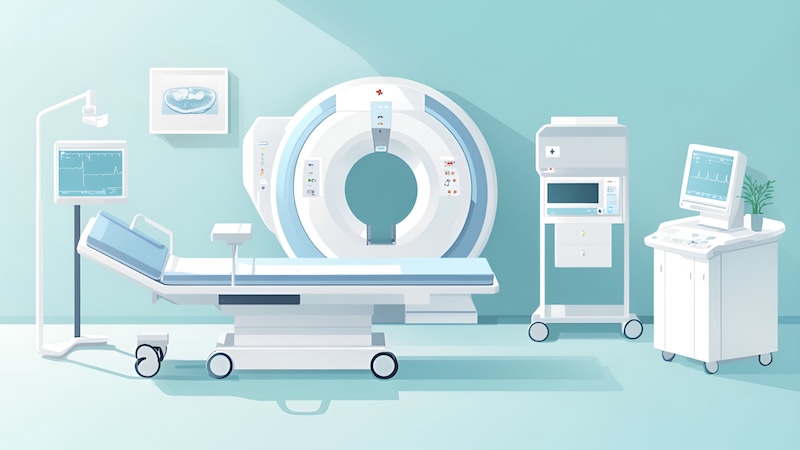
Having established why organizations pursue medical device outsourcing, it's essential to understand that not all outsourcing arrangements serve the same purpose. Companies can delegate different phases of the product lifecycle, from initial concept through production, and choosing the right type of partnership directly impacts project success, regulatory compliance, and time to market.
Manufacturing outsourcing involves contracting external facilities to produce medical devices according to established specifications and designs. This approach allows companies to leverage specialized production capabilities without investing in their own manufacturing infrastructure. Organizations typically pursue this route when they possess strong in-house design capabilities but lack the production capacity, specialized equipment, or regulatory expertise required for commercial-scale manufacturing.
Contract manufacturers for medical devices handle various production aspects including component fabrication, assembly, sterilization, packaging, and quality testing. These partners maintain FDA-registered facilities and operate under strict quality management systems compliant with ISO 13485 and FDA 21 CFR Part 820 regulations. The medical device outsourcing market for manufacturing services encompasses everything from Class I devices like bandages to Class III implantable devices requiring stringent cleanroom environments.
Manufacturing partnerships typically follow one of two models: the company provides complete design files and specifications for execution, or the manufacturer offers design-for-manufacturability input to optimize production efficiency. This type of device outsourcing proves particularly valuable for startups and mid-sized companies that need to scale production quickly without the capital expenditure of building manufacturing facilities.
Development outsourcing encompasses the creative and engineering phases of bringing a medical device concept to reality. This includes industrial design, mechanical engineering, electrical engineering, software development, human factors research, and prototyping. Companies engage development partners when they lack specific technical expertise, need to accelerate timelines, or want to supplement internal teams during peak project demands.
Outsourcing medical device development offers access to multidisciplinary teams experienced in navigating complex regulatory pathways. These partners guide products from conceptualization through design verification and validation, creating documentation packages necessary for FDA submissions. Unlike manufacturing relationships, development outsourcing requires deeper collaboration on strategic decisions about device functionality, user experience, and market positioning.
This model benefits organizations at various stages: early-stage companies without established engineering teams, established firms entering new device categories, and organizations developing specialized technologies beyond their core competencies. Development partners bring cross-industry insights from working with multiple clients, potentially accelerating innovation and reducing design iterations.
Some medical device outsourcing arrangements combine both development and manufacturing under a single partnership. Full-service providers take concepts from initial sketches through commercial production, offering continuity throughout the product lifecycle. This integrated approach minimizes handoff risks between design and production phases, as the manufacturing team participates in design decisions from the beginning.
Full-service medical device outsourcing simplifies vendor management and accountability. Companies work with one primary contact rather than coordinating multiple specialized partners. However, this convenience requires thorough due diligence, as the partner must demonstrate excellence across all disciplines rather than specialization in one area.
Beyond physical development and production, companies increasingly outsource regulatory affairs and quality assurance functions. These specialized services include preparing FDA submissions, managing post-market surveillance, conducting clinical trials, and maintaining quality management systems. Regulatory outsourcing proves particularly valuable for organizations entering the US market for the first time or launching products in multiple international jurisdictions.
Quality assurance outsourcing helps ensure ongoing compliance with FDA regulations and international standards. Third-party experts conduct internal audits, manage corrective and preventive actions, and maintain documentation systems that satisfy regulatory inspections. This type of device outsourcing allows companies to maintain compliance without building extensive internal quality departments.
Selecting between manufacturing, development, or integrated outsourcing medical device services depends on several factors: internal capabilities, project complexity, regulatory requirements, budget constraints, and strategic objectives. Companies with strong design teams but limited production resources benefit from manufacturing outsourcing. Organizations with innovative concepts but limited engineering expertise should consider development partnerships. Startups or companies entering entirely new device categories might prefer full-service arrangements that provide comprehensive support.
The decision also involves assessing risk tolerance and control preferences. Manufacturing outsourcing maintains tighter intellectual property control over designs, while development outsourcing requires sharing proprietary concepts earlier in the process. Understanding these distinctions helps organizations structure partnerships that align with their strategic goals while managing risks appropriately in the competitive medical device market.
Understanding the distinctions between manufacturing outsourcing and design and development outsourcing gives companies a clearer foundation for making the right call. The harder question, however, is when outsourcing medical device work actually makes strategic sense for your organization.
There is no universal trigger point that signals it is time to pursue medical device outsourcing. The decision depends on a combination of internal capability gaps, resource constraints, regulatory complexity, and competitive timelines. Getting this timing right can mean the difference between a product that reaches the U.S. market efficiently and one that stalls in development limbo.
The most straightforward reason to consider outsourcing medical device development is a gap between what your team can do and what the project demands. If your in-house engineers lack experience with a specific technology — such as wireless implantable sensors, combination drug-device products, or AI-driven diagnostic software — attempting to build that competency from scratch adds both time and financial risk. Partnering with a specialized firm that has already navigated similar FDA 510(k) or PMA pathways accelerates the learning curve substantially.
Capability gaps do not only appear at the technical level. Regulatory expertise, quality management system (QMS) development under 21 CFR Part 820, and clinical evaluation planning all require deep domain knowledge. If your team does not possess these skills, outsourcing medical device regulatory functions can reduce the risk of costly submission delays.
Speed to market is one of the most compelling drivers of device outsourcing decisions. When a competitor has announced a similar product or when a clinical need is urgent, waiting 18 months to hire and onboard a full internal development team is not a viable option. Contract development organizations (CDOs) and engineering firms that specialize in medical design can often begin meaningful work within weeks, leveraging pre-qualified processes, existing supplier relationships, and experienced personnel.
Consider outsourcing medical device development when any of the following conditions apply:
Your product launch window is compressed. A dedicated external partner with available bandwidth can run parallel workstreams that an understaffed internal team cannot.
Your core competency lies elsewhere. If your organization excels at clinical commercialization but not at hardware engineering, outsourcing the device design phase keeps your team focused on higher-value activities.
You need to validate feasibility before committing capital. A defined outsourced feasibility study is lower risk than building an internal team around a concept that has not yet been proven.
Regulatory submission timelines are approaching. External partners with FDA submission experience can compress documentation timelines without sacrificing compliance integrity.
You are entering a new device category. Expanding from Class I to Class II or Class III devices introduces regulatory, clinical, and technical requirements that may exceed current internal experience.
Budget is always part of the outsourcing medical device conversation, but the calculus is more nuanced than comparing contractor rates to salary figures. Building an internal multidisciplinary team — encompassing mechanical engineering, electrical engineering, software development, regulatory affairs, and quality assurance — requires significant upfront investment in hiring, training, and infrastructure. That investment makes sense for companies with a long pipeline of similar products. For companies launching a single device or exploring a new product line, outsourcing can be the more capital-efficient path.
The outsourcing market for medical devices in the United States also offers flexible engagement structures. Some firms offer fixed-fee project contracts, which simplifies budgeting. Others work on time-and-materials arrangements that provide flexibility when the scope is less defined early in development. Understanding these models before entering negotiations ensures your financial expectations are aligned with how your partner operates.
It is equally important to account for the cost of not outsourcing when internal bandwidth is limited. Delays caused by overextended teams, missed FDA submission windows, or design errors that require expensive rework often exceed the cost of engaging specialized external support from the start.
Outsourcing medical device development is not always the optimal choice. If your proprietary technology is the core differentiator of your business and exposing it to an external party creates unacceptable IP risk, a more selective approach — perhaps outsourcing only non-core functions — may be preferable. Similarly, if your team has deep device design expertise, strong regulatory relationships, and adequate bandwidth, the coordination overhead of managing an external partner may outweigh the benefits.
Cultural and communication alignment also matters. Outsourcing medical device projects requires clear documentation, structured design controls, and consistent communication. Organizations that are not yet disciplined in these practices may find that an external partner amplifies rather than resolves their internal process challenges.
The most effective approach to deciding whether to pursue medical device outsourcing is to frame it as a build-versus-buy analysis grounded in honest self-assessment. Map your current capabilities against the full scope of what device development requires — from early-stage design inputs through V&V testing and FDA submission. Identify the gaps. Then determine whether those gaps are best closed by hiring, partnering, or a hybrid model that combines both.
Timing this analysis early in the product planning cycle, rather than after a development bottleneck has already emerged, gives your organization the greatest range of options and the best chance of reaching U.S. patients with a safe, effective, and commercially successful medical device.

After determining the optimal timing for medical device outsourcing, companies must address the complex regulatory landscape that governs development partnerships. Regulatory compliance represents one of the most critical aspects of outsourcing medical device projects, as any gaps in quality systems or documentation can derail product approvals and market entry. Understanding the specific requirements from both the FDA and international regulatory bodies ensures that your outsourcing medical device strategy maintains the highest standards of safety and efficacy throughout the development lifecycle.
The FDA maintains strict oversight of medical device development, regardless of whether work occurs in-house or through device outsourcing arrangements. When outsourcing medical device projects, manufacturers remain ultimately responsible for ensuring their contract partners comply with all applicable regulations. The FDA's Quality System Regulation (QSR) under 21 CFR Part 820 requires companies to establish and maintain procedures for controlling supplier quality, including contractors performing design, development, or manufacturing activities.
Companies must conduct thorough supplier evaluations before engaging in medical device outsourcing partnerships. This evaluation process includes assessing the contractor's quality management system, regulatory compliance history, technical capabilities, and previous FDA inspection outcomes. The FDA expects manufacturers to document these evaluations comprehensively, demonstrating due diligence in contractor selection. Design history files must clearly delineate which activities were performed by external partners and include evidence that these partners followed appropriate design controls.
Manufacturers engaging in device outsourcing must establish formal quality agreements with their contractors. These agreements should define specific responsibilities for design validation, verification activities, risk management, and documentation requirements. The FDA can inspect contract facilities as part of the manufacturer's quality system, making it essential that outsourcing partners maintain FDA-ready operations. Regular audits of contract partners help ensure ongoing compliance and identify potential issues before they impact product quality or regulatory submissions.
The European Union Medical Device Regulation (EU MDR) introduced stringent requirements that significantly impact medical device outsourcing strategies for companies seeking European market access. EU MDR requires enhanced clinical evidence, comprehensive technical documentation, and rigorous post-market surveillance, all of which affect how companies structure their outsourcing medical device arrangements. Manufacturers must ensure their contract partners understand and can meet these elevated standards, particularly regarding clinical evaluation reports and risk management documentation.
Under EU MDR, manufacturers bear full responsibility for products even when components or development activities are outsourced. The regulation requires detailed supplier management procedures, including written agreements that clearly specify each party's responsibilities for regulatory compliance. When outsourcing medical device design activities, manufacturers must ensure contractors maintain design and development files meeting EU MDR requirements, including rationale for design decisions, verification and validation protocols, and traceability matrices linking design inputs to outputs.
The increased scrutiny under EU MDR extends to supply chain transparency and component traceability. Companies engaged in device outsourcing must implement robust systems for tracking materials, components, and processes used by their contractors. This includes maintaining detailed records of all suppliers and sub-contractors involved in the device development process. The post-market surveillance requirements under EU MDR also necessitate clear communication channels with outsourcing partners to capture and report adverse events, complaints, and quality issues effectively.
Successful medical device outsourcing depends on establishing comprehensive quality management systems that integrate seamlessly between manufacturers and their contractors. ISO 13485, the international standard for medical device quality management systems, provides the framework for ensuring consistent quality across outsourcing medical arrangements. Both manufacturers and their outsourcing partners should maintain ISO 13485 certification, demonstrating commitment to regulatory compliance and systematic quality processes.
Documentation requirements represent a critical challenge in device outsourcing relationships. Manufacturers must establish clear procedures for document control, ensuring that all design inputs, specifications, test protocols, and results are properly maintained and accessible. The design history file must contain complete records of the design and development process, including contributions from outsourcing partners. This documentation proves essential during regulatory submissions and inspections, providing evidence that the device was developed according to approved procedures and meets all specified requirements.
Risk management documentation requires particular attention when outsourcing medical device development. ISO 14971 outlines risk management processes that must be applied throughout the product lifecycle. Outsourcing agreements should specify how risk assessments will be conducted, documented, and updated as development progresses. Manufacturers must ensure their contractors understand the intended use of the device, potential hazards, and risk mitigation strategies. Regular risk management reviews involving both manufacturers and outsourcing partners help identify emerging risks and ensure appropriate controls are implemented before issues impact product safety or regulatory compliance.
Choosing Your After establishing the regulatory framework and compliance requirements for outsourcing medical devices, companies face a critical strategic decision: whether to partner with a single provider for comprehensive development or distribute different phases across multiple specialized vendors. This choice fundamentally shapes project timelines, cost structures, and risk management strategies throughout the medical device outsourcing process.
End-to-end medical device outsourcing involves contracting with a single partner capable of managing all development phases from initial concept through final manufacturing and potentially even post-market support. This comprehensive approach consolidates medical design, prototyping, testing, regulatory documentation, and production under one organizational umbrella. Many established medical device contract manufacturers in the United States offer full-service capabilities, housing engineering teams, regulatory specialists, quality assurance professionals, and manufacturing facilities within their operations.
The primary advantage lies in seamless coordination and accountability. A single point of contact manages the entire development lifecycle, reducing communication overhead and eliminating the handoff risks that occur when transferring projects between vendors. Design decisions consider downstream manufacturing constraints from the outset, potentially avoiding costly redesigns during production scale-up. Quality management systems remain consistent throughout development, simplifying FDA audit trails and Design History File documentation.
Cost predictability represents another significant benefit. End-to-end contracts typically establish comprehensive pricing structures upfront, allowing more accurate budgeting across multi-year development cycles. Payment milestones align with project phases rather than individual deliverables, and companies avoid the transaction costs associated with onboarding and managing multiple vendor relationships simultaneously.
However, this approach requires careful partner selection. Organizations must verify that their chosen provider maintains genuine expertise across all required disciplines rather than subcontracting critical functions without disclosure. The concentration of project risk with a single vendor means that capability gaps or performance issues can jeopardize entire development programs without easy mitigation options.
Piecemeal outsourcing medical device development distributes different project phases or functional areas across multiple specialized providers. A company might engage separate partners for industrial design, mechanical engineering, electronics development, software programming, testing and validation, regulatory consulting, and contract manufacturing. Each vendor selection targets specific technical expertise or cost advantages for their designated scope.
This modular approach offers several strategic benefits. Companies can select best-in-class specialists for each development phase, potentially achieving superior technical outcomes in critical areas. If one vendor relationship deteriorates or a provider proves inadequate, the organization can replace that partner without disrupting the entire project. Cost optimization opportunities emerge through competitive bidding for individual work packages, and companies retain greater control over development decisions by maintaining direct oversight of all parallel workstreams.
Flexibility represents a key advantage when development requirements evolve. Organizations can scale specific functions up or down without renegotiating comprehensive contracts, and they can leverage emerging technologies or specialized capabilities as needs arise during the device design process. This adaptability proves particularly valuable for complex medical devices requiring niche expertise in areas like miniaturization, advanced materials, or specialized sterilization methods.
The piecemeal model demands significant internal project management capabilities. Companies must coordinate schedules across multiple vendors, manage technical interfaces between development phases, and ensure consistent quality standards throughout disparate organizations. Documentation requirements multiply as each vendor relationship requires separate contracts, statements of work, quality agreements, and intellectual property provisions. Transfer of knowledge and deliverables between sequential vendors introduces risks of miscommunication, technical incompatibilities, or gaps in design rationale documentation critical for regulatory submissions.
Several factors should guide your decision between end-to-end and piecemeal medical device outsourcing approaches. Internal technical capabilities play a crucial role. Organizations with strong engineering and project management resources can effectively orchestrate multiple vendor relationships, while companies with limited in-house expertise benefit from comprehensive partner support. The complexity and novelty of your device design influence this decision significantly. Straightforward devices based on established technologies align well with end-to-end providers offering proven processes, whereas breakthrough innovations requiring cutting-edge capabilities in specific domains may necessitate specialist partners.
Risk tolerance and project timeline constraints matter considerably. End-to-end partnerships reduce coordination complexity and typically accelerate time-to-market through streamlined workflows, making them preferable when speed takes priority. Conversely, organizations comfortable managing higher complexity in exchange for potentially superior technical outcomes or cost optimization may prefer piecemeal strategies. Budget structures and funding availability also influence this choice. Staged funding through venture capital or grants often suits piecemeal approaches with discrete payment milestones, while established companies with predictable budgets can commit to comprehensive end-to-end contracts.
Your regulatory strategy deserves careful consideration. End-to-end providers experienced with FDA submissions can streamline regulatory documentation and audit readiness. However, companies pursuing novel regulatory pathways or seeking specific consultant expertise might benefit from specialized regulatory partners within a piecemeal framework. The outsourcing market landscape in your device category matters too. Some therapeutic areas have mature full-service providers while others require assembling specialized capabilities from multiple sources.
Many successful medical device companies employ hybrid strategies combining elements of both models. A common approach involves partnering with an end-to-end provider for core development while engaging specialized consultants for specific challenges like human factors engineering, clinical trial design, or cybersecurity validation for connected devices. This balanced strategy maintains the coordination benefits of a primary partner while accessing niche expertise when needed.
Another effective hybrid model separates development and manufacturing phases. Companies might use piecemeal outsourcing during early-stage design and prototyping to leverage specialized innovation capabilities, then transition to an end-to-end manufacturing partner for late-stage development, validation, and production. This approach optimizes for technical excellence during critical design decisions while simplifying manufacturing scale-up and quality system maintenance.
Regardless of your chosen approach, establish clear decision criteria before engaging the outsourcing market. Define must-have capabilities, evaluate vendor qualifications thoroughly, and structure contracts that protect your interests while enabling productive partnerships. Success in outsourcing medical device development depends less on selecting the theoretically optimal model and more on choosing an approach aligned with your organizational strengths, project requirements, and strategic objectives.
Having explored the financial implications and intellectual property considerations of medical device outsourcing, along with quality oversight practices, it becomes clear that successful partnerships require both strategic planning and operational discipline. The following key principles distill the essential insights from this comprehensive examination of outsourcing medical device development and manufacturing.
Strategic outsourcing decisions demand thorough partner evaluation. Selecting the right external partner for medical device development requires evaluating capabilities beyond basic manufacturing capacity. Assess potential partners on their regulatory expertise with FDA requirements, their track record in your specific device category, and their quality management systems. Companies should verify that outsourcing partners maintain current ISO 13485 certifications and understand the nuances of Design Controls under 21 CFR Part 820. The strength of your partner's engineering team, their prototyping capabilities, and their experience navigating the regulatory pathway for similar devices directly impacts project success. Due diligence at the selection phase prevents costly misalignments later in the development cycle.
Intellectual property protection must be proactive, not reactive. When outsourcing medical device design and manufacturing, protecting proprietary information requires multi-layered safeguards implemented before sharing sensitive data. Comprehensive non-disclosure agreements serve as the foundation, but effective IP protection extends to segmenting information so no single vendor possesses complete product knowledge. Consider geographic diversification of outsourcing partners for critical components, limiting each partner's access to proprietary specifications. Document all IP ownership terms explicitly in contracts, including inventorship rights for improvements developed during collaboration. Regular IP audits throughout the outsourcing relationship help identify potential vulnerabilities before they become compromises. Companies that treat IP protection as an ongoing process rather than a one-time contractual checkbox significantly reduce their risk exposure.
End-to-end partnerships offer coherence while piecemeal approaches provide flexibility. The choice between comprehensive device outsourcing with a single partner versus distributing work across multiple specialists depends on your specific product complexity and internal capabilities. End-to-end relationships with full-service partners streamline communication, reduce coordination overhead, and often accelerate time to market by eliminating handoff delays between development phases. However, piecemeal outsourcing allows companies to select best-in-class specialists for each function, from industrial design through final assembly, potentially achieving superior outcomes in individual areas. Mid-sized medical device companies frequently benefit from hybrid models, maintaining internal control over core competencies while outsourcing peripheral functions. The optimal approach aligns with your risk tolerance, internal resources, and the criticality of maintaining direct oversight over specific development stages.
ROI extends beyond immediate cost savings to strategic capabilities. While reduced development expenses represent an obvious benefit of medical device outsourcing, the most significant returns often emerge from accelerated market entry and access to specialized expertise. Outsourcing partners with established manufacturing infrastructure can compress production timelines by months, allowing earlier revenue generation and extended patent protection periods. The ability to scale production rapidly in response to market demand without capital investments in facilities provides financial flexibility that internal operations cannot match. However, calculating true ROI requires factoring in hidden costs including coordination time, potential quality issues requiring rework, and the opportunity cost of knowledge that remains external rather than building internal capabilities. Companies should establish clear metrics for measuring outsourcing success beyond simple cost-per-unit comparisons.
Quality oversight cannot be delegated even when production is. Maintaining rigorous quality standards when outsourcing medical device manufacturing demands active involvement rather than passive trust. Establish detailed quality agreements that specify inspection protocols, acceptance criteria, and corrective action procedures before production begins. Regular on-site audits at partner facilities verify compliance with agreed-upon standards and identify process drift before it affects product quality. Implement statistical sampling plans appropriate for your device risk classification, understanding that higher-risk devices warrant more intensive oversight. Smart companies embed quality checkpoints throughout the outsourcing relationship, from design verification through final device testing, treating their partners as extensions of their own quality systems. The FDA holds the device manufacturer responsible for quality regardless of outsourcing arrangements, making robust oversight both a business imperative and a regulatory obligation.
Successful medical device outsourcing balances strategic opportunity with operational discipline, requiring companies to invest in partner relationships, protect their innovations, and maintain unwavering quality standards throughout the product lifecycle.
After exploring critical strategies for maximizing ROI and protecting intellectual property in medical device outsourcing partnerships, many organizations still have practical questions about implementation. The following frequently asked questions address common concerns that medical device companies encounter when considering or managing outsourcing relationships.
What is the typical timeline for transitioning to medical device outsourcing?
The transition timeline for outsourcing medical device development varies significantly based on project complexity and regulatory requirements. Simple Class I device components may transition within three to six months, while complex Class III devices requiring extensive documentation and validation can take twelve to eighteen months.
After exploring the strategic considerations, operational models, and practical implementation frameworks, it becomes clear that medical device outsourcing represents a transformative approach for companies navigating today's complex regulatory and competitive landscape. The decision to leverage external expertise through device outsourcing partnerships fundamentally reshapes how organizations allocate resources, manage risk, and accelerate innovation cycles.
Successful medical device outsourcing initiatives share common characteristics that distinguish them from less effective arrangements. Organizations that treat outsourcing medical device development as a strategic partnership rather than a transactional vendor relationship consistently achieve superior outcomes. These partnerships thrive on transparent communication, aligned incentives, and mutual commitment to quality standards that meet or exceed FDA regulatory requirements. Companies that invest time in selecting partners with complementary capabilities and compatible organizational cultures position themselves for long-term success in an increasingly collaborative industry.
The financial implications of outsourcing medical device projects extend beyond immediate cost savings. While reducing fixed overhead and capital expenditures provides tangible short-term benefits, the strategic value lies in converting rigid cost structures into flexible, scalable arrangements that adapt to market conditions. This financial flexibility proves particularly valuable during product development phases characterized by uncertainty, enabling companies to pivot quickly when clinical feedback or regulatory guidance necessitates design modifications. Organizations that master this balance between cost efficiency and strategic agility create sustainable competitive advantages in markets where speed and adaptability determine success.
Risk management emerges as a critical differentiator in medical device outsourcing relationships. Companies that establish robust quality management systems, implement comprehensive intellectual property protections, and maintain clear regulatory compliance frameworks minimize the inherent risks associated with distributed development models. The most successful partnerships incorporate regular audits, detailed documentation protocols, and escalation procedures that address potential issues before they impact product timelines or regulatory submissions. This proactive approach to risk mitigation transforms outsourcing from a potential liability into a strategic asset that enhances overall program stability.
Technology transfer and knowledge management represent ongoing challenges that require continuous attention throughout the outsourcing medical relationship. Organizations that document processes thoroughly, establish clear communication channels, and invest in relationship management create knowledge repositories that preserve institutional memory across personnel changes and project transitions. This systematic approach to information sharing ensures that critical design decisions, validation data, and regulatory strategies remain accessible to all stakeholders, reducing dependencies on individual contributors and strengthening program continuity.
The evolving outsourcing market continues to present new opportunities for medical device companies seeking specialized capabilities. Emerging technologies in areas such as connected devices, artificial intelligence integration, and advanced materials require expertise that few organizations can develop internally across all relevant domains. Strategic device outsourcing arrangements enable access to cutting-edge capabilities while maintaining focus on core competencies that differentiate products in competitive markets. This targeted approach to capability building allows companies to compete effectively across broader product portfolios without diluting internal resources or compromising quality standards.
Looking forward, organizations that embrace medical device outsourcing as a core strategic capability rather than a tactical expedient position themselves to capitalize on industry trends favoring collaboration and specialization. The most successful companies will be those that develop sophisticated partner management capabilities, cultivate ecosystems of specialized providers, and integrate external contributions seamlessly into internal development processes. As regulatory complexity increases and market demands accelerate, the ability to orchestrate distributed development networks becomes a defining characteristic of industry leaders who consistently deliver innovative medical devices that improve patient outcomes while maintaining commercial viability in competitive healthcare markets.
 English