Sunglasses Manufacturers in China: What to Verify
A sunglasses factory can hit your price and still get your shipment held, because the paperwork for the lens is a separate job from the frame. Most of it comes down to the hub, the production model, and whether the test report covers the lens you ordered.
| Hub | Known For | Best Fit |
|---|---|---|
| Xiamen | Sun lenses, polarized, sports | Performance and premium |
| Wenzhou | Fashion frames, OEM and ODM | Mid to high-end brands |
| Taizhou | Injection-molded volume | Promotional and mass retail |
| Danyang | Optical lenses, wholesale market | Prescription, not sunglasses |
Sending a sunglasses brief to the wrong hub is the fastest way to get a quote you cannot use.
Where the Factories Actually Are
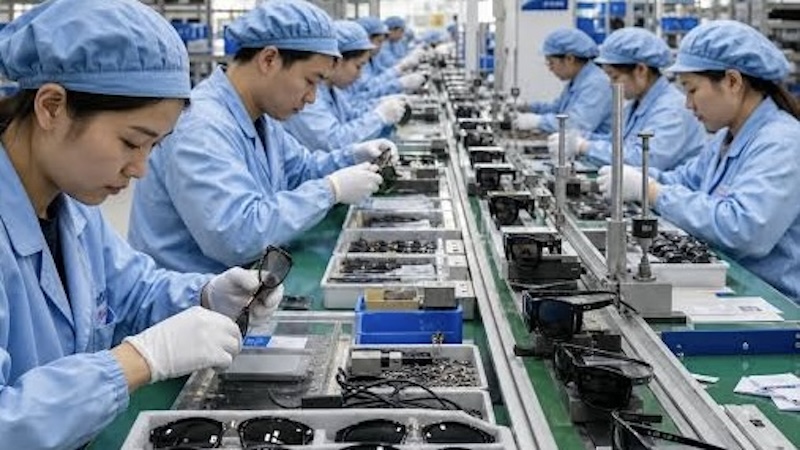
Xiamen and Wenzhou cover most sunglasses programs between them. Xiamen is where polarized and impact-resistant sun lenses are concentrated, and Wenzhou runs the largest base of frame factories, building to your design or adapting one of its own. Taizhou handles the fast-moving molded styles that promotional programs run on.
Danyang is the one that catches buyers out, a lens and wholesale town rather than a frame base. Briefing it for a fashion sunglasses line asks a lens town to run a frame program.
Which cluster suits you is a product question, not a price question. Sports and polarized lines point one way and fashion acetate another. A supplier quality audit then tells you whether the workshops you were shown are the ones that will build your order.
Pointing a lens town at a frame program is the kind of mismatch quality inspection catches on the first sample rather than in the first customer review.
OEM, ODM, or White Label
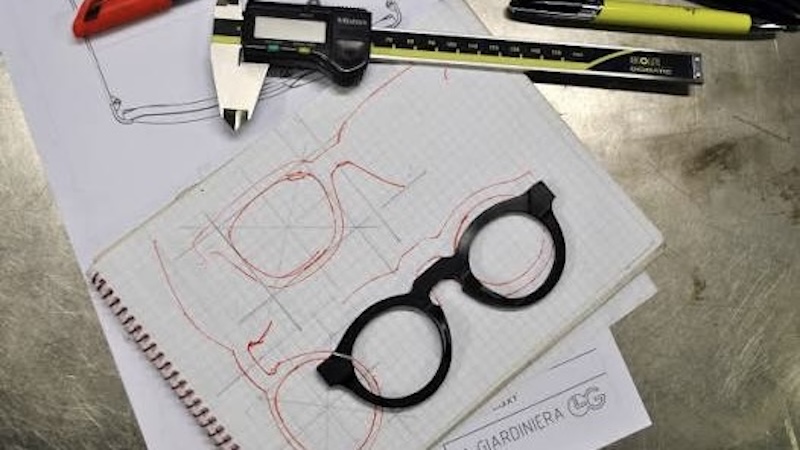
The model you buy under decides how much of the product is actually yours. Under OEM the factory builds to your drawings and materials, which suits a brand that already has a technical spec.
Under ODM you start from the factory’s existing shape and change the lens tint, the color, the temples, or the case. White label is the fastest and the least distinct, since you are putting a logo on a catalog product.
The question ODM buyers forget to ask is exclusivity. A shape you picked from a catalog is available to every other buyer in it unless you pay for exclusivity. That is where consumer goods sourcing separates a brand from a reseller. Ask in writing whether the mold is shared, whether your changes are yours, and for how long. A factory that will not answer that question has answered it.
UV400 Is a Claim, Not a Certificate
UV400 is a marketing label, and it proves nothing on its own. It describes a lens that filters ultraviolet light up to 400 nanometers, but it is not a standard, not a certificate, and not something customs recognizes. What each market wants is a file rather than a single report, and the contents are not the same in each one.
For the United States the binding requirement is impact resistance, not tint. Sunglass lenses must be certified impact resistant under the FDA rule 21 CFR 801.410, and a certificate should accompany each lot entering the country.
The testing has to be done on sampled units rather than on one showpiece. Foreign factories also register with the FDA, list the product, and name a US agent, and goods without that in place can be detained at the port.
For the European Union sunglasses are protective equipment, and the paperwork says so. The lens is tested to the EU filter standard EN ISO 12312-1, with a technical file and a signed declaration of conformity behind it. The labeling carries the filter category from 0 to 4, with a warning that category 4 is not for driving.
The CE mark belongs on the product itself where the product allows it, and moves to the packaging and accompanying documents only where it does not. Settle early whether it goes on a temple, a tag, or a box.
Australia runs a third route, and it lands on the importer. Sunglasses cannot be sold there unless they meet the Consumer Goods (Sunglasses and Fashion Spectacles) Safety Standard 2017, which adopts selected sections of AS/NZS 1067.1:2016. The duty to check sits with the importer or retailer rather than with the factory.
The expensive mistake is artwork that does not match the report. A box printed with category 3 on a lens the lab measured as category 2 is a compliance problem you paid to print.
Approve artwork against the actual report, not the plan. Decide which reports you genuinely need the same way you would judge product testing in China, where the money goes on testing everything instead of the right things.
The Spec That Decides the Quote
Sunglasses quotes swing on four things, and vague wording on any of them invites the cheapest interpretation. Frame and lens material, coating, hinge type, and finishing are what separate a $2 pair from an $8 pair, and a brief that says “good quality acetate” has specified nothing. Name each one:
Frame material: acetate, injection-molded plastic, or metal, named by grade rather than by adjective.
Lens: material, filter category, tint, and whether polarization is claimed, since a polarization claim has to be supported by data.
Hinge and fittings: the part that fails first in a customer’s hands, and the one buyers leave to the factory.
Case and cloth: a separate supplier with its own minimum, which is where a small order gets expensive.
Minimum order is a negotiation about setup, not about goodwill. Frame minimums usually run in the hundreds per style and rise with custom tooling, while printed cases and boxes carry their own separate minimum. Splitting your quantity across four colors of one shape costs less than four different shapes, and the rest of the levers sit in how to negotiate lower MOQ.
Samples, and Whether the Run Matches Them
A sunglasses sample is built by hand, and the production run is not. Hinge feel, polish, tint consistency across a batch, and coating hardness are where the run drifts away from the sample you approved. The first three are visible in a factory visit while coating hardness only shows up in a lab. Decide which of them you are actually going to verify before production starts.
Approve against a sealed reference, not a photograph. Keep one signed pair yourself, leave one at the factory, and write into the order that production is judged against it. That discipline is what sits behind managing sample orders in China. The gap it closes is the one described in why good samples fail at volume.
Then put the check in writing before anyone visits the factory. Hinge action, color against the reference, logo placement, carton marks, and the count per box belong in an inspection checklist rather than in the inspector’s judgment.
What an inspector can do with the filter category and the coating is confirm that the labeling and the report match the goods in front of them. Re-measuring either one is not part of the job. A report against your written standard is what turns a complaint into a claim.
FAQ
Q1: Does one factory make both the frames and the lenses?
Not always. Many frame factories buy lenses in, so ask who makes the lens and confirm the test report you are given covers that exact one.
Q2: Is a polarized lens automatically a UV-safe lens?
No, and the two are separate properties. Polarization cuts glare from flat surfaces while UV filtering is about what the material blocks, so a polarized lens can still fail a UV test and needs its own report.
Q3: The factory says it supplies a European brand. Is that worth anything?
Treat it as a screening signal, not as evidence. Another brand’s report is normally confidential and says nothing about your order in any case. Ask which model and which year, then prove the capability with a test on your own lens.
Q4: Who is responsible for the CE mark, the factory or me?
That turns on whose name is on the product. Sell it under the factory’s brand and the factory is the manufacturer, while you check its declaration. Put your own brand or trademark on it and EU law treats you as the manufacturer, which moves the technical file, the declaration, and the marking onto you.
Q5: My order has four lens colors. Do I need a report for each?
Testing follows what the lens is made of and how dark it reads rather than the style name, so several colors on the same lens can sit under one report. Confirm the scope with the lab before you order, since a darker tint can move it into another category.
Q6: Can I check the lenses myself when samples arrive?
A handheld UV meter gives you a quick screen and nothing more, useful for catching an obviously wrong lens before you pay for lab work. It is not a result you can show a customs officer or a customer.
Q7: A customer says the lenses scratched within a week. Is that a defect?
Not automatically, though a missing coating spec weakens your claim rather than clearing the factory. Early scratching can also come from the lens material, handling damage, or packaging rubbing in transit, so compare what you promised the customer against what you specified to the factory.
Q8: I want to move from an ODM shape to my own design. What carries over?
The factory relationship and the lens specification carry over, and the test reports may not. A different frame structure, material, or way of mounting the lens can fall outside the scope of the old report, so budget a fresh test alongside development and sampling.
Conclusion
Sunglasses punish buyers who treat the lens as part of the frame order. The frame decides whether customers like the product, and the documents behind the lens decide whether they ever see it.
A laboratory can tell you the lens passed. It cannot tell you the cartons on the dock hold that same lens, so our quality inspection team opens them and checks before your balance goes out.