
Shenzhen Wholesale Electronics Markets: What to Buy
Shenzhen is the fastest place on earth to find an electronic product and the easiest place to buy the wrong version of it. The skill is not finding supply, which is endless, but knowing which building to walk into and what to test before any money moves.
| What You Need | Where to Start |
|---|---|
| Components and chips | Huaqiang Electronics World |
| Prototypes and computer parts | SEG Plaza |
| Phones and digital products | Yuanwang Digital Mall |
| Used phones, repair parts | Feiyang Times (Tongtiandi Market) |
| Accessories and wearables | Longsheng Accessories City |
| Finished electronics, appliances | Bao’an Electron Digital City |
Match the product to the building and a three-day trip does what a week of wandering cannot.
The Markets Are Not Interchangeable
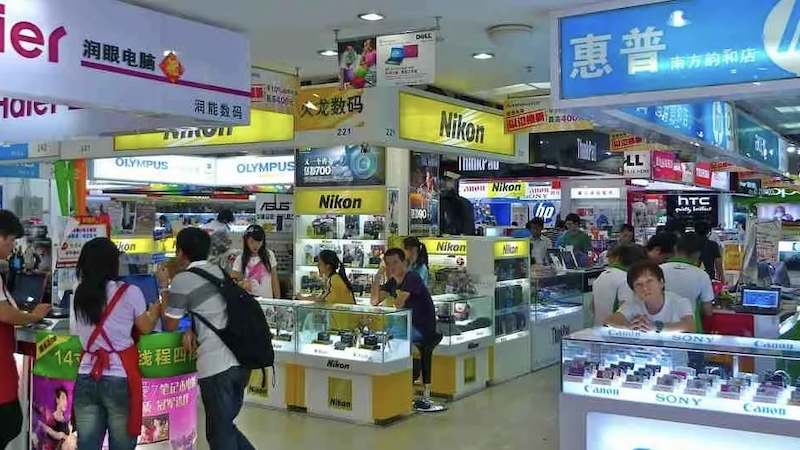
Heading straight to Huaqiangbei for everything is the standard first-trip mistake. The district is the global center of the trade, and also the noisiest and most mixed in quality of all the wholesale markets in China. Several specialist markets around it are calmer and clearer for a defined product.
Each building organizes its floors differently, so read the directory before you start comparing stalls. One tower runs components at street level and computers above; the next puts accessories downstairs and refurbished phones higher up. Assuming a single pattern is how buyers spend a morning on the wrong floor.
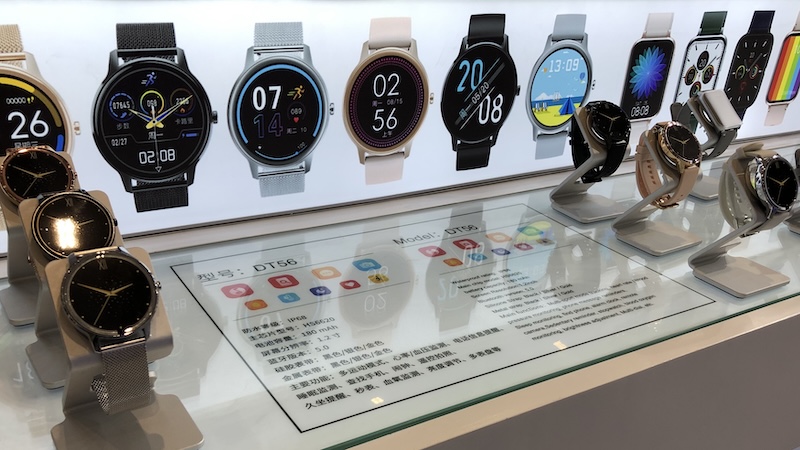
New categories tend to reach this district before they are easy to buy elsewhere. Drones, wearables, and whatever the current wave of smart devices happens to be all turn up on these floors early. That is the real argument for walking them in person.
Telling a stall that assembles from one that only resells is the difference between a supplier and a middleman, and sorting that out is where consumer electronics sourcing begins.
Shenzhen Electronics Markets by Product Type
Huaqiang Electronics World is one of the district’s main component markets. Chips, connectors, passives, modules, and cable assemblies fill it, which suits hardware developers, assemblers, and anyone buying parts rather than boxes. Grade is what bites here, since relabeled, pulled, and mixed-batch components look identical to new ones until they are tested.
SEG Plaza serves builders and prototypers. Computer parts, development boards, modules, and small components sit alongside the people who assemble them, which suits buyers turning an idea into a working unit. Watch the pricing instead of the parts: a single-unit quote bears little relation to what a real run costs, and budgets built on sample prices come apart later.
Yuanwang Digital Mall is the phone and digital wholesale center. Current handsets, tablets, and digital products move here in volume, which suits traders buying finished branded goods rather than parts. Provenance is the thing to check, since region variants, grey-channel stock, and different warranty positions all sit behind similar-looking prices.
Longsheng Accessories City is the accessories building. Cases, cables, chargers, protectors, packaging, wearables, and low-cost consumer electronics dominate the floors here, and the buyers are sellers building a fast-moving accessory range. Continuity is the weak point, because stock turns over quickly and your reorder may be unavailable, or made by a different supplier.
Feiyang Times, home to Tongtiandi Communications Market, is the second-hand end of the district. Used phones, spares, and repair parts move here in quantity, which suits refurbishers and repair businesses. Age is the risk to chase, since refurbished units, superseded versions, and incomplete accessory sets are all common, so confirm the model year and what is in the box.
Bao’an Electron Digital City sits outside the Huaqiangbei core. It covers finished electronics and appliances, which makes it worth the trip when you want boxed products rather than parts. The questions to ask here are about specification, brand authorization, and who handles after-sales, since those decide whether the goods are sellable at home.
Come with a Specification, Not an Idea
A stall cannot quote a description, and you cannot compare two quotes that describe different products. The buyers who get accurate numbers arrive with the details written down and hand the same sheet to everyone.
What to bring:
Specification sheet: in English and Chinese, with the exact model or parameters.
Photos: of the target product and its packaging.
Test checklist: the same checks applied at every stall.
Certificates needed: which marks your market requires.
Quantity range: the volumes you actually want priced.
Ask for prices at more than one quantity. Stock on the floor and goods made to order behave differently. A stall quoting a production run is quoting a factory lead time it may not control.
Test on the Floor, Not at Home
Two products with the same shell can be completely different inside. Cells, chips, and screens are substituted routinely, and the price gap between grades is where the surprise lives.
Use the testing counters while the seller is watching. Function checks, battery behavior, ports, and batch codes on high-value parts take minutes on the floor. Left until the goods land, they cost an order.
Find out who you are buying from, not just what. Ask whether the stall makes the goods, distributes them officially, or simply trades them. Then ask for the business license, production photos, and certificates issued for the model quoted. Counterfeits and mixed grades are common enough here to deserve their own guide, and the Huaqiangbei market risks piece covers them.
Build the checks into the order, not just into the trip. An incoming quality control routine on parts you buy repeatedly catches the drift between batches that market-bought components are prone to.
Bargaining Works Differently by Product Type
Generic accessories have room, but branded parts do not. Cables, chargers, cases, and no-name gadgets are quoted with negotiation built in. Chips, screens, and branded items move on volume, payment terms, and whether you come back.
Bundling beats haggling. Several lines placed with one seller usually beat pushing hard on a single item, and leave you one counterpart to hold responsible when something is wrong.
Remember that a stall price is not a factory price. Most sellers are traders, and the margin covers carrying stock and the risk of holding it. That is often worth paying on small mixed orders and worth removing once volumes are steady.
Certification Decides Whether You Can Sell It
Electronics attract more paperwork than almost anything else you can buy in China. Wireless products for the United States typically need FCC authorization, and the European market expects CE with its supporting documentation plus RoHS compliance. Anything with lithium cells brings transport rules of its own.
Ask for documents issued against the exact model and version you are quoting. A certificate held up on a phone usually covers a neighboring product, and the gap only becomes visible at your border. Where the goods go into a regulated market, product testing in China on units from the actual run is what makes the file yours.
Paperwork errors stop shipments more often than defects do. Descriptions, models, and quantities have to agree across the invoice, the packing list, and the declaration. Getting the shipping documents consistent before booking prevents the most expensive kind of delay.
Buying Without Flying
Once the product and the seller are settled, the trip stops paying for itself. Reorders, repeat components, and known models are all handled remotely, with an agent collecting samples, checking goods, and consolidating shipments.
What remote buying cannot replace is discovery. Walking the floors is how buyers find the version they did not know existed, and for anyone comparing options side by side or hunting for a product they cannot yet specify, that can justify a first visit. Verification, payment staging, consolidation, and export work the same either way, and buying from wholesale markets sets them out.
FAQ
Q1: How many days does a first trip need?
Two to three focused days cover a single category, and longer if you are comparing several. Build in time to return to shortlisted stalls, since the second conversation is where real prices appear.
Q2: How do people pay on the floor?
WeChat Pay and Alipay dominate, and foreign buyers can now link many international cards to either app. Cash still works for small purchases, while anything of size moves by bank transfer.
Q3: Can I buy a single unit to evaluate?
Usually yes, and the stalls expect it, though the sample price will sit well above the bulk price. Treat that gap as the cost of testing rather than as a negotiation failure.
Q4: Do component stalls sell loose pieces or only full reels?
Both, though loose pieces carry a premium and reels or trays are where the real price sits. Ask for the packing unit before comparing two quotes, since one may be per piece and the other per reel.
Q5: What happens if I need a small change to an existing product?
Specialist stalls and the assembly shops nearby handle light modification routinely, from packaging and firmware to connectors. Anything structural means finding the factory rather than the stall.
Q6: How do purchases from several stalls get shipped and checked together?
Everything goes to one warehouse for consolidation, where a forwarder normally receives, combines, and repacks the goods. Counting and inspecting them is a separate job that an agent or inspector does, and it has to be agreed rather than assumed.
Q7: Do lithium batteries change how the goods can ship?
Yes, since cells and battery-powered devices carry transport rules, documentation, and packing requirements of their own. Confirm what the seller can supply and what your forwarder will accept before you agree a price.
Q8: What recourse do I have if the goods fail after I leave?
Little, unless you put replacement terms in writing before paying, which is why terms beat price on high-value items. Keep your test notes, photos, and receipts as the basis for any claim.
Conclusion
Shenzhen rewards preparation and punishes shortcuts, and almost every good trip and bad one comes down to that. Arrive with a specification, test on the floor, confirm who is selling, and settle the certification and paperwork before the price.
Testing a unit on the floor, finding out whether the stall built it or bought it, and getting the certificates checked before the price is agreed all happen inside those buildings. We are in them every week, so consumer electronics sourcing means your order is placed with somebody we have already watched work.