



In the modern business ecosystem, agility and efficiency are not just buzzwords; they are survival mechanisms. As companies strive to remain competitive in a rapidly evolving global market, the strategic delegation of non-core functions has become paramount. This is where business process outsourcing services (BPO) step in, transforming from simple cost-cutting measures into powerful drivers of innovation, scalability, and strategic advantage.
This comprehensive guide delves deep into the world of outsourcing, exploring its various facets—from customer service outsourcing services to high-level knowledge process outsourcing (KPO). We will navigate the complexities of selecting partners, managing quality, negotiating contracts, and integrating these services seamlessly into your operations. Whether you are a startup looking to scale outsourcing payroll services or a multinational corporation seeking legal process outsourcing, this article provides the strategic roadmap you need.
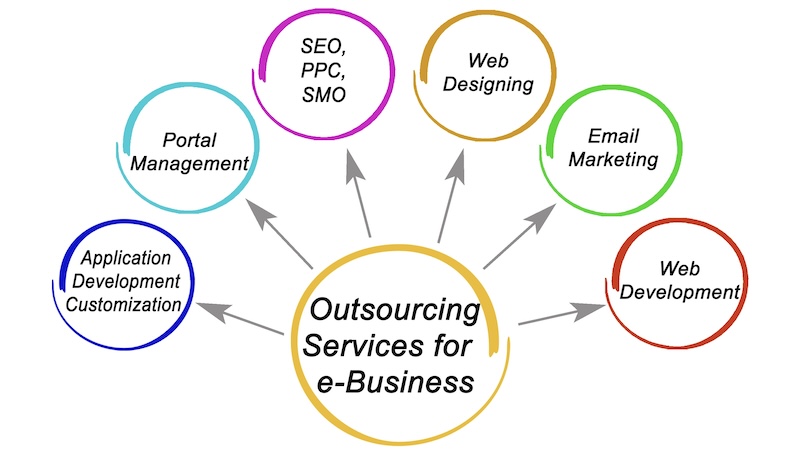
To leverage outsourcing effectively, one must first understand the taxonomy of the industry. It is no longer a monolith but a diverse ecosystem of specialized services, each requiring a distinct management approach.
At its core, business process outsourcing services involve contracting specific business tasks to a third-party service provider. Originally associated with manufacturing supply chains, BPO has expanded to include almost every aspect of corporate operations.
* Back-Office Outsourcing: Includes internal business functions such as billing, purchasing, data entry, and outsourcing payroll services. These are often transactional and process-heavy.
* Front-Office Outsourcing: Includes customer-related services such as marketing, sales support, and customer service outsourcing services. These require higher levels of interaction and cultural alignment.
The industry has moved up the value chain.
BPO 1.0: “Lift and shift.” Moving a process as-is to a lower-cost geography. Focus: Cost Arbitrage.
BPO 2.0: Process improvement. The vendor optimizes the process using Six Sigma or Lean methodologies. Focus: Efficiency.
BPO 3.0: Transformation. The vendor uses technology (AI, automation) and domain expertise to fundamentally change business outcomes. Focus: Value and Innovation.
As the BPO industry matured, it gave rise to specialized sectors requiring higher levels of expertise and education.
Knowledge Process Outsourcing (KPO): This involves outsourcing core information-related business activities. KPO requires advanced analytical and technical skills. Examples include market research, data analysis, pharmaceutical R&D, and financial consultancy. Unlike traditional BPO, which is process-driven, knowledge process outsourcing is expertise-driven. It provides value through specialized knowledge rather than just process efficiency. Companies use KPO to access talent that is scarce or too expensive in their home markets.
Legal Process Outsourcing (LPO): A subset of KPO, legal process outsourcing involves transferring legal work to external vendors. This ranges from document review (e-discovery) and contract management to legal research and patent drafting. LPO allows law firms and corporate legal departments to reduce costs while accessing specialized talent pools, often in different time zones, enabling a “follow-the-sun” 24-hour work cycle.
Why do companies outsource? The reasons have evolved beyond simple labor arbitrage.
While cost savings remain a primary driver, the nature of these savings has shifted. It’s not just about lower wages; it’s about converting fixed costs into variable costs. By outsourcing payroll services or IT support, a company avoids the capital expenditure (CapEx) of setting up infrastructure and the long-term liability of permanent staff. This “asset-light” model frees up cash flow for investment in growth.
For a tech startup, the core competency is coding and product development, not managing a call center. By using customer service outsourcing services, the founders can focus their energy on innovation. Outsourcing frees up internal resources to concentrate on what actually differentiates the business in the market. As management guru Peter Drucker said, “Do what you do best and outsource the rest.”
Knowledge process outsourcing opens the door to a global talent pool. A company in New York can access top-tier data scientists in Bangalore, financial analysts in London, or manufacturing engineers in Shenzhen without the complexities of immigration or relocation. This democratization of talent is a key competitive advantage in a talent-scarce world.
Outsourcing can also be a risk management tool. Legal process outsourcing firms often have specialized compliance teams that stay updated on global regulations, reducing the risk of non-compliance for their clients. Similarly, outsourcing supply chain management can diversify risk across multiple geographies, preventing a single point of failure.
Business is cyclical. You need 50 support agents during Christmas but only 10 in January. * Elasticity: BPO providers can ramp teams up or down in weeks, whereas hiring internal staff takes months. * Trialing New Markets: Want to test the German market? Outsource a small German customer service team before setting up a full legal entity there.
Let’s examine specific areas where outsourcing delivers high impact.
In the age of the customer, support is a brand differentiator. Customer service outsourcing services have moved far beyond the stereotypical scripted call center.
* Omnichannel Support: Modern providers manage customer interactions across phone, email, chat, social media, and even WhatsApp. They ensure a consistent brand voice across all channels.
* AI Integration: Leading BPOs are integrating AI chatbots to handle routine queries (Tier 0 support), escalating only complex issues to human agents. This hybrid model improves response times and reduces costs.
* 24/7 Coverage: Outsourcing allows companies to offer round-the-clock support without forcing local staff to work graveyard shifts.
* Cultural Alignment: The challenge in this vertical is maintaining brand voice. Successful outsourcing requires rigorous training and often “nearshoring” (outsourcing to nearby countries with similar cultures) to ensure external agents “sound” like your company.
Payroll is critical but non-strategic. Errors here lead to employee dissatisfaction and severe tax penalties.
* Compliance: Outsourcing payroll services ensures adherence to constantly changing tax laws, social security mandates, and labor regulations across different jurisdictions. This is vital for companies with a distributed remote workforce.
* Security: specialized payroll providers invest heavily in data security, often offering better protection against data breaches and identity theft than an in-house team could afford.
* Scalability: As a company grows from 50 to 500 employees, or expands into new countries, an outsourced payroll solution scales instantly without the need to hire more HR staff or buy new software licenses.
The legal sector is traditionally conservative, but legal process outsourcing is disrupting it by unbundling legal services.
* E-Discovery: In litigation, reviewing thousands of electronic documents (emails, chats) is time-consuming. LPO firms use software and low-cost lawyers to sift through this data efficiently, identifying relevant evidence at a fraction of the cost of a law firm associate.
* Contract Lifecycle Management (CLM): Managing the lifecycle of contracts—from drafting to renewal—is a prime candidate for LPO. Providers can abstract key data points (dates, liabilities) from thousands of legacy contracts to create a searchable database.
* Intellectual Property: specialized LPO firms assist with patent searches and trademark filings globally, which is crucial for businesses expanding into new markets like China. Protecting IP is paramount; learn more about this in our guide on protecting your product idea.
This remains the largest segment of the outsourcing market.
* Staff Augmentation: Hiring external developers to work alongside internal teams for a specific project.
* Managed Services: Outsourcing the entire management of IT infrastructure (servers, helpdesk, security).
* QA and Testing: Using external teams to rigorously test software for bugs before release.
For product companies, this is the backbone.
* 3PL (Third-Party Logistics): Outsourcing warehousing and fulfillment. A 3PL stores your inventory and ships it to customers.
* Procurement Outsourcing: Hiring a specialized firm to manage your supplier relationships and negotiate contracts. This is often the first step in building a resilient supply chain.
* Freight Audit and Payment: Outsourcing the complex task of auditing thousands of freight invoices to catch billing errors.
Finding the right BPO partner is as critical as finding the right manufacturing supplier. The process shares many similarities with product sourcing.
Before you look for a partner, map your process. You cannot outsource a mess. If your internal process for outsourcing payroll services is chaotic, an external provider will only amplify that chaos.
* Document Workflows: Create detailed flowcharts of the current process.
* Identify Pain Points: What are you trying to solve? Cost? Speed? Error rates?
* Set KPIs: Define clear Key Performance Indicators. e.g., “Average Handle Time under 3 minutes” or “Payroll accuracy of 99.9%.”
Just as you would vet a factory in China, you must vet a service provider.
* Security Audits: Do they have ISO 27001 certification for information security? Do they have SOC 2 Type II reports?
* Infrastructure: Do they have redundant power (generators) and internet connections (multiple ISPs)? What is their Disaster Recovery plan?
* Talent: For knowledge process outsourcing, interview the actual team members who will work on your account, not just the sales team. Check their attrition rates; high turnover leads to poor quality.
* References: Ask for case studies similar to your industry. Call their current clients to ask about responsiveness and problem-solving.
While typically associated with physical goods, sourcing agents and consultants can also facilitate service procurement. They understand the local landscape, whether it’s IT hubs in India, manufacturing support in China, or call centers in the Philippines. For businesses looking to outsource manufacturing-related processes, understanding the local landscape is key. See our insights on manufacturing hubs of China.
· Fixed Price: Good for well-defined projects (e.g., “Draft 50 contracts”).
· Time and Materials (T&M): You pay for the hours worked. Common in IT and KPO.
· Transaction-Based: Pay per unit (e.g., per payroll slip processed, per call answered). Good for variable volumes.
· Outcome-Based: The most mature model. You pay for results (e.g., % of revenue collected).
Signing the contract is just the beginning. Effective management is the glue that holds the partnership together.
Establish a clear governance structure to manage the relationship.
* Operational Level: Daily or weekly stand-ups to discuss immediate tasks and blockers.
* Tactical Level: Monthly reviews of KPIs and SLAs (Service Level Agreements) to track performance trends.
* Strategic Level: Quarterly business reviews (QBRs) to align on long-term goals, discuss innovation, and renegotiate terms if necessary. This layered approach ensures that minor issues in customer service outsourcing services don’t escalate into strategic failures.
Quality control is not just for widgets; it’s for services too.
* QA Scorecards: For customer service, listen to a sample of call recordings and score them against a rubric (tone, accuracy, empathy).
* Error Rates: For outsourcing payroll services, track the accuracy of paychecks and timeliness of tax filings.
* Peer Review: For legal process outsourcing, implement a system where senior onshore lawyers randomly review the work of offshore teams (e.g., checking 1 in 10 reviewed documents). For a broader perspective on quality management, which applies to both products and services, read about types of inspection in production management.
The “us vs. them” mentality is the enemy of outsourcing. Treat your outsourced team as an extension of your own.
* Onboarding: Provide the same onboarding training to external teams as you do to internal staff. Teach them your company history and values.
* Inclusion: Invite vendor leads to company town halls. Give them company email addresses.
* Context: Explain why a task is important. A data entry clerk in a knowledge process outsourcing firm will do a better job if they understand how their data drives the company’s strategy.
Outsourcing is not without risks. Acknowledging them is the first step to mitigation.
When you use outsourcing payroll services or LPO, you are handing over sensitive personal and corporate data. * Risk: Data breaches, IP theft, misuse of data.
* Mitigation: Strict data processing agreements (DPA), regular security audits, and ensuring the vendor is GDPR/CCPA compliant. Use distinct, secure channels for data transfer (no emailing passwords!). Implement VDI (Virtual Desktop Infrastructure) so data never leaves your servers.
Outsourcing critical functions like legal process outsourcing can feel like losing the steering wheel.
* Risk: Vendor lock-in, opacity in operations, loss of institutional knowledge.
* Mitigation: Detailed SLAs with penalty clauses for underperformance. Maintain an internal “champion” or process owner who understands the process deeply and manages the vendor. Never outsource the strategy, only the execution. Keep good documentation so you can switch vendors if needed.
If your customer service outsourcing services provider is in a region with political unrest or natural disasters, your support lines could go down.
* Risk: Service interruption.
* Mitigation: Geographic diversity. Don’t put all your eggs in one basket. Require your vendor to have a Business Continuity Plan (BCP) with active-active sites in multiple locations.
The hourly rate might look low, but hidden costs can pile up.
* Risk: Transition costs, management overhead, travel costs, currency fluctuations.
* Mitigation: rigorous TCO (Total Cost of Ownership) analysis before signing. Negotiate “all-in” rates where possible.
Different countries have different labor and data laws.
* Risk: Violating local labor laws in the Philippines or data residency laws in Europe.
* Mitigation: Ensure your contract indemnifies you against vendor non-compliance. Hire a local legal consultant to review the engagement model.

While India and the Philippines are famous for IT and Voice BPO, China is the undisputed king of manufacturing-related outsourcing. This goes beyond just making products; it includes the entire ecosystem of supply chain management services.
For many Western companies, the entire procurement department is effectively outsourced to agents in China. This is a form of business process outsourcing services.
* Vendor Management: Agents handle the day-to-day communication with factories, negotiating prices and timelines.
* Quality Assurance: Third-party inspection agencies perform QC checks on the production line.
* Logistics: Freight forwarders manage the shipping, customs clearance, and warehousing. This integrated approach allows brands to run lean operations, focusing on design and marketing while the “China team” handles the physical product. To understand how a sourcing partner acts as an extension of your team, read about everything you need to know about China sourcing agents.
The analysis of supply chain data—predicting lead times, optimizing container loads, analyzing tariff impacts, and forecasting raw material prices—is a high-value knowledge process outsourcing activity. Sourcing companies like Maple Sourcing increasingly provide these analytical services to their clients, moving up the value chain from simple “buying agents” to strategic supply chain partners.
The BPO industry is on the cusp of a major disruption driven by technology.
RPA involves software “robots” that can mimic human actions on a computer (clicking, typing, copying).
* Impact: Routine, repetitive tasks in outsourcing payroll services (like data entry across systems) or legal process outsourcing (like standard contract generation) are being automated.
* Shift: The human role is shifting from “doer” to “reviewer” and “exception handler.” BPO providers are becoming technology providers, selling automated outcomes rather than human hours.
Platforms are emerging that allow companies to tap into a dispersed network of freelancers for micro-tasks. This “cloud sourcing” model offers extreme flexibility but poses challenges for data security and quality consistency. It is best for non-sensitive, high-volume tasks like image tagging for AI training.
Traditional BPO pricing is based on FTEs (Full-Time Equivalents) or hourly rates. The future is outcome-based pricing.
* Example: Instead of paying for 10 agents for customer service outsourcing services, you pay per “resolved ticket” or per “satisfied customer” (CSAT score).
* Example: Instead of paying hourly for legal process outsourcing, you pay per “reviewed document.” This aligns the incentives of the buyer and the provider. If the provider automates the task, they keep the margin, and the buyer gets the result faster.
Different industries have unique outsourcing needs. Let’s look at two high-growth verticals.
The healthcare industry is under immense pressure to reduce costs while improving patient care.
* Medical Billing and Coding: Outsourcing this complex task ensures faster reimbursements and reduces claim denials.
* Teleradiology: X-rays and MRI scans are sent to radiologists in different time zones for overnight analysis.
* Telehealth Support: BPO providers manage patient appointment scheduling and triage hotlines.
Banks and insurance companies are heavy users of BPO.
* Mortgage Processing: From loan origination to underwriting support, outsourcing speeds up the mortgage lifecycle.
* Fraud Detection: KPO teams analyze transaction patterns to identify and block fraudulent activities in real-time.
* Investment Research: Investment banks outsource equity research and financial modeling to KPO firms to support their onshore analysts.
Ready to take the plunge? Here is a step-by-step implementation guide.
Never outsource everything at once. Start with a pilot project.
* Scope: Pick a non-critical, well-defined process.
* Duration: Run the pilot for 3-6 months.
* Evaluation: Measure against pre-defined success metrics.
This is the most dangerous phase. If knowledge is lost during transfer, the process fails.
* Documentation: Create detailed Standard Operating Procedures (SOPs).
* Shadowing: Have the external team shadow your internal team (virtually or physically) to learn the ropes.
* Reverse Shadowing: Watch the external team perform the task and correct them in real-time before they go live.
Once the process is live, expect a dip in performance (the “learning curve”). Support the team through this. Once stable, challenge the vendor to improve the process. Ask: “How can we do this faster/cheaper/better?” This continuous improvement is the hallmark of successful knowledge process outsourcing.
Successful outsourcing is 50% process and 50% psychology. Understanding the human element is crucial.
Your internal team may fear job losses or loss of status.
* Transparency: Be open about why you are outsourcing. Is it to grow? To save money? To focus on core skills?
* Upskilling: Show your team that outsourcing routine tasks frees them up for higher-value, more interesting work.
Out of sight often means out of mind.
* Video First: Use video calls for meetings. Seeing faces builds empathy.
* Small Talk: Don’t just talk business. Ask about their weekend. Treat them like colleagues, not resources.
In an era of conscious capitalism, how you outsource matters as much as what you outsource.
Ensure your vendor pays fair wages and provides safe working conditions.
* Audit: Visit the vendor’s site. Do the employees look happy? Is the office clean and safe?
* Impact Sourcing: Consider working with BPOs that specifically hire from disadvantaged communities (e.g., rural areas, veterans, people with disabilities). This turns your operational expense into social impact.
Digital services have a carbon footprint (servers, cooling).
* Green IT: Ask your vendor about their energy consumption. Do they use renewable energy for their data centers?
Real-world examples illustrate the transformative power of BPO when executed correctly.
The Challenge: A rapidly growing D2C fashion brand in the US was overwhelmed by customer inquiries during Black Friday. Their response time dropped to 48 hours, leading to angry customers and cancelled orders.
The Solution: They partnered with a boutique customer service outsourcing services provider in the Philippines. Instead of a generic call center, they chose a vendor specializing in fashion. They flew their Head of CX to Manila for a week to train the team on brand voice and styling advice.
The Result: Response time dropped to 15 minutes. CSAT scores rose by 20%. The internal team was freed up to focus on influencer marketing and product design. The outsourced team eventually took over 24/7 social media monitoring, turning complaints into sales opportunities.
The Challenge: A mid-sized law firm in London was losing clients to larger firms because their fees for M&A due diligence were too high. Their associates were burning out from reviewing thousands of contracts.
The Solution: The firm engaged a legal process outsourcing partner in India. The LPO team used AI-powered contract review software to identify risks in the target company’s documents. The London associates then reviewed only the flagged “high risk” clauses.
The Result: The cost of due diligence dropped by 40%. The firm passed these savings to clients, winning back business. Associate retention improved as they focused on high-level legal strategy rather than document drudgery.
We are moving towards a “liquid workforce” model.
Companies will no longer have just “employees” and “vendors.” They will have a fluid mix of full-time staff, gig workers, AI agents, and BPO partners, all collaborating on the same platforms.
* Orchestration: The role of the manager will evolve into an “orchestrator” who decides which resource (human or machine, internal or external) is best suited for a specific task.
BPO providers will become hyper-specialized. Instead of generic “IT support,” we will see providers who only do “Cybersecurity for Fintech” or “Data Labeling for Autonomous Vehicles.” This depth of expertise will make knowledge process outsourcing indispensable.
Before you sign that contract, run through this final checklist.
1. Define the “Why”: Are you outsourcing for cost, speed, or quality? Be clear.
2. Map the Process: If you can’t document it, you can’t outsource it.
3. Security Audit: Does the vendor meet your data privacy standards (GDPR, SOC2)?
4. Pilot Test: Start small with a low-risk project to test the waters.
5. Cultural Fit: Do you actually like the people you are hiring? Can you see yourself working with them daily?
6. Exit Strategy: If things go wrong, do you have a plan to bring the work back in-house or switch vendors?
Business process outsourcing services are not a magic wand that fixes broken processes. They are a strategic lever that, when pulled correctly, can catapult a business to new heights of efficiency and focus. From the transactional necessity of outsourcing payroll services to the strategic depth of legal process outsourcing, the opportunities are vast.
However, success requires a shift in mindset. It requires viewing vendors not as remote order-takers, but as partners in your growth story. It demands rigorous governance, clear communication, and a commitment to quality.
As global supply chains and digital ecosystems become more intertwined, the line between “in-house” and “outsourced” will continue to blur. The winners will be those who can orchestrate these diverse resources into a seamless, value-creating machine. Whether you are sourcing products from China or data analysis from India, the principles remain the same: trust, verify, and collaborate.
To explore how these principles apply to your global sourcing strategy, and to leverage our expertise in managing complex supply chain processes, visit our services page. Let us help you optimize your operations so you can focus on building your brand.
 English