Embarking on the journey of starting an import export business is a thrilling prospect, offering a direct gateway to the vast world of global commerce. Entrepreneurs are drawn to the allure of sourcing unique products from international markets and introducing them to a domestic audience. The question that inevitably arises, however, is one of practicality and planning: What is the absolute minimum investment for an import export business? The truth is, there is no single magic number. The investment required can range from a few thousand dollars for a lean, agile online venture to hundreds of thousands for a large-scale operation with significant inventory.
The cost of entry into the import-export world is not a fixed price tag but a dynamic figure shaped by your business model, product choice, sourcing strategy, and scale of ambition. An entrepreneur starting an online import export business from their living room, focusing on a niche product with a small initial order, will have a vastly different financial outlay than a company aiming to become a major distributor from day one. This comprehensive guide will demystify the financial aspects of this industry. We will dissect the various cost components, explore different import export business opportunities, and provide a realistic framework to help you calculate the investment needed to turn your global trade aspirations into a successful reality. We will delve into the critical roles of sourcing, supplier management, quality control, and logistics, paying special attention to the nuances of importing from manufacturing hubs like China, and how an import export agent can be a pivotal part of your strategy.

Before you can build a budget, you must understand the fundamental pillars of expenditure. The total investment is not a single lump sum but a collection of distinct costs, each with its own variables. Understanding these components allows you to see where your money is going and where you have opportunities to be lean or where investment is non-negotiable.
1. Business Setup and Legal Foundation: These are the initial, often one-time costs required to establish your business as a legal entity. This includes company registration, licenses, permits, and basic professional services. While seemingly administrative, a solid legal foundation is crucial for long-term success and avoiding costly compliance issues down the line.
2. Product Sourcing and Inventory: This is typically the largest and most variable expense category. It encompasses the cost of your actual goods, from product development and samples to the main production run. Your choice of product, the complexity of its manufacturing, the Minimum Order Quantity (MOQ) set by the supplier, and your initial inventory level will all dramatically influence this figure.
3. Logistics, Shipping, and Duties: Getting your products from the factory to your warehouse or fulfillment center involves a chain of costs. This includes international shipping (freight), insurance, customs duties, taxes, and local transportation. These costs can be significant and are often overlooked by newcomers.
4. Sales, Marketing, and Operations: Once the products arrive, you need to sell them. This pillar includes all the costs associated with reaching your customers, such as website development, digital marketing, advertising, payment processing fees, and the day-to-day operational expenses of running your business.
Each of these pillars contains numerous sub-categories of expenses. In the following sections, we will break down each one, providing a detailed look at the specific costs you need to anticipate when starting an import export business. This granular approach will empower you to create a more accurate and realistic initial budget.
The first layer of your investment is the administrative and legal framework of your business. These costs are often incurred before you even place your first product order. While not the most glamorous part of the process, getting this right is fundamental to protecting yourself and operating legally.
Your first decision is how to structure your business legally. The most common options are Sole Proprietorship, Partnership, Limited Liability Company (LLC), and Corporation (S-Corp or C-Corp). Each has different implications for liability, taxation, and administrative complexity.
1. Sole Proprietorship: The simplest and cheapest to set up, but it offers no personal liability protection. Costs can be as low as $25 - $100 for registering a business name.
2. LLC (Limited Liability Company): A popular choice for small businesses, as it provides personal liability protection while offering tax flexibility. Filing fees vary by state but typically range from $50 to $500. You may also have annual reporting fees.
3. Corporation: Offers the strongest liability protection but comes with more complex compliance and administrative requirements. Setup costs can be higher, often $500 to $1,500+ when including legal assistance.
For most individuals starting an import export business, an LLC provides a good balance of protection and simplicity. It’s wise to consult with a lawyer or an accountant to choose the best structure for your specific situation. This initial legal advice might cost $300 to $1,000, but it can save you much more in the long run.
The import-export industry is regulated. While you may not need a single “import-export license” in many countries like the United States, you will need to register with certain government agencies and may require permits for specific types of goods.
1. Business License: A general business operating license from your city or county is almost always required. (Cost: $50 - $400).
2. EIN (Employer Identification Number): If you are based in the U.S. and plan to hire employees or operate as a corporation or partnership, you’ll need an EIN from the IRS. It’s free to obtain.
3. Customs Registration: You must be registered as an “Importer of Record” with your country’s customs agency (e.g., Customs and Border Protection - CBP in the U.S.). This may involve securing a customs bond.
4. Customs Bond: In the U.S., if you are importing goods valued at over $2,500 for commercial purposes, you will need a customs bond. A continuous bond, which is the most common type, can cost between $250 and $500 per year.
5. Specific Product Permits: Importing certain goods requires permits from specific government agencies. For example, in the U.S., you would need permits from the FDA for food and drugs, the FCC for electronics, and the CPSC for children’s products. The costs for these permits and associated testing can vary dramatically, from a few hundred to several thousand dollars.
This category covers the basic tools and services needed to operate professionally from day one.
1. Business Bank Account: Essential for keeping your finances separate. Most banks offer business checking accounts with low or no monthly fees if you maintain a minimum balance.
2. Website Domain and Hosting: Your digital storefront. A domain name costs around $10 - $20 per year, and basic web hosting can range from $100 to $300 per year.
3. Professional Email: Using an email address with your own domain (e.g., you@yourcompany.com) builds credibility. This is often included with hosting or can be purchased for around $6 per user per month.
4. Basic Software: Accounting software (like QuickBooks or Xero) is crucial for tracking income and expenses. Plans start around $15 - $30 per month.
Estimated Total for this Section: A lean setup could be around $500 - $1,500, while a more robust approach with legal consultation and specific permits could be $2,000 - $5,000+.
This is the heart of your investment and the area with the most significant financial impact. The amount you spend here will be the primary determinant of your total startup cost. It’s a delicate balance between ordering enough stock to be competitive and not over-investing and tying up too much capital.
Before you place a large order, you need to be sure about your product. This phase involves research, sampling, and potentially design modifications.
1. Market Research: Identifying viable import export business opportunities is the first step. This might involve purchasing market research reports, using keyword research tools, or analyzing competitors. While you can do much of this yourself for free, dedicated tools could cost $50 - $200 per month.
2. Product Samples: You must never place a bulk order without first getting and testing samples. Samples are your first line of defense against quality issues. The cost per sample might be high (e.g., $50 - $100 for a product that costs $10 in bulk), and you’ll need to pay for international express shipping (e.g., DHL, FedEx), which can be another $50 - $100 per shipment. Budgeting $300 - $1,000 for sampling from multiple potential suppliers is a realistic and necessary expense.
3. Product Modifications and Molds: If you are creating a unique product or modifying an existing one, you may need to pay for mold fees or tooling. This is common in plastics, electronics, and metalwork. These costs can be substantial, ranging from $1,000 to $10,000+, depending on the complexity. For those new to this, understanding the difference between OEM and ODM manufacturing is crucial, as it dictates the level of customization and potential upfront tooling investment required.
The cost of your first major order is determined by two key factors: the per-unit cost of the product and the Minimum Order Quantity (MOQ).
Unit Cost x MOQ = Initial Inventory Cost
Unit Cost: The price you pay the factory for each individual product. This is influenced by the raw materials, manufacturing complexity, labor costs, and the supplier’s profit margin.
MOQ (Minimum Order Quantity): The smallest number of units a supplier is willing to produce in a single production run. This is a critical number for startups. A high MOQ can be a major barrier to entry.
Let’s explore how this plays out across different product categories:
Unit Cost: $1 - $5
Typical MOQ: 500 - 1,000 units
Estimated Initial Inventory Cost: $1 x 1,000 units = $1,000 to $5 x 500 units = $2,500.
Considerations: These products are often highly competitive. Your investment is lower, but you’ll need a strong brand and marketing strategy to stand out.
Unit Cost: $5 - $25
Typical MOQ: 300 - 500 units per style/color.
Estimated Initial Inventory Cost: $5 x 500 units = $2,500 to $25 x 300 units = $7,500.
Considerations: The need for multiple sizes and colors can quickly increase the total number of units (SKUs) you need to order, driving up the total investment. Finding reliable clothing manufacturers in China who are willing to work with lower MOQs is key for new brands.
Unit Cost: $15 - $100+
Typical MOQ: 500 - 1,000 units
Estimated Initial Inventory Cost: $15 x 500 units = $7,500 to $100 x 1,000 units = $100,000.
Considerations: Electronics require rigorous quality control, certifications (like FCC, CE, RoHS), and have a higher risk of defects. The investment is significantly higher due to both the unit cost and the need for thorough testing. Staying on top of consumer electronics industry trends is vital to avoid investing in obsolete technology.
Unit Cost: Varies widely.
Typical MOQ: Often higher, 1,000+ units.
Estimated Initial Inventory Cost: Can easily be $10,000 - $50,000+, plus mold/tooling fees.
Considerations: Creating a unique product offers the highest profit potential and brand defensibility. However, it also requires the largest upfront investment in both development and inventory. For many entrepreneurs, finding good private label manufacturers in Asia is a strategic goal that balances branding with manageable development costs.
Negotiating MOQs: For a startup, negotiating a lower MOQ is a critical skill. You might be able to achieve this by offering to pay a slightly higher unit price, agreeing to a long-term contract, or starting with a less customized version of the product. An experienced import export agent can be invaluable in these negotiations.
While it might seem counterintuitive to add an expense when trying to determine the minimum investment, engaging professional import export services can be one of the smartest financial decisions you make. A good sourcing agent and a robust quality control plan are not just costs; they are investments in risk mitigation that can save you from catastrophic financial losses.
For anyone new to starting an import export business, especially when sourcing from a country like China, the landscape can be treacherous. Language barriers, cultural differences, a lack of transparency, and the sheer number of potential suppliers make it easy to make costly mistakes. An import export agent or sourcing company acts as your on-the-ground team, navigating these complexities on your behalf.
Here’s how they impact your investment:
Finding Reliable Suppliers: Agents have established networks of vetted, reliable factories. This dramatically reduces the time and money you would spend on searching, screening, and performing due diligence on potential suppliers. They can often find factories that are not listed on major B2B platforms and are more willing to work with startups.
Negotiating Better Terms: An experienced agent understands the local market and has strong negotiation skills. They can often secure better pricing, lower MOQs, and more favorable payment terms than an individual could, which can directly reduce your initial inventory outlay. Understanding how to negotiate with suppliers is a core service they provide.
Preventing Scams: The cost of being scammed—sending a deposit to a fraudulent company—can be a business-ending event. An agent verifies the legitimacy of a factory, ensuring you are dealing with a real, reputable business.
Streamlining Communication: They act as a single point of contact, overcoming language barriers and ensuring your product specifications are perfectly understood by the factory, which prevents costly errors in production.
Cost of a Sourcing Agent: The fee structure varies. Some charge a percentage of the total order value (typically 3-10%), while others work on a fixed fee or a project-based retainer. For a $20,000 order, a 5% commission would be $1,000. While this adds to your upfront cost, it can easily be offset by the savings and risk reduction they provide. To learn more, you can explore the everything you need to know about China sourcing agent guide.
Assuming your products will arrive exactly as you specified is one of the biggest gambles in importing. The cost of discovering a major quality defect after the goods have been shipped and paid for is immense. A proper QC plan is your insurance policy.
Pre-Production Inspection: Verifying the raw materials and components before mass production begins.
During Production Inspection: Checking the products on the assembly line to catch issues early.
Pre-Shipment Inspection: This is the most critical step. A third-party inspector visits the factory when your order is 100% complete and at least 80% packed. They perform a random inspection based on established standards (like AQL) to verify quality, quantity, specifications, and packaging.
Container Loading Inspection: Ensuring the correct products and quantities are loaded securely into the shipping container.
Cost of QC Services: The cost of a third-party inspection in China is typically charged per “man-day.” A standard Pre-Shipment Inspection usually requires one man-day. The cost can range from $200 to $500 per inspection. For an initial order, budgeting for at least a PSI is an absolute must. For a $20,000 order, a $300 inspection fee is a small price to pay for peace of mind. Effective inspection and quality control in manufacturing is not an area to cut corners.
Investing $500 - $2,000 in sourcing and QC services on your first order might seem like a significant addition to your minimum investment, but it’s one of the most effective ways to protect your primary investment—your inventory.
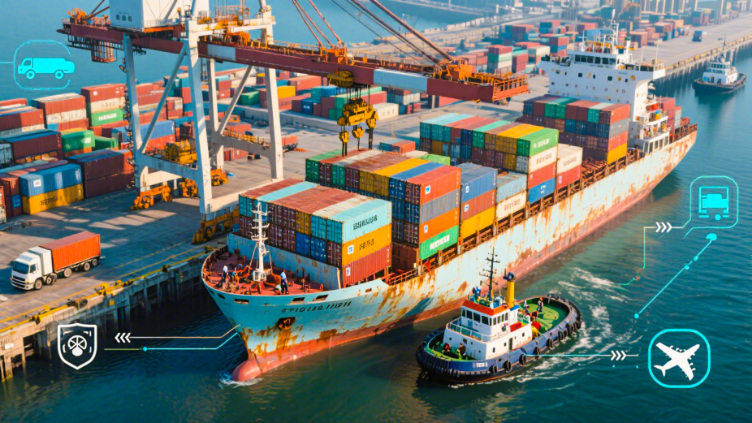
Your investment doesn’t end when you pay the supplier. You still have to get the products from the factory in the origin country to your doorstep or fulfillment center. The total cost to do this is known as your “landed cost.” Failing to budget accurately for this can destroy your profit margins.
Landed Cost = Product Cost + Shipping + Customs + Insurance + Taxes + Local Delivery
This is the cost of moving your goods across the ocean or through the air. You will typically work with a freight forwarder who coordinates this process.
Sea Freight: The most common and cost-effective method for larger shipments. It’s slower (taking 30-50 days from China to the US/Europe) but significantly cheaper. Costs are calculated by volume (Cubic Meters - CBM) for LCL (Less than Container Load) shipments or a flat rate for FCL (Full Container Load).
Air Freight: Much faster (5-10 days) but significantly more expensive. It’s suitable for high-value, lightweight goods or for urgent replenishment of stock. Costs are based on chargeable weight (a combination of actual weight and dimensional weight).
Cost Example: Shipping a 2 CBM (cubic meter) shipment from China to a U.S. West Coast port might cost $300 - $800 by sea, whereas the same shipment by air could cost $2,000 - $4,000+. For anyone starting out, understanding why sea freight is cheaper than air freight is fundamental to building a cost-effective logistics strategy.
The shipping term you agree upon with your supplier has a direct impact on your costs. The two most common are:
* EXW (Ex Works): You are responsible for all costs from the factory door. This includes trucking from the factory to the port, origin port fees, and everything thereafter. It seems cheaper upfront but involves more logistical work and hidden costs at the origin.
* FOB (Free On Board): The supplier is responsible for all costs to get the goods loaded onto the ship at the port of origin. You take over responsibility from there. FOB is the most recommended term for new importers as it simplifies the process and provides clearer cost visibility. A deep dive into FOB vs. EXW can help you make an informed decision.
This is a government-levied tax on imported goods. It is a percentage of the commercial value of your goods.
* HS/HTS Codes: Every product has a specific Harmonized System (HS) code that determines the duty rate. It is crucial to classify your product correctly to pay the right amount.
* Duty Rate: Rates can vary from 0% to over 25% for certain goods. An average rate for many consumer products is between 2-8%.
* Tariffs: Additional duties, such as the Section 301 tariffs on goods from China imported into the U.S., can add a significant percentage (e.g., 7.5% or 25%) on top of the regular duty rate.
Calculation Example:
* Value of Goods: $20,000
* Standard Duty Rate (e.g., 4%): $20,000 x 0.04 = $800
* Additional Tariff (e.g., 7.5%): $20,000 x 0.075 = $1,500
* Total Duties: $2,300
You must research the correct HTS code for your product and budget for these taxes. They are unavoidable.
Cargo Insurance: Essential to protect your investment against loss or damage during transit. It’s relatively inexpensive, typically around 0.5% of the commercial value (e.g., $100 on a $20,000 shipment).
Local Delivery: The cost of trucking your goods from the destination port to your final warehouse or location. This can range from $200 to $1,000+ depending on the distance and size of the shipment.
Estimated Total for this Section: For a $20,000 inventory order, a realistic budget for all landed costs (shipping, duties, insurance, etc.) could be anywhere from $3,000 to $6,000, or 15-30% of the commercial value of the goods.
Your investment journey continues after your products have safely arrived. Now you need to invest in reaching customers and selling your products. These costs are ongoing, but you need a solid budget for the first 3-6 months to gain traction.
For an online import export business, your website is your primary asset.
E-commerce Platform: Using a platform like Shopify, BigCommerce, or WooCommerce is the standard.
- Shopify: Plans range from $29 to $299 per month. It’s user-friendly and great for beginners.
- WooCommerce: A free plugin for WordPress, but you’ll pay more for hosting, themes, and premium extensions, which can add up to $500 - $2,000 in initial setup costs.
Website Design and Development: You can use a pre-built theme (cost: $50 - $200) or hire a developer for a custom site (cost: $2,000 - $10,000+). For a minimum investment strategy, a premium theme is the way to go.
High-Quality Product Photography and Videography: Essential for e-commerce. You can’t sell what you can’t show well. Budget $500 - $2,500 for a professional shoot of your initial product line.
You need to drive traffic to your website. A “build it and they will come” approach does not work.
Digital Advertising (PPC): This includes Google Ads, Facebook Ads, and Instagram Ads. It’s the fastest way to get in front of potential customers. A starting monthly budget of $500 - $1,500 is realistic for a new business.
Content Marketing and SEO: Writing blog posts, creating guides, and optimizing your site for search engines is a long-term strategy that pays dividends over time. While you can do it yourself, you might invest in SEO tools ($100/month) or a freelance writer.
Social Media Marketing: Building a community on platforms relevant to your audience. This can be low-cost if done yourself but requires a significant time investment.
Email Marketing: A crucial tool for nurturing leads and driving repeat purchases. Platforms like Mailchimp or Klaviyo have free or low-cost starting plans, but will scale with your subscriber list.
A reasonable marketing budget for the first six months could be $3,000 - $10,000, depending on how aggressively you want to grow.
These are the ongoing costs of doing business.
Payment Processing Fees: Companies like Stripe and PayPal charge a fee for every transaction, typically around 2.9% + $0.30. This isn’t an upfront cost but will eat into your margins. Understanding the best online payment processors for small business is important for managing this.
Fulfillment and Warehousing: If you’re not storing and shipping products from your garage, you’ll need a third-party logistics (3PL) partner. They charge for storage (per pallet/bin per month), pick-and-pack fees (per order), and shipping costs.
Customer Service: Initially, you’ll likely handle this yourself. As you grow, you might need customer service software or to hire a virtual assistant.
Contingency Fund: This is one of the most important but often forgotten parts of your budget. You should set aside at least 10-20% of your total initial investment as a buffer for unexpected costs, delays, or emergencies. For a $30,000 investment, that’s an extra $3,000 - $6,000.
Now, let’s bring it all together. Here are two sample budget scenarios to illustrate the potential range for the minimum investment for an import export business.
This entrepreneur is focused on minimizing upfront costs, doing most of the work themselves, and starting with a very simple product.
Business Setup: LLC filing, basic licenses ($500)
Product Sourcing & Inventory:
- Product: Simple home goods (e.g., silicone kitchen utensils)
- Samples & Research: $400
- Inventory: 500 units @ $3/unit = $1,500
Sourcing/QC Services: Pre-shipment inspection only ($300)
Logistics & Landed Cost: 25% of inventory cost ($375)
Sales & Marketing: Shopify plan, premium theme, DIY photography ($500)
Initial Marketing Budget (3 months): $1,500
Contingency Fund (20%): $1,015
Total Estimated Minimum Investment: ~$6,100
This entrepreneur is investing more upfront for a more customized product, professional branding, and a more aggressive marketing launch.
Business Setup: LLC with legal consultation, customs bond ($1,500)
Product Sourcing & Inventory:
- Product: Custom-designed electronic accessory
- Samples, R&D, potential tooling fee: $2,500
- Inventory: 1,000 units @ $12/unit = $12,000
Sourcing/QC Services: Sourcing agent retainer + 2 inspections ($1,500)
Logistics & Landed Cost: 25% of inventory cost ($3,000)
Sales & Marketing: Shopify, custom web design work, professional photography ($3,000)
Initial Marketing Budget (3 months): $4,500
Contingency Fund (20%): $5,600
Total Estimated Minimum Investment: ~$33,600
Start with a Simple Product: Avoid products with high complexity, multiple electronic parts, or those requiring extensive certifications until you are more experienced.
Negotiate a Lower MOQ: This is the single most effective way to reduce your inventory cost. Be prepared to pay a slightly higher unit price in exchange.
Choose Surface Shipping: Sea freight is dramatically cheaper than air. Plan your timelines accordingly to take advantage of the lower cost.
Bootstrap Your Marketing: In the early days, focus on low-cost marketing strategies like content marketing, building an email list, and organic social media.
Do It Yourself (When Possible): Handle tasks like customer service, social media management, and basic bookkeeping yourself at the beginning to save on operational costs.
Leverage a Sourcing Partner: While it’s an upfront cost, a good partner can save you money on inventory, prevent costly mistakes, and help you scale faster. This is an investment in efficiency and security. Our comprehensive sourcing services are designed to provide this value from day one.
The minimum investment for an import export business is not a static figure but a spectrum of possibilities. As we’ve seen, it’s possible to get started with a lean, bootstrapped approach for under $10,000, while a more ambitious launch can easily require $30,000 to $50,000 or more. The most critical takeaway is that success is not determined by the amount you spend, but by how intelligently you plan and allocate your capital.
Every successful import-export journey begins with meticulous research and a detailed, realistic budget. By breaking down your investment into its core components—setup, inventory, logistics, and marketing—you can move from a vague, intimidating number to a clear, actionable financial plan. Prioritize your spending on what matters most: a quality product, a robust quality control process, and a clear strategy to reach your customers.
While the path of starting an import export business is filled with challenges, it remains one of the most rewarding import export business opportunities for dedicated entrepreneurs. By arming yourself with knowledge, planning diligently, and making strategic investments in areas like supplier relationships and quality assurance, you can navigate the complexities of global trade and build a profitable and sustainable enterprise.
 English