Maple Sourcing Ltd.
Maple Sourcing Ltd.
We Make Your Sourcing Easy!
Need help? sales@maplesourcing.com
English
Maple Sourcing Ltd.
Maple Sourcing Ltd.

How to Write an RFQ for China Suppliers: Examples and Best Practices

Published:
Updated:
13334 Views
Table of Content [Hide]

    Have you ever sent a message to a Chinese factory asking for a price, then received a quote that had nothing to do with what you actually needed?

    That is what happens when buyers skip the RFQ. A Request for Quotation is not just an administrative step — it is the document that determines whether the prices you receive are comparable, whether the factory understands your requirements, and whether you have any documentation to reference when something goes wrong.

    This guide covers what an RFQ must include, three practical examples across different product categories, and how to evaluate and act on the responses you receive.

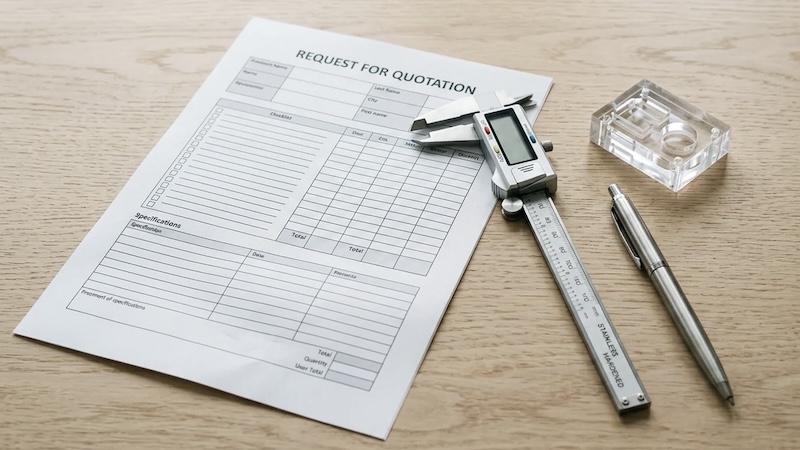
    Procurement document on office desk

    What an RFQ Does That a Simple Inquiry Does Not

    A price inquiry asks one question: how much? An RFQ asks every question that matters before production begins.

    The RFQ standardizes the conversation. Without it, one supplier quotes for premium materials while another quotes for a cheaper substitute. One includes tooling; another does not. The resulting quotes cannot be meaningfully compared.

    A well-written RFQ also signals that you are a serious buyer. Factories receive hundreds of vague inquiries every week. A detailed, structured document tells them you have done your homework — and that you are worth quoting accurately.

    Understanding whether direct vs indirect sourcing fits your business model is useful context before reaching out to suppliers. Factory-direct RFQs and trading-company RFQs have different dynamics, and knowing which type of supplier you are targeting changes how you structure your approach.

    What Every RFQ Must Include

    1. Company Introduction

    Two to three sentences: who you are, what you sell, and which market you serve. Factories evaluate buyers just as buyers evaluate factories. A professional introduction tells them you are real and worth engaging.

    2. Product Specifications

    This is the most critical section. Vagueness here creates inaccurate quotes and downstream quality problems.

    For any manufactured product, specify:

    • Material (grade, composition, finish — not just “plastic” or “metal”)
    • Dimensions and weight
    • Color (use Pantone or RAL codes, not color names)
    • Performance requirements
    • Required certifications (CE, FCC, EN71, FDA, etc.)
    • Technical drawings or CAD files for custom products

    3. Quantity and Pricing Structure

    Request pricing at multiple volume tiers (e.g., 500 / 1,000 / 3,000 units). This lets you see volume discounts and creates negotiating data. Also request:

    • Tooling or mold cost as a separate one-time line item
    • Sample cost and lead time
    • Your currency preference (usually USD)

    If your initial quantity is below the supplier’s typical MOQ, acknowledge it clearly and explain that you are looking for a long-term partner. Negotiating minimum order quantities is a standard part of the sourcing process and is easier when you are transparent from the first message.

    4. Packaging and Labeling

    Specify both unit packaging (retail box, polybag, etc.) and master carton requirements (units per carton, carton dimensions, material). Include:

    • Barcode placement
    • “Made in China” marking requirements
    • Any platform-specific labeling (e.g., FBA labels for Amazon)

    5. Shipping Terms and Lead Time

    Request quotes on a specific Incoterm. FOB (Free on Board) is commonly used by importers because it gives buyers control over international freight from the port of export. Ask for:

    • Production lead time after purchase order and deposit
    • Sample lead time
    • Port of shipment

    If the supplier quotes EXW (Ex-Works), ask what local pickup, export declaration, and China-side handling costs are excluded from the price. EXW can look cheaper than FOB but may create extra responsibility and cost for the buyer that is easy to underestimate.

    6. Payment Terms

    State your preferred payment structure in the RFQ. A common starting position for new suppliers is 30% deposit on order confirmation, with the 70% balance payable after pre-shipment inspection approval. Include:

    • Deposit percentage
    • Balance payment timing
    • Whether the balance can be held until inspection is approved
    • Accepted payment methods (T/T, Trade Assurance, L/C)

    If a factory refuses any structured payment framework or demands 100% upfront, treat it as a risk signal.

    7. Inspection Requirements

    Include your inspection expectations in the RFQ, not just in the purchase order. Specify:

    • Whether you require a pre-shipment inspection (PSI)
    • AQL level and defect classification (critical / major / minor)
    • Packaging, labeling, and barcode checks
    • Reference to the approved sample as the quality benchmark

    Buyers who specify inspection requirements upfront retain more leverage during order execution. Factories know from the beginning that a third party will check the goods before balance payment.

    8. Supplier Information Request

    Ask the supplier to provide: business license, relevant quality certifications, MOQ, and maximum monthly production capacity for the product. This information filters out suppliers who cannot meet your requirements before you invest time in negotiation.

    A Simple RFQ Template

    Before writing a product-specific RFQ, confirm your document covers these five areas:

    • Product specifications — material, dimensions, color, performance, certifications
    • Quantity tiers — pricing at multiple volume levels, MOQ, and tooling costs
    • Packaging and labeling — unit packaging, master carton, barcodes, required marks
    • Shipping and payment terms — Incoterm, port, lead time, deposit and balance structure
    • Certification and inspection requirements — compliance standards, AQL level, PSI requirement

    Any RFQ missing one of these five areas will produce quotes that are either incomplete or incomparable.

    Two RFQ Examples

    Example 1: Custom Electronics (Bluetooth Speaker)

    Product: Portable Bluetooth Speaker — "Aura Mini"
    Housing: ABS+PC plastic, matte black. Dimensions per attached CAD file.
    Driver: 5W, 4-ohm, 45mm. Bluetooth 5.0. Battery: 1200mAh Li-poly, USB-C.
    Playtime: 8+ hours at 70% volume.
    Compliance: CE, RoHS, FCC required. Provide existing certs or quote for testing.
    Packaging: Retail box with manual and USB-C cable. EAN-13 barcode.
    Inspection: PSI required before balance. AQL 2.5 major / 4.0 minor.
    Quantities: Please quote at 1,000 / 3,000 / 5,000 units.
    Tooling: Quote separately.
    Samples: 5 pre-production units.
    

    Understanding what OEM means for importers is especially relevant for electronics, where factory-supplied designs (ODM) and buyer-supplied specifications (OEM) require very different levels of technical documentation.

    Example 2: Standard Hard Good (Stainless Steel Water Bottle)

    Product: Insulated Water Bottle — "HydratePro 500ml"
    Material: 304 stainless steel body. BPA-free PP lid with silicone gasket.
    Insulation: Double-wall vacuum. 24hr cold / 12hr hot minimum.
    Finish: Powder-coated matte, Pantone 7462 C. Logo laser engraved (artwork attached).
    Compliance: FDA and LFGB compliant. Test reports must match this exact product model.
    Inspection: PSI required before balance payment.
    Quantities: 500 / 1,000 / 2,500 units.
    Samples: 2 units with logo.
    

    Buyer comparing supplier quotes

    How to Evaluate and Act on RFQ Responses

    Build a Comparison Spreadsheet

    Once responses arrive, resist the temptation to make decisions based on a quick scan of unit prices. Create a spreadsheet with one row per supplier and columns for each key variable: unit price at each quantity tier, tooling cost, sample cost, MOQ, lead time, payment terms, and certifications provided. Only when all information is in one place can you make a genuine comparison.

    If two quotes are far apart, do not assume one supplier is simply cheaper. Confirm whether both suppliers quoted the same material, packaging, certification, Incoterm, tooling scope, and testing requirements. Price differences are often explained by different assumptions, not different efficiency.

    The lowest unit price is rarely the best offer. A supplier with slightly higher pricing who answers every question, provides certifications, and offers favorable payment terms is usually a better partner than one who offers a rock-bottom quote with gaps in the specification response.

    Look at what the supplier did not answer. Missing information reveals either a limitation in their capability or a lack of attention to the buyer’s requirements — both are useful signals.

    Manage Communication Consistently

    If one supplier raises a question that reveals an ambiguity in your RFQ, share the clarification with all suppliers simultaneously. This keeps the process fair and ensures all quotes are based on the same requirements. Set a firm deadline for questions and a firm deadline for quote submission — factories respect buyers who run a structured process.

    Follow Up on Gaps Before Moving Forward

    If a supplier quotes a different material or omits a specification, ask them to re-quote to your exact requirements before comparing. Do not assume a substitution is acceptable unless they have explained why.

    Request samples before committing to production

    Once you have narrowed to two or three suppliers, request samples before placing a bulk order. For bulk buying from China, the sample stage is one of the most cost-effective quality control steps available — it tests the supplier’s ability to follow specifications before a significant financial commitment is made.

    Protect your IP before sharing detailed designs

    Before sending technical drawings, CAD files, or proprietary packaging designs, use a China-specific NNN agreement. It is usually stronger than a generic Western NDA because it covers non-disclosure, non-use, and non-circumvention in a China manufacturing context. It should be drafted properly and signed by the correct legal entity.

    If you source from multiple factories, consolidating shipments from multiple suppliers can reduce per-unit freight cost. Factor this into your landed cost comparison before choosing between suppliers.

    FAQ

    Q1: How many suppliers should I send an RFQ to?

    Three to seven is a practical range. Too few limits your comparison data. Too many creates follow-up management work that may not add meaningful insight. Focus on suppliers who specialize in your product category, not the broadest possible pool.

    Q2: How detailed does an RFQ need to be for a standard product?

    For any product where you care about material quality, performance, or compliance, full specification is necessary even for standard items. A stainless steel water bottle looks the same whether made from 201 or 304 grade steel — the difference only appears in testing and long-term performance. Specify the grade, or you may not receive it.

    Q3: What is the difference between an RFQ and a purchase order?

    An RFQ is a document you send to potential suppliers requesting a quotation. A purchase order is the formal document you issue to the chosen supplier to confirm an order. The RFQ precedes the purchase order and is part of the supplier selection process.

    Q4: How long does it take to receive RFQ responses from Chinese suppliers?

    Most active suppliers respond within one to three business days if the RFQ is clear and well-structured. If you have not received a response within five days, a polite follow-up is appropriate. Suppliers who do not respond, or who send generic catalog responses that ignore your specifications, are telling you something useful about how they would manage your order.

    Q5: Should I reveal my target price in the RFQ?

    Opinions differ. Sharing a target price can filter out suppliers immediately outside your budget and attract responses calibrated to your range. It can also cap the negotiation before you know the supplier’s real price. A middle approach: share a general budget indication rather than a specific target, and ask suppliers to submit their best price given your volume.

    Q6: What do I do if all responses come in above my target cost?

    Revisit your specifications first. Some requirements add cost without proportional buyer value. Revisit quantities — higher MOQ usually produces a better unit price. If all quotes are above target, a sourcing agent with existing factory relationships may help identify lower-cost options or alternative specifications. A practical overview of direct product sourcing in China covers what agents do and where they add value in the sourcing process.

    Conclusion

    An RFQ is not a form to fill in — it is the first test of your supplier relationship. The quality of responses you receive is a direct reflection of the quality of the document you send.

    Factories take detailed, professional RFQs seriously because they signal a buyer who knows what they want and will hold the factory accountable to it. Vague inquiries attract vague responses, price guesses, and substituted materials.

    The time you invest in writing a complete RFQ before contacting any supplier is one of the most cost-effective quality control steps in the sourcing process. Every vague specification becomes a risk before production even starts.

    Need support with your China imports?
    We offer full service from new product development to shipment: sourcing, supplier vetting, order monitoring and quality inspections. Submit your inquiry today.
    Aaron Li
    I’m Aaron Li, a sourcing expert. Since 2012, I’ve helped 300+ startups source from China and manage product standards. Here, I share practical answers to common questions about sourcing and quality control.
    All Articles
    Shipping Marks on Carton: Complete Guide for Exporters
    Retail Arbitrage: Where to Source and How to Earn Profit
    Best Chinese Wholesale Websites Including Made-in-China.com
    Hot-Selling Products from China for Senior Living at Home
    How to Source Wholesale Home Decor for Retail Businesses
    Top 10 Solar Panel Manufacturers in China (2026)
    How to Get Free Samples from China Factories
    African Importers: Best Dollar Store Products from China
    Pros and Cons of Cross-Border Private Label Sourcing
    Buying from Alibaba? Here Are the Risks No One Warns You About
    Tips to Find Reliable Wholesale Suppliers for Small Businesses
    CBM Calculator for Ocean Freight: Formula and Examples
    Ecommerce Brands: Top 5 High-Margin Product Niches
    Proforma Invoice vs Commercial Invoice: Key Differences
    Ocean & Air Freight: Gross vs Net Weight Rules
    Startups: Direct vs Indirect China Sourcing
    How to Write an RFQ for China Suppliers: Examples and Best Practices
    Trade-Offs in Logistics and Supply Chain Management: What Every Importer Should Know
    Startup Budget for a China Import-Export Business
    Logistics Companies in China: Major Providers and How to Choose
    How to Ask a Chinese Supplier to Lower the Price Without Losing Quality
    Hidden Expenses Every China Importer Should Expect
    Amazon Resellers: Best Ways to Import from China (2026)
    MOQ of Custom Packaging for Small Business
    Quality Audit Checklist for Chinese Factories
    China Manufacturing Hubs: Which Region Should You Source From?
    Made in PRC vs Made in China: What the Label Means
    The Definitive Guide to FCL vs. LCL Container Shipping (2026)
    Sea vs Air Freight: Core Reasons Behind Their Price Gap
    A Hot List of Toys to Import from China in 2026
    China to Canada: Lowest-Cost Shipping Options (2026)
    Alibaba vs AliExpress: Which Platform Fits Your Buying Goal?
    How to Import Goods from China to USA Under New Tariff Policy (2026)
    Custom Sourcing: OEM and ODM Main Differences
    5 Phases to Protect Product IP when Outsourcing in China
    FOB vs. EXW: Which Is Better for UK Importers?
    1688 Sourcing Agents: Benefits for Retail Resellers
    A Thorough Introduction to the Yiwu Market Product List
    What Is 4PX Shipping? Delivery Times, Tracking, and Delays
    DHL Shipment On Hold? What It Means and How to Resolve It
    Why You Need Taobao Agents for Kitchenware Sourcing
    Can You Trust an Alibaba Verified Supplier? What the Badge Really Means
    Foshan Furniture Market: Actions to Assure Quality
    Guangzhou Fabric Market: Tour Guide & Sourcing Tips
    Canton Fair: China's Largest Import and Export Fair (2026 Guide)
    Why Huaqiangbei Electronic Market Is No Longer Good for Importers
    High-End Electric Toothbrush Manufacturers in China
    Private Label Bags from Chinese Manufacturers
    Manage Sample Orders: Key Tips for China Importers
    Top 5 Shipping Documents Required for Imports
    How to Improve Your Procurement Life Cycle in Logistics Management
    Top Beauty and Healthcare Items on Amazon (2026)
    3 Ways to Evaluate Production Capacity of China Factories
    China's Top 10 Wholesale Markets: Where to Source, What to Expect
    Why China Dominates Global Toothbrush Manufacturing
    Top 10 Iconic Products Made in Shenzhen (2026)
    Lower MOQ, Same Supplier: Negotiation Tactics That Actually Work
    How OEM Manufacturing Adds Value to Consumer Brands
    Cargo Consolidation: Cut Shipping Costs for Importers
    Most Profitable Products to Import from China to Europe (2026)
    Key Shipping Ports in China and North America
    Major Apple Manufacturers in China: Winners, Losers, and Risks in 2026
    What Is Incoming Quality Control (IQC) and Why Is It Important?
    China Sourcing Agent Fees in 2026: Rates, Models, and Hidden Costs
    What Products from China Are Most Profitable to Resell in 2026?
    Why Are Most Things Made in China? 2026 Update
    Top 10 Quality Inspection Companies in China: Who to Trust in 2026
    How Much Cheaper Is It to Manufacture in China? The Real Numbers in 2026
    Key Trends in Sourcing Customized Products from China in 2026
    Standard Process for Pre-Shipment Inspection in China
    Key Challenges of Global Sourcing and How to Overcome Them
    Shenzhen Electronics Wholesale Markets: Where to Source, What to Expect in 2026
    Verify Chinese Company Without Visiting China
    Retail Resellers: 5-Step China Bulk Sourcing Guide
    5-Step Alibaba Order Process for Small Retailers
    What Makes Chinese Supply Chains Highly Efficient
    Make Rapid Prototypes in China Manufacturers
    China Sourcing Basics for Amazon FBA Sellers
    Bulk Imports from China: Key Advantages
    LED Product Importers: Key China Sourcing Guide
    How China Sourcing Services Save You Time and Costs
    How to Contact Chinese Factories Directly and Get a Response
    Manage Chinese Factories to Ensure On-Time Deliveries
    Where to Source High-Quality Kitchen Utensils in China
    Top 10 Wholesale Items Imported from China (2026)
    Top 10 Trendy Consumer Electronics Made in China
    Comprehensive Guide to Find Chinese Suppliers Online
    How to Grow Your Business with a Shenzhen Sourcing Agent
    Handbook for Sourcing Chinese Hardware Products
    Transform Supply Chains via Direct China Sourcing
    Effective Supplier Management Strategies for Sourcing Success
    Direct Product Sourcing in China: A Beginner's Guide
    How to Source High-Quality Outdoor Goods from China
    Why FBA Private Label Sellers Need China Agents
    Benefits and Challenges of Manufacturing Products in China
    Why Procurement Outsourcing in China Is Important for Your Business
    Sourcing Chinese Metal Products: Critical Details
    Private Label FBA Sellers: China Sourcing Agent Guide
    Everything You Need to Know About Calculating Import Duty from China to USA
    How In-Process QC Works in Chinese Factories
    Read More
    References
    Our Features
    Custom Products
    Turn concept to reality
    Quick Response
    Within 24 hours
    Detail Oriented
    Strive for perfection
    Assured Quality
    100% Guarantee