When you come up with a new product idea, you are eager to test its market performance right away. However, rushing into full production with a large upfront investment carries significant risks. This is where rapid prototyping China delivers immense value for global product developers.
Whether you work on a 3D printing prototype or manage full-scale prototype production China, the most reliable starting point is always a detailed written specification, clear sample standards and defined inspection criteria. This fundamental step prevents most common failures in early-stage prototype work. A prototype is never evaluated on price alone. Its true purpose is to verify critical details: part fit, functional performance, visual appearance and necessary design revisions. Without clear documentation, even a technically accurate prototype can fail to meet your actual development goals. Formal written guidelines keep your project focused on measurable results, rather than vague assumptions exchanged via emails or instant messages. Understanding the prototype manufacturing process from the very beginning also helps teams stay on track throughout the entire development cycle.
Why China Dominates the Rapid Prototyping Market
China’s leading position in rapid prototyping China does not rely solely on low costs. Its core competitiveness comes from integrated industrial clusters, professional engineering support and ultra-fast production cycles. For product teams prioritizing speed, risk control and manufacturability, prototype production China has become the top choice worldwide.
Before moving forward with a 3D printing prototype or launching prototype production China, always verify a supplier’s background, production capacity, payment terms and protocols for handling defective parts. Conduct comprehensive checks covering product categories, sample quality, MOQ flexibility, packaging management, certification requirements, lead time, payment workflows and on-site inspection access. You can assess suppliers by reviewing their business qualifications, service channels, product ranges and past project cases before paying any deposit.
China’s mature industrial ecosystem allows buyers to complete these verifications far more efficiently. For example, a developer creating a consumer device may need a printed enclosure, CNC machining prototype for aluminum heat sinks, silicone keypads and simple assembly fixtures within one development cycle. In major Chinese manufacturing hubs, buyers can source all these services from connected local suppliers, instead of building a supply chain from scratch. This not only cuts production time, but also speeds up the identification and resolution of design flaws.
Manufacturing Infrastructure and Geographic Concentration
A major advantage of rapid prototyping China lies in its geographically concentrated supply chain. Prototype makers, machine shops, material suppliers and surface finishing service providers gather in established industrial zones, minimizing handoff delays. CNC machining prototype, 3D printing, vacuum casting, sheet metal fabrication and post-processing can all be coordinated within the local network — a huge benefit for product prototype development, which often requires multiple production processes.
Suppose a product housing starts as a conceptual 3D printed model, then transitions to machined aluminum and requires anodizing or final assembly later. A trusted partner for rapid prototyping China can streamline these transitions seamlessly, unlike fragmented supply chains in other regions. This dense industrial layout also boosts problem-solving efficiency. If a supplier finds issues such as overly thin wall thickness or fragile cosmetic edges during production, they can consult nearby technical experts for optimized solutions immediately. In less concentrated markets, each design change means finding new vendors and requesting new quotes, leading to costly delays.
Cost Advantages and Labor Efficiency
China’s edge in prototype manufacturing also stems from a mature supply chain and skilled production teams. It is wrong to assume every quote here is the cheapest on the market. Instead, integrated sourcing, machining, finishing and inspection services make most prototype production China projects more cost-effective overall.
For buyers comparing rapid prototyping China with overseas alternatives, labor efficiency directly reduces hidden costs. Experienced teams can process design files quickly, flag potential manufacturing issues in advance and finish secondary operations efficiently. This cuts down delays, rework and repeated communication. A reputable provider for rapid prototyping China creates value not just through competitive unit prices, but by keeping every stage of product prototype development efficient and commercially viable.
Take startups creating hardware samples for investor presentations as an example. Local workshops may offer convenient on-site visits but require separate vendors for machining, painting, laser engraving and assembly. A Chinese supplier with integrated services can deliver a complete sample package at a lower overall cost. The savings come from optimized workflows and long-term supplier partnerships, not just labor rates. This explains why rapid prototyping China remains competitive even after adding international shipping fees.
Speed as a Competitive Differentiator
Speed is the most prominent competitive strength of rapid prototyping China. Product teams need physical samples quickly to test fit, function, appearance or prepare for investor pitches. Local suppliers in China are structured to review design drawings promptly, suggest production-friendly revisions and start fabrication without lengthy administrative delays.
This high responsiveness makes rapid prototyping China the go-to choice for teams facing tight deadlines. Faster quoting and streamlined production coordination allow developers to test multiple design versions before investing in formal tooling or bulk orders. The speed advantage is rooted in complete infrastructure and rich industry experience, not just rushed production — this is why China’s prototype industry maintains long-term competitiveness.
Fast turnaround also brings strategic business benefits. If your team can test three revised enclosure designs in a single month instead of one, you will make more informed decisions for formal tooling and avoid expensive corrections later. For consumer products with fixed seasonal launch windows, every day saved in product prototype development matters greatly. A supplier that shortens iteration cycles delivers far more value than a low-cost option with slow lead times.
Primary Rapid Prototyping Methods Available in China
The same manufacturing depth that supports short lead times also shapes which prototype methods are easiest to source. In practice, rapid prototyping China projects usually center on three proven options: CNC machining, 3D printing, and vacuum casting, each suited to a different stage of product validation. Exploring rapid prototype benefits of each technique will help you pick the right solution for your goals.
For product prototype development, the safest starting point is a written specification, a sample standard, and a clear inspection trigger.
The most effective buyers do not choose a process based only on what is cheapest or fastest on paper. They choose based on what question the prototype must answer. A design team testing hand feel may not need machined metal. A team verifying a seal groove or threaded fit may need much tighter dimensional control than a printed part can provide. Understanding the role of each method helps prevent paying for unnecessary precision or, just as often, ordering a prototype too rough to be useful. Many buyers also take time to analyze prototype vs final product differences, to ensure early samples align with long-term production standards.
CNC Machining for Precision Prototypes
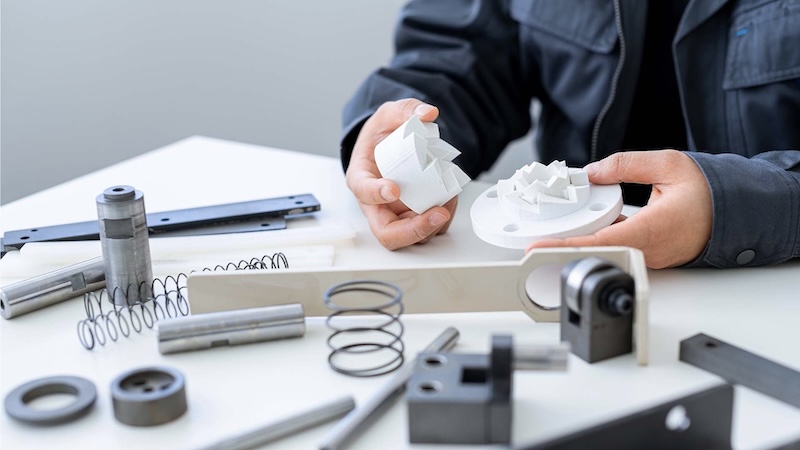
CNC machining is often the best fit when a prototype must closely match the geometry, surface quality, and material behavior of the intended production part. For engineers comparing reliable rapid prototyping China options, this method is especially useful for metal parts, rigid plastics, housings, brackets, fixtures, and components with tight tolerances. It also works well when threads, fine features, or post-processing steps such as anodizing or bead blasting matter to the review.
The main tradeoff is that CNC removes material, so part complexity and machining time can affect cost more than with some additive methods. Even so, a trusted rapid prototyping China partner can use CNC machining prototype to produce highly functional samples that are suitable for fit checks, assembly trials, and limited mechanical testing before tooling decisions are made.
CNC is particularly valuable when the prototype is intended to de-risk production. If the final part will be machined aluminum or a production plastic that can be machined from billet, then CNC often gives the clearest preview of dimensional behavior, fastener engagement, and finishing quality. That is why medical device enclosures, industrial brackets, robotics parts, and automotive fixtures frequently start with machined samples before any commitment to volume tooling.
3D Printing and Additive Manufacturing
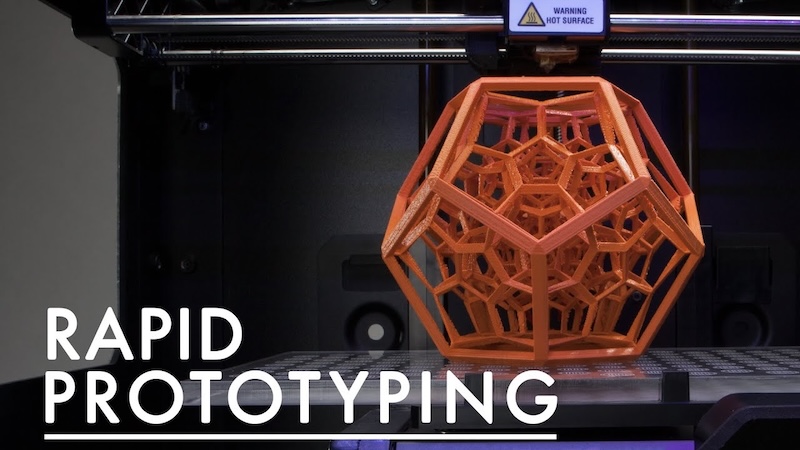
3D printing is widely used when design speed matters more than production-grade finish. It allows teams to move from CAD files to physical models quickly, which makes it valuable for concept proofing, ergonomic studies, internal design reviews, and early enclosure development. In many China-based production support workflows, additive manufacturing helps teams test several versions in parallel instead of waiting for one machining cycle at a time. A well-built 3D printing prototype can fully demonstrate a designer’s creative ideas in the early development phase.
Different additive processes support different goals, but the practical point is simple: 3D printing is strongest when you need fast iteration on shape and layout. It may be less ideal when the prototype must reflect final material properties or cosmetic standards exactly. A careful factory-side coordination service will usually flag those gaps early so expectations stay aligned with the chosen process.
For example, SLA may be selected for smoother visual models, while SLS may be preferred for tougher functional nylon-like parts. FDM can work for very early, low-cost concept testing. In China, the advantage is often not just access to these technologies, but the ability to pair them with finishing, painting, inserts, or light assembly so a rough concept model can become a more presentable validation sample when needed. Custom product prototype created via 3D printing is also a popular choice for brands launching personalized goods.
Vacuum Casting for Low-Volume Replication
Vacuum casting sits between one-off prototypes and full injection molding. It is commonly used to make small batches of plastic-like parts from a master model, often after an initial 3D-printed or machined pattern has been approved. That makes it a practical choice for pilot runs, sample kits, market testing, and pre-production evaluation when teams need multiple units that look and feel more consistent than single printed parts. Vacuum casting prototype is a cost-efficient pick for brands needing small-batch samples.
For buyers researching manufacturing oversight in China, vacuum casting is useful because it can bridge development and sourcing decisions without immediate investment in hard tooling. The process still has limits in volume and long-term repeatability, but it can be a sensible option when appearance, short-run quantity, and moderate speed all matter at the same time.
A common use case is a startup preparing 20 to 100 units for distributor review or trade show demonstrations. Injection molding may be too expensive at that stage, while 3D printing every unit can produce inconsistent appearance and high labor cost. Vacuum casting offers a middle path: parts can be color matched, textured to a limited degree, and produced in quantities large enough for realistic field feedback before major capital is committed.
Rapid prototyping technology can generate physical models directly from computer-aided design (CAD) files, greatly shortening the time from design to prototype, which means buyers can see physical samples of their custom products made in China in less time, speeding up product development and launch process.
Understanding Pricing and Cost Factors
After comparing CNC machining, 3D printing, and vacuum casting, cost becomes the practical filter for choosing among them. For buyers evaluating production quality support options, pricing is rarely just the quoted unit cost, especially when a prototype is part of a broader product development and sourcing plan.
Before approving product prototype development, compare supplier identity, production capability, payment timing, and defect-handling rules.
A strong quote should tell you what is included, what is assumed, and what could change. If the supplier lists only a headline price without process details, material grade, tolerance assumptions, or inspection scope, the number may be too incomplete to compare fairly. The real cost question is not "Who is cheapest?" but "Which supplier can deliver the right learning outcome with the least total waste of time and money?"
Why CNC Machining Costs Less in China
CNC machining often costs less in China because the work sits inside a dense manufacturing ecosystem rather than in a single isolated workshop. Machine shops, raw material vendors, fixture makers, finishing providers, and inspection resources are commonly clustered together, which reduces coordination time and overhead. That structure can make a supplier coordination service more efficient from quoting through final delivery.
Labor is only part of the picture. A more important factor is utilization: many shops run a steady mix of prototype and production work, so expensive equipment, programmers, and quality systems are spread across more jobs. In practice, that can lower setup-related costs for milled or turned parts, especially when designs are revised several times.
Competition also matters. A reliable China-based production support partner usually operates in a market where buyers can compare multiple capable shops for aluminum housings, plastic enclosures, brackets, and other common prototype categories. That pressure tends to keep pricing sharper, but it does not mean every low quote is a good quote. If a factory-side coordination company leaves out tolerance review, finishing assumptions, or inspection scope, the apparent savings may disappear during rework.
Hidden Costs and Total Landed Price Considerations
The quoted machining price is only the starting point. For a trusted manufacturing oversight supplier, the more useful question is total landed cost: what you actually spend to get a usable part into your hands, approved for testing, and ready for the next design decision.
Look closely at these cost drivers:
- Engineering clarification: Incomplete drawings, missing tolerances, or unclear material callouts can trigger back-and-forth that slows release and adds revision work.
- Finishing and secondary operations: Anodizing, painting, threads, inserts, engraving, and assembly are often priced separately.
- Scrap and remake risk: If communication is weak, one wrong assumption can turn a low quote into a delayed and more expensive prototype cycle.
- Shipping and import costs: Express freight, duties, taxes, and brokerage can materially change the true production quality support cost.
- Payment and project management overhead: Time spent coordinating vendors, checking files, and resolving quality issues is a real business cost.
For many teams, the best value comes from a partner that can support both prototyping and the handoff into sourcing product decisions. That is where a product development company or organized sourcing team can reduce total cost by catching manufacturability issues early, consolidating suppliers, and shortening iteration cycles. In other words, China supplier coordination decisions should be judged by usable outcomes, not by the cheapest line item on a quotation.
A helpful comparison method is to normalize quotes before deciding. Put suppliers side by side and check whether each quote includes the same revision level, material, surface finish, quantity, inspection report, packaging, and shipping term. Buyers are often surprised to find that the "higher" quote is actually lower risk because it includes engineering review and documented inspection, while the cheaper one assumes basic production only. That kind of apples-to-apples review is especially important when prototypes are feeding investor timelines, compliance testing, or customer trials.
Quality Assurance and Standards in Chinese Prototyping
Lower machining rates and competitive quotes only matter if the prototype arrives with the right material, dimensions, and finish. In China-based production support projects, quality assurance is what turns an attractive price into a usable engineering result instead of a costly rework cycle.
For rapid prototype benefits, the safest starting point is a written specification, a sample standard, and a clear inspection trigger.
The strongest quality systems are simple enough to follow and specific enough to verify. Buyers should not rely on broad phrases such as "high quality" or "strict QC" without understanding what those words mean in practice. In prototype work, quality control is not only about rejecting bad parts. It is about confirming that the part can answer the design question it was ordered to test.
Material Standards and Certifications
Material control is one of the first checks to make with any factory-side coordination supplier. Ask for the exact resin, metal, or elastomer grade rather than a broad label such as "ABS-like" or "stainless steel." For functional prototypes, request material certificates, batch traceability when available, and confirmation that substitute materials will not be used without approval. That is especially important when a part will support fit, strength, heat, or surface testing.
For a reliable manufacturing oversight workflow, buyers should also verify which standards actually apply to the project. Some prototypes only need internal material consistency, while others may need documentation tied to industry or end-market requirements. A trusted production quality support partner should explain that difference clearly and flag any evidence gap instead of making broad compliance claims.
Engineering Validation Processes
Good prototype quality starts before production. A capable team should review 3D files, tolerances, wall thickness, draft, undercuts, and critical cosmetic areas before machining, printing, or casting begins. This engineering review helps catch features that are manufacturable in CAD but risky in the selected process, which reduces avoidable delays and part revisions.
In practice, validation often includes DFM feedback, drawing confirmation, and agreement on what the prototype must prove. For example, a housing prototype may prioritize assembly fit and button travel, while a bracket may focus on load path and hole position. In supplier coordination in China sourcing, that shared validation plan matters because quality is judged against the intended test purpose, not against an assumed standard that was never documented.
A useful habit is to mark critical-to-function and critical-to-cosmetic features directly on the drawing or in an inspection note. That small step helps the supplier allocate attention correctly. It also reduces the chance that a noncritical cosmetic imperfection is treated as a major issue while a more important fit feature receives only a basic check. In prototype work, prioritization is often as important as absolute perfection.
Quality Control Systems and Inspection Protocols
Inspection should match the prototype's function and risk level. A simple appearance model may only need visual checks and basic dimensional sampling, while an engineering prototype may require first-article inspection, measurement reports, assembly checks, and photos before shipment. Clear inspection criteria are one of the easiest ways to identify a China-based production support company that works in a controlled, repeatable way.
Useful questions include:
- What dimensions are critical, and how will they be measured?
- Will the factory provide inspection records, photos, or a first-article report?
- How are nonconforming parts identified, reviewed, and corrected?
- Who approves deviations before production or shipment?
For product development and sourcing teams, this discipline keeps prototype learning cycles efficient. It also makes handoff easier if the project later moves from prototyping into pilot production with a product development company or a broader sourcing program.
Another practical safeguard is a pre-shipment photo or video review for cosmetic or assembly-sensitive parts. That will not replace physical inspection, but it can catch obvious color mismatches, missing inserts, wrong logos, or packaging mistakes before the goods leave the factory. For international buyers, this step is often a low-cost way to avoid losing another week to remake and reship.
Choosing Between Chinese Manufacturers and Local Alternatives
Strong inspection routines and engineering validation reduce risk, but they do not answer a broader sourcing question: where should the prototype be made in the first place? For teams comparing factory-side coordination options with local shops, the real decision is usually about speed, control, communication, and downstream manufacturing fit.
Before approving rapid prototype benefits, compare supplier identity, production capability, payment timing, and defect-handling rules.
The right answer can vary by development stage. Early concept models may benefit from local, same-day interaction, while later-stage functional prototypes may benefit more from a supplier environment that mirrors future production methods. The mistake is assuming one location is always better. In reality, the best choice is often the one that matches the type of risk you are trying to reduce.
Trade-Offs Between Overseas and Domestic Prototyping
Chinese manufacturers often appeal when a project needs competitive pricing, broad process options, and a practical path from prototype into larger-scale production. A reliable manufacturing oversight partner may handle CNC machining, sheet metal, casting support, and finishing under one roof, which can simplify product development and sourcing. That can be especially useful for hardware startups and procurement teams trying to reduce handoffs.
Local alternatives usually offer shorter shipping routes, easier in-person reviews, and faster feedback for highly iterative early concepts. If your prototype changes daily, domestic access can outweigh offshore savings. In contrast, if the design is reasonably stable and the goal is to validate manufacturability, trusted production quality support providers can be a strong fit. The best choice depends on revision frequency, tolerance sensitivity, launch timing, and how closely the prototype should match future production methods. Many buyers will also study prototype vs final product differences across local and overseas suppliers to make a fully informed choice.
A hybrid strategy is often effective. Teams may print or rough-machine first concepts locally, then move later revisions to China once the main geometry stabilizes and the project needs better cost realism or production-like finishing. This staged approach combines fast local learning with global sourcing preparation, reducing both design risk and supply chain surprise.
Communication and Time Zone Considerations
Communication is often the deciding factor between a smooth overseas project and a frustrating one. Time zone differences can slow clarification if drawings are incomplete or if change requests are informal. When evaluating a supplier coordination service, look beyond sales responsiveness and assess engineering communication: can the team flag tolerance conflicts, suggest material substitutes, and confirm inspection points clearly in writing?
A simple process helps. Use controlled drawings, revision numbers, annotated 3D files, and a written approval trail for every change. Batch questions into one message instead of sending fragments across the day. For urgent programs, ask who will manage handoff coverage and what response window is realistic. A capable China-based production support company can work efficiently across time zones, but only when expectations, file control, and decision authority are clear on both sides.
Intellectual Property Protection Strategies
IP concerns are valid, especially for custom mechanisms, branded consumer products, and pre-launch electronics housings. Still, the answer is not simply to avoid overseas work. It is to structure the project so sensitive information is shared deliberately. When reviewing a factory-side coordination supplier, ask about confidentiality agreements, file access controls, subcontracting practices, and how project data is stored and distributed.
Practical safeguards include splitting critical components across vendors when appropriate, limiting access to full assemblies, watermarking nonfinal drawings, and documenting ownership of tooling, CAD, and revisions. For some companies, working through a product development company adds oversight during supplier selection and communication. If your design carries meaningful competitive value, choose trusted manufacturing oversight experts only after legal protections and operational controls are in place, not as an afterthought.
FAQ
Q1: Why is CNC machining so cheap in China?
CNC machining costs less in China due to lower labor rates, high production volume that spreads equipment costs, abundant local material suppliers, and competitive market density. Many Chinese rapid prototyping facilities operate multiple shifts and maintain high machine utilization, reducing per-part overhead. However, the cheapest quote isn't always best—reliable production quality support providers balance cost with quality control, communication, and manufacturability feedback that prevents costly redesigns later. A well-executed CNC machining prototype can save brands huge costs in the long run.
Q2: How much does 3D printing cost in China?
3D printing costs in China vary widely based on technology, material, and part complexity. Basic FDM parts may cost a small fee, while SLA or SLS prototypes range from moderate to high prices depending on size and resolution. Metal 3D printing is significantly more expensive. When evaluating supplier coordination options, consider lead time, material properties, and post-processing needs alongside price. Requesting quotes from multiple providers with clear specifications helps establish realistic budget expectations for your project and your 3D printing prototype.
Q3: What should I prepare before contacting a rapid prototyping company in China?
Before contacting China-based production support providers, prepare a clear 3D CAD file (STEP or IGES format preferred), specify material requirements, desired finish, critical tolerances, and intended use of the prototype. Document what the prototype must validate—fit, function, or appearance. Include quantity needed and target lead time. This preparation enables manufacturers to provide accurate quotes, identify potential manufacturing issues early, and suggest cost-effective alternatives that meet your validation goals, streamlining the entire prototype manufacturing process.
Q4: How do I choose the right rapid prototyping process in China?
Choose the rapid prototyping process based on what your prototype must prove, not just cost. CNC machining offers production-grade materials and tight tolerances for functional testing. 3D printing provides faster turnaround for design validation and complex geometries. Vacuum casting suits appearance models requiring specific finishes. When working with factory-side coordination suppliers, discuss your validation goals—they can recommend processes that balance speed, material properties, accuracy, and budget for your specific requirements. Vacuum casting prototype remains a top pick for small-batch appearance samples.
Q5: What are the typical lead times for rapid prototyping in China?
Typical lead times for manufacturing oversight services range from 3-5 days for simple 3D printed parts to 7-15 days for CNC machined prototypes, depending on complexity, material availability, and finishing requirements. Rush services may reduce timelines but increase costs. International shipping adds 3-7 days. Lead times also depend on communication efficiency and file readiness. Providers with strong project management and clear processes typically deliver more predictable schedules than those competing solely on low pricing.
Q6: How do I evaluate the quality of a Chinese rapid prototyping supplier?
Evaluate production quality support suppliers on communication responsiveness, manufacturability feedback quality, process certifications, and consistency across orders rather than lowest price alone. Request sample parts similar to your needs. Assess whether they ask clarifying questions about tolerances, materials, and intended use. Check if they identify potential issues proactively. Reliable suppliers provide detailed quotes, explain tradeoffs, maintain quality documentation, and demonstrate understanding of both prototyping and eventual production requirements.
Q7: Can Chinese rapid prototyping companies handle low-volume production?
Many supplier coordination providers bridge the gap between prototypes and low-volume production, offering bridge tooling, soft tooling, or CNC production runs of 50-1000 units. This capability is valuable for market testing or pre-production while hard tooling is being prepared. However, clarify minimum order quantities, unit pricing at different volumes, and lead time differences. Some specialize in true prototyping only, while others maintain hybrid capabilities that support product launch phases effectively. Custom product prototype services can also be extended into small-batch production for growing brands.
Q8: What materials are available for rapid prototyping in China?
China-based production support facilities typically offer extensive material options including engineering plastics (ABS, PC, nylon, PEEK), metals (aluminum, steel, titanium, brass), silicone for casting, and various 3D printing resins. Material availability depends on the process—CNC machining accesses production-grade materials, while 3D printing offers specialized resins with specific properties. When selecting materials, discuss mechanical requirements, environmental conditions, and whether prototype material should match production material for accurate validation.
Q9: How do I protect my intellectual property when prototyping in China?
Protect IP when using factory-side coordination services by working with established providers who sign NDAs (ensure enforceability), splitting designs across multiple suppliers for sensitive projects, avoiding sharing complete assemblies unnecessarily, and using trusted sourcing agents or platforms with vendor vetting. Register patents before disclosure when possible. Reputable prototyping companies understand IP concerns and maintain confidentiality as standard practice. Building relationships with transparent, professional suppliers reduces risk significantly compared to choosing unknown vendors based solely on price.
Q10: Should I visit Chinese rapid prototyping factories in person?
Visiting manufacturing oversight facilities is valuable for complex projects, ongoing partnerships, or when transitioning to production, but not essential for initial prototype orders. In-person visits allow you to assess equipment capability, quality processes, and team expertise firsthand. However, many successful prototype projects proceed entirely remotely through clear digital communication, detailed specifications, and sample part evaluation. Video calls, process photos, and measurement reports can provide sufficient confidence. Prioritize visits when project scale, IP sensitivity, or technical complexity justify the investment.
Conclusion
When selecting a partner for prototyping work, focus on finding a team whose capabilities and workflows align with your design goals, quality standards, timeline and communication preferences. Do not be swayed by the lowest price or empty promises of ultra-fast delivery. The most reliable partners back up their expertise with verifiable proof, including professional process capabilities, rich material experience, transparent quoting rules, realistic lead times, and standardized protocols for revisions and quality checks. A stable and cooperative partnership for rapid prototyping China is built on tangible performance rather than marketing claims.
A practical next step is to compile a complete RFQ package, including 3D drawings, material preferences, surface finish requirements, tolerances, order quantity and delivery deadlines. Compare responses from multiple suppliers side by side to judge their professionalism and consistency. This simple step helps you filter out unqualified vendors and accurately determine whether prototype production China is the right fit for your current project.
Successful prototype sourcing is built through steady accumulation and careful planning. Start with small-scale prototype orders to verify communication efficiency, inspection standards and overall service quality before expanding cooperation. This phased approach controls costs and risks effectively, and it lays a solid foundation for long-term product prototype development. In fast-paced product development cycles, this rigorous mindset plays an equally important role as cost and production speed.





 English