The best approach to sourcing custom products from China is to start with a clear product brief, validate manufacturability early through custom product prototyping, and select partners based on communication, process discipline, and alignment with your product category. This strategy is particularly valuable for brands, importers, and product teams developing
consumer electronic products from China, where small specification gaps can escalate into costly production errors. A practical first step is to define your requirements in sufficient detail so a factory or prototyping company can review them and flag potential risks before tooling or mass production begins.
Custom product sourcing steps rely heavily on two foundational documents: a detailed China product specification sheet and a custom product tech pack, both anchored by a clear sample standard and inspection triggers to align expectations with manufacturers.
Custom Product Prototyping: The Critical First Step
After exploring the fundamentals of sourcing custom products from China, it’s essential to focus on the stage that transforms ideas into tangible assets: custom product prototyping. This phase often determines whether your sourcing plan remains efficient or requires expensive corrections later.
Before finalizing a custom product tech pack or China product specification sheet, evaluate supplier identity, production capabilities, payment terms, and defect-resolution protocols to mitigate risks early.
What Custom Product Prototyping Means for Your Business
For buyers developing private-label items, new accessories, or modified existing products, a prototype is more than a sample—it’s a functional checkpoint that tests form, size, materials, usability, and manufacturability before full production. In practice, custom product prototyping reduces ambiguity when communicating with factories or
product sourcing companies.
This clarity is critical because many sourcing issues stem from misaligned expectations. A prototype lets you confirm details like fit, assembly, finish, and packaging direction while changes are still cost-effective. When pursuing
product development in China, the prototype also serves as a reference point for supplier discussions, quality checks, and production planning.
Choosing the Right Prototype Fidelity Level
Not every prototype needs to match the finished product’s appearance and performance. Different fidelity levels serve distinct decision-making needs, so selecting the right one saves time and resources:
- Concept model: Validates basic form, dimensions, and appearance—ideal for early design feedback.
- Looks-like prototype: Focuses on visual details (color, finish, branding placement) for stakeholder approval.
- Works-like prototype: Tests functionality, movement, or assembly without final cosmetic refinements.
- Pre-production sample: Combines appearance and function to identify manufacturing risks before full-scale production.
Reliable custom product prototyping depends on matching the prototype type to your current goals. For example, a functional test unit is essential for products with moving parts or safety requirements, while a concept model suffices for validating shape. Learn more about search products in
electronic market for importers.
Local vs. China-Based Prototyping: Pros and Cons
Local prototyping offers advantages when speed, hands-on collaboration, or frequent design revisions are priorities. In-person sample reviews and rapid feedback cycles accelerate early-stage development, making it ideal for simple appearance models or rough functional checks.
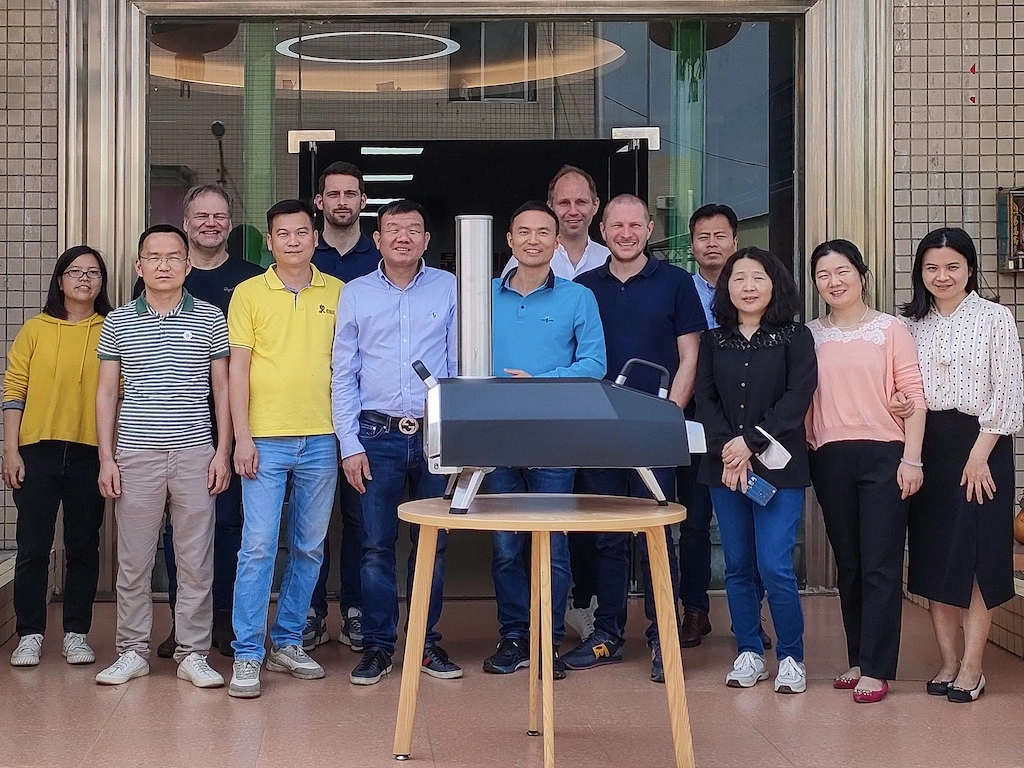
China-based custom product prototyping becomes more valuable when the prototype must reflect production-intended materials, tooling approaches, or manufacturing methods. This alignment uncovers issues that local mock-ups might miss. For example, Maple Sourcing’s work on Ooni’s custom kitchen scales required multiple prototype rounds to perfect the yellow ring and dust-proofing features—adjustments that relied on China’s specialized manufacturing capabilities. If your end goal is overseas production, sourcing prototypes from the same ecosystem improves quoting accuracy and reduces misunderstandings.
A balanced approach often works best: refine the concept locally, then request production-aligned samples through your sourcing partner. This hybrid strategy delivers clearer decisions before scaling sourcing efforts.
Supplier Vetting China: Finding Reliable Manufacturing Partners
Once you’ve defined your prototype needs and decided between local or China-based development, supplier selection becomes the next critical milestone. In China’s manufacturing landscape, distinguishing capable factories from intermediaries impacts speed, communication, design feedback, and the transition to production.
Factory audit for suppliers is a cornerstone of this vetting process. The safest approach includes a written specification, sample standard, and clear inspection triggers to validate supplier capabilities.
Distinguishing Prototyping Companies from Trading Companies
A genuine prototyping company controls core processes (engineering, machining, tooling, sample-making) in-house. This matters because it lets you discuss tolerances, material substitutions, finish options, and design-for-manufacturing considerations directly with the team building your prototype. For reliable verification, ask for photos/videos of workshop equipment, sample workflows, and examples of similar projects in your category.
Trading companies can simplify communication through established factory networks, but transparency is key. Confirm who owns production, conducts quality inspections, and supports revisions if initial samples fail. In international trading, clarity about responsibilities matters more than the supplier’s label.
Key Questions for Supplier Evaluation
Effective vetting starts with targeted questions that reveal capabilities and process discipline. Ask potential suppliers:
- Which prototyping steps are completed in-house vs. outsourced?
- What materials and processes do you recommend for this design, and why?
- How do you manage design changes after the first sample is produced?
- Who verifies dimensions, fit, and finish before sample shipment?
- Can you support the transition from prototype to mass production?
These answers help you compare suppliers on execution quality, not just responsiveness. For a comprehensive vetting for supplier, a
quality audit checklist is needed.
Red Flags in Supplier Vetting
Watch for warning signs that indicate unreliability:
- Avoiding direct answers about factory ownership or production capabilities
- Refusing to discuss process limitations or provide factory audit access
- Pressuring you to place large orders before prototype validation
- Casual documentation of drawings, revisions, or feedback
- Inconsistent communication between sales and engineering teams
With supplier vetting China, trustworthy partners acknowledge uncertainties, ask clarifying questions, and document changes meticulously. If this discipline is lacking, a product sourcing agent can help verify capabilities before you commit.
Material Selection and Manufacturing Capabilities
After narrowing down potential partners, the focus shifts to verifying their ability to produce your product with the required materials and processes. In China’s manufacturing landscape, material choice and technical capabilities directly impact lead times, quality, and the smooth transition from prototype to production.
Before approving a factory audit for suppliers, compare their material expertise, production capacity, payment terms, and defect-handling protocols to ensure alignment with your needs.
Plastic Prototyping Options: 3D Printing, CNC, and Injection Molding
For plastic parts, collaborate with your supplier to select the process that best fits your design intent:
- 3D printing: Fast and cost-effective for visual models, early fit checks, and complex geometries—ideal for concept validation but may not reflect production material behavior.
- CNC machining: Offers tighter dimensional control and uses engineering plastics closer to production resins—valuable for functional components like enclosures or brackets.
- Prototype injection molding: Delivers cosmetic consistency and realistic molding behavior for pre-production samples—sensible once the design is stable enough to justify tooling costs.
A reliable supplier will recommend the process that best tests your product, not just the one they specialize in. For example, Maple Sourcing’s order monitoring system tracks material sourcing and production processes to ensure consistency across prototype and production runs. Learn more about different ways of making
rapid prototypes.
Metal Prototyping: Machining and Casting Methods
Metal prototypes require similar process alignment:
- Machining: The preferred method for accurate dimensions, threaded features, and functional testing in aluminum, steel, or brass—fast for validating strength and fit.
- Casting: Useful for complex shapes that mirror production geometry, especially for housings or contoured parts—may require secondary machining for tight tolerances.
When evaluating suppliers, focus on evidence of process matching: sample parts in similar materials, clear documentation of achievable finishes, and honest feedback on design feasibility. This ensures your custom product tech pack requirements are realistic and cost-effective.
Aligning Materials with Production Goals
Material selection should balance performance, cost, and manufacturability. For example, sustainable materials are increasingly in demand—many Chinese factories now offer eco-friendly options that meet global standards. Discuss material certifications, durability requirements, and cost trade-offs with your supplier to ensure alignment with your brand values and target market.
Cost Transparency: Budgeting for Custom Product Sourcing
After finalizing material and process decisions, understanding prototyping costs becomes critical. In China’s product sourcing landscape, the goal is not just finding the lowest price but understanding cost drivers to avoid surprises.
Custom product sourcing steps should include a detailed budget that accounts for prototyping, tooling, production, and logistics—all anchored by your China product specification sheet.
Typical Pricing Ranges by Prototyping Method
Prototyping costs vary widely based on material, complexity, finish, tolerance, and quantity. As a general guide:
- Simple 3D-printed plastic parts: $50–$300
- CNC-machined plastic or metal parts: $200–$1,000
- Vacuum-cast prototypes (small batches): $300–$1,500
- Prototype injection molding: $1,000–$5,000+
Cautious buyers treat these ranges as directional, prioritizing like-for-like comparisons over headline prices. For example, Maple Sourcing’s cost optimization services help clients negotiate transparent pricing that includes all process steps.
Hidden Costs to Anticipate
Many sourcing surprises stem from unaccounted costs:
- Tooling: Even soft tools or pilot molds can impact budgets, especially if designs are still evolving.
- Revisions: Incomplete drawings or ambiguous requirements lead to costly design changes.
- Shipping and customs: Expedited shipping for prototypes or customs documentation fees add up.
- Testing and certification: Functional prototypes may require third-party testing to validate performance.
A reliable supplier will outline these costs upfront. For tips on avoiding budget overruns, pay attention to avoiding
hidden sourcing costs.
Securing Accurate Quotes
Accurate quotes require detailed inputs. Provide suppliers with:
- 3D CAD files, 2D drawings, and revision history
- Material specifications or approved alternatives
- Prototype quantity and follow-up production volume estimates
- Surface finish, color (Pantone/RAL codes), and tolerance requirements
- Delivery address, timeline, and shipping preferences
- Prototype purpose (e.g., visual review, functional testing, certification)
If working with a product sourcing agent, ask them to standardize quote terms so labor, tooling, revisions, and freight are itemized separately. This transparency simplifies comparison and supports data-driven decisions.
Streamlining the Prototyping to Production Process
Clear pricing and accurate quotes only deliver value if the handoff from concept to sample is seamless. In China’s specification-focused manufacturing environment, this transition is where delays and rework are either prevented or introduced.
Before approving custom product sourcing steps, confirm supplier alignment on identity, production capacity, payment terms, and defect-resolution processes.
Preparing Technical Documentation
For reliable production, share documentation tailored to the manufacturing method:
- 2D drawings with dimensions, tolerances, and assembly notes
- 3D CAD files (preferably STEP or IGES format for compatibility)
- Material specifications, color codes, and finish requirements
- Bill of Materials (BOM) for multi-component products
- Packaging requirements that impact form or fit
For electronic products, include PCB files, connector specs, firmware details, and test criteria. Maintain clear revision control with labeled file names and separated must-have vs. preferred requirements. This reduces back-and-forth and ensures suppliers quote against the same standard you’ll use for evaluation.
Effective Communication with Suppliers
Successful prototyping relies on structured communication, not constant updates. Establish:
- Designated approval authorities for changes
- A system for logging and resolving questions
- Scheduled checkpoints (pre-production file review, in-process updates, final sample approval)
- Clear feedback templates for defects and revisions
This structured approach is especially valuable for consumer products, where small interpretation gaps in texture or fit can render a sample commercially unviable. Maple Sourcing’s bilingual team bridges cultural and language barriers, ensuring your custom product tech pack requirements are accurately translated to factories.
Quality Control for Prototypes and Pre-Production Samples
A prototype is a decision-making tool, not just a sample. Evaluate it against your China product specification sheet by:
- Verifying dimensional accuracy with calipers or measuring tools
- Assessing material quality, color matching, and surface finish
- Testing functionality under normal use conditions
- Examining assembly quality (gaps, alignment, joint strength)
- Validating packaging protection and presentation
Categorize feedback as critical defects, recommended changes, or nice-to-haves to streamline revisions. For complex products, consider
third-party inspection to ensure objectivity.
IP Protection and Legal Considerations
Protecting your intellectual property is non-negotiable when sharing designs in China. A robust China NNN agreement guide (Non-Disclosure, Non-Use, Non-Circumvention) provides stronger protection than standard NDAs by preventing suppliers from disclosing your designs, using them for competing products, or bypassing you to work with your customers.
Product IP protection China measures should include:
- Signed NNN agreements before sharing any confidential information
- Watermarked technical drawings and confidential labeling
- Patent, trademark, or design right registrations in China
- Clear ownership clauses for tooling and molds in your custom manufacturing contract
Trustworthy IP protection services help clients navigate these complexities, ensuring their custom product designs remain secure throughout the sourcing process.
FAQ
Q1: Why is custom product prototyping critical for sourcing from China?
Custom product prototyping validates manufacturability, identifies design flaws, tests materials, and aligns expectations with factories. It prevents expensive mistakes by catching issues before tooling and mass production—saving time and resources in the long run.
Q2: How much does custom product prototyping cost in China?
Costs range from $50 for simple 3D-printed parts to $5,000+ for complex injection-molded prototypes. Factors include material, complexity, finish, and quantity. While upfront, prototyping costs far less than fixing production-scale defects.
Q3: How long does the prototyping process take in China?
Timelines vary by complexity: 5–10 days for 3D-printed/CNC-machined parts, 3–4 weeks for mold-based prototypes, and 6–8 weeks for complex electronic products. Build buffer time for revisions and shipping.
Q4: What types of prototypes should I request from Chinese manufacturers?
Request prototypes in stages: concept models (form validation), works-like prototypes (function testing), and pre-production samples (manufacturing validation). This staged approach balances cost and risk.
Q5: How do I evaluate prototype quality from China?
Compare samples against your technical documentation: check dimensions, material consistency, finish, functionality, and assembly quality. Use photos, videos, and measurement reports to document findings.
Q6: How can I protect my IP during prototyping in China?
Sign a China-specific NNN agreement, watermark designs, register IP rights in China, and limit information sharing to what’s necessary for the current prototype stage. Work with reputable suppliers with a track record of IP respect.
Q7: What information do I need to provide for accurate prototyping quotes?
Supply 3D/CAD files, material specs, quantity, finish requirements, color codes, tolerance levels, delivery details, and prototype purpose. The more detailed your brief, the more accurate the quote.
Q8: How many prototype revisions should I expect?
Most custom products require 2–4 revisions. Simple designs may finalize in 1–2 rounds, while complex products with electronics or tight tolerances may need 4–6. Clear communication minimizes unnecessary iterations.
Q9: Should I visit the factory during prototyping?
Visits are beneficial for complex projects or first-time partnerships but not mandatory. Remote management works with structured checkpoints, detailed documentation, and third-party inspections.
Q10: What common mistakes should I avoid during prototyping?
Rushing the process, skipping detailed specifications, choosing suppliers based solely on price, ignoring minor defects, and neglecting IP protection. These missteps often lead to cost overruns and delays.
Conclusion
Successful custom product sourcing in China hinges on three core pillars: rigorous custom product prototyping, thorough supplier vetting China, and clear documentation. By validating designs early, selecting capable partners, and aligning on expectations through a detailed China product specification sheet and custom product tech pack, you mitigate risks and set the stage for efficient production.
Maple Sourcing’s end-to-end services—from prototype development to order monitoring and IP protection—leverage our extensive supplier network and manufacturing expertise to streamline your sourcing journey. Our work with clients like Ooni demonstrates how structured prototyping, precise specification management, and proactive quality control deliver custom products that meet exact requirements. By integrating digital tools for real-time supply chain visibility and sustainable manufacturing practices, we help you stay ahead of industry trends.
The next step is to compile your technical documentation, define your prototype goals, and partner with a sourcing team that prioritizes transparency and results. With the right approach, China’s manufacturing ecosystem becomes a powerful engine for turning your product ideas into market-ready successes—delivering quality, cost-efficiency, and scalability that drives business growth.





 English