Chinese Suppliers: How to Find, Check, and Manage Them
Finding a Chinese supplier is easy, and the whole job is finding one that ships what the listing promised. A search returns hundreds of names, so the real work is filtering, checking, agreeing terms, and then managing the one you pick through the first order and beyond. Each of those four fails in its own way.
| Stage | What You Are Testing | What It Ends With |
|---|---|---|
| Find | Who really makes it | A shortlist of five |
| Check | Proof behind the claims | One verified supplier |
| Negotiate | Terms you can hold | Price, MOQ, payment set |
| Manage | Standards that stick | A supplier worth reordering |
Most buyers solve the first row and treat the other three as paperwork, which is where first orders go wrong.

Find: Start Wide, Then Cut Fast
Search wide on purpose, because you cannot judge a supplier you never saw. Marketplaces, industry directories, trade fairs, and referrals each surface different factories, and the strongest maker for your product is rarely the one ranking first on whichever platform you happened to open. Collect more names than feels comfortable.
The fastest filter after that is product focus. A catalog running from earbuds to garden tools to kitchenware belongs to a company coordinating other factories, so find out who controls production before you go any further. A real maker leads with your category and can show it on a line rather than in a stock photo.
Separating the makers from the coordinators on a raw list is what supplier sourcing does before a single enquiry goes out.
Location is the second cut, because Chinese manufacturing runs in regional clusters and a supplier far from your product’s hub is usually buying from it. Reading the city on each listing halves a long list before you write to anyone. If you are still weighing China against a domestic option, settle which wholesale route fits your stage first.
Once the list is down to eight or ten, reaching the factories directly is the first real test. How a supplier answers a plain question previews how they will answer once your money is committed.
Factory or Trading Company
A factory is not automatically right and a trading company is not automatically wrong. The choice follows the order you are placing and how much coordinating it needs, rather than the label on the letterhead.
A direct factory gives you the most control over price, production, and technical changes when one product makes up most of the order. You talk to the people who build the thing, which matters when the specification is tight or revisions are likely. The tradeoff is that a factory rarely wants a small or mixed order.
A trading company works best when the order spans several products, the quantities are small, or one team has to coordinate different plants. A capable one beats a mediocre factory on communication and quality control, while a weak one is a markup with an email address. A wholesaler is one more step removed: fine for a catalog item, wrong for anything you want to own.
So judge the company by what it controls, not by what it calls itself. Ask who owns the factory, who signs off quality, who answers a technical question, and who is accountable when the goods fail.
Ask Every Supplier the Same Question
The signals that predict quality only appear when you ask the same thing of everyone. Send one detailed brief to every remaining supplier on the same day. Each supplier fills in whatever you leave vague in its own favor, and three quotes built on three sets of assumptions cannot be compared at all.
A strong quote request covers specification, quantity, packaging, target market, certifications, and timeline. Read the replies for what they reveal rather than for the number at the bottom.
A supplier who breaks the price into material, labor, tooling, and packing is showing you their thinking. One who sends a single figure and ignores half the brief is showing you something too.
Once the quotes are in, the job changes from finding to choosing. Comparing the shortlisted suppliers on the same brief, the same lead time, and the same sample is what decides who gets the order. Order paid samples from your last few candidates at once, because handling sample orders well is what turns a good reply into something you can hold.
Check What the Listing Will Not Tell You
A shortlist is a list of candidates worth investigating, not a decision. Every listing looks professional, which is exactly why a listing settles nothing. The three checks that follow are the cheap part of sourcing and the part that decides your first order.
Start with identity. Learning to verify a Chinese company through its registration, business scope, and trading history confirms the claims match the legal entity behind the website, and skipping it is how buyers wire deposits to companies that make nothing.
Then match the plant to your order rather than to its brochure. A factory that runs your product between two much larger jobs will put yours last, so checking real production capacity is a question of fit rather than size.
On a large or complex first order, a supplier quality audit beats any certificate a supplier emails you. A certificate says the factory once met a standard. An audit tells you whether the tenth carton will look like the first.
Negotiate From Evidence, Not Hope
By the time you negotiate you should be arguing from what you saw, not from a target you invented. The sample, the audit, and the capacity check give you the footing to push on price and terms, and a supplier can tell within two messages whether you know what the product should cost.
Push on cost the right way, which is rarely a flat demand for a lower number. Asking a supplier to cut price, not quality works when you hand them a lever: a cleaner specification, simpler packaging, a longer lead time, or a commitment to reorder. A cut with nothing behind it comes back as a quieter cut to the material.
MOQ is the other number worth arguing, and it is usually softer than the first quote suggests. A factory sets it high to protect its setup cost, so negotiating a lower MOQ is a conversation about who carries that cost. A trial order at a premium, a forecast they can plan around, or standard rather than custom materials all lower the floor without costing them money.
Pay for Passed, Not Packed
The payment structure is the last leverage you hold. A 30% deposit against a 70% balance is the common split, but the split alone protects nobody, because what the balance waits for is what protects you.
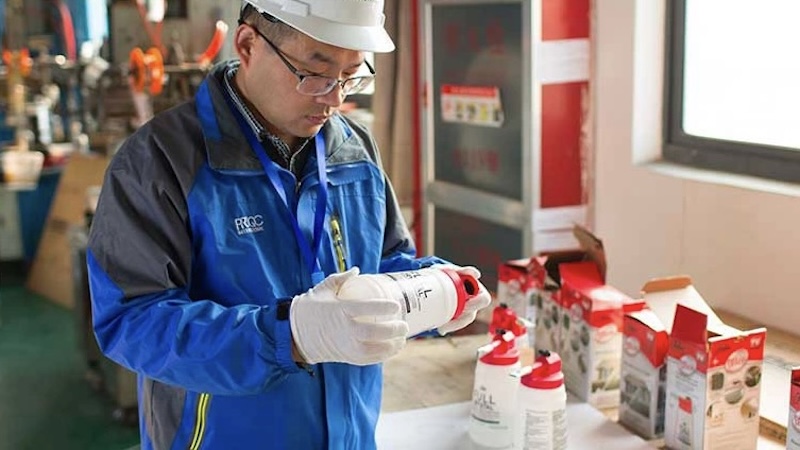
Release the balance against a passed inspection, not a packed carton. Structuring China supplier payment terms so the final payment waits on an inspection report, with rework if the lot fails, turns your money into the last check on quality. A supplier who refuses any link between payment, independent inspection, and correction is telling you where the risk sits.
Lock the First Order Before Production Starts
Choosing the supplier decides who receives the order, not what arrives. This is the cheapest moment to agree the standard, the schedule, and what happens when one of them slips, because after the deposit moves every one of those costs something to change.
Everything you settled by email has to survive into one written order. The approved sample, the packaging, the deadline, and what counts as a pass all belong there, along with the name of the one person allowed to approve a change. Whatever you leave open is what shows up later as a defect.
The completion date needs more than one promised day. Ask when the materials land and when the line starts, because a date you can check twice before it arrives beats one you only hear about on the day.
The Second Order Is Where Value Is Won
Finding a supplier is a project and managing one is a habit. The factory that shipped a clean first order can still drift on the third, when your attention has moved on and a cheaper material quietly appears in the build.
Most of the work is about being a buyer worth performing for. Pay on the day you said and stop changing the brief late, and yours becomes the easy order on a crowded floor. Factories protect the buyers who make planning simple. That is what good supplier management buys: a factory that absorbs a small problem instead of billing you for it.
Keep the runner-up warm, because one supplier is one point of failure. The second-best factory on your shortlist is your insurance the week the first one has a fire, a labor shortage, or a quality slip. Rebuilding that relationship under deadline pressure costs far more than keeping it alive.
FAQ
Q1: Should I find a supplier before or after the design is settled?
Settle the design far enough to specify it, because no factory can quote or sample a moving target. Then show it to two or three of them before you commit, since a factory will tell you which part is expensive to make while the drawing can still change.
Q2: How much should I budget for the whole find-and-check process?
Plan on a few hundred dollars for paid samples and courier, plus roughly one man-day each for an audit and a pre-shipment inspection, which runs near $300 a day in the main Guangdong cities. Under a thousand dollars is the usual total, against a first order worth many times that.
Q3: Can I trust a supplier that only sells through a marketplace and has no website?
A missing website is common and not disqualifying, since many capable factories rely on platform traffic. What matters is whether registration, export history, and a factory check hold up, so judge the verifiable facts rather than the polish of the online presence.
Q4: The supplier came from a trusted referral. Can I skip the checks?
Run them anyway, because a referral tells you the factory worked for somebody else’s product, not that it suits yours. Registration and capacity take an afternoon to confirm, which is cheap insurance on somebody else’s judgment.
Q5: The supplier I want is not the cheapest. How much premium is reasonable?
There is no fixed percentage, so price the difference instead of arguing it. Work out what one rework round, one delayed launch, or one failed inspection would cost you, and hold that number against the gap between the two quotes.
Q6: Should I tell a supplier my brand name and my end market?
Share the end market, because it decides certification, labeling, and packaging long before anything is made. Hold the brand name and artwork until the order is agreed, since a factory needs to know the standard the goods must meet well before it needs your logo.
Q7: The factory shipped part of my order without telling me. What now?
Ask for the reason and the recovery plan in writing before you approve anything, because a short shipment is usually a materials or capacity problem the factory hoped to absorb quietly. Work out what actually arrived before you work out what to pay.
Q8: When is a supplier worth replacing rather than fixing?
Replace when the problem is capability or honesty, and fix when it is process. A factory that cannot make your product to spec will not learn how on your order, while one that ships late but tells you early is usually worth the work.
Conclusion
The supplier you keep is the one you were always willing to walk away from. Every check buys the same thing: the confidence to say no while saying no still costs you nothing.
Holding a factory to the written order, and getting an inspector through the door before the balance moves, are both far easier from an hour away than from eight time zones. We work that side as your supplier sourcing team, one order at a time.