
Outdoor Product Suppliers in China: Numbers, Not Claims
Outdoor gear fails in weather, load, and time, and none of those three show up in a warehouse or a photo. A supplier who answers in numbers is a different risk from one who answers in adjectives, and the gap only becomes visible after your customer has been rained on.
| What to pin down | Why it decides the order |
|---|---|
| Fabric denier and coating | Whether waterproof means anything |
| Fill power and fill weight | Whether the warmth rating holds |
| Hardware brand | Where zippers and buckles fail |
| Seam construction | The leak path nobody photographs |
| Test report per model | Claims you can actually defend |
Every line there is a number or a document, and a supplier who has neither may not understand or control the production behind the quote.
Where Outdoor Suppliers Actually Cluster
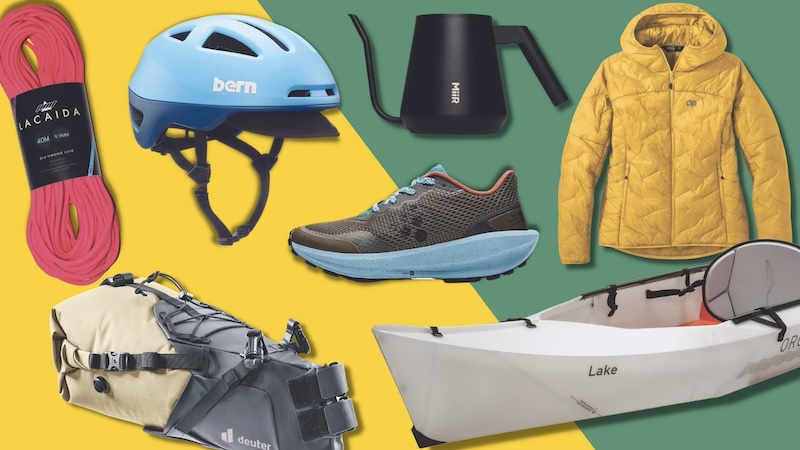
Production is concentrated in several Chinese regions, so location is a useful first filter and not proof of what a supplier actually makes. Zhejiang is one of the strongest outdoor bases, with clusters for tents, camping equipment, technical textiles, and the components behind them.
Fujian is where to start on packs and soft goods, Guangdong on apparel and electronic accessories, and Shandong on selected sports and outdoor products. Treat all four as starting points, not as exclusive production locations.
Match the province to the product before you shortlist anyone. A tent quoted from outside the main clusters deserves a closer look, especially if the supplier cannot name the source of its fabric and poles. The China manufacturing hubs map is the fastest way to check a registered address against what the company claims to build.
Checking that a registered address is a real production line, not an office, is routine work in household goods sourcing and hard to do from a search result.
The Failures Happen After the Photograph
A tent that looks perfect in a showroom leaks at the seam, and a boot that feels solid delaminates on a wet trail two days in. Some of that is workmanship, but much of it begins as a specification gap.
Nobody wrote down what the product had to survive, so the factory built what it could sell you, which is how consumer goods sourcing fails in every category that gets used rather than displayed.
The fastest test of a supplier is a question about performance, not appearance. Ask how the tent behaves in sustained rain instead of whether it is waterproof. A maker who understands the category answers with a rating, a test method, and a caveat about which seams matter. Anyone who replies “very good quality” and sends more photos has given you the whole signal you needed.
Ask for Numbers, Not Adjectives
Every outdoor claim reduces to a figure the supplier either has or does not have. Tents come down to fabric denier, the coating type, and the hydrostatic head in millimeters.
Sleeping bags turn on fill power, fill weight, and a temperature rating tested to ISO 23537-1 rather than estimated in the office. Backpacks rest on fabric weight, the brand of the zippers and buckles, and how the strap anchors are stitched.
Ask for a spec sheet before you ask for a price. A capable supplier can provide one or build it, listing materials, weights, dimensions, and performance ratings. If a supplier cannot build a clear spec sheet or answer technical questions consistently, treat that as a warning that it may not control the product closely enough. Running that same question set across three candidates separates them faster than any price comparison.
Test the Sample the Way a Customer Will
A sample you only look at tells you what the photographs already told you. Outdoor failures are physical, so the sample stage has to be too, and it is the last point where a redesign costs a courier fee instead of a batch.
Four simple checks expose the obvious problems before bulk production. Pitch the tent and spray it for 10 minutes, then check every seam and the floor corners. Load the pack to its rated capacity and carry it for an hour, watching the stitching at the strap anchors.
Wash a sleeping bag twice and see whether the fill redistributes or clumps. Leave fabric in direct sun for a week and compare it against a piece kept in the dark.
A good supplier will tell you which tests to run. They know the product passes and would rather you confirm it now. Treating sample orders in China as a documented process also gives you a signed reference to inspect against later. Anyone who steers you away from testing has told you what the test would find.
Paper About the Factory Is Not Paper About the Product
A management system certificate shows the factory has procedures, not that your tent keeps water out. The document you need names your product, your model number, the standard applied, and the lab that ran it. Anything addressed to the company instead of the item is a different kind of paper.
Which standard applies depends on the product and the market, and that homework is yours, not the factory’s. For adult recreational sleeping bags rated to -20°C or warmer, temperature claims can be tested under ISO 23537-1, while military and extreme-climate models fall outside its scope. High-visibility clothing follows EN ISO 20471.
Products made for children may face additional market-specific safety rules, and ISO 23537-1 does not cover children’s or babies’ sleeping bags. Where a claim carries commercial weight, product testing in China against the named standard is what turns it from marketing into something you can defend.
Where the Cheap Quote Actually Lands
A buyer comparing two tent suppliers took the one at $18 over the one at $22 and saved $2,000 on 500 units. Supplier A could not name the fabric or the waterproof rating. Supplier B supplied a spec sheet showing 210D Oxford at 3,000 mm and a test report from an accredited lab. The samples looked identical.
The batch leaked at the seams, and the saving was gone before the returns were counted. Around 40% of units came back for replacement, the rest sold at a discount, and the second order went to Supplier B anyway. Outdoor goods make this pattern worse than most categories, because sea transit puts weeks between the mistake and the evidence.
What to Do If You Still Cannot Tell
When the paperwork looks fine and the sample is ambiguous, buy information before inventory. A supplier quality audit confirms whether the sewing lines, the seam taping equipment, and the testing setup actually exist behind the profile. It costs less than a failed first order and answers a question samples cannot.
Then write the inspection scope before you place the order, not after. For outdoor products the inspection checklist should cover dimensions, stitch density, hardware function under load, seam finish and tape coverage, and a water spot check.
The usual carton and labeling items sit on top of that. If the category is new to you, using a China buying agent who knows outdoor manufacturing shortens the shortlist before any of this starts.
FAQ
Q1: Which outdoor categories carry the most risk?
Anything waterproof, anything down-filled, and anything load-bearing, because in all three the property you are buying is invisible on arrival. Harnesses, helmets, and buoyancy aids sit in their own tier, since failure there is a safety matter, not a returns line.
Q2: What makes a waterproof requirement testable?
Give the figure, the test method behind it, and the parts it applies to, since a floor and a fly are often rated differently. A requirement without a number is a preference, and the factory will meet it however it likes.
Q3: Does the factory need to know the climate my customers use this in?
Yes, because coatings, foams, and adhesives behave differently in heat, cold, and damp, and a plant building for one market defaults to what it knows. Name the temperature range and the exposure you expect, then ask which materials the factory would change.
Q4: How do I check down fill without a lab?
Weigh the finished bag against the approved sample and the agreed total weight, since the shell, zippers, and lining sit inside that figure too. Loft recovery after a night compressed is a second rough signal, though fill weight and fill power still need proper testing to confirm.
Q5: How do I keep sizing and capacity consistent across a range?
Ask how the figure was measured, since pack volume and tent capacity are calculated differently from one factory to the next. Fix the method in the order and check it on the approved sample, or the same 40-liter label ends up covering two different bags.
Q6: Does outdoor gear need different packaging for sea transit?
Often yes, because weeks in a humid container is exactly the condition that grows mold on canvas, webbing, and untreated leather. Ask what moisture protection is used inside the carton and whether desiccant is included, then check it at loading.
Q7: Should I order spare parts alongside the gear?
Yes, for the parts that fail in the field: poles, buckles, zipper sliders, and repair patches. Agree the quantity and the price with the main order, because a small spares run ordered later costs far more per piece.
Q8: How often should I re-test on repeat orders?
Re-test whenever the fabric, the coating, the hardware, or the factory changes, and spot check otherwise. Outdoor specifications drift quietly, and the first sign is usually a review about a leak rather than a message from the supplier.
Conclusion
Good and bad outdoor suppliers do not look different, they answer differently. The ones worth keeping tell you what their product can survive and hand you the report that proves it. The rest describe how it looks and hope you never test it in the rain.
Rain, load, and cold do not care what the specification said. Our household goods sourcing team tests against those three before the balance goes out, so the first review is not where you find out.