



What if you could test a product idea this week instead of debating it for months? That question captures why rapid prototyping services matter to modern teams. In competitive markets, speed is useful, but learning speed is decisive. Rapid prototyping turns abstract concepts into physical evidence so teams can make better decisions earlier.
At its core, rapid prototyping is a structured way to move from sketch to testable model with fewer delays and fewer assumptions. Depending on the design goal, this can include rapid forming methods for early shape studies, freeform fabrication for complex geometries, and layer manufacturing for precise, repeatable builds. The point is not to create a perfect final product on day one. The point is to reduce uncertainty while design choices are still inexpensive to change.
For a company focused on product development, this introduction matters because prototype quality affects every downstream step: engineering effort, sourcing product options, tooling readiness, and launch timing. A rough concept that looks acceptable on screen may fail when held, assembled, or used. A physical prototype reveals those gaps quickly, helping teams align product development and sourcing decisions before costs escalate.
A practical way to approach rapid prototyping services is to treat them as a decision tool, not just a manufacturing task. Before requesting a build, define what decision the prototype must support. Common examples include fit validation, mechanism proof, user handling, and visual presentation for stakeholder approval. Clear intent leads to the right process, material, and tolerance level.
To frame your first phase effectively, focus on four questions:
What must this prototype prove right now: form, fit, function, or finish?
Which constraints matter most at this stage: lead time, budget, durability, or detail?
How close does it need to be to production behavior versus concept communication?
What decision will be made immediately after testing this iteration?
These questions keep the effort centered on learning value. They also prevent a common mistake: over-specifying early prototypes and spending time on details that do not change decisions.
Rapid forming and related methods are most useful when paired with iteration discipline. Teams that run short prototype cycles can compare options, expose risk, and refine requirements while momentum is high. That rhythm supports better collaboration between design, engineering, and procurement functions, especially in a product development company managing multiple timelines.
This article will build on that foundation by clarifying how to choose methods, when to use each prototype fidelity level, and how to integrate prototype feedback into product development workflows. The goal is to help you approach rapid prototyping services with a clear purpose: transform ideas into reality through faster, smarter decisions at each stage.
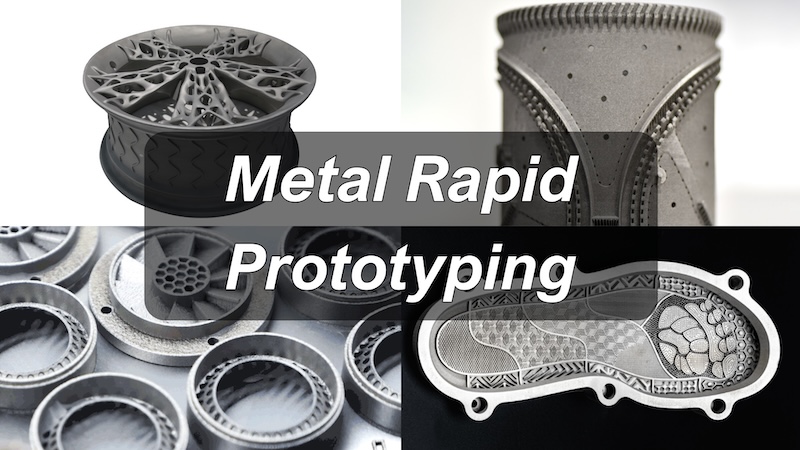
After introducing why these services matter, it helps to clarify what actually happens behind the scenes. Rapid prototyping services turn digital ideas into physical parts quickly, so teams can test design, fit, and function before committing to full production.
Rapid prototyping is a development method that creates early physical models from 3D CAD files in short cycles. Instead of waiting for tooling, teams use additive or hybrid processes to evaluate shape, usability, and assembly issues while designs are still flexible. This approach reduces late-stage surprises and helps product development move with better evidence.
Rapid forming is closely related but usually aimed at producing stronger, more production-like components, often in lower volumes. In practice, businesses use rapid prototyping for learning and iteration, then apply rapid forming when they need near-end-use parts for pilot runs, customer demos, or pre-launch validation. Freeform fabrication and layer manufacturing are core ideas here: parts are built from digital geometry layer by layer, enabling complex forms that are harder to machine traditionally.
The workflow is structured but fast. A product team begins with concept requirements, translates them into CAD, and prepares files for printing or other build methods. Engineers then choose materials and resolution based on the decision they need to make, such as visual review, ergonomic testing, or functional verification.
A typical service flow includes:
1. Design intake and file check to confirm geometry, tolerances, and manufacturability.
2. Process and material selection matched to use case, timeline, and budget.
3. Build preparation including orientation, supports, and layer settings.
4. Fabrication and post-processing such as cleaning, curing, sanding, or machining.
5. Review and iteration where feedback is folded into the next version.
For business teams, this loop matters because each prototype is a decision tool. It aligns stakeholders earlier, improves communication with sourcing product partners, and supports clearer handoffs into product development and sourcing activities.
Most rapid prototyping services rely on a mix of technologies rather than a single method. Layer manufacturing platforms, including common polymer and resin systems, are widely used for speed and geometric freedom. Powder-based methods can provide stronger mechanical performance for specific applications, while CNC finishing is often added when tighter tolerances or smoother surfaces are required.
Freeform fabrication is especially valuable when designs include internal channels, complex curves, or lightweight structures. In business terms, technology choice should follow purpose: visual models for executive review, functional prototypes for engineering tests, or near-production parts for launch planning. A capable product development company helps map each objective to the right process, preventing wasted cycles and making rapid prototyping and rapid forming practical tools for faster, lower-risk product decisions.
After defining the rapid prototyping workflow and core technologies, the practical question becomes software choice. In day-to-day product development, the platform you use often determines how quickly a concept moves into rapid forming, freeform fabrication, and test-ready parts.
Software for rapid prototyping is not one-size-fits-all. Teams usually combine tools based on where they are in the design cycle, the complexity of the geometry, and the selected layer manufacturing process. A solid stack supports four needs: concept modeling, engineering validation, print preparation, and collaboration with manufacturing partners.
Most platforms fall into a few clear categories, and understanding those categories helps you pick tools that reduce rework.
Parametric CAD platforms (engineering-first design)
Tools like SolidWorks, Autodesk Fusion, and PTC Creo are widely used when parts need precise dimensions, assemblies, and design revisions. They are strong for mechanical product development because features can be edited systematically instead of redrawing from scratch. For rapid prototyping services, this means cleaner handoff files and fewer iteration delays.
Industrial design and surfacing tools (form-first design)
Rhino and Autodesk Alias are common when aesthetics and complex surfaces matter, such as consumer products with ergonomic contours. These tools help teams explore freeform fabrication ideas quickly before locking final dimensions. They are especially useful early in development, then often paired with parametric CAD for detailed engineering.
Mesh editing and repair tools (print-readiness)
Platforms such as Meshmixer, Materialise Magics, and Netfabb focus on fixing mesh errors, wall thickness issues, and non-manifold geometry that can break builds. In layer manufacturing, model integrity is critical because small digital flaws can cause failed prints or weak sections.
Slicer and machine workflow software (process control)
Cura, PrusaSlicer, and Simplify3D, along with OEM machine software, convert models into machine instructions. They control layer height, supports, infill, orientation, and print strategy. These settings directly affect speed, strength, and surface finish, so they are a major lever in rapid forming performance.
Cloud collaboration and PLM-connected tools (team alignment)
Onshape and Fusion cloud workflows support shared version control, design reviews, and faster approval cycles across distributed teams. For a product development company managing multiple projects, this reduces confusion over file versions and keeps prototyping decisions traceable.
For businesses evaluating rapid prototyping services, the key is integration, not popularity alone. Ask whether your software choices can exchange neutral formats cleanly (such as STEP for CAD and STL/3MF for additive workflows), preserve design intent during revisions, and support both quick concept models and engineering-grade prototypes. If your product development and sourcing process involves external partners, prioritize platforms that simplify collaboration and change tracking.
A practical approach is to map software to prototype purpose: concept validation, fit check, functional testing, or pre-production learning. That alignment keeps rapid prototyping focused on business outcomes, including shorter cycle time, fewer tooling surprises, and clearer decisions before production investment.
Software choice shapes model quality, but execution quality depends on who builds the part. At this stage, selecting the right partner for rapid prototyping, rapid forming, freeform fabrication, and layer manufacturing determines whether your design moves smoothly into product development and sourcing or stalls in rework.
Start by matching service capability to your project risk. A trusted provider should support your required process, material, tolerance range, and finish standards, not just offer a long equipment list. For early concept models, speed and communication may matter most. For pre-production validation, process control, repeatability, and documentation become more important.
Use a short qualification workflow:
1. Share a controlled RFQ package with CAD files, quantity, tolerance notes, and intended use.
2. Request process recommendations and ask why one method fits better than another.
3. Ask for sample parts or a small pilot run before larger commitments.
4. Confirm lead times for standard and expedited builds.
5. Review how design feedback is handled before production starts.
This approach helps you compare providers on technical fit and responsiveness, which is essential when rapid forming timelines affect launch plans.
Evaluation should go beyond price-per-part. A strong rapid prototyping services company demonstrates design-for-manufacturing support, clear quality checkpoints, and transparent revision handling. If your team is moving from concept to low-volume production, ask whether the same partner can support both prototype and bridge manufacturing workflows. Continuity reduces handoff friction and preserves design intent.
Focus on practical checks:
- Engineering depth: Can they flag wall-thickness, warping, or support-related risks before printing?
- Quality discipline: Do they define inspection methods for critical dimensions and cosmetic standards?
- Material guidance: Can they explain tradeoffs among plastics, resins, and metals for function, not marketing?
- Communication cadence: Will you get named contacts, milestone updates, and quick issue escalation?
- Scalability: Can they transition from one-off freeform fabrication to repeatable layer manufacturing batches?
For business relevance, this is where a product development company perspective matters. You are not just buying a part; you are buying decision speed and fewer downstream sourcing errors.
There is no universal "best" vendor. The right manufacturer depends on geometry complexity, material requirements, timeline pressure, and where the prototype sits in your product development path. In practice, many teams maintain two to three qualified partners: one for high-detail concept work, one for functional testing, and one for urgent overflow.
When building that vendor bench, prioritize operational reliability over brand visibility. Ask each candidate for comparable project examples, standard turnaround windows, and rework policy clarity. A useful signal is whether they proactively suggest design adjustments that reduce cost or improve print success without compromising function.
If your organization handles ongoing product development and sourcing, choose vendors that can integrate with your broader process, including packaging, component compatibility, and handoff to manufacturing partners. That alignment keeps rapid prototyping from becoming an isolated task and turns it into a repeatable engine for faster, lower-risk product decisions.
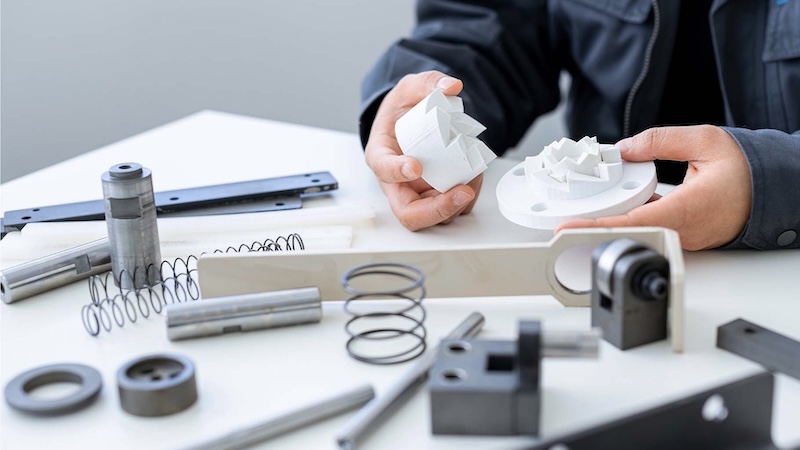
After you identify credible partners, the practical question is cost. Pricing clarity is what turns a promising conversation into a workable plan for product development, especially when rapid prototyping must support tight launch timelines and design decisions.
Rapid prototyping pricing is shaped by technical choices and project constraints, not by a single rate card. In most cases, geometry complexity is the first cost driver. Intricate parts with thin walls, undercuts, or internal channels need more setup, slower build parameters, and extra post-processing. That applies whether the method is freeform fabrication, CNC-assisted hybrid workflows, or layer manufacturing with high-resolution settings.
Material selection is the second major variable. Standard resins and commodity plastics are usually less expensive than engineering-grade polymers, metal powders, or specialty materials that require tighter process control. Tolerances also matter. A visual concept model can be priced very differently from a functional prototype that must hold fit, strength, or thermal targets.
Other common pricing factors include:
Prototype quantity and iteration cycles: One-off builds often have higher per-unit cost than short prototype batches. Multiple design revisions increase total spend, even when each build is modest.
Post-processing requirements: Sanding, painting, sealing, machining, and inspection add labor and time.
Lead time pressure: Expedited schedules usually increase cost because they consume priority machine slots and staffing.
File readiness: Clean CAD files with clear notes reduce engineering clarification time and lower quoting risk.
For business planning, treat rapid forming as a decision tool, not just a production expense. Faster learning can prevent costly downstream tooling changes.
Accurate estimates come from clear technical inputs. If your RFQ is vague, quotes will vary widely or include hidden assumptions. A strong request package should include CAD files, target dimensions and tolerances, intended use case, material preferences, expected quantity, and required finish quality. Add deadline details and whether you need one prototype round or several validation cycles.
To improve quote quality, ask every provider to break pricing into components such as setup, build, post-processing, and shipping. Itemized quotes make apples-to-apples comparison easier and help your team decide where to reduce cost without hurting function. For example, you may keep a critical mating surface at tight tolerance while relaxing cosmetic surfaces.
When timelines are uncertain, request two scenarios: standard lead time and expedited lead time. This helps product development and sourcing teams model trade-offs before committing budget. It is also useful to ask what design adjustments could lower price, such as orientation changes, wall-thickness updates, or material substitutions.
If you work with a product development company, align prototype cost reviews with broader milestones, including design freeze and manufacturing handoff. That keeps rapid prototyping connected to business outcomes instead of becoming an isolated line item.
After reviewing cost drivers and quote accuracy, the core lesson is that better decisions come from matching process capability to product intent, not from choosing the fastest or cheapest option by default. In rapid prototyping and rapid forming workflows, consistency in requirements, material choices, and communication reduces avoidable iteration and protects schedule confidence.
Define the prototype objective before selecting a process. Align each build with a clear purpose, such as fit validation, functional testing, or visual review, so freeform fabrication methods are chosen for outcomes rather than convenience. This keeps teams from over-specifying early parts or underbuilding test-critical ones.
Treat process selection as a performance tradeoff, not a brand preference. Compare layer manufacturing routes based on tolerances, surface needs, mechanical behavior, and turnaround expectations. A process that excels for form studies may be a poor fit for load-bearing evaluation, even if lead time appears attractive.
Lock key inputs early to improve quote reliability and build repeatability. Stable files, explicit acceptance criteria, and agreed post-processing expectations reduce pricing volatility and rework risk. Clear constraints also help teams compare options on equal terms and avoid hidden scope shifts.
Use iteration deliberately, with decision gates. Rapid prototyping works best when each cycle answers a specific question and informs the next revision. Structured checkpoints prevent endless redesign loops and keep rapid forming activity tied to measurable progress.
Prioritize communication discipline across design, engineering, and fabrication partners. Shared terminology, revision control, and documented assumptions minimize interpretation gaps. In practice, this is what turns freeform fabrication speed into dependable execution rather than fragmented output.
Taken together, these points frame a practical decision model: start with intent, choose the right manufacturing path, control inputs, and manage iteration with discipline. That approach keeps layer manufacturing and rapid prototyping efforts efficient while preserving technical confidence in each build.
Q1: When should I choose additive methods over CNC or molding?
- Choose additive if geometry is complex, internal channels matter, or design changes are still frequent.
- Choose CNC when you need strong surface finish control, tight tolerances on simple geometry, or familiar engineering plastics and metals.
- Choose molding when volume is stable and high enough to justify tooling.
- Use a hybrid path when speed matters: rapid prototyping for design validation, then process shift for scale.
Q2: How do I reduce rework in layer manufacturing projects?
Specify critical-to-function features early and tag them in drawings. Align orientation strategy with strength direction and surface priorities. Request a pilot build of a few units before committing to a larger batch. Document approved post-processing so repeat runs stay consistent. Capture lessons learned after each iteration in a short design log.
To turn concepts into products, approach rapid prototyping as a structured cycle that reduces uncertainty before full production. In business terms, the value is not only speed. It is faster learning, better alignment across design and engineering, and fewer expensive late-stage changes. When teams use rapid forming early, they test fit, function, and manufacturability while options are still flexible.
A useful mindset is to connect each prototype to a specific decision. Instead of asking for "a prototype," define what must be confirmed: user interaction, mechanical performance, assembly sequence, or visual quality. This keeps scope focused and prevents overbuilding. It also helps select the right method, whether you need freeform fabrication for geometric freedom or layer manufacturing for quick iteration on complex forms.
To keep momentum and business relevance, use a short decision checklist:
Define the decision point. State what this iteration must prove or eliminate.
Match process to risk. Use rapid forming methods that expose your highest technical or user risk first.
Set acceptance criteria. Agree on pass-fail conditions before building, including tolerances, usability targets, or assembly checks.
Capture outcomes immediately. Record what changed in the design file, bill of materials, and manufacturing assumptions.
Choose the next move quickly. Decide to refine, freeze, or pivot based on evidence from the prototype.
This approach keeps rapid prototyping tied to outcomes that matter to product teams: shorter development cycles, cleaner handoffs, and more confident go or no-go decisions. It also supports cross-functional clarity. Designers can validate intent, engineers can verify constraints, and operations can assess production readiness from increasingly realistic models.
As your projects mature, the strongest results usually come from combining methods across stages. Early freeform fabrication can explore shape and ergonomics at low commitment. Mid-stage layer manufacturing can validate internal features and assemblies. Later iterations can increase fidelity to confirm materials, finishes, and production behavior before launch. The important point is not using every technology. It is using the right one at the right decision moment.
The practical next step is simple: select one active concept and plan a three-iteration prototype sprint with explicit decision gates. Define what each build must answer, how success will be judged, and what action follows each result. That disciplined cadence is how ideas move from sketches to manufacturable reality, and how rapid prototyping delivers measurable business impact rather than just fast output.
 English