



In the hyper-connected, volatile global marketplace of the 21st century, the traditional, linear supply chain is no longer fit for purpose. Once a predictable sequence of ‘plan, source, make, deliver,’ it has morphed into a complex, dynamic ecosystem vulnerable to geopolitical shifts, climate events, and sudden spikes in consumer demand. For businesses that rely on global sourcing and intricate logistics networks, the need for a paradigm shift is not just a competitive advantage—it is a matter of survival. This is the dawn of digital transformation for supply chain management, a fundamental rethinking of how companies connect with suppliers, manage inventory, and serve customers through the power of technology and data.
The supply chain digital transformation is a holistic journey, not a single project. It involves integrating advanced digital technologies into every facet of the supply chain, from initial product design and raw material sourcing to final-mile delivery and post-sale service. This process breaks down functional silos, creating a transparent, intelligent, and predictive digital transformation value chain that can anticipate disruptions, adapt to change, and unlock unprecedented levels of efficiency and customer value. For companies engaged in global trade, leveraging supply chain transformation services is becoming the primary lever for building resilience and driving sustainable growth.
This comprehensive guide will explore the multifaceted world of supply chain transformation. We will dissect the core technologies driving this revolution, outline a strategic roadmap for implementation, and provide actionable insights for businesses looking to build a future-proof supply chain. We will delve into the critical pillars of this transformation, including procurement, manufacturing, logistics, and risk management, with a special focus on the unique challenges and opportunities of sourcing from manufacturing hubs like China. The goal is to equip you with the knowledge to move beyond reactive problem-solving and architect a supply chain that is inherently agile, intelligent, and ready for the future.

The urgency behind the digital transformation for supply chain movement stems from the inherent weaknesses of legacy systems when confronted with modern challenges. Traditional supply chains, often built on paper-based processes, fragmented IT systems, and siloed departmental functions, are brittle by design. They operate with significant information lag, making them slow to react and vulnerable to a host of problems that can cripple a business.
Pervasive Lack of Visibility: The most significant failing of traditional supply chains is their opacity. Businesses often have a black hole of information between placing an order with a supplier and receiving the goods. They may not know the exact status of their production run, where their container is in transit, or if a delay at a port will impact their ability to meet customer demand. This lack of real-time visibility makes proactive decision-making impossible.
Siloed Data and Disconnected Systems: In a typical legacy setup, the procurement team uses one system, the logistics department another, and the warehouse a third. These systems rarely communicate effectively, leading to data duplication, inaccuracies, and a fractured view of the end-to-end process. This fragmentation prevents the creation of a single source of truth, which is the foundation of any successful supply chain digital transformation.
Reactive vs. Proactive Operations: Without real-time data and predictive analytics, traditional supply chains are perpetually in a reactive mode. A supplier delay is only discovered when a shipment fails to arrive. A quality issue is only identified during final inspection, long after thousands of units have been produced. This constant firefighting consumes resources, erodes margins, and damages customer trust.
High Operational Costs and Inefficiency: Manual processes are breeding grounds for inefficiency. Time is wasted on data entry, chasing down order statuses via email, and reconciling mismatched invoices. Furthermore, poor visibility leads to excessive buffer inventory—or safety stock—being held at every node of the supply chain to guard against uncertainty, tying up valuable working capital.
Inability to Meet Modern Customer Expectations: Today’s customers, whether B2B or B2C, expect speed, transparency, and personalization. They want to know where their order is at all times and receive it faster than ever before. A slow, opaque supply chain simply cannot deliver this level of service, leading to customer churn and loss of market share.
Recent global events have brutally exposed these vulnerabilities. The COVID-19 pandemic, geopolitical trade disputes, and logistical bottlenecks like the Suez Canal blockage have demonstrated how quickly a single point of failure can trigger a cascade of disruptions across the entire digital transformation value chain. These events were a wake-up call, proving that supply chain resilience is no longer a theoretical concept but a critical business imperative. Companies that had already invested in their supply chain transformation were better equipped to pivot, finding alternative suppliers, rerouting shipments, and communicating proactively with their customers. Those who hadn’t, struggled, facing stockouts, soaring costs, and reputational damage.
This new reality has fundamentally changed the boardroom conversation. The supply chain is no longer viewed as a mere cost center but as a strategic enabler of business growth and continuity. The imperative is clear: digitize or risk being left behind.
A successful supply chain digital transformation is not about adopting a single piece of technology; it’s about building an integrated ecosystem of digital solutions that work in concert to create a cohesive, intelligent, and automated operation. These technologies form the pillars upon which a modern supply chain is built.
At the heart of any transformation is a modern, cloud-based Enterprise Resource Planning (ERP) system. Legacy, on-premise ERPs are often rigid and difficult to integrate with other platforms. A cloud ERP serves as the ‘single source of truth,’ a central hub that connects data from procurement, manufacturing, inventory, finance, and logistics. It provides the foundational layer of data management and process standardization necessary for all other digital initiatives. The scalability and accessibility of the cloud mean that data can be accessed by stakeholders anywhere in the world, a crucial feature for global supply chains.
The Internet of Things (IoT) gives the physical supply chain a digital voice. By embedding sensors in warehouses, on factory floors, and within shipping containers, companies can capture real-time data about the location, condition, and status of their assets and inventory.
In the Warehouse: IoT sensors can monitor temperature and humidity for sensitive goods, track the movement of forklifts for operational efficiency, and automate inventory counts using smart shelves or RFID tags.
In Manufacturing: Sensors on machinery can predict maintenance needs before a breakdown occurs (predictive maintenance), monitor production output in real-time, and ensure quality parameters are being met.
In Transit: GPS and cellular-enabled trackers placed on containers or pallets provide real-time location data. More advanced sensors can also monitor for shock (indicating potential damage), light exposure (indicating a security breach), and temperature fluctuations. This level of supply chain traceability is a game-changer for logistics management. For a deeper understanding of this topic, our article on Supply Chain Traceability Solutions in Global Sourcing provides valuable insights.
If IoT provides the sensory data, AI and ML provide the intelligence to make sense of it. These technologies can analyze vast datasets to identify patterns, predict future outcomes, and automate complex decisions, forming the cognitive engine of the digital transformation for supply chain.
Demand Forecasting: AI algorithms can analyze historical sales data, market trends, weather patterns, and even social media sentiment to create highly accurate demand forecasts, reducing the risk of stockouts or overstocking.
Predictive Risk Management: ML models can scan global news, weather reports, and shipping data to predict potential disruptions. For example, it could flag a potential delay at a key port due to an impending strike, allowing a logistics manager to proactively reroute a shipment. This is a core component of modern Risk Management in Sourcing.
Procurement Optimization: AI can analyze supplier performance data to recommend the best supplier for a particular order based on cost, quality, and lead time. It can also automate the negotiation process for non-strategic components.
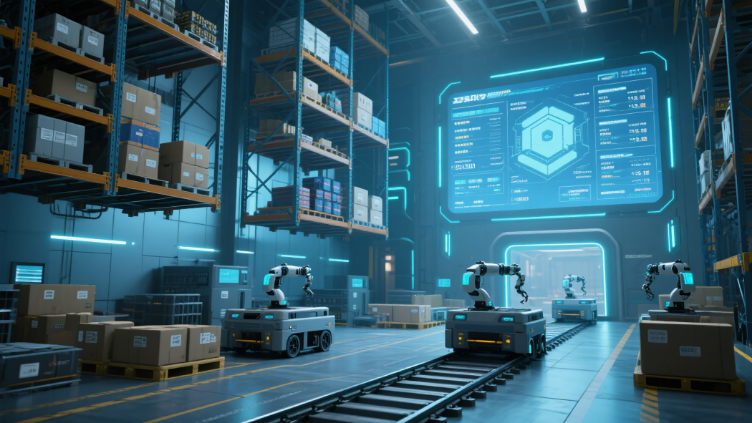
Warehouse Automation: AI powers the robots and automated guided vehicles (AGVs) that are transforming warehouse operations, from picking and packing to sorting and replenishment.
Blockchain technology offers a decentralized, immutable ledger that can create an unprecedented level of trust and transparency in the digital transformation value chain. Each transaction—from the sourcing of raw materials to the final sale to the consumer—can be recorded as a block on the chain. Once recorded, it cannot be altered.
This has profound implications for:
- Traceability and Provenance: For products where origin is critical (e.g., organic food, conflict-free minerals, luxury goods), blockchain can provide an unalterable record of its journey from source to shelf, combating counterfeiting and verifying claims.
- Ethical Sourcing: Companies can use blockchain to track and verify compliance with labor and environmental standards throughout their supply chain, supporting their sustainable sourcing initiatives.
- Streamlining Trade Finance: The complex paperwork involved in international trade, such as letters of credit and bills of lading, can be digitized and managed on a blockchain, reducing fraud and speeding up payments.
A digital twin is a virtual replica of a physical supply chain. By feeding this virtual model with real-time data from IoT sensors and ERP systems, companies can create a living, breathing simulation of their entire operation. This powerful tool can be used to:
Run ‘What-If’ Scenarios: What is the impact of a 10% tariff increase on our total landed cost? What happens if our primary supplier’s factory is shut down for a week? A digital twin allows managers to test the impact of various scenarios and develop contingency plans without any real-world risk.
Optimize the Network: Planners can use the digital twin to optimize their supply chain network design, determining the ideal locations for warehouses, the most efficient shipping routes, and the optimal inventory levels for each product.
Together, these five pillars form a powerful technology stack that enables a true supply chain transformation, moving it from a fragmented, reactive cost center to an integrated, predictive strategic asset.
Embarking on a supply chain digital transformation is a major undertaking that requires careful planning, executive buy-in, and a phased approach. It’s a marathon, not a sprint. Attempting to implement everything at once is a recipe for failure. A more strategic, step-by-step roadmap is essential for success.
This foundational phase is about understanding where you are and defining where you want to go. It involves a deep-dive analysis of your current processes, systems, and performance.
Conduct a Maturity Assessment: Honestly evaluate the current state of your supply chain across different dimensions: people, processes, and technology. Where are the biggest pain points? Where are the most significant manual efforts? Where are the data silos?
Map Your Value Chain: Create a detailed map of your end-to-end supply chain processes. Identify all the stakeholders, systems, and handoffs. This will reveal bottlenecks, redundancies, and areas of inefficiency. The goal is to understand the entire digital transformation value chain as it currently exists.
Define Your ‘North Star’: Based on your business strategy, define the key objectives of your transformation. Is the primary goal to reduce costs, improve customer service, increase agility, or enhance sustainability? These goals will guide your priorities. For example, if cost is key, you might focus on finding the cheapest way to import from China.
Build the Business Case and Secure Sponsorship: Quantify the expected benefits of the transformation (e.g., 15% reduction in inventory costs, 20% improvement in on-time delivery) to build a compelling business case. Secure strong, visible sponsorship from the executive leadership team. Without this top-down support, any large-scale transformation effort is likely to stall.
In this phase, the focus shifts to implementation, but in a controlled and targeted manner. The goal is to achieve some quick wins, learn valuable lessons, and build momentum for the broader rollout. This is where many companies engage with supply chain transformation services to leverage external expertise.
Prioritize Initiatives: You cannot tackle everything at once. Use a matrix based on ‘business impact’ and ‘ease of implementation’ to prioritize your digital initiatives. A high-impact, relatively easy-to-implement project is an ideal starting point.
Launch a Pilot Project: Select a specific area of the supply chain for a pilot project. For example:
- Track & Trace Pilot: Implement IoT trackers on a single, high-value shipping lane to prove the value of real-time visibility.
- Supplier Portal Pilot: Roll out a collaboration portal to a small group of strategic suppliers to streamline communication and purchase order management. This is a key part of improving supplier relationship management.
- Warehouse Automation Pilot: Introduce AGVs in a specific section of your warehouse to automate a repetitive task.
Measure, Learn, and Iterate: Rigorously measure the KPIs of your pilot project. What worked well? What challenges did you encounter? Use these learnings to refine your approach before a wider rollout. Celebrate the successes to build enthusiasm across the organization.
With successful pilots under your belt, you can now begin to scale your digital solutions across the entire organization and integrate them to unlock network effects.
Develop a Rollout Plan: Create a phased rollout plan for scaling the successful pilot projects across different product lines, geographies, or business units.
Focus on Integration: The true power of supply chain digital transformation is unlocked through integration. This means ensuring your new systems (like an IoT platform) are deeply integrated with your core ERP system. The goal is a seamless flow of data across the entire technology stack.
Invest in Change Management: Technology is only half the battle. A significant portion of your effort must be focused on people. This involves:
- Training: Providing comprehensive training to employees on the new processes and tools.
- Communication: Continuously communicating the ‘why’ behind the changes and celebrating milestones.
- Redefining Roles: Some roles will be automated, while new roles requiring data analysis and digital skills will emerge. Develop a plan for reskilling and upskilling your workforce.
Supply chain transformation is not a one-time project with a defined end date. It is a continuous journey of improvement and innovation.
Establish a Center of Excellence (CoE): Create a dedicated team responsible for monitoring the performance of the digital supply chain, identifying new opportunities for optimization, and exploring emerging technologies.
Leverage Advanced Analytics: With a wealth of integrated data now at your fingertips, you can apply more advanced analytics. Use your digital twin to continuously optimize your network, and use predictive analytics to get ahead of disruptions.
Foster a Culture of Innovation: Encourage a culture where employees are empowered to experiment with new ideas and continuously look for better ways of working. The goal is to create a learning organization that is always evolving.
By following this strategic roadmap, companies can navigate the complexities of supply chain digital transformation in a structured and manageable way, minimizing risk and maximizing the return on their investment.
The digital transformation for supply chain impacts every single function, from the initial sourcing of materials to the final delivery of the product. Let’s explore how this transformation reshapes the core processes of procurement, manufacturing, and logistics.
Digital transformation elevates the procurement function from a back-office purchasing department to a strategic driver of value for the entire organization.
Automated Procure-to-Pay (P2P): The entire transactional process, from creating a purchase requisition to paying the supplier invoice, can be automated. This frees up procurement professionals from mundane administrative tasks to focus on more strategic activities. AI-powered systems can automatically match invoices to purchase orders and receipts (three-way matching), flagging exceptions for human review.
AI-Powered Supplier Discovery and Vetting: Instead of manually searching online directories, AI tools can scan a vast universe of potential suppliers, using predefined criteria to identify the most promising candidates. They can analyze financial health, certifications, and past performance to provide a risk score for each potential partner. This is a crucial first step before deciding to trust an Alibaba verified supplier, for example.
Advanced Spend Analytics: Digital tools provide deep visibility into company-wide spending. Procurement teams can analyze this data to identify opportunities for supplier consolidation, volume-based discounts, and compliance improvement. This data-driven approach is key to effective negotiation with suppliers.
Collaborative Supplier Portals: These portals act as a shared workspace for buyers and suppliers. Suppliers can log in to receive purchase orders, submit invoices, provide updates on production status, and collaborate on forecasts and designs. This creates a single channel for communication, reducing reliance on email and improving transparency.
The factory floor is a focal point of the supply chain digital transformation. Industry 4.0 technologies are creating ‘smart factories’ that are more efficient, flexible, and productive.
IoT for Predictive Maintenance: As mentioned earlier, placing sensors on critical machinery allows companies to monitor their health in real-time. Algorithms can predict when a part is likely to fail, allowing maintenance to be scheduled proactively. This minimizes unplanned downtime, which is a major source of cost and disruption.
Robotics and Automation: Collaborative robots (cobots) are working alongside humans to perform repetitive or ergonomically challenging tasks. AGVs are autonomously transporting materials from the warehouse to the production line. This automation increases throughput, improves quality, and enhances worker safety.
Digital Twins of Production: Creating a digital twin of a production line allows engineers to test new configurations, simulate the introduction of a new product, and optimize the workflow without interrupting actual production.
3D Printing (Additive Manufacturing): For certain components, especially spare parts or custom designs, 3D printing allows for on-demand production. This can dramatically reduce lead times and inventory holding costs for slow-moving spare parts. It’s a key technology for companies needing rapid prototypes made in China.
Logistics, the physical movement of goods, is being revolutionized by digital technology, turning it into a highly optimized, visible, and predictive function.
Real-Time Visibility and ETA Prediction: IoT trackers combined with AI provide real-time visibility of shipments anywhere in the world. More importantly, AI algorithms can analyze this data along with port congestion, weather, and traffic patterns to provide highly accurate predictive Estimated Times of Arrival (ETAs). This allows companies to manage their customers’ expectations and proactively plan for downstream activities like warehouse receiving and production.
Dynamic Route Optimization: For delivery fleets, AI-powered software can calculate the most efficient route in real-time, factoring in traffic, delivery windows, and vehicle capacity. This reduces fuel costs, lowers emissions, and increases the number of deliveries a driver can make per day.
Smart Warehousing: The modern warehouse is a hub of automation. Automated Storage and Retrieval Systems (AS/RS) can store and retrieve pallets at high speed. Voice-directed picking tells workers where to go and what to pick via a headset, freeing up their hands and eyes. ‘Pick-to-light’ systems illuminate the bin containing the correct item, improving speed and accuracy. This level of automation is critical for handling the high volumes of e-commerce.
Digital Freight Marketplaces: These platforms connect shippers directly with carriers, much like Uber connects riders with drivers. This increases transparency in pricing and capacity, allowing shippers to find and book freight capacity more efficiently than through traditional phone-and-email-based freight brokers. It helps in optimizing costs, a key aspect of finding the cheapest way to ship from China to Canada, for instance.
By transforming these core functions, the digital transformation for supply chain creates a powerful, interconnected system that is far greater than the sum of its parts.
While the technologies and strategies behind the supply chain digital transformation are powerful, their implementation is complex. It requires deep domain expertise, significant technical know-how, and a nuanced understanding of global markets. For many companies, particularly small and medium-sized enterprises (SMEs), building this capability entirely in-house is not feasible. This is where strategic partnerships, especially with providers of supply chain transformation services, become invaluable.
A sourcing and supply chain partner, like Maple Sourcing, can act as a crucial enabler and accelerator for your digital transformation journey, particularly when your supply chain has a significant footprint in Asia.
Bridging the Technology Gap: A specialized partner has often already invested in and mastered many of the digital tools needed for a modern supply chain. They can provide you with access to a sophisticated technology stack—such as a supplier collaboration portal, a real-time visibility platform, and a robust quality management system—without you having to bear the full cost and implementation burden yourself. You are essentially plugging into their existing digital ecosystem.
On-the-Ground Data Collection: The success of any digital system depends on the quality of the data it receives. A partner with a physical presence in your sourcing regions can act as your ‘human IoT network.’ Their teams can conduct factory audits, perform in-process quality inspections, and verify production milestones, feeding this crucial, real-world data into your shared digital systems. This ensures that the data driving your decisions is accurate and timely. This is a core part of our sourcing services.
Supplier Onboarding and Training: Rolling out new digital processes to a diverse, global supplier base can be a major challenge, often hindered by language barriers and varying levels of technical sophistication. A local partner can lead the charge, providing hands-on training to your suppliers in their native language and ensuring they are properly onboarded onto your new digital platforms.
Risk Management and Exception Handling: Digital systems are excellent at flagging exceptions, but a human expert is often needed to resolve them. When a real-time sensor flags a temperature deviation in a shipment, or a quality inspection fails, your local partner is on the ground to immediately intervene. They can work with the supplier to implement corrective actions or arrange for a new shipment, managing the disruption before it escalates.
Focusing Your Resources: By outsourcing the operational and technical heavy lifting of managing a global supply chain, a partner allows you to focus your internal resources on your core competencies: product innovation, brand building, and customer relationships. You can focus on defining the strategy for your supply chain transformation while your partner handles the tactical execution.
When selecting a partner to support your digital transformation for supply chain, look for one that is more than just a traditional sourcing agent. A true transformation partner should demonstrate:
A Digital-First Mindset: Do they use modern, cloud-based platforms for communication and data management? Can they provide you with real-time visibility and data-driven insights?
Deep Process Expertise: Do they have a profound understanding of best practices in global procurement, quality control, and logistics? Can they help you re-engineer your processes for the digital age?
A Collaborative and Transparent Approach: Do they operate as a true extension of your team, providing full transparency into their operations and costs? A partnership model, rather than a transactional one, is key.
By leveraging the right partner, you can de-risk your transformation journey, accelerate your time-to-value, and gain access to the expertise and technology needed to build a world-class digital supply chain.
The digital transformation for supply chain is no longer a futuristic vision; it is a present-day reality and a strategic necessity. The convergence of powerful technologies like IoT, AI, and cloud computing has given businesses the tools to dismantle their brittle, opaque supply chains and rebuild them as resilient, agile, and intelligent ecosystems. This supply chain transformation is the key to not only surviving in an era of unprecedented volatility but to thriving in it.
The journey from a traditional, siloed operation to a fully integrated digital transformation value chain is a marathon that requires a clear strategy, a phased approach, and a relentless focus on creating value. It begins with a thorough assessment of your current state and the definition of a clear ‘North Star’ vision. It proceeds through carefully managed pilot projects that build momentum and culminates in a scaled, integrated digital nervous system that connects your entire operation.
This transformation touches every function, turning procurement into a strategic weapon, manufacturing into a smart, self-optimizing process, and logistics into a predictive, transparent service. However, the technology itself is not the end goal. The ultimate objective is to leverage these tools to make better decisions, mitigate risks proactively, and serve customers more effectively. For businesses deeply engaged in global trade, this often means leaning on expert supply chain transformation services and partners who can provide the on-the-ground expertise and digital infrastructure needed to succeed.
As you embark on or continue your transformation journey, remember that the goal is continuous evolution. The digital supply chain is a living entity, constantly learning and adapting. By fostering a culture of data-driven decision-making and innovation, you are not just implementing new technology; you are architecting a future-ready enterprise poised for sustained success in the complex global economy.
 English