Maple Sourcing Ltd.
Maple Sourcing Ltd.
We Make Your Sourcing Easy!
Need help? sales@maplesourcing.com
English
Maple Sourcing Ltd.
Maple Sourcing Ltd.

Sourcing Agent Fees for Small-Batch China Importers

Published:
Updated:
18839 Views
Table of Content [Hide]
    Are you a small-scale wholesaler struggling with small China orders? Hidden costs, rejected MOQs, and communication gaps drain margins, while navigating the supply chain alone risks overpaying, defects, or compliance fines. Partnering with a reliable sourcing agent solves these issues—but understanding their fees and value feels daunting. This guide simplifies sourcing agent fees, covering core services, negotiation tactics, and cost-saving strategies to turn supply chain stress into growth.
    sourcing agent fee

    Why Do You Need a Sourcing Agent?

    For small-batch importers, a sourcing agent unlocks access, reduces risk, and protects your bottom line. Without local expertise, even basic tasks become time-consuming and costly: factories often refuse orders under 500–1,000 units, language gaps lead to misinterpreted product specs, while fluctuating EU and US trade rules and tariff policies often trigger unplanned additional costs without proper guidance.
    According to Alibaba Industry Reports, 60% of small-batch importers struggle with unreliable suppliers and high costs. Sourcing agents can fix these pain points: they negotiate MOQs as low as 50 units, cut defect rates to 0.5–2% (against the 3–8% average for independent buyers), slash freight by 25–40% via consolidated shipments, lower factory prices by 10–20% through local factory ties, and manage product compliance to prevent customs delays and penalties.
    For orders under $10,000, these benefits are even more critical. The time you’d spend vetting suppliers, negotiating terms, and troubleshooting issues can instead go to growing your business—while the sourcing agent’s fees typically represent just 3–5% of total landed costs, far less than the losses from defective goods or missed sales.

    Understanding Sourcing Agent Fees in 2026

    Sourcing agent fees are the compensation for end-to-end supply chain services, from finding reliable suppliers to delivering your goods. For small-batch importers, these fees are a necessary investment—but one that pays for itself through cost savings and risk reduction.
    Industry data shows small importers with monthly orders below $15,000 spend 7–11% of total product value on agent services in 2026. This 2% year-over-year increase stems from rising labor costs for on-site inspections and stricter cross-border compliance verification. The good news? 72% of China’s sourcing firms now offer customized low-volume service packages up from 38% in 2025, giving you more flexibility to find a structure that fits your budget.
    Skipping an agent to save money often backfires: importers without local support face defective goods, shipment delays, or supplier fraud far more frequently, with average avoidable annual losses ranging from $2,000 to $8,000. A reputable agent’s fees are a small price to pay for peace of mind and measurable savings.

    Core Services for Small-Batch Importers

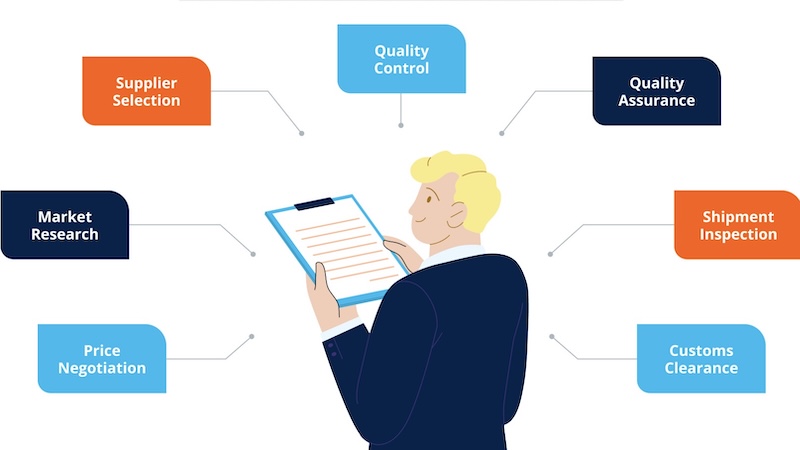
    A trusted sourcing agent delivers targeted support tailored exclusively to low-volume cross-border buyers. Every service is designed to fix unique struggles small wholesalers face that large corporate buyers never encounter—here’s a detailed breakdown of each core offering and its real-world value:

    1. Supplier Matching & MOQ Negotiation

    Most standalone factories set rigid high minimum orders to cut their own production overhead, locking out merchants testing new product lines. Agents maintain long-standing ties with flexible small-scale manufacturers, negotiating customized 50–100 unit minimums instead of the standard 1,000-unit threshold, and shortlisting a handful of qualified suppliers that match your material, size, and price needs. This eliminates hours of blind research on generic B2B platforms and opens doors to factories you’d never access directly.

    2. Cross-Language Communication

    Time zone gaps and translation errors frequently cause costly mistakes like wrong sizing, incorrect colors, or misprinted branding. Your agent acts as a full-time bilingual liaison throughout production, translating detailed technical specs, mediating conflicts, and clarifying payment and delivery terms to remove all room for misinterpretation. They save you from endless back-and-forth emails and ensure your vision is communicated accurately to factories.

    3. Sample Coordination

    Ordering separate samples from multiple factories generates steep international shipping bills. Agents gather all rapid prototypes at their local office first, combining them into one parcel to cut sample shipping costs by over 30%. They also pre-check sample quality before sending them overseas, so you don’t waste money on flawed prototypes or unnecessary shipments.

    4. Multi-Stage Quality Control

    Small-batch shipments rarely get thorough factory QC inspections without third-party oversight, leading to unsellable defective items. Agents conduct three rounds of checks, verifying raw materials pre-production, spot-checking mid-run items, and performing full pre-shipment inspections. This strict process keeps defect rates below 2%, saving you from costly inventory write-offs and disappointed customers.

    5. Logistics Consolidation

    Sourcing from multiple factories means separate shipments and sky-high split freight fees. Agents combine all your orders into one container, drastically lowering per-unit delivery costs and simplifying customs filing with a single document set. This consolidation service is especially valuable for small-batch importers, as it turns scattered orders into cost-effective shipments.

    6. Compliance Support

    2026’s updated regulations including EU ICS2 pre-arrival data filing and US customs rules carry heavy fines for incomplete shipping paperwork. Agents stay updated on regional standards covering CE, FDA, etc, and help you prepare all required documents ahead of shipment. They navigate the red tape so your cargo clears customs smoothly, avoiding costly detention or penalties.

    Sourcing Agent Fee Structure: 4 Main Models

    Your fee structure directly impacts budget stability. Four mainstream frameworks dominate the 2026 market, each tailored to distinct small-batch scenarios, with expanded practical details for small merchants:
    Fee Model Pricing Range Best For Key 2026 Practical Notes
    Commission-Based 8–10% under $10k Recurring growing orders Calculated on FOB price
    Flat Fee $600–$2800 per project One-time seasonal buys No minimum fees for repeat clients
    Hourly Billing $55–95/hour Single short tasks Senior specialists cost higher
    Hybrid Retainer + Commission $250–750/month +4–6% Monthly regular restocks Saves 3–5% vs pure commission

    1. Commission-Based Sourcing Fees

    The most common model: agents charge a percentage of your total order value, with tiered discounts as volume grows. For orders under $10k, rates hover at 8–10% as fixed labor and travel costs cannot be diluted across small shipments. Most agents hold a $200–$400 minimum fee per shipment for ultra-small orders under $3k.
    Pros: No upfront deposit; fees scale with your business; agents are incentivized to negotiate lower factory prices. Cons: Costs fluctuate with order size; unregulated agents may prioritize higher-priced suppliers for bigger commissions.

    2. Flat Sourcing Agent Fees

    A fixed payment for full-cycle support, regardless of order size. Ideal for merchants needing predictable budgeting for one-off seasonal lines.
    Pros: Clear cost forecasting; no surcharges for order expansion; simple invoicing. Cons: Poor value for orders under $5k; agents lack incentive to push for better prices.

    3. Hourly Sourcing Agent Rates

    Billed per working hour, best for standalone short tasks covering factory audit and pre-shipment inspections rather than full-cycle sourcing.
    Pros: Full control over spending; no long-term contracts; flexible to pause or terminate. Cons: Costs spiral for multi-supplier projects; requires tracking hours to avoid inflation.

    4. Hybrid Retainer + Commission

    Combines a low monthly retainer with reduced commission, balancing predictability and performance incentives. Launched widely in 2026 for TikTok, Amazon, and Shopify sellers with steady small-batch restocks, this model cuts long-term service costs by 3–5% versus pure commission-only plans.

    2026 Industry Trends Reshaping Fees

    Several key cross-border trade shifts rewrite standard sourcing agent pricing rules this year. These trends directly affect small-batch importers, with simple guidance to reduce your own service expenses:
    Sustainable sourcing compliance creates a mild cost premium. Global demand for eco-friendly recycled materials pushes agents to run extra factory audits to verify green production standards, adding a small surcharge for buyers sourcing biodegradable goods. You can offset this extra cost by folding eco-certification checks into long-term contracts to negotiate partial waivers
    Specialized small-batch agencies have flooded the market since 2024. Previously most sourcing businesses focused entirely on large bulk orders, but many teams now build their whole service model around orders under $20k. Intense competition between these specialist firms pushes general service pricing downward for startup importers.
    Cargo consolidation has become a free standard service in 2026. Earlier years saw separate logistics fees to combine shipments from multiple factories, yet most industry providers now include cross-factory consolidation at no extra cost. Always confirm consolidation falls under your base service fee before signing any contract to avoid outdated logistics surcharges.
    What is a sourcing agent

    How to Negotiate Sourcing Agent Fees

    Highlight your long-term sales growth trajectory clearly during initial quote requests. Agents prioritize clients planning larger future orders, so share simple monthly growth forecasts to unlock tiered volume discounts that lower commission rates as your spending rises over quarters.
    Bundle every required service add-on into one unified package rather than sourcing, inspection, and logistics support separately. Most agencies offer a combined bundle discount off the total cost of individual standalone services. List all required support tasks upfront and request a single bundled price instead of scattered line-item charges.
    Request formal sliding-scale tiered pricing written directly into your service contract. Avoid fixed flat commission rates with no room for adjustment, and negotiate automatic rate drops once cumulative quarterly order value hits pre-agreed spending thresholds.
    Add measurable performance bonus clauses to align shared financial goals between you and the agent. Propose a small extra commission payout only if the team negotiates factory unit prices well below your preset target budget. This structure keeps baseline service fees low during regular production runs while rewarding outstanding cost-saving results.
    Collect fully written formal quotations from at least three separate sourcing agencies. Competing bids reveal true industry average pricing benchmarks you can reference to push your preferred agent toward matching competitive market rates. Never rely on verbal pricing offers; demand detailed written quotations listing full service scope and all potential hidden supplementary fees.

    Two Exclusive Negotiation Templates for Small-Batch Buyers

    Template 1: Formal Email

    Dear [Agent Name],
    We run a small cross-border store with growing monthly orders and plan long-term sourcing from China.
    We want a hybrid pricing plan with sliding tiered commissions and a permanent 2% discount under a 12-month exclusive contract. Please send an itemized quote listing all base services and extra fees like sample shipping and audit costs. We can add a 1% bonus if you hit our target factory prices.
    Best regards,
    [Your Full Name]

    Template 2: Instant Message

    Hi, our online store only places small monthly orders under $7k right now, yet our sales grow steadily all year and we will scale up China product orders significantly over upcoming quarters. Can you provide tiered commission pricing that reduces as our total monthly order amount expands? We will sign a one-year exclusive cooperation deal if you cut base service rates. Please list every possible extra fee such as sample delivery, factory audits, or label edits clearly within your offer. We can add a small performance bonus if you secure factory pricing below our target budget numbers.

    Sourcing Packages for Independent Store & Live Stream Sellers

    Different cross-border business models carry unique order rhythms and budget limits that demand customized fee structures from China sourcing agents. This section compares tailored service packages for two widespread small-batch merchant groups:

    Independent Shopify Store Sellers

    Independent store operators rely on steady medium-frequency restocks paired with gradual monthly volume growth, making the hybrid retainer plus sliding tiered commission model the best balanced choice.
    Suitable package breakdown covers a monthly retainer paired with sliding commission percentages that lower as sales expand month over month. Core included services span supplier matching across major manufacturing zones, routine pre-shipment quality control, consolidated sea freight coordination, and basic compliance document assistance.
    Matching advantages come from a fixed monthly retainer securing dedicated agent resources year-round, while sliding commissions automatically shrink service costs as store sales expand each month. This setup avoids large cost spikes during seasonal restock cycles and fits brands following slow consistent growth trajectories.

    Cross-Border Live Stream Sellers

    Live stream merchants need ultra-flexible small batch fast replenishment for trending viral products, alongside unpredictable spike orders during large promotional shopping events, making short-term commission-only pricing more suitable than fixed monthly retainers.
    Suitable package uses standard commission rates with a minimum charge per shipment and no mandatory monthly retainer cost. Core included services cover fast sample expediting, rush production coordination, priority air freight shipping, and short-notice factory spot quality checks.
    Matching advantages eliminate fixed monthly service cost during quiet off-stream sales seasons, which saves cash flow when live viewership and order numbers drop off. Agents also prioritize ultra-fast turnaround times for trending live inventory batches to capitalize on short viral product sales periods.

    Real-World Case Studies

    Case 1: Successful Small-Batch Cooperation Positive Reference

    Background

    A US Shopify independent store selling eco-friendly bamboo kitchen utensils relied fully on Alibaba sourcing in mid 2025. Inconsistent factory quality, slow cross-timezone reply speeds, and expensive split shipping fees compressed gross profit margins down to 22%. Monthly small-batch China orders averaged $6,500 across all product lines.

    Solution

    The store owner negotiated a hybrid sourcing agent fee framework built around recurring low-volume restock needs. A fixed monthly retainer covered ongoing supplier relationship maintenance work, tiered commission rates applied different charges based on cumulative shipment value, and a performance bonus triggered if the agent negotiated factory prices below preset cost targets.

    Measured Six-Month Outcomes

    Blended overall sourcing agent fees dropped substantially from initial projected standalone commission pricing. Agent factory negotiation work delivered meaningful reductions on raw product unit costs. Consolidated cargo shipments cut ocean freight spending through the agent’s bulk logistics industry partnerships. Product defect rates fell sharply thanks to mandatory pre-shipment inspection included within standard service packages. Overall retail profit margins expanded noticeably within half a year, completely offsetting all associated agent service expenditures.

    Case 2: Costly Pitfall of Choosing Unqualified Agents Negative Example

    Background

    A small TikTok live stream seller selected an ultra-low hourly-rate sourcing agent operating from a remote industrial zone instead of established professional teams. The agent advertised reduced commission with no minimum service fees to cut short-term spending. The merchant placed an electronics small batch order intended for a major holiday live stream sales event.

    Key Mistakes Made

    The agent’s service contract omitted all supplementary inspection and audit clauses, with no clear limits listed for hidden extra charges. No pre-production or mid-production quality checks were scheduled to reduce the agent’s labor workload and lower quoted rates. The agent refused to combine multiple factory shipments, leading to expensive split air freight surcharges added separately after production finished.

    Final Loss Outcomes

    A large share of finished electronic goods arrived with defective internal components, resulting in a full live stream inventory write-off and complete loss of the critical holiday sales window. Unexpected hidden fees including emergency third-party inspection and split air freight pushed total agent-related costs far above standard industry market rates. The agent declined to accept financial responsibility for factory quality failures. Combined losses from defective inventory and excess service charges wiped out all projected seasonal live stream revenue for the brand.
    All types of agents for China sourcing

    FAQ

    Q1: What are average sourcing agent fees for small-batch China orders in 2026?
    Shipments under $10k carry commission rates between 8% and 10%, while full-project flat fees range $500 to $1,500. Most local sourcing teams enforce a minimum service charge to cover fixed labor overhead for tiny orders under $3,000.
    Q2: How can I lower sourcing agent fees as a low-volume merchant buying goods from China?
    Consolidate scattered shipments to unlock volume discounts, sign a year-long exclusive cooperation contract for permanent rate cuts, bundle all separate service lines together for package savings, and negotiate sliding-scale commission pricing that falls as monthly order value grows over time.
    Q3: Should I pick commission pricing or flat fixed fees for unpredictable live stream small batches?
    Commission structures fit merchants with uneven monthly order sizes like live stream sellers, while flat fees deliver stable budgeting for single seasonal inventory purchases. Hybrid retainer and commission packages offer balanced value for independent stores maintaining steady recurring restocks.
    Q4: What hidden supplementary charges must I confirm before signing contracts with sourcing agents?
    Make sure to clarify sample shipping surcharges, yearly factory audit paperwork fees, expedited document rush costs, emergency factory visit labor fees, customs detention coordination charges, and repeated packaging design revision fees. Request full written disclosure of every potential extra cost before finalizing cooperation terms.
    Q5: How do China sourcing agent fees compare to agents operating in Southeast Asia?
    China-based agent commission rates sit slightly lower than equivalent service charges in Vietnam, Thailand, or Indonesia, thanks to dense local supplier networks cutting travel and coordination overheads. China also delivers unmatched small-batch customization flexibility unavailable across competing Asian manufacturing nations.
    Q6: Will collecting multiple written quotes from different sourcing firms reduce my final service rates?
    Comparing formal quotations from separate agencies creates natural market competition and reveals industry standard pricing benchmarks to reference during negotiations. Long-term exclusive partnerships with one trusted team often bring more total value through loyalty discounts and priority factory access over repeated bidding cycles.
    Q7: What core service items fall within baseline standard sourcing agent fees?
    Basic entry-level packages cover supplier identification, factory price negotiation, and routine order progress updates. Upgraded full-service bundles add third-party quality control, cross-border logistics coordination, and regulatory compliance paperwork assistance, with a mild corresponding rise in baseline service fees.
    Q8: When does hourly sourcing agent billing become the most cost-effective choice for small-batch importers?
    Hourly billing rates only make financial sense for isolated standalone assignments such as independent factory background verification or single one-time sample technical review work. Commission pricing delivers superior overall cost efficiency for complete multi-supplier end-to-end sourcing projects.
    Q9: Is hiring a sourcing agent worthwhile for orders below $1,000? 
    Agent support remains highly recommended for first-time overseas importers lacking China supply chain experience, as local representation prevents catastrophic financial risks such as receiving large batches of unusable defective inventory, losing deposit payments to untrustworthy factories, or facing steep unexpected customs tariff fines caused by incorrect product classification. Experienced buyers familiar with factory negotiation and cross-border logistics workflows may safely rely on direct B2B sourcing platforms for ultra-mini orders under $1,000.
    Q10: What financial risks come with partnering with sourcing agents that skip formal pre-shipment quality control?
    Agents who cut out pre-shipment quality checks to offer artificially low quoted rates create severe financial risk for your small business. Without full inspection before cargo leaves China, you may face high defective product ratios that force full inventory write-offs and completely missed seasonal retail sales windows. Most contracts from low-cost unregulated agents exclude all liability for flawed merchandise, meaning you will bear 100% of all financial losses from damaged goods with no legal path to recover compensation from either the agent or manufacturing factories.

    Conclusion

    Breaking down complex sourcing agent fees is vital for small-batch China importers. By acknowledging agents’ practical value, reviewing pricing structures, studying cost variables and using custom negotiation tactics, you turn service fees into profitable investments.
    Avoid prioritizing the cheapest agent rates. Small-order specialists offer long-term benefits including low MOQ negotiations, cheaper consolidated shipments and thorough quality control. Rising demand for low-volume production means importers who manage agent fees well can build robust supply chains for steady cross-border profits.
    Need a safer China sourcing partner?
    We help find suppliers, compare quotes, verify factories, and manage orders from China.
    Aaron Li
    Hey, this is Aaron Li, an expert in quality sourcing. Since 2012, I have helped 300+ startups to source from China and manage the quality. I'd like to share my experience and knowledge for frequently asked questions related to product sourcing and quality control.
    All Articles
    Shipping Mark on Carton: Complete Guide for Importers
    Retail Arbitrage: Where to Source and How to Earn Profit
    Top 5 Chinese Wholesale Online Platforms (2026)
    Best China Products for Senior Care Retail Stores
    How to Source Wholesale Home Decor for Retail Businesses
    Top 10 Chinese Solar Panel OEM Factories (2026)
    How to Get Free Samples from China Factories
    African Importers: Best Dollar Store Products from China
    Pros and Cons of Cross-Border Private Label Sourcing
    Alibaba Wholesale Purchasing: 5 Hidden Risks to Prevent
    How to Source Low-MOQ Products for Online Resellers
    Ocean Freight CBM Calculation: One Easy Formula
    Ecommerce Brands: Top 5 High-Margin Product Niches
    Proforma Invoice vs Commercial Invoice: Key Differences
    Ocean & Air Freight: Gross vs Net Weight Rules
    Startups: Direct vs Indirect China Sourcing
    RFQ: Real Examples & Industry Best Practices
    How to Find the Best Freight Options for Importers
    Startup Budget for a China Import-Export Business
    Top 8 Largest China-Based Logistics Providers (2026)
    Small-Batch Startups: Tips to Cut Factory Costs
    Hidden Expenses Every China Importer Should Expect
    Amazon Resellers: Best Ways to Import from China (2026)
    MOQ of Custom Packaging for Small Business
    Quality Audit Checklist for Chinese Factories
    Key Manufacturing Industrial Hubs Across China
    Made in PRC: Meaning of This Product Label
    FCL vs LCL: 2026 Shipping Comparison Guide
    Sea vs Air Freight: Core Reasons Behind Their Price Gap
    2026 Hottest Toy Lines Imported from China
    China to Canada: Lowest-Cost Shipping Options (2026)
    Alibaba vs AliExpress: Key Differences for Importers
    US-China Tariffs 2026: Importer Compliance Handbook
    Custom Sourcing: OEM and ODM Main Differences
    5 Phases to Protect Product IP when Outsourcing in China
    FOB vs. EXW: Which Is Better for China Importers?
    1688 Sourcing Agents: Benefits for Retail Resellers
    Yiwu Wholesale Market: Top 10 Products to Import
    4PX Shipping: Full Lead Time Breakdown (2026)
    DHL Shipment On Hold? 3 Steps to Fix It (2026)
    Why You Need Taobao Agents for Kitchenware Sourcing
    Alibaba Verified Suppliers: Can You Trust Them? (2026)
    Foshan Furniture Market: Actions to Assure Quality
    Guangzhou Fabric Market: Tour Guide & Sourcing Tips
    2026 Complete Sourcing Guide for the Canton Fair
    Is Huaqiangbei Still Ideal for Importers? 2026
    High-End Electric Toothbrush Manufacturers in China
    Private Label Bags from Chinese Manufacturers
    Manage Sample Orders: Key Tips for China Importers
    Top 5 Shipping Documents Required for Imports
    Cost-Saving Tips for Logistics Management Workflow
    Top Beauty and Healthcare Items on Amazon (2026)
    3 Ways to Evaluate Production Capacity of China Factories
    Top 10 Largest Chinese Wholesale Markets (2026)
    Why China Dominates Global Toothbrush Manufacturing
    Top 10 Iconic Products Made in Shenzhen (2026)
    Custom Design Orders: Tactics for MOQ Negotiation
    How OEM Manufacturing Adds Value to Consumer Brands
    Cargo Consolidation: Cut Shipping Costs for Importers
    China to Europe: Top 10 High-Profit Import Goods (2026)
    Key Shipping Ports in China and North America
    Major Apple Manufacturers in China: 2026 Update
    Electronic Component Imports: IQC Inspection Checks
    Sourcing Agent Fees for Small-Batch China Importers
    Best China Products to Resell Across Global Markets
    Why Are Most Goods Made in China? 2026 Update
    Top 10 Inspection Companies in China (2026)
    Reduce Expenses by Manufacturing Your Goods in China
    2026 Trends for Customized Products from China
    Standard Process for Pre-Shipment Inspection in China
    Cross-Border Sourcing: Pain Points and Solutions
    Shenzhen Wholesale Markets: Ideal for Electronics Sourcing
    Verify Chinese Company Without Visiting China
    Retail Resellers: 5-Step China Bulk Sourcing Guide
    5-Step Alibaba Order Process for Small Retailers
    What Makes Chinese Supply Chains Highly Efficient
    Make Rapid Prototypes in China Manufacturers
    China Sourcing Basics for Amazon FBA Sellers
    Bulk Imports from China: Key Advantages
    LED Product Importers: Key China Sourcing Guide
    How China Sourcing Services Save You Time and Costs
    5 Effective Ways to Contact Chinese Factories
    Manage Chinese Factories to Ensure On-Time Deliveries
    Where to Source High-Quality Kitchen Utensils in China
    Top 10 Wholesale Items Imported from China (2026)
    Top 10 Trendy Consumer Electronics Made in China
    Comprehensive Guide to Find Chinese Suppliers Online
    Electronics Resellers: Why You Need Shenzhen Agents
    Handbook for Sourcing Chinese Hardware Products
    Transform Supply Chains via Direct China Sourcing
    How to Build Stable Partnerships with China Suppliers
    TikTok Sellers: Easy Steps for Direct Sourcing in China
    How to Source High-Quality Outdoor Goods from China
    Why FBA Private Label Sellers Need China Agents
    5 Top Challenges when Manufacturing Goods in China
    Boost Retail Profits with Outsourced China Procurement
    Sourcing Chinese Metal Products: Critical Details
    Calculate US Import Duties for Chinese Goods (2026)
    How In-Process QC Works in Chinese Factories
    Retailers: Guide for China Manufacturing Outsourcing
    Read More
    References