Maple Sourcing Ltd.
Maple Sourcing Ltd.
We Make Your Sourcing Easy!
Need help? sales@maplesourcing.com
English
Maple Sourcing Ltd.
Maple Sourcing Ltd.

Most Profitable Products to Import from China to Europe (2026)

Published:
Updated:
22668 Views
Table of Content [Hide]

    Most importers who lose money on China shipments do not lose it at the factory. They lose it at the port — in customs holds, mounting storage fees, and certification gaps that no one checked before the order was placed. A product with a strong factory price can arrive in Europe carrying hidden costs that wipe out the entire margin before a single unit reaches a customer.

    Container shipping from China to Europe at a major Chinese port

    That risk does not make China the wrong choice. Eurostat recorded €145.3 billion in Chinese imports in Q1 2026, confirming China as the EU's largest external supplier — a position built on supplier density, export experience, fast tooling, and certification capability that most alternative markets are still developing. The opportunity is real. The challenge is choosing the right product category and running the right process.

    Below are 10 high-margin import categories for 2026, each with sourcing guidance, buyer profiles, and compliance requirements.

    2026 EU Import Overview: All 10 Categories

    Category Margin Potential Main Buyer Type Key Compliance Risk
    Smart home hardware High (50–68%) Retailers, property firms CE, RoHS, ERP energy label
    Sustainable eco goods Medium-High (48–65%) Home improvement, DIY GRS, REACH
    Fitness & wellness gear High (52–72%) E-commerce brands, gyms Material safety, skin tests
    Electronics accessories Medium-High (45–60%) Telecom retailers, e-commerce RoHS
    Industrial auto parts Medium (40–55%) B2B manufacturers ISO, factory audit required
    Aftermarket auto LED Medium (42–55%) Repair shops, marketplaces RoHS, E-mark, labeling
    Sustainable activewear Medium-High (46–63%) DTC brands, boutiques GRS, REACH
    Industrial PPE Medium (41–54%) B2B distributors CE (category-specific)
    Biodegradable packaging High (50–66%) Food service, retailers EN 13432, REACH
    Smart bathroom fixtures High (52–68%) Hotels, senior living, retail Water efficiency standards

    These margin ranges are directional estimates based on typical landed-cost-to-retail spreads, not guaranteed profit margins. Actual net margins will be lower after platform fees, returns, storage, and marketing costs.

    Top 10 Profitable Import Products

    1. Smart Home Devices

    Matter-compatible lighting kits, solar security cameras, smart thermostats, and motion-sensing plugs dominate retail demand. Wholesale buyers include property developers and commercial facility operators sourcing full building management systems.

    Production centers in Ningbo and Shenzhen. Retail MOQ: 50 units; wholesale contracts: 500+. Private label adds a 12–18% retail markup. EU energy-efficiency rules and the Matter protocol continue to support demand, especially for products that help reduce household energy use. Required: CE, ERP energy label, RoHS. Target margin: 55–72%.

    Germany and the Netherlands are strong markets, driven by government energy subsidy programs that support end-customer purchase decisions. Importers who align product specs to local rebate eligibility criteria tend to see faster inventory turnover.

    2. Renewable Eco Hardware

    Home solar kits and recycled plastic storage containers lead retail sales. Bulk wholesale packages serve home improvement chains with complete accessory sets.

    Production in Ningbo and Changzhou. MOQ: 30 units retail, 300 wholesale. Eco-certified goods carry a stable price premium over non-certified alternatives. Scandinavian markets have shown consistent residential solar uptake. Required: GRS certification, REACH documentation for France and Italy. Target margin: 48–62%.

    France and Italy run active government rebate programs for home solar installations, creating demand that is partially insulated from consumer spending cycles. Bundling solar panels with compatible storage components into one SKU raises average order value without increasing certification complexity.

    3. Portable Fitness & Wellness Gear

    Compact home exercise equipment and wearable health trackers lead retail; corporate and fitness studio bulk packs drive B2B revenue.

    Manufacturing in Dongguan. MOQ: 25 retail, 200 commercial. Single-unit retail: $49.99–$119.99. Larger corporate orders can bring meaningful per-unit cost reductions. French customs detains cargo missing skin safety test documentation — get this cleared before shipment. Target margin: 52–72%.

    The UK and Germany are high-volume markets, but buyer preferences diverge: German buyers prioritize functional specifications and certifications; UK buyers respond more strongly to brand story and packaging design. Adapting presentation by market rather than shipping a single standard version can improve performance on both channels.

    4. 5G Mobile Accessories

    Wireless charging hardware and lightweight AR eyewear for retail. Branded bulk accessory packs supply telecom retail partners.

    Core supply hub: Huaqiangbei, Shenzhen. MOQ: 100 units retail, 1,000+ telecom wholesale. Light product weight reduces air freight costs. Pre-assembled gift sets tend to push margins above standalone items. Required: RoHS certification for all circuit components. Target margin: 45–60%.

    5G rollouts continue to support accessory demand across Southern and Central Europe. Unbranded accessories face heavy price compression on Amazon; private-label packaging with a clear compatibility claim — "Designed for [device model]" — commands a measurable premium and reduces return rates.

    5. Precision Industrial Components

    Miniature sensors and custom machining spare parts serve B2B manufacturing clients exclusively.

    Production in Taizhou hardware industrial parks. Minimum run: 800 units. Tiered volume discounts for OEM framework orders. Factory audit reports are non-negotiable during supplier screening — buyers at European auto and machinery factories require them. Target margin: 40–52%.

    Germany is a key buyer market, with Poland and the Czech Republic growing as automotive manufacturing hubs. ISO 9001 certification from the Chinese factory adds credibility during RFQ evaluations and can help shorten procurement approval cycles.

    6. Aftermarket Automotive LED Parts

    Vehicle replacement lighting and interior storage organizers for retail. Bulk cartons supply independent auto repair shops.

    Manufacturing in Wenzhou. MOQ: 40 retail, 450 wholesale. Apply a seasonal price adjustment ahead of summer and winter travel periods to protect margin. Required: RoHS hazard reports, E-mark where applicable, native-language labeling per destination country. Target margin: 42–55%.

    Automotive accessories and non-critical replacement parts are safer starting points than regulated lighting components, which can involve road-safety rules, E-marking, and high return rates if compatibility listings are inaccurate. Listing optimization — specifying make, model, and year — is as important as product quality for reducing returns on marketplace channels.

    7. Sustainable Activewear

    Recycled polyester, organic cotton, and reclaimed textile sportswear for direct-to-consumer and small-batch wholesale channels. Eco-conscious buyers pay a premium for traceable sourcing.

    Production in Quanzhou. MOQ: 50 pieces. Social platforms tend to outperform generic marketplaces for this category. Gen Z and millennial buyers are the primary audience, and demand for sustainable activewear has shown consistent growth across Europe. Required: GRS certification, REACH compliance. Target margin: 46–63%.

    The UK and the Nordic countries show strong demand, with consumers actively researching supply chain transparency before purchasing. Sharing factory audit photos and material traceability certificates directly in product listings can increase conversion — something many competitors in this category still do not do.

    8. EU-Certified Industrial PPE

    Medical and construction protective gear for B2B clients; retail multi-packs for individual buyers.

    Mass production in Jinan. MOQ: 50 retail, 1,200 institutional. Medical-grade and industrial-use CE certifications differ — confirm the correct standard before placing any production order. Updated EU workplace safety legislation creates recurring annual bulk demand. This category is better suited to experienced B2B importers because certification mistakes can make a shipment unsellable. Target margin: 41–54%.

    Construction sector buyers represent a large share of institutional demand, concentrated in France, Germany, and the Netherlands. Reusable PPE lines offer more stable long-term margins than disposables because repeat procurement cycles are predictable and price sensitivity decreases once a supplier clears internal approval.

    9. Biodegradable Food & Household Packaging

    Plant-based food containers, compostable bags, and cleaning supply packaging for retail. Bulk rolls and catering-sized packs supply restaurants, supermarket chains, and food delivery operators.

    Production in Taizhou and Changzhou. MOQ: 100 retail cartons, 1,000 catering rolls. The EU Packaging and Packaging Waste Regulation (PPWR), generally applying from August 12, 2026, increases pressure on retailers and suppliers to improve packaging recyclability, labeling, material selection, and documentation — creating sustained demand for compliant alternatives. Home compost certification adds a meaningful price premium. Required: REACH testing, EN 13432 biodegradability certification. Target margin: 50–66%.

    Germany and the Netherlands are among the more advanced markets for corporate adoption, with major supermarket chains already operating under sustainability commitments that require compliant packaging from suppliers.

    10. Smart Bathroom Fixtures

    Motion-sensor faucets and app-controlled bidet seats for retail. Commercial sensor-toilet systems serve hotel chains and senior living facilities.

    Manufacturing in Xiamen. MOQ: 40 units. This niche faces less retail competition than kitchen appliances or home electronics, while water-saving technology aligns with EU Water Framework Directive targets. App-controlled models tend to command a retail premium over basic motion-sensor variants, with the software integration typically handled at the factory level. Target margin: 52–68%.

    Hotel renovation programs across Europe continue to drive demand for sensor-based bathroom fixtures, and senior living facilities represent a growing institutional buyer segment with predictable procurement cycles.

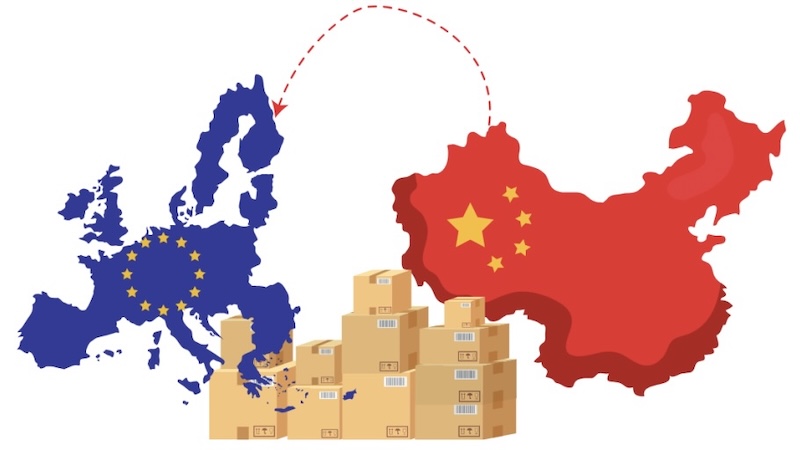
    China EU Trade Map

    Ready to source any of these categories from China?
    Maple Sourcing verifies suppliers, checks EU compliance requirements, and inspects goods before shipment — so your margin is protected before products reach Europe.

    5-Step Sourcing Playbook for Stable Margins

    The product category matters, but the sourcing process often decides whether the margin survives.

    Step 1: Run Market Research Before Sampling

    Use three free tools: Google Trends regional filters, Eurostat import databases, and Amazon EU sales dashboards. Map 12-month seasonal demand cycles and competitor pricing before committing to any product. Importers who skip this step routinely hold slow-moving inventory that locks up working capital.

    Step 2: Vet Manufacturers Before Sending Deposits

    Unaudited factories create two expensive problems: customs seizure of non-compliant goods and high defect rates. Four vetting steps reduce most risk: verify the business license in the Chinese national database, request a live virtual factory tour, review existing EU certification samples, and speak with European importers who have used the supplier. Working with pre-screened factory directories can reduce vetting time significantly. 

    Step 3: Calculate Full Landed Cost — Not Just FOB Price

    Comparing factory prices to retail prices without accounting for freight, duties, VAT, inspection, and certification costs produces inaccurate margin forecasts — a full breakdown of hidden costs of importing from China can help you build a more complete picture. The table below shows an illustrative cost breakdown for a $12 smart home camera:

    Cost Category Per Unit % of Factory Price
    FOB Factory Cost $12.00 Base
    Ocean Freight & Port Fees $1.80 15%
    EU Customs Duty $0.48 4%
    Standard EU VAT $3.12 26%
    Pre-Ship QC Fee $0.75 6.25%
    Annual CE Charge $0.50 4.17%
    Total Landed Cost $18.65 155.4%

    Example only; actual costs vary by HS code, freight rate, VAT treatment, product category, and destination country.

    At a $34.99 retail price, gross margin is 46.7% — not the 63% a raw FOB comparison suggests. Plan your budget accordingly:

    Expense Cost Range (USD) Purpose
    Product samples $800–2,200 Quality & design testing
    Certification testing $1,000–3,500 EU compliance certificates
    Pre-shipment inspection $400–1,200 Third-party factory audit
    Trial sea container $1,800–4,000 Initial bulk stock
    IOSS VAT registration $150–400 EU cross-border tax filing
    Contingency reserve $1,000–3,000 Emergency logistics fees
    Total Min. Budget $5,150–14,300 New importer baseline

    Step 4: Meet EU Import Compliance Standards

    Three compliance areas affect every shipment entering the EU in 2026. The EU is reforming its low-value e-commerce customs exemption, with new duties applying to consignments previously exempt under the €150 threshold — check the latest guidance at taxation-customs.ec.europa.eu before planning your pricing. The EU PPWR, generally applying from August 12, 2026, increases pressure on suppliers and retailers to improve packaging recyclability, labeling, material selection, and documentation. Incomplete paperwork at customs can lead to holds, storage charges, and missed delivery windows.

    Mandatory baseline documentation across all 10 categories:

    • EU Responsible Person physical address printed on electronics, textile, and wellness packaging
    • Technical construction files retained for 10 years post-delivery
    • SVHC chemical test records for plastic, rubber, and coated goods

    Step 5: Implement Multi-Stage Quality Control

    A three-stage inspection process can significantly reduce defect rates before goods leave China: prototype validation before mass production, random mid-batch factory spot checks, and full container review 72 hours before export customs clearance. Local inspection teams document photos and dimensional records for every batch.

    Choose freight mode based on product type and urgency:

    Freight Mode Best For Transit Time Cost Level
    Ocean FCL Bulk furniture, eco goods, PPE 25–35 days Lowest
    Ocean LCL Mid-volume smart home, activewear 30–40 days Low
    Rail (China–Europe) Mid-volume, time-sensitive batches 18–22 days Medium
    Air freight High-margin electronics, urgent restocks 5–8 days Highest

    FAQ

    Q1: Which categories suit first-time importers with limited capital?

    Low-MOQ smart home accessories, compact fitness gear, and eco LED lighting. All three have straightforward certification paths and don't require heavy industrial tooling. Avoid precision components and PPE for your first shipment — compliance overhead erodes margins on small batches.

    Q2: How do I vet Chinese factories without traveling?

    Request a live video production tour, ask for existing EU certification test reports, and speak with European importers who currently use the factory. Embed quality and compliance standards into every purchase order before sending any deposit.

    Q3: What hidden costs most distort landed cost calculations?

    Annual IOSS registration fees, port detention penalties, inspection labor, yearly CE document renewal, and the temporary €3 low-value import duty introduced as part of 2026 EU customs reforms. Build a complete cost spreadsheet using the model in Step 3 before comparing suppliers.

    Q4: What compliance documents do smart home imports require?

    CE marking under RED and LVD directives, full RoHS test reports, printed EU Responsible Person address, and REACH chemical documentation for plastic components.

    Q5: How much startup capital do I need?

    Budget $5,000–$15,000 for a properly structured first import. Start with low-MOQ verticals to test demand before committing to full container volumes. The detailed breakdown is in the Step 3 budget table.

    Q6: Do these import categories face higher customs scrutiny in 2026?

    Smart home and sustainable goods receive slightly more random sampling, but complete pre-approved certification significantly reduces the risk of customs delays and seizure. Low-value uncertified goods face considerably stricter inspection following the 2026 EU customs reforms.

    Conclusion

    The 10 import categories covered here can support attractive gross margins for European retail and wholesale businesses, but only when compliance, supplier selection, and landed cost are managed carefully. Smart home hardware, sustainable eco merchandise, and biodegradable packaging offer particularly strong demand conditions in 2026, supported by EU regulatory incentives and shifting consumer priorities.

    The businesses that protect their margins when they import from China to Europe consistently do four things: run market research before sampling, vet factories before sending deposits, model full landed cost before ordering, and implement multi-stage quality control before shipment. Each step removes a category of avoidable loss that compounds quickly across an order cycle.

    Getting these four disciplines right does not require a large team or years of experience. It requires the right sourcing process and partners who understand both the Chinese supply side and the EU compliance environment. That combination — supplier verification, quality control, and compliance review built into every order — is where the margin is either protected or lost.

    Importing from China to Europe and want a reliable sourcing partner?
    Maple Sourcing handles supplier screening, factory audits, pre-shipment inspection, and order monitoring for European importers across all major product categories.
    Aaron Li
    Hey, this is Aaron Li, an expert in quality sourcing. Since 2012, I have helped 300+ startups to source from China and manage the quality. I'd like to share my experience and knowledge for frequently asked questions related to product sourcing and quality control.
    All Articles
    Shipping Mark on Carton: Complete Guide for Exporters
    Retail Arbitrage: Where to Source and How to Earn Profit
    Best Chinese Wholesale Websites Including Made-in-China.com
    Hot-Selling Products from China for Senior Living at Home
    How to Source Wholesale Home Decor for Retail Businesses
    Top 10 Chinese Solar Panel Manufacturers (2026)
    How to Get Free Samples from China Factories
    African Importers: Best Dollar Store Products from China
    Pros and Cons of Cross-Border Private Label Sourcing
    Alibaba Wholesale Purchasing: 5 Hidden Risks to Prevent
    Tips to Find Reliable Wholesale Suppliers for Small Businesses
    Ocean Freight CBM Calculation: One Easy Formula
    Ecommerce Brands: Top 5 High-Margin Product Niches
    Proforma Invoice vs Commercial Invoice: Key Differences
    Ocean & Air Freight: Gross vs Net Weight Rules
    Startups: Direct vs Indirect China Sourcing
    RFQ: Real Examples & Industry Best Practices
    Key Trade-Offs in Logistics and Supply Chain Management
    Startup Budget for a China Import-Export Business
    Logistics Companies in China: Major Providers and How to Choose
    How to Ask a Supplier to Reduce Price for the Same Quality
    Hidden Expenses Every China Importer Should Expect
    Amazon Resellers: Best Ways to Import from China (2026)
    MOQ of Custom Packaging for Small Business
    Quality Audit Checklist for Chinese Factories
    Key Manufacturing Industrial Hubs Across China
    Made in PRC vs Made in China: What the Label Means
    The Definitive Guide to FCL vs. LCL Container Shipping (2026)
    Sea vs Air Freight: Core Reasons Behind Their Price Gap
    A Hot List of Toys to Import from China in 2026
    China to Canada: Lowest-Cost Shipping Options (2026)
    Alibaba vs AliExpress: Which Platform Fits Your Buying Goal?
    How to Import Goods from China to USA Under New Tariff Policy (2026)
    Custom Sourcing: OEM and ODM Main Differences
    5 Phases to Protect Product IP when Outsourcing in China
    FOB vs. EXW: Which Is Better for UK Importers?
    1688 Sourcing Agents: Benefits for Retail Resellers
    A Thorough Introduction to the Yiwu Market Product List
    What Is 4PX Shipping? Delivery Times, Tracking, and Delays
    DHL Shipment On Hold? What It Means and How to Resolve It
    Why You Need Taobao Agents for Kitchenware Sourcing
    Alibaba Verified Suppliers: Can You Trust Them? (2026)
    Foshan Furniture Market: Actions to Assure Quality
    Guangzhou Fabric Market: Tour Guide & Sourcing Tips
    Canton Fair: China's Largest Import and Export Fair (2026 Guide)
    Why Huaqiangbei Electronic Market Is No Longer Good for Importers
    High-End Electric Toothbrush Manufacturers in China
    Private Label Bags from Chinese Manufacturers
    Manage Sample Orders: Key Tips for China Importers
    Top 5 Shipping Documents Required for Imports
    How to Improve Your Procurement Life Cycle in Logistics Management
    Top Beauty and Healthcare Items on Amazon (2026)
    3 Ways to Evaluate Production Capacity of China Factories
    Top 10 Largest Chinese Wholesale Markets (2026)
    Why China Dominates Global Toothbrush Manufacturing
    Top 10 Iconic Products Made in Shenzhen (2026)
    Custom Design Orders: Tactics for MOQ Negotiation
    How OEM Manufacturing Adds Value to Consumer Brands
    Cargo Consolidation: Cut Shipping Costs for Importers
    Most Profitable Products to Import from China to Europe (2026)
    Key Shipping Ports in China and North America
    Major Apple Manufacturers in China: 2026 Update
    What Is Incoming Quality Control (IQC) and Why Is It Important?
    Sourcing Agent Fees for Small-Batch China Importers
    Best China Products to Resell Across Global Markets
    Why Are Most Things Made in China? 2026 Update
    Top 10 Third-party QC Agencies in China (2026)
    How Much Cheaper Is It to Manufacture in China in 2026?
    Key Trends in Sourcing Customized Products from China in 2026
    Standard Process for Pre-Shipment Inspection in China
    Key Challenges of Global Sourcing and How to Overcome Them
    Shenzhen Wholesale Markets: Ideal for Electronics Sourcing
    Verify Chinese Company Without Visiting China
    Retail Resellers: 5-Step China Bulk Sourcing Guide
    5-Step Alibaba Order Process for Small Retailers
    What Makes Chinese Supply Chains Highly Efficient
    Make Rapid Prototypes in China Manufacturers
    China Sourcing Basics for Amazon FBA Sellers
    Bulk Imports from China: Key Advantages
    LED Product Importers: Key China Sourcing Guide
    How China Sourcing Services Save You Time and Costs
    5 Effective Ways to Contact Chinese Factories
    Manage Chinese Factories to Ensure On-Time Deliveries
    Where to Source High-Quality Kitchen Utensils in China
    Top 10 Wholesale Items Imported from China (2026)
    Top 10 Trendy Consumer Electronics Made in China
    Comprehensive Guide to Find Chinese Suppliers Online
    How to Grow Your Business with a Shenzhen Sourcing Agent
    Handbook for Sourcing Chinese Hardware Products
    Transform Supply Chains via Direct China Sourcing
    Effective Supplier Management Strategies for Sourcing Success
    TikTok Sellers: Easy Steps for Direct Sourcing in China
    How to Source High-Quality Outdoor Goods from China
    Why FBA Private Label Sellers Need China Agents
    Benefits and Challenges of Manufacturing Products in China
    Why Procurement Outsourcing in China Is Important for Your Business
    Sourcing Chinese Metal Products: Critical Details
    Private Label FBA Sellers: China Sourcing Agent Guide
    Everything You Need to Know About Calculating Import Duty from China to USA
    How In-Process QC Works in Chinese Factories
    Read More
    References
    Our Features
    Custom Products
    Turn concept to reality
    Quick Response
    Within 24 hours
    Detail Oriented
    Strive for perfection
    Assured Quality
    100% Guarantee