
How Much Cheaper Is Manufacturing in China? 20% to 50%
For many consumer goods, private-label products, and light industrial items, a Chinese factory quote still lands 20% to 50% below a comparable North American or Western European one. That range is a quoted unit price at the same specification, quantity, and payment terms, before tooling, freight, duty, and inspection, and it comes from quoting the same job in both places rather than from published averages.
| What creates the quote gap | What eats it after |
|---|---|
| Labor cost and depth | International freight |
| Local component supply | Duties and clearance |
| Supplier competition | Inspection and rework |
| Packaging done in house | Extra sampling rounds |
| Automated lines at scale | Air freight to recover time |
Only the left column is inside that percentage.
The Savings Are Not About Wages
Wages still matter on labor-heavy goods, but they stopped being the whole reason years ago. Coastal wages have climbed steadily and the quote gap survived anyway, which tells you something else is carrying it.
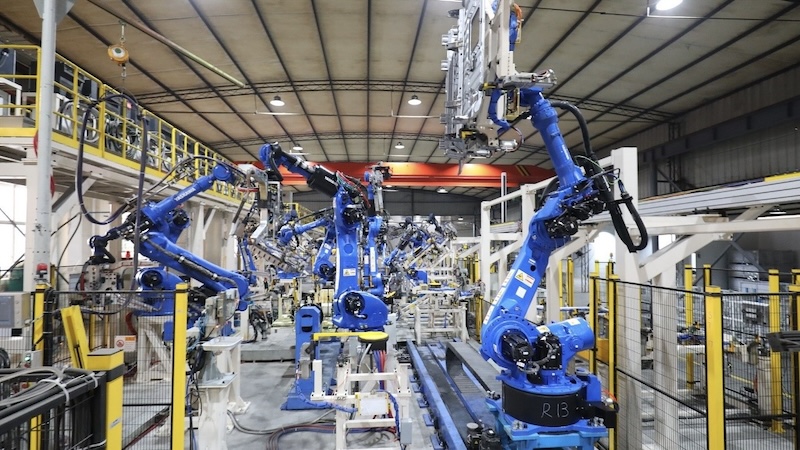
What survived it is density: component makers, tooling shops, and packaging vendors close enough to the assembly line that less goes wrong between them. Automation added to that, since factories bought robots rather than relocating. Neither is a wage story and neither is easy to copy, which is the whole China supply chain advantage.
For a cost calculation the practical consequence is simple. Comparing a Chinese quote against a Vietnamese or Mexican one on labor alone will mislead you. Most of what you are buying is the speed and accuracy of everything around the labor, and none of that reaches the quote for manufacturing in China.
Pulling that hidden half into the open, so two quotes from two countries can actually be compared, is the first job purchase management has to do.
Where the Savings Actually Come From
Tooling and speed sit outside that percentage, and for a first product they often matter more than it does. Chinese tooling shops build molds faster and cheaper than most makers in North America or Europe, and tooling is both the first big spend and the first thing to delay a launch.
A lower mold cost with a shorter turnaround lets you test, revise, and get to market inside one season instead of two. That speed is one side of the supply chain trade-offs every importer ends up pricing.
Supplier competition keeps pricing honest in mature categories. You can put several genuinely capable factories side by side and compare, which you cannot do in a market that has three suppliers for your product.
The buyers who save most are not the ones who take the lowest number. They pick a factory capable enough to deliver and small enough to care. Judge that on what share of its capacity your order takes, what it commits to on scheduling, how it handled your sample problems, and whether the machines your product needs are free.
How Much Can You Really Save?
The quote gap is the first number, and what survives freight, duty, inspection, and rework is the second. It holds widest for products that are labor-intensive, component-heavy, packaging-heavy, or built on a mature supplier base, which is where electronics accessories, home goods, and hardware sit.
| Product type | Quote gap |
|---|---|
| Electronics accessories, hardware | Wide |
| Home goods, private-label items | Wide |
| Component-heavy or custom-assembled | Wide |
| Bulky, low-value goods | Wide, then freight takes it |
| Heavily tariffed or regulated goods | Wide, then duty takes it |
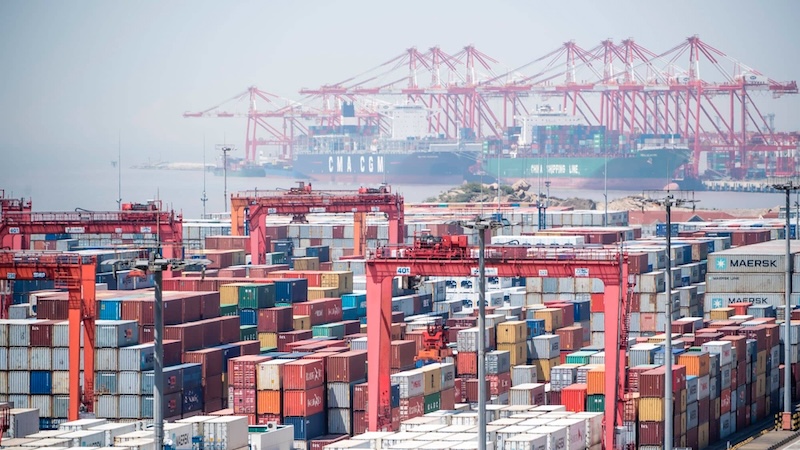
A low-value item that fills a lot of container space can lose the whole gap to freight before it reaches your door.
So compare landed numbers, not factory numbers. A real comparison counts tooling, packaging, inspection, freight, duties, warehousing, and rework risk, and the gap between a quote and a true landed cost is often wide enough to flip the decision.
Where Buyers Lose It Themselves
China can be cheaper and still cost you more, when specs, sampling, or inspection are handled badly. Four mistakes do most of the damage:
Vague specifications. Hand over a photo and a paragraph and the supplier picks the cheapest acceptable version, which you discover after production. Material thickness, finish, color, and tolerance all move both cost and quality, so pin them down before you ask for a price.
Poor sampling. A sample tests the supplier’s communication as much as the product. A factory that struggles to read a brief at sample stage will not read it better under production pressure.
Weak inspection. This is the expensive one. A defect costs a fraction to fix on the factory floor and a fortune to fix after the goods land. That is why a during production inspection protects the saving the quote promised.
No supplier check. A polished online profile proves nothing about production capacity, and a supplier quality audit verifies the company, the equipment, the people, and the systems. Whether it can hold your specification is a separate question, answered by a technical review, samples, and a trial run.
Case: a buyer took the lowest quote on a plastic housing without locking the wall thickness. The factory used thinner plastic, parts cracked in transit, and the replacement run wiped out the entire saving. One line on a spec sheet would have prevented it.
The Costs That Eat the Gap
Three things outside the factory quote decide how much of the gap you keep. None of them removes the advantage, and all of them belong in the sum before you commit.
Trade policy weighs more than most buyers expect, and it is set market by market. Tariff rates, the treatment of low-value shipments, and documentation rules differ between the US, the UK, and the EU, so check the ones for your destination rather than a general summary. Where the goods legally originate sets the duty rate, and moving final assembly does not always move it.
Compliance has grown stricter, and retrofitting it is where savings die. If your product needs safety, wireless, or chemical approvals, build them into the plan before sampling. Fixing a product already made to the wrong specification costs more than the certification ever would.
The China Plus One move has spread without emptying China. Most companies moved simpler, labor-heavy lines and kept the complex, tooling-heavy products where the supplier base is. Copy the pattern, not the headline.
FAQ
Q1: Which countries actually beat China on price now?
Vietnam and India compete well on apparel and other labor-heavy goods, which is where the gap narrows most. Mexico rarely beats a Chinese quote, but shorter transit into North America can beat it on total delivered cost and on how much stock you have to hold. China stays strongest when a product needs multiple components, fast tooling, and mature supplier coordination in one place.
Q2: How accurate is that headline range for my product?
Treat it as a starting point, not a promise. It averages categories that behave nothing like each other, so a hardware accessory and a bulky homeware item can sit at opposite ends of the same range.
Q3: What should I measure the saving against?
The headline range compares a Chinese quote with a Western maker’s. If your real alternative is your current supplier or another Asian factory, run that comparison instead, because a saving measured against a quote you would never have accepted is not a saving.
Q4: Does faster production count as a real saving?
Yes, and it is the one buyers forget to count. Cash tied up waiting on a slow launch has a price, and so does entering a season late, neither of which appears on a quote.
Q5: What order size do I need to see real savings?
There is no minimum order that unlocks it, but savings grow as volume spreads fixed costs like tooling and clearance across more units. Very small first orders can look expensive, then turn cheap per unit on the reorder.
Q6: How much do sourcing support and inspection add to the cost?
Inspection may be quoted by the day, by the batch, or by the site, often with travel billed separately, while sourcing support runs on a share of order value, a project fee, a monthly retainer, or some mix. Spread each fee across the orders and units it actually covers, not just the batch in front of you, then compare that per-unit figure with the cost of one rejected batch.
Q7: Does the exchange rate change what I actually save?
Yes. You pay in one currency and sell in another, so a shift between order and payment moves your real cost. On large orders, write a rate assumption into the budget and revisit it if the currency swings.
Q8: Will the price hold when I reorder?
Not automatically. Material costs, exchange rates, and your own volume all move between runs, and a first-order price can be set low to win the account. Ask what the price depends on and how much notice you get before it changes.
Conclusion
The structural advantage is real, and it is not the same thing as a cheap order. Density and supplier competition set the quote gap, while your specification, your inspection, and your freight decide what is left of it at the warehouse door.
Holding the specification steady, keeping the same supplier honest between orders, and inspecting before the balance moves are what turn a headline percentage into a number you actually keep. That is purchase management done on the ground, so the saving survives the second order and the third.