



If thousands of sellers can buy from the same marketplace, why do some build reliable, profitable Amazon businesses while others stall after launch? The difference is rarely a secret product. It is usually sourcing discipline. For anyone moving From Alibaba to Amazon, this guide starts with a practical reality: China remains the most influential hub for private-label and wholesale FBA inventory because it combines supplier depth, manufacturing flexibility, and logistics infrastructure in one ecosystem.
For new and growing sellers, FBA sourcing from China is not only about finding a low unit price. It is about building a repeatable system that protects margin, quality, and delivery timelines. China product sourcing still leads because sellers can compare many factories in the same category, request customizations at relatively low minimum order quantities, and scale production without changing countries every time demand rises. That combination makes it easier to test, iterate, and relaunch faster than in fragmented sourcing environments.
This does not mean every supplier is a fit. It means the opportunity is larger if you approach it with a structured process. A strong approach includes supplier vetting, sample validation, cost modeling, production follow-up, and shipment planning for Amazon standards. In that workflow, many brands use FBA sourcing services or a trusted product sourcing agent to reduce avoidable errors, especially when language, time zone, and factory communication create friction.
To frame the rest of this article, think about China sourcing through four business-critical lenses:
Selection power: Dense supplier networks make side-by-side comparisons possible, which improves negotiating leverage and product fit.
Customization potential: Packaging, bundling, and small design changes are often feasible, helping listings stand out without reinventing the product.
Operational scalability: As order volume grows, production can often be expanded within the same supplier ecosystem.
Execution risk: Quality drift, unclear specifications, and shipping misalignment can quickly erase savings if controls are weak.
Another reason this topic matters now is cost transparency. Many sellers underestimate the true FBA sourcing cost by focusing on ex-factory quotes and ignoring sampling, inspection, prep, freight, duties, and inventory timing risk. The result is a product that appears profitable on paper but struggles after storage fees, ad spend, and returns. This guide will help you evaluate sourcing decisions with a full-cost lens, so you can make decisions based on contribution margin, not just headline price.
As you read forward, treat this as an operations playbook, not a trend piece. We will walk through how to shortlist suppliers on Alibaba, when to involve an FBA sourcing company, how to compare quotes correctly, and how to move from first sample to Amazon-ready shipment with fewer surprises. If your goal is a durable brand rather than a one-product gamble, the right starting point is clear: approach China product sourcing as a system you can repeat and improve each cycle.

China remains attractive because it offers broad product choice, mature manufacturing clusters, and flexible order options. To turn those advantages into profit, you need a clear FBA workflow that connects supplier decisions to Amazon performance.
FBA sourcing from China is the process of finding products, selecting factories, ordering inventory, and preparing goods so they can be received by Amazon fulfillment centers. In practice, it starts with product research and target margins, then moves into supplier discovery, sample checks, price negotiation, production, quality control, and shipping prep. Every step affects your listing health, customer reviews, and reorder speed.
For most sellers, the operational goal is simple: land compliant inventory at a viable FBA sourcing cost while protecting quality. That means defining specifications early, confirming packaging and labeling requirements before production, and planning lead times around stockout risk. Whether you work independently or through FBA sourcing services, execution discipline matters more than chasing the lowest unit price.
Alibaba and similar B2B marketplaces function as discovery and communication hubs, not automatic trust signals. They help you compare factories, view product ranges, request quotes, and shortlist potential partners. Strong buyers use these platforms to create a structured vetting process: they ask for recent production examples, align on quality standards, and verify that a supplier can meet Amazon prep requirements.
A practical approach is to treat platform messaging as your first filter, then validate capabilities through samples and process checks. This is where direct sourcing from China becomes more strategic than transactional. You are not only buying a product; you are building a repeatable supply chain. If bandwidth is limited, an FBA sourcing company can coordinate screening, sample rounds, and factory follow-up while you stay focused on catalog growth.
Traditional importing often prioritizes bulk purchasing and general retail distribution. FBA sourcing is tighter and more data-driven because Amazon imposes specific standards for packaging, labeling, shipment routing, and inventory timing. Small mistakes that might be manageable in conventional importing can create delays, extra fees, or inbound rejections in FBA.
Key differences include:
Inventory strategy: FBA often uses smaller, faster reorder cycles instead of large seasonal buys.
Compliance detail: Carton labels, unit prep, and shipment plans must match Amazon rules exactly.
Margin management: Your true FBA sourcing cost includes product, freight, prep, duties, and Amazon fees.
Supplier fit: You need factories that can hold consistency across repeat orders, not just offer a low first quote.
Understanding these differences helps you make better sourcing choices from day one. It also sets up the next part of your guide: building a direct sourcing process that is reliable, scalable, and aligned with long-term marketplace growth.
After mapping how FBA sourcing moves from B2B platforms to your Amazon listings, partner selection becomes the real risk-control point. In practice, successful FBA sourcing from China depends less on finding the lowest quote and more on choosing suppliers that can deliver consistent quality, compliance, and timelines at scale.
Treat marketplace profiles as a starting file, not proof of reliability. Shortlist suppliers by product specialization, export history, response quality, and willingness to share documentation early. Ask for recent production photos, packaging examples, and clear answers on MOQ, lead time, and defect handling.
A practical vetting workflow keeps decisions objective:
Verify business identity and factory role, then confirm whether they are a manufacturer, trading company, or mixed model.
Request sample runs with your packaging and labeling standards, then evaluate consistency across multiple units.
Compare communication quality, not just price, because delayed or vague replies usually become larger execution problems.
Run a pre-production checklist covering materials, dimensions, barcode placement, and carton specs for Amazon fulfillment.
This process helps control both product risk and hidden FBA sourcing cost before you place a full order.
Direct factory relationships can improve unit economics when you already have sourcing experience, clear specifications, and internal quality controls. However, many growing sellers use FBA sourcing services to manage supplier screening, sample coordination, negotiation, inspections, and shipping handoffs in one process.
The decision is usually operational, not ideological. A direct model may fit if you can manage day-to-day communication, production follow-up, and dispute resolution internally. An FBA sourcing company can be more efficient when your team needs faster onboarding to new categories or better process discipline across multiple SKUs. In a broader China product sourcing strategy, a strong product sourcing agent or company often reduces avoidable delays by aligning factory output with Amazon requirements from the start.
Some warning signs appear early and should not be ignored. If a supplier avoids direct answers about quality standards, changes pricing after sample approval, or resists third-party inspection, your execution risk is rising.
Watch for these red flags during qualification:
Large quote swings without a materials explanation.
Reluctance to provide production timelines in writing.
Pressure to skip samples or inspections to "save time.
Inconsistent company details across invoices, chat profiles, and bank records.
Fast promises on every requirement, but no structured process.
Reliable sourcing partners are transparent about tradeoffs, constraints, and lead times. For Amazon sellers, that reliability is what protects listing performance, cash flow, and long-term growth, which is why supplier vetting should be treated as a core part of your complete FBA sourcing system, not a one-time task.
After you identify trustworthy partners, the practical question is cost control. In FBA sourcing from China, profits are usually won or lost in the details of unit pricing, MOQ terms, and landed costs before inventory reaches Amazon.
A supplier quote is only the starting point of your FBA sourcing cost model. The visible unit price often excludes tooling, packaging upgrades, inspection, and payment processing fees. If you are comparing a direct factory with an FBA sourcing company, request the same cost structure from both so you can compare total delivered value instead of headline price.
When reviewing MOQ, treat it as a negotiation variable, not a fixed rule. Many factories set higher MOQs to protect production efficiency, but a lower initial run may be possible if you accept a simpler package, fewer color variants, or a longer lead time. This matters for new sellers who need to validate demand without overcommitting cash.
Use a simple per-unit framework before placing any order:
Base unit cost at your tested specification.
One-time costs spread across the first order, such as mold or logo setup.
Quality control and defect allowance.
Packaging and labeling to Amazon requirements.
Service margin if using FBA sourcing services.
This structure also supports better product development and sourcing decisions. If a product development company helps refine materials or simplify assembly, a slightly higher development fee can still reduce your long-term per-unit cost and return risk.
Shipping can erase margin faster than most first-time importers expect. For FBA sourcing from China, your landed cost should include freight mode, origin handling, customs-related charges, destination drayage, prep work, and final delivery appointments to Amazon warehouses. A low ex-factory quote can become expensive after these layers are added.
Air freight usually offers speed but higher per-unit cost, while ocean freight improves unit economics at higher volumes and requires tighter planning. Small and mid-sized sellers often use a blended strategy: limited air shipment for launch timing, followed by ocean replenishment once sales stabilize.
Ask for logistics estimates in a like-for-like format, including what is not included. Hidden fees commonly appear in relabeling, palletization, storage during appointment delays, and corrections for carton dimensions that do not match Amazon routing rules. If you work with FBA sourcing services, confirm whether prep center handling is bundled or billed separately.
To keep forecasting realistic, model best-case and stress-case freight scenarios before you confirm MOQ. That gives you a workable margin range and prevents cash flow surprises during peak shipping periods.
After you map product cost, MOQs, and freight, the next gap is operational clarity. The right software stack turns rough estimates into repeatable decisions, so your FBA sourcing from China process stays profitable as order volume grows.
For most sellers, product research tools are where risk is reduced before money is committed. Use them to validate demand consistency, price stability, and competitive pressure, then run each shortlisted item through a profit calculator that includes referral fees, fulfillment fees, landed cost, packaging, and a return buffer. This is where FBA sourcing cost becomes practical rather than theoretical.
A useful workflow is simple: shortlist 10 products, model best-case and conservative margins, and eliminate anything that only works under perfect assumptions. If you are working with FBA sourcing services, ask for calculators you can edit, not static screenshots. If you handle product development and sourcing, combine market data with prototype and tooling assumptions early so your margin model reflects the real product, not a generic listing.
Email threads and chat apps can work at low volume, but they break down once revisions, samples, and inspections run in parallel. A shared communication and QC platform keeps specification files, approved changes, sample history, and defect photos in one place. That prevents version confusion and protects both timeline and margin.
When evaluating a platform, prioritize features that support clear handoffs: task ownership, timestamped approvals, inspection checklists, and issue escalation. If you use an FBA sourcing company, confirm who owns final sign-off at each checkpoint and how quickly corrective actions are tracked. This is especially important when product development changes occur late, since packaging updates and labeling details can affect compliance, prep, and final warehouse acceptance.
Once purchase orders are placed, inventory and shipping tools keep inbound flow aligned with sales velocity. Good systems connect supplier ETAs, freight milestones, and Amazon receiving status so you can spot delays before they create stockouts. They also help you split shipments intelligently, balancing storage risk against replenishment speed.
Look for software that supports reorder point alerts, carton-level tracking, and scenario planning for peak periods. Even a basic dashboard can improve cash flow decisions by showing what inventory is tied up in production versus transit. For brands scaling beyond one hero SKU, this visibility is often the difference between sustainable growth and reactive firefighting. If your roadmap includes a broader product line, coordinating with a product development company can keep launch timing, sourcing product decisions, and inbound logistics synchronized.
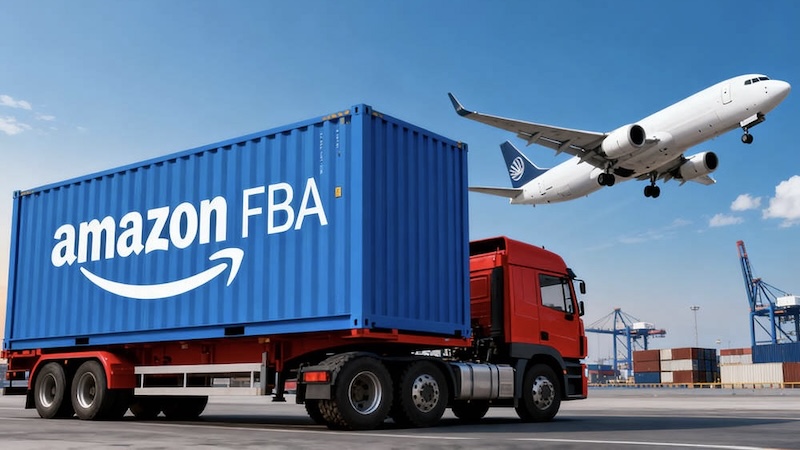
The tools covered in the last section become much more valuable when you apply them in a repeatable workflow. This is where many sellers reduce mistakes in FBA sourcing from China: they move from scattered tasks to a clear implementation sequence that protects margin, quality, and launch timing.
Strong sourcing starts with a product brief, not a catalog search. Define your target price band, minimum margin, size and weight limits, and acceptable competition level before contacting any factory. In practice, this keeps FBA sourcing cost visible from day one, because expensive shipping, fragile designs, and heavy items can erase profit even when unit pricing looks attractive.
For each short-listed product, validate three things: demand consistency, listing quality gaps, and landed cost feasibility. Use your research stack to estimate total landed cost, including packaging, duties, prep, and inbound freight to Amazon. If your expected margin is thin before negotiation, skip early. Sellers who treat this stage seriously usually need fewer supplier changes later and can brief an FBA sourcing company more effectively if outside support is required.
When you begin supplier outreach, evaluate communication quality as carefully as price. A usable quote should include unit cost by quantity break, production lead time, packaging specs, and payment terms. During negotiation, focus on commercial clarity: final Incoterms, defect thresholds, replacement policy, and timeline penalties. This creates a cleaner decision framework than chasing only the lowest quote.
Sample orders are your risk filter. Request pre-production and production-grade samples, then test function, finish, packaging durability, and barcode placement under real fulfillment conditions. If you work with FBA sourcing services or a product sourcing agent, require written sample review criteria and approval checkpoints. For China product sourcing, the best practice is simple: no bulk payment until sample outcomes and specifications match your target listing promise.
Quality control is where sourcing plans either hold or fail. Build an inspection checklist directly from your product specs, packaging standards, and Amazon compliance needs, then lock it before production starts. Your checklist should cover materials, dimensions, logo execution, accessory count, carton strength, and labeling accuracy.
Pre-shipment inspection should happen when most units are packed, so findings reflect the real batch. Define pass/fail thresholds in advance and include rework responsibility in the purchase agreement. If issues appear, pause final payment until corrective actions are verified. This discipline protects reviews, reduces returns, and stabilizes inventory planning. Whether you run sourcing internally or through an FBA sourcing company, consistent inspection protocols are what turn one successful order into a scalable sourcing system.
For teams ready to formalize this workflow, aligning the process with a trusted Product Sourcing Company model can streamline handoffs from product selection through shipment release without losing control of quality or cost.
After completing product research, supplier negotiation, sample validation, and pre-shipment checks, the final decisions become much clearer. This section condenses the core choices that shape consistent execution in FBA sourcing from China without adding unnecessary complexity.
Treat sourcing as a system, not a single transaction. Your strongest outcomes come from aligning demand validation, landed margin targets, supplier communication, and inspection standards before inventory is produced.
Keep unit economics visible at every checkpoint. A realistic FBA sourcing cost should include product price, packaging, freight, duties, prep, Amazon fees, and a buffer for defects or delays so margin decisions stay grounded.
Choose support based on risk, not convenience alone. FBA sourcing services are most useful when they improve supplier vetting, communication clarity, quality follow-through, and shipment readiness in ways your internal process cannot consistently handle.
Evaluate any FBA sourcing company with process discipline in mind. Prioritize transparent quoting, documented quality criteria, clear escalation paths, and repeatable reporting rather than broad promises or lowest-price positioning.
Protect continuity through documentation. The handoff from sourcing to replenishment is smoother when specifications, acceptable quality limits, packaging requirements, and shipping plans are written clearly and reused across purchase cycles.
Taken together, these points keep your sourcing model practical, measurable, and easier to scale while reducing avoidable surprises in Amazon FBA operations.
Q1: How much should I budget before placing my first full order?
Plan for four buckets: samples, product cost, logistics, and Amazon prep requirements. A simple first-run budget often includes sample fees, a 30/70 supplier payment split, freight, duties, labeling/packaging updates, and a small buffer for rework. Your exact FBA sourcing cost depends on product size, order quantity, and defect risk, so treat early quotes as directional until samples and packaging are approved.
Q2: Do I need an FBA sourcing company, or can I do it myself?
You can self-manage if you have time for supplier vetting, negotiation, quality control coordination, and shipment planning. An FBA sourcing company can help when you want tighter execution, fewer communication gaps, or better process control across multiple factories. The tradeoff is service fees, so compare those costs against your time, error risk, and launch timeline.
Q3: How can I compare supplier quotes fairly?
Use a normalized quote sheet. Keep specs identical for every supplier, then compare unit cost, tooling terms, MOQ, lead time, packaging details, and Incoterm in one table. A cheaper unit price can become expensive if packaging fails Amazon requirements or if defect handling is vague. Clear quote comparisons prevent costly surprises later.
Q4: What payment terms are reasonable for new buyers?
Many first orders use a deposit before production and balance before shipment. For risk control, avoid paying in full upfront, and tie final payment to passed inspection and approved packaging photos. Use payment channels that provide transaction records, and keep every term documented in your purchase agreement.
Q5: How many samples should I order before mass production?
At minimum, get one functional sample and one packaging-confirmed sample. If the product has moving parts, electronics, or cosmetic sensitivity, test multiple units from the same run to check consistency. Approve the final sample version in writing so your quality checks match exactly what was accepted.
Q6: What is the biggest mistake that drives up FBA sourcing cost?
Unclear specifications. When dimensions, materials, tolerances, or packaging standards are vague, factories make assumptions and rework becomes likely. That leads to delays, expedited shipping, or rejected inventory. A precise spec sheet with photos and pass/fail criteria is one of the highest-leverage cost controls.
Q7: Should I split production across two suppliers?
For early launches, one qualified supplier is usually simpler to manage. Split sourcing can reduce dependency risk later, but it also increases coordination complexity and quality variation. A practical path is to stabilize one supplier first, then qualify a backup using the same spec pack and inspection checklist.
Q8: When should I switch from DIY sourcing to professional support?
Consider support when order volume grows, defect disputes consume your week, or lead-time misses hurt stock levels. At that stage, structured FBA sourcing services can help standardize communication and execution. The goal is not outsourcing everything immediately, but removing operational bottlenecks that block profitable growth.
The FAQ likely clarified the practical details, but decisions still come down to execution. If your goal is profitable, repeatable sourcing for Amazon, your conclusion should be simple: choose a process you can operate consistently, then improve it with each order.
From Alibaba to Amazon, strong outcomes usually come from disciplined prep rather than shortcuts. That means validating demand, narrowing to qualified suppliers, testing samples, defining quality expectations in writing, and planning landed margins before you place a full order. Whether you handle supplier communication yourself or use FBA sourcing services, the same rule applies: clarity early prevents expensive fixes later.
As you finalize your approach to FBA sourcing from China, keep your decision criteria practical:
Cost visibility before commitment Estimate total FBA sourcing cost, not just unit price. Include product cost, sampling, inspection, shipping, duties, prep, and Amazon fees so your margin is real, not assumed.
Quality control that is documented Use clear specifications, acceptable defect limits, and pre-shipment checks. A lower quote is rarely a win if quality drift leads to returns or account risk.
Communication reliability Prioritize suppliers or partners who respond clearly, confirm details, and flag issues early. Consistent communication is often the difference between smooth launches and delayed inventory.
Scalability of your workflow Your first order should not rely on improvisation. Build a repeatable checklist for quoting, sampling, inspection, logistics, and reorder timing.
Support model that matches your capacity If time is tight or you are expanding fast, an FBA sourcing company can centralize supplier vetting and coordination. If you have strong in-house operations, direct management may be more efficient.
The concrete next step is to run one product through a full sourcing scorecard this week. Compare at least two supplier options, map full landed cost, and set a pass/fail threshold for quality and margin before payment. This turns research into a decision framework you can trust.
In short, the best sourcing strategy is the one that protects profit, reduces avoidable risk, and stays repeatable as your catalog grows. Use this guide as your operating baseline, then refine it with each cycle until sourcing becomes a controllable advantage rather than a recurring uncertainty.
 English