



What if the biggest risk in sourcing from China is not price, quality, or shipping, but starting with the wrong strategy? For many buyers, global sourcing begins as a cost question and quickly becomes an execution challenge. The companies that succeed treat sourcing as a business system, not a one-time transaction.
Global sourcing in China means finding, evaluating, and managing manufacturing partners that can deliver the right China product at the right quality, timeline, and total landed cost. This process can create major advantages, but it also introduces moving parts: communication gaps, production variability, compliance needs, and logistics decisions that affect margins. A practical approach helps you reduce surprises before they become expensive problems.
For teams researching options, the first mindset shift is simple: stop thinking only about unit price. A lower quote can hide weak quality control, unclear specifications, or unstable lead times. Strong China product sourcing focuses on commercial fit and operational reliability together. In other words, the goal is not just to buy cheaper. The goal is to build a repeatable sourcing model that supports growth.
A clear starting framework includes four priorities:
Define your sourcing objective clearly. Decide whether your priority is margin improvement, faster product development, supplier diversification, or a blend of goals.
Translate product requirements into measurable standards. Specs, packaging, tolerances, and testing expectations should be written before supplier outreach.
Choose the right operating model. You may work directly with factories, with Chinese sourcing agents, or with product sourcing companies that coordinate supplier discovery and qualification.
Plan control points early. Quality checks, sample approvals, and milestone reviews should be built into the timeline, not added after issues appear.
This is where a reliable sourcing service can support internal teams that lack local coverage or procurement bandwidth. The role of a product sourcing agent/company is not only to find suppliers. The real value is process discipline: clearer communication, structured supplier comparison, and follow-through during sampling and production. Many global sourcing services also help buyers avoid common early-stage mistakes, such as approving suppliers before validating capabilities.
As this article continues, you will learn how to navigate each stage with fewer blind spots: supplier screening, quote analysis, negotiation boundaries, quality planning, and shipment readiness. The focus stays practical and business-centered, so you can make better sourcing decisions with confidence rather than reacting to problems late. If you are evaluating support options, reviewing a structured product sourcing company workflow can help you compare internal and external execution paths before committing resources.
After the introduction, the practical question becomes why so many sourcing strategies still center on China. For teams managing global sourcing services, the answer is not one factor but a system that combines industrial depth, cost structure flexibility, and highly specialized production clusters.
China’s manufacturing strength comes from connected ecosystems rather than isolated factories. In major production regions, raw materials, component makers, assembly plants, packaging providers, and freight support often sit within short transit distance. That proximity shortens lead times, simplifies engineering changes, and helps buyers solve quality issues faster when specifications shift.
Scale also matters for risk control. Large and mid-sized factories can usually support pilot runs, volume ramps, and repeat orders under the same production network, which is critical for consistent China product sourcing. For importers working with product sourcing companies or Chinese sourcing agents, this infrastructure reduces handoff friction: fewer disconnected vendors, clearer timelines, and better coordination from sampling through shipment.
China remains cost-competitive not because every unit is always the cheapest, but because pricing can be structured to fit different sourcing stages. Buyers can often negotiate around tooling, minimum order quantity, packaging format, material grade, and delivery windows to balance margin and quality. This flexibility is especially useful when launching a new SKU or testing demand before scaling.
A strong sourcing service should break total landed cost into clear parts so decisions are commercial, not guesswork. Useful cost lines typically include:
Unit manufacturing cost and material options.
Tooling, mold, or setup charges.
Packaging and labeling requirements.
Inland freight, export handling, and booking timing.
Rework risk tied to inspection standards.
When these elements are visible, teams can compare suppliers on real value, not headline price alone.
Another reason China stays central is product breadth. Buyers can source simple commodities, engineered components, and customized private-label products in the same broad market, often with region-specific expertise by category. This diversity helps procurement teams avoid rebuilding sourcing channels every time they expand a catalog.
Specialization also improves execution quality. In mature categories, factories and upstream partners usually understand common certifications, testing expectations, and packaging norms for selected export markets. A product sourcing agent can map those category clusters to your requirements, pre-screen likely manufacturers, and reduce mismatch during quotation and sampling.
For businesses focused on navigating global sourcing in China successfully, the key takeaway is operational: leverage infrastructure, structure costs transparently, and source within the right specialization cluster. That approach turns China from a broad option into a controllable sourcing system.
China’s manufacturing depth, competitive pricing, and category specialization create strong opportunities, but execution determines results. To turn those advantages into consistent outcomes, buyers need a disciplined process that reduces ambiguity, filters supplier risk, and protects margins from the first inquiry to final shipment.
Clear specifications are the foundation of successful China product sourcing. Vague requirements often lead to mismatched samples, rework, and delayed launches, even when a factory is technically capable. Build a concise product brief that covers materials, dimensions, tolerances, performance standards, packaging, labeling, and required testing. Include acceptable quality levels, color references, and any must-have certifications for your market.
Treat your brief as a commercial tool, not just a technical document. Precise requirements let suppliers quote on the same basis, making price and lead-time comparisons meaningful. They also help a sourcing service or product sourcing companies communicate your expectations in local factory workflows. If your item has custom features, request pre-production samples with approval checkpoints so design issues are solved before mass production.
Strong supplier selection balances capability, communication, and operational fit. Start with a long list, then narrow based on proven experience in your product type, export history, quality control discipline, and responsiveness. Ask focused questions about production capacity, lead times during peak periods, subcontracting practices, and change-control procedures when specifications are updated.
A practical way to compare candidates is to score them against the same criteria:
Technical fit: Similar products produced at commercial scale.
Quality systems: Documented inspections, defect handling, and traceability.
Commercial clarity: Transparent quoting, tooling terms, and payment structure.
Communication reliability: Fast, accurate replies and clear issue escalation.
Scalability: Ability to support growth without quality drift.
Many teams use Chinese sourcing agents or global sourcing services to run this screening efficiently, especially when language, time zone, and supplier verification capacity are limited.
Supplier promises should always be verified before larger financial commitments. Due diligence typically includes business license checks, ownership confirmation, operational history review, and cross-checking whether the supplier is a direct manufacturer or primarily a trading intermediary. This step reduces fraud exposure and helps align your sourcing model with your cost and control goals.
Factory audits add on-site validation. A well-structured audit reviews production lines, equipment condition, workforce stability, incoming material controls, in-process inspections, final quality checks, and corrective-action practices. It should also confirm that documented systems are actually used in daily operations. Whether handled internally, through product sourcing companies, or via a product sourcing partner, audit findings should feed into a supplier approval decision with clear risk thresholds.
Done together, these steps create a repeatable framework for global sourcing services that supports dependable quality, predictable timelines, and healthier long-term unit economics.
After defining specifications, shortlisting suppliers, and validating factories, your results now depend on execution quality. This is where a sourcing service becomes a strategic control layer, helping you manage communication, timelines, quality checks, and cost decisions across the full buying cycle.
Not all product sourcing companies solve the same problem, so choosing the right model prevents mismatched expectations. Agent-based firms often focus on supplier identification, negotiation, and production follow-up, making them useful when you already know your product category. End-to-end global sourcing services typically combine sourcing with inspection, logistics coordination, and issue resolution. Category specialists concentrate on verticals such as electronics, textiles, or home goods, which can improve technical communication and quality consistency. Product development company adds engineering input, prototyping support, and design-for-manufacturing guidance. For buyers launching new items, this product development and sourcing combination usually reduces rework and speeds commercialization.
A strong partner should fit your product complexity and operational style, not just offer low fees. Evaluate Chinese sourcing agents and broader teams against practical criteria:
Category and process expertise: Ask for recent, relevant project examples with similar materials, tolerances, and packaging requirements.
Quality management discipline: Confirm inspection checkpoints, defect reporting format, and corrective-action workflow before placing orders.
Supplier network transparency: Clarify whether factories are direct, layered through traders, or mixed, and how substitutions are approved.
Communication cadence: Define update frequency, escalation paths, and response-time expectations in writing.
Commercial alignment: Ensure payment terms, MOQ flexibility, and lead-time commitments support your margin and launch schedule.
This evaluation keeps sourcing product decisions tied to business outcomes such as landed cost, sell-through timing, and returns risk.
Pricing structures vary, and the cheapest headline number can become costly if scope is unclear. Common models include a commission percentage on order value, a fixed monthly retainer, and per-service fees for tasks like audits or inspections. Commission can align incentives during active purchasing but may reduce cost transparency if supplier pricing is opaque. Retainers improve planning for steady pipelines, especially when you need ongoing product development support. Per-service billing works for targeted projects, though fragmented fees can add up across multiple SKUs. Before signing, request a written scope matrix that separates included services from chargeable extras, including sampling rounds, travel, claims handling, and post-shipment support.
After comparing sourcing models, partner criteria, and pricing structures, the practical question is how to manage execution without losing visibility. Technology is where strong plans become repeatable workflows, especially when multiple suppliers, samples, and revisions are moving at once.
Supplier discovery platforms can speed up early research, but they work best as filtering tools rather than decision engines. For buyers using a sourcing service or working with Chinese sourcing agents, these systems help organize options by product category, certifications, production capabilities, and communication responsiveness. The value is not only finding factories faster, but documenting why specific candidates move forward.
A practical process is to build a short verification checklist inside your sourcing workflow:
Confirm legal business identity and operating history.
Match claimed capabilities to your exact specs, tolerances, and materials.
Validate quality systems and past export experience for similar products.
Review response quality, not just response speed.
Keep a written risk log for each supplier before sample approval.
This approach keeps product sourcing companies and internal teams aligned on objective criteria. It also supports better product development and sourcing decisions because engineering, quality, and procurement teams can review the same supplier records. If you are building a long-term pipeline, connect discovery data with your product development process so supplier selection supports design-for-manufacturing from the start.
Even with verified suppliers, delays usually come from fragmented communication. Shared project management tools reduce this risk by centralizing timelines, design files, sample feedback, and quality checkpoints. For global sourcing services, this is especially useful when your internal team, sourcing partner, and factory contacts are in different time zones.
Focus on a simple operating rhythm: one source of truth for milestones, one channel for formal approvals, and clear version control for drawings and packaging files. When messages are scattered across email threads and chat apps, teams often approve outdated documents or miss change requests. A structured workspace makes accountability visible and shortens decision cycles.
For business relevance, treat software as part of your operating model, not just admin support. If your company is scaling sourcing product lines, integrate project tracking with product development gates so supplier progress, sample outcomes, and cost updates feed directly into launch decisions. This is where collaboration between your team and a product development company can create leverage: fewer handoff errors, faster corrective actions, and clearer cost-quality tradeoffs before purchase orders are finalized.
Used well, these tools do not replace human judgment. They strengthen it by giving your sourcing team clean information, faster escalation paths, and better control across the full sourcing lifecycle.
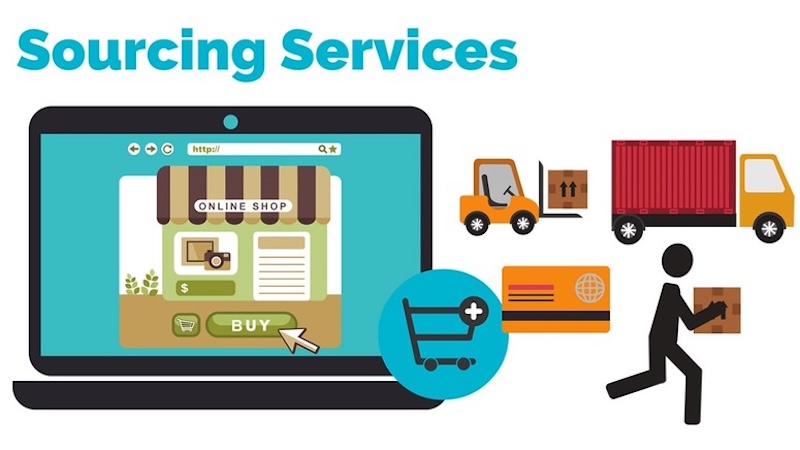
After supplier discovery and workflow tools are in place, execution risk becomes the real test of a sourcing strategy. This is where a sourcing service creates value: turning process visibility into predictable product outcomes across quality, IP, and communication.
Quality drift is one of the most common failures in cross-border buying, especially between first samples and scaled production. The practical fix is to build quality into product development and sourcing from day one, not inspect problems at the end. Start with a clear specification pack: materials, tolerances, finishing standards, labeling, packaging, and pass/fail criteria. Pair that with a pre-production meeting where your team, factory, and Chinese sourcing agents confirm the same version-controlled requirements.
For ongoing control, use stage-gate inspections at key milestones rather than a single final check. A useful sequence is raw material verification, first-article approval, in-line inspection, and pre-shipment audit. Global sourcing services and product sourcing companies often coordinate these checkpoints and escalate nonconformities quickly. Tie supplier payment milestones to approved quality gates, and run corrective action loops after each issue. If defect patterns persist, reassess factory capability before placing larger orders.
IP protection in sourcing product programs is mostly operational discipline plus contract clarity. Before sharing drawings, formulas, or firmware, define ownership, permitted use, and tooling rights in written agreements that are enforceable in the manufacturing jurisdiction. Keep sensitive files segmented so each partner receives only what they need, and watermark technical documents where practical.
During product development, control revision access through named contacts and structured repositories instead of ad hoc message threads. Limit subcontracting without written approval, and require disclosure if any process is outsourced. A product development company supporting global sourcing services can help map which components are strategic and should remain with higher-trust partners. Also plan for continuity: dual-source non-proprietary parts and keep critical know-how documented internally so your business is not locked into one factory relationship.
Most communication failures are not language failures; they are assumption failures. Teams often agree in principle while interpreting requirements differently, which causes delays, rework, and cost leakage. Reduce this by using closed-loop communication: written recap, owner, deadline, and evidence of completion after every key decision.
Define one operating cadence across all stakeholders: weekly status review, issue log, change log, and risk register. Ask for photo or video proof at milestones, not only verbal updates. When working with Chinese sourcing agents or product sourcing companies, clarify decision authority so urgent issues do not stall between teams. Keep instructions concrete, avoid idioms, and separate "must-have" from "nice-to-have" requirements. Over time, this structure builds trust and speeds execution, which directly improves margin protection and launch reliability.
After addressing quality control, IP safeguards, and cross-cultural communication, the core lesson is consistency: successful sourcing depends on repeatable processes, clear ownership, and disciplined follow-through. These final points compress the broader strategy into practical decision anchors for teams evaluating a sourcing service or building an internal sourcing workflow.
Treat sourcing as a managed system, not a one-time transaction. Define standards early, document requirements in detail, and keep accountability visible across milestones. Whether you work with product sourcing companies or manage supplier relationships directly, predictability comes from process discipline rather than reactive fixes.
Choose partners based on operational fit, not only cost. The right Chinese sourcing agents should match your product complexity, communication cadence, and quality expectations. A lower quote has limited value if it creates delays, rework, or unclear responsibilities that disrupt timelines and margins.
Build visibility across every handoff. Keep specifications, approvals, and production updates centralized so teams can act quickly when issues appear. Strong global sourcing services reduce risk when they create transparency, shorten feedback loops, and prevent information gaps between sourcing, quality, and logistics stakeholders.
Balance risk control with speed. Fast execution is useful only when quality and compliance remain intact. Prioritize decisions that protect long-term reliability, including structured supplier validation, clear contract terms, and documented escalation paths when expectations are not met.
Align sourcing decisions with business goals. The most effective model supports your target quality level, launch timing, and cost structure at the same time. In practice, that means selecting a sourcing approach that can scale without weakening control, communication, or product consistency.
Together, these takeaways keep sourcing decisions grounded in execution quality, not short-term impressions. That focus is what supports stable outcomes over time.
Q1: What is the typical minimum order quantity (MOQ) when sourcing from Chinese manufacturers?
Minimum order quantities vary significantly depending on the product type, manufacturer size, and production complexity. For simple products like textiles or accessories, MOQs can range from 500-1,000 units. Complex electronics or custom machinery may require 100-300 units. Large factories typically have higher MOQs (3,000-10,000 units) while smaller suppliers offer more flexibility. Many suppliers are willing to negotiate MOQs for initial orders, especially if you demonstrate long-term partnership potential. Consider requesting sample production runs first, then gradually increase volume as you validate quality and market demand. Remember that lower MOQs often mean higher per-unit costs, so balance flexibility with cost efficiency.
Q2: How long does the global sourcing process from China usually take from start to finish?
A complete sourcing cycle from initial research to receiving products typically takes 3-6 months for first-time orders. Supplier identification and vetting require 2-4 weeks, followed by 1-2 weeks for sample requests and evaluation. Negotiation and contract finalization add another 1-2 weeks. Production time varies widely—simple products may take 3-4 weeks while complex items need 8-12 weeks. Quality inspection requires 3-5 days, and ocean shipping adds 4-6 weeks (or 5-10 days for air freight). Experienced buyers with established relationships can reduce timelines to 6-8 weeks for repeat orders. Building buffer time into your planning is essential to account for Chinese holidays, production delays, and customs clearance.
Q3: What are the most important quality control measures when sourcing products from China?
Effective quality control requires a multi-stage approach. Start with thorough supplier audits to verify certifications, production capabilities, and quality management systems. Request pre-production samples to approve materials, colors, and specifications before mass production begins. Implement during-production inspections (DUPRO) to catch issues early when corrections are still feasible and cost-effective. Conduct pre-shipment inspections (PSI) on finished goods, typically checking 10-30% of the order using AQL standards. Consider hiring third-party inspection companies for unbiased assessments. Clearly define quality standards in your purchase agreement, including acceptable defect rates, testing procedures, and remediation responsibilities. Document everything with photos and detailed reports to maintain accountability and support continuous improvement with your manufacturing partners.
Q4: Should I use a sourcing agent or work directly with Chinese manufacturers?
The decision depends on your experience level, order volume, and internal resources. Direct manufacturer relationships offer better margins, faster communication, and deeper partnerships for established buyers with sourcing experience and sufficient order volumes. However, sourcing agents provide valuable services including supplier vetting, language translation, negotiation support, quality control coordination, and logistics management—especially beneficial for first-time importers or small businesses. Agents typically charge 5-10% commission but can save you from costly mistakes and time-consuming searches. A hybrid approach works well: use an agent initially to learn the process and establish relationships, then transition to direct management as your confidence and volume grow. Evaluate your team's bandwidth, language capabilities, and risk tolerance when deciding which model suits your business best.
The FAQ addressed the practical questions that usually block progress, so the final step is to turn that clarity into a decision. Successful sourcing is less about finding a single perfect factory and more about building a repeatable process that protects quality, timelines, and margin.
If you are evaluating a sourcing service, product sourcing companies, or Chinese sourcing agents, judge them by process discipline rather than promises. A strong partner should be transparent on supplier screening, sample control, contract terms, inspection checkpoints, and escalation paths when production drifts. The same standard applies if you run sourcing internally: define the workflow first, then select people and tools that can execute it consistently.
A practical close-out framework can keep decisions grounded:
Define your non-negotiables. Set target cost range, minimum quality threshold, lead-time limits, and communication cadence before outreach.
Run a controlled pilot. Start with one SKU or a limited batch to test reliability under real deadlines and quality checks.
Use stage-gate controls. Confirm specs, pre-production sample approval, in-line inspection, and final inspection before shipment release.
Stress-test total landed cost. Include packaging, freight mode, duties, rework risk, and delay impact, not just unit price.
Decide with an exit option. Move forward only if the process is repeatable, and keep a backup supplier path active.
This approach helps you compare global sourcing services on evidence, not sales language. It also reduces the common cycle of switching suppliers after avoidable failures in documentation, quality alignment, or timeline control.
To move forward now, create a one-page sourcing brief and scorecard, then use it in your next three supplier conversations. Within those discussions, you will quickly see who can operate with the rigor needed for long-term sourcing success in China.
 English