



What if the biggest driver of supply performance is not price negotiation, but the sourcing model chosen before a single order is placed? That question sits at the center of modern operations planning. Teams that treat sourcing as a tactical purchasing task often react to delays, cost swings, and quality issues. Teams that approach it as a strategic design choice build more resilient, flexible supply networks.
This article explores how different sourcing approaches shape outcomes across cost, lead time, risk exposure, and service reliability. The focus is practical: understanding which types of sourcing strategies support stable performance in real operating conditions, especially when demand shifts, transportation capacity tightens, or compliance requirements evolve. In that context, strategic procurement and supply chain management becomes less about chasing the lowest unit price and more about balancing total value over time.
Many organizations still separate procurement and logistics decisions, even though those decisions are deeply connected. Procurement strategies in supply chain management influence inventory profiles, production scheduling, and customer fulfillment speed. Likewise, supply chain sourcing strategies determine how much optionality a business has when a region faces disruption or a critical input becomes constrained. Seeing these links clearly is essential for leaders, analysts, and cross-functional teams making sourcing decisions.
A useful framing for this discussion is to evaluate sourcing choices through four performance lenses:
Continuity: Can supply continue under disruption, policy changes, or capacity shocks?
Cost control: Does the strategy support predictable total landed cost, not only purchase price?
Quality consistency: Can standards be maintained across sites, suppliers, and product revisions?
Responsiveness: How quickly can supply adapt to demand, design, and market changes?
These lenses are especially relevant when planning globally distributed networks. For example, China supply chain management remains important for many categories due to manufacturing depth and ecosystem maturity, but dependence on any single-region model can increase operational concentration risk. The goal is not to label one geography as universally better. The goal is to match sourcing structure to business priorities, product complexity, and risk tolerance.
In the sections that follow, we will break down the main sourcing strategy types and compare where each one tends to perform well or create trade-offs. You will get a clear foundation for evaluating options, aligning internal stakeholders, and improving supply performance through intentional sourcing design rather than reactive purchasing decisions.
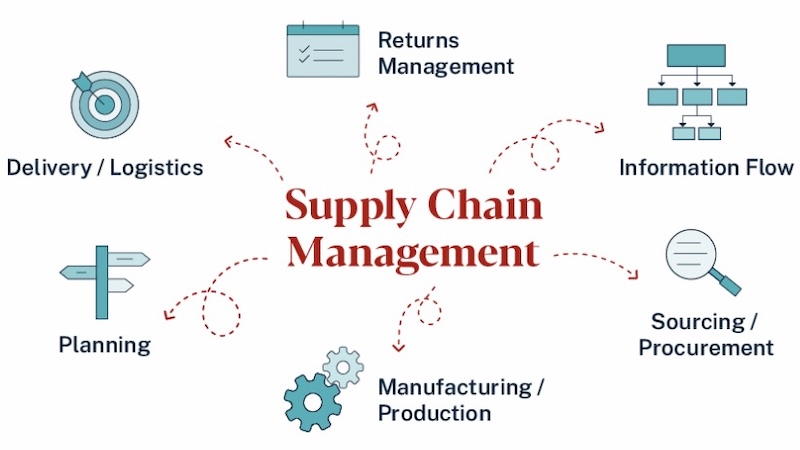
The introduction established that sourcing decisions are not only operational tasks but also performance levers. Building on that idea, the strategy you choose for sourcing directly shapes cost stability, lead-time reliability, product quality, and how quickly your team can respond when demand or supply conditions change.
In practice, supply chain sourcing strategies determine how risk and control are distributed across your supplier base. A single-source model can simplify coordination and pricing discussions, but it can also increase exposure when disruptions occur. A multi-source model can improve resilience, yet it often requires tighter supplier management, clearer specifications, and stronger internal planning discipline to avoid inconsistency.
For teams working on strategic procurement and supply chain management, the core question is not which model is universally best. The better question is which model supports your business priorities at this stage, such as margin protection, service levels, speed to market, or quality consistency. Strategy choice matters because each tradeoff shows up later in measurable supply performance outcomes.
A practical way to evaluate procurement strategies in supply chain management is to test each option against four business-critical dimensions:
Continuity risk: How vulnerable is the category to disruption if one supplier fails?
Cost behavior: Will this strategy stabilize total landed cost or create volatility?
Execution complexity: Can your current team execute this model without adding avoidable delays?
Improvement potential: Does the strategy create room for supplier development and process gains over time?
When these dimensions are reviewed together, sourcing strategy becomes a performance design decision rather than a purchasing preference. This is especially relevant in categories with long lead times, strict quality tolerances, or frequent design updates.
In China supply chain management, this decision is often magnified because supplier networks can offer both high capability and high variation. If supplier qualification, communication cadence, and quality controls are not matched to the sourcing model, the expected cost advantage can be offset by rework, delay, and escalation effort. That is why many procurement leaders pair strategy selection with a plan to streamline sourcing and supplier management from day one.
Use this decision pattern to keep execution grounded:
Define category objectives before RFQs are issued.
Select a sourcing model that fits those objectives and internal capacity.
Set supplier governance rules early, including quality checkpoints and escalation paths.
Review performance regularly and adjust the model when demand, risk, or product requirements shift.
This approach keeps supply chain sourcing strategies tied to business outcomes, not theory. It also supports stronger cross-functional alignment between procurement, operations, and finance, which is where supply performance improvements are sustained rather than temporary.
For organizations refining their operating model, the most effective path is to connect strategy choice with day-to-day execution standards, especially in markets where coordination across multiple suppliers is common. If your team is also optimizing workflows in Asia, practical guidance on how to streamline sourcing and supplier management in China can help translate strategy into repeatable performance gains.
Because sourcing strategy directly shapes lead time, quality consistency, and cost volatility, the model you choose needs to match your risk profile and service goals. In strategic procurement and supply chain management, these choices are not theoretical. They define how fast you can respond when demand shifts, materials tighten, or logistics conditions change.
These terms are often confused, but they carry different risk implications in procurement strategies in supply chain management. Single sourcing means you intentionally buy a category from one preferred supplier, even though alternatives exist. This can improve coordination, simplify quality control, and strengthen pricing leverage through volume concentration. It is a strategic choice.
Sole sourcing means only one supplier is available due to patents, technical compatibility, regulatory constraints, or unique capability. In that case, concentration is not optional, so contingency planning becomes critical. For both models, teams should define backup inventory levels, approval paths for expedited buys, and clear supplier performance triggers. In China supply chain management, this distinction matters because a single chosen partner can be replaced, while a sole-capable source may require redesign or requalification before any switch is possible.
Dual sourcing splits volume across two qualified suppliers, while multiple sourcing spreads demand across three or more. Both approaches reduce dependency risk and improve continuity if one source faces delays, quality issues, or sudden capacity limits. They also support competitive tension during commercial reviews.
That said, resilience comes with management overhead. More suppliers can create variance in specifications, communication cadence, and inbound logistics. To keep performance stable, procurement teams typically standardize contracts, technical tolerances, and scorecards across all suppliers. A practical model is to allocate a primary share to the best-performing supplier and reserve a secondary share for surge capacity and risk buffering. This structure supports supply chain sourcing strategies that balance cost with continuity rather than optimizing only unit price.
Geographic strategy determines how your network absorbs disruption. Global sourcing can unlock broader supplier pools and cost advantages, especially for mature product categories. Nearshore sourcing often improves transit reliability and collaboration speed. Local sourcing can shorten replenishment cycles and support rapid engineering feedback.
Most organizations use a blended portfolio, not a single geography. For example, an importer may keep high-volume, predictable items in global supply lanes while moving fast-turn or high-uncertainty SKUs closer to demand. This is where an integrated supply chain management system becomes valuable: it connects supplier performance, inventory policy, and order planning so sourcing decisions stay aligned with service targets. Across all procurement strategies in supply chain management, the strongest results usually come from matching each category to the sourcing model that best fits its risk, margin, and responsiveness requirements.
After comparing sourcing models such as single, dual, global, and local approaches, the practical question becomes how to operate those choices day to day. This is where strategic procurement and supply chain management must act as one system rather than separate functions.
When these teams work in sync, procurement decisions are no longer limited to price negotiations. They directly support inventory targets, lead-time stability, quality expectations, and service levels. In other words, procurement strategies in supply chain management become operational tools that protect performance, not just cost controls.
Category strategy is the link between sourcing theory and business results. A category plan defines how a company will buy key spend areas, while business goals define what outcomes matter most, such as faster replenishment, lower landed cost, reduced disruption risk, or stronger margin. Alignment happens when each category has a clear role in those priorities.
For example, if a business goal is higher order-fill reliability, a category strategy for critical components may prioritize dual-source coverage, tighter supplier capacity commitments, and shorter replenishment windows. If the goal is margin protection in a volatile market, the same category may use indexed pricing terms, should-cost reviews, and planned alternates. The point is consistency: category choices should trace directly to measurable supply outcomes.
A practical framework for alignment includes four steps:
Classify categories by business impact and supply risk. Separate strategic, bottleneck, leverage, and routine categories so teams do not apply one sourcing playbook to everything.
Set category-specific performance goals. Tie each category to service, cost, risk, and working-capital objectives that match enterprise priorities.
Select supply chain sourcing strategies by objective. Use single, multiple, nearshore, or global mixes based on the category role, not habit.
Run joint governance. Procurement, planning, operations, and finance should review category performance together and adjust before issues spread.
This integrated approach is especially important in complex networks such as China supply chain management, where lead times, compliance expectations, and logistics variability can shift quickly. A category strategy that looks efficient on paper can fail in execution if transport constraints, demand volatility, or quality controls are not built into the operating model.
That is why many organizations move toward an integrated supply chain management system: shared data, shared priorities, and shared decision rights across sourcing, planning, logistics, and supplier management. In an integrated supply model, procurement does not hand off a contract and step away. It remains connected to forecast changes, capacity signals, and fulfillment performance so category strategies stay aligned with business goals over time.
For teams improving supply performance, the key takeaway is simple: strategic procurement and supply chain management create value together when category strategy is treated as a business execution tool, not a standalone sourcing document.
After aligning category strategy with business goals, procurement teams need to pressure-test where each region creates measurable value. In practice, evaluating China supply chain management within a multi-region model helps convert strategy into operating performance across cost, resilience, and service levels.
China remains central in many procurement strategies in supply chain management because of deep industrial clustering, broad component ecosystems, and scalable production networks. For many product categories, this can support lower unit economics at higher volumes, especially when tooling, subcomponents, and final assembly are located within short transit ranges of each other.
Capacity flexibility is another practical advantage. When demand shifts quickly, established manufacturing corridors can often absorb ramp-ups faster than less mature regions. Lead time can also improve when suppliers operate inside dense logistics infrastructure with frequent port and air options. The key is to evaluate total landed cost, not only ex-works price, and model scenarios by shipment mode, order frequency, and inventory policy.
Cost advantages are meaningful only if risk-adjusted economics remain stable. Strategic procurement and supply chain management should therefore assess tariff exposure, policy volatility, and compliance obligations at the item and market-entry level. A sourcing plan that works this quarter can underperform later if trade terms or documentation requirements change.
Operational compliance risk also rises when firms scale quickly without standardized controls. Teams should map product classifications, origin rules, quality checkpoints, and supplier documentation into a common governance process. Geopolitical uncertainty adds another layer, including potential shipping disruption, licensing constraints, or sudden route congestion. This is where structured supply chain sourcing strategies matter: resilience is designed upfront, not retrofitted during disruption.
A practical path for many organizations is a China Plus One model: keep core categories in China where capability depth is strongest, then qualify at least one secondary region for selected SKUs or components. This approach balances performance and continuity without forcing a full relocation that may raise cost or reduce quality consistency.
Execution works best through an integrated supply chain management system that connects demand planning, supplier performance, logistics visibility, and risk triggers in one operating view. With that foundation, teams can set clear allocation rules, such as volume split thresholds, dual-tooling priorities, and contingency lead-time buffers. In business terms, this hybrid design improves service reliability while preserving commercial leverage, which is the main objective of modern strategic procurement and supply chain management.
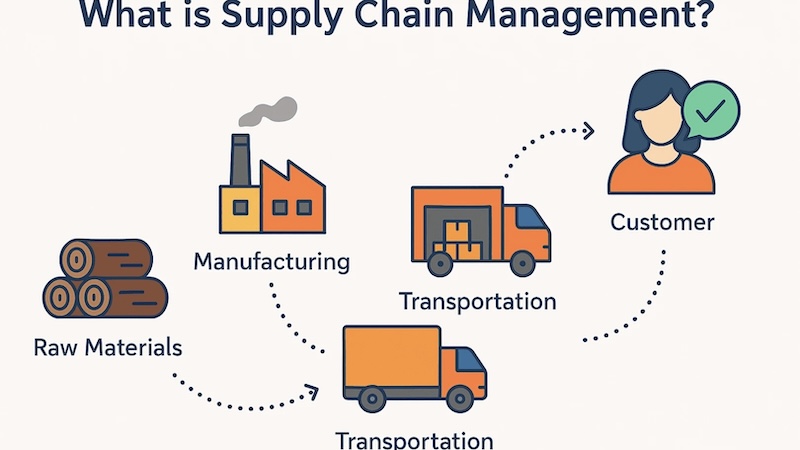
A hybrid footprint only improves performance when teams can compare options with a shared, repeatable method. After mapping cost, capacity, lead-time, and exposure tradeoffs, the practical question becomes how to choose the right mix for each category without relying on opinion.
For strategic procurement and supply chain management, supplier selection should combine operational reality with financial impact. A supplier scorecard gives structure to that process by rating partners against the same criteria across regions, products, and business units. Keep it focused on decision-useful factors, then apply clear weights based on category priorities.
A practical scorecard often includes:
Quality performance (defect rates, rework burden, corrective action responsiveness).
Delivery performance (on-time rate, lead-time stability, flexibility during demand swings).
Commercial terms (price discipline, payment terms, tooling or minimum order constraints).
Compliance and transparency (documentation quality, audit readiness, traceability discipline).
Collaboration capability (forecast alignment, engineering support, issue resolution speed).
Pair that scorecard with total cost of ownership, not unit price alone. In procurement strategies in supply chain management, TCO should capture freight mode, inventory carrying cost, quality failure cost, expediting risk, and internal management overhead. This is especially important when comparing China supply chain management routes with alternate locations where quoted prices may look higher but variability may be lower, or vice versa. The goal is a like-for-like commercial view that helps teams streamline sourcing decisions and avoid hidden margin erosion.
Once scorecard and TCO inputs are clear, convert them into a risk-adjusted decision matrix. This step translates qualitative concerns into a governance tool that sourcing, operations, finance, and leadership can review together.
Use a simple structure: list candidate sourcing models on one axis and decision criteria on the other, then assign both impact and likelihood for each risk area. Common dimensions include continuity risk, regulatory or trade exposure, single-point dependency, logistics fragility, and ramp-up complexity. Multiply weighted performance by risk modifiers to avoid selecting an option that looks efficient on paper but is fragile in execution.
To keep supply chain sourcing strategies practical, set decision thresholds in advance. For example, a model can move forward only if it meets minimum quality and continuity scores, even when TCO is attractive. This protects service levels while preserving cost discipline. Over time, refreshing the matrix quarterly supports faster rebalancing as market conditions shift. That operating cadence is how strategic procurement and supply chain management turns sourcing strategy from a one-time project into an ongoing performance system.
After comparing supplier scorecards, total cost of ownership, and risk-adjusted choices, the core message is execution discipline. Strong outcomes come from selecting and combining supply chain sourcing strategies that match business priorities, not from chasing the lowest visible price.
Treat sourcing as a portfolio decision, not a one-off bid event. Effective procurement strategies in supply chain management balance cost, resilience, quality, and speed, then assign sourcing models by category based on those trade-offs.
Use total cost logic consistently across regions and suppliers. In strategic procurement and supply chain management, unit price is only one input; logistics exposure, working-capital impact, quality stability, and changeover friction determine whether a source is truly competitive over time.
Keep risk and performance decisions integrated. China supply chain management can remain a high-value component when paired with clear fallback capacity, compliance controls, and decision triggers that define when to rebalance volume across the broader network.
Build governance that can adapt without constant redesign. The most durable supply chain sourcing strategies use shared metrics, review cadence, and ownership rules so teams can adjust mix, lead times, and inventory posture as conditions shift.
Judge success by supply performance outcomes. Across procurement strategies in supply chain management, the right strategy is the one that supports service levels, protects margin, and sustains continuity under disruption while remaining practical to operate day to day.
Review it quarterly at minimum, and immediately after major disruptions, demand swings, or policy changes. For stable categories, keep a lighter monthly check on lead times, cost variance, and service levels. The goal is not to redesign everything, but to confirm your current supply chain sourcing strategies still match business risk and growth priorities.
A sourcing strategy defines how you will secure supply over time, such as single-source, dual-source, or nearshore-plus-offshore mixes. A procurement plan is the execution schedule: who buys what, when, from which approved vendors, and under which terms. In short, strategy sets direction, while the plan manages timing, ownership, and controls.
Only in narrow cases where demand is predictable, quality requirements are simple, and switching risk is low. In most environments, unit price alone hides freight variability, defect costs, payment terms, and recovery time after disruption. Teams using procurement strategies in supply chain management typically perform better when they compare full landed and risk-adjusted cost, not purchase price in isolation.
Use dual sourcing when continuity matters more than minimal cost and you can split volume without hurting quality or coordination. A practical trigger is when one disruption could stop customer shipments or production for multiple days. Keep one source as the operational anchor and a second source ready with validated specs, agreed capacity bands, and clear ramp-up rules.
Separate them from routine spend and apply tighter governance. For volatile categories, lock service-critical volumes first, then flex the remainder with indexed terms or shorter contracts. This approach helps strategic procurement and supply chain management teams protect uptime while still capturing market opportunities when prices soften.
The model can offer scale, specialization, and competitive cost, but it requires stronger coordination across logistics, quality, and planning cycles. Build longer planning horizons, tighter milestone tracking, and explicit contingency inventory rules. If your portfolio depends on this lane, pair it with a secondary regional option to improve resilience without abandoning cost efficiency.
Watch for changes that predict service failure before invoices or stockouts reveal them:
Repeated shipment date moves within the same purchase order cycle.
Quality drift, even if still inside formal acceptance thresholds.
Longer response times on engineering changes or forecast confirmations.
Sudden payment-term pressure not tied to contract milestones.
Capacity allocation language becoming conditional or non-committal.
Start from service promises, not vendor preferences. Map each category to required fill rate, recovery speed, and acceptable substitution limits, then select strategy fit: stable items can prioritize efficiency, while customer-critical items prioritize continuity. This keeps supply chain sourcing strategies connected to real service outcomes instead of internal cost targets alone.
Yes. Begin with a simple category sheet tracking demand pattern, supplier concentration, lead-time risk, and recovery options. Add a quarterly decision review using a lightweight scoring model, then formalize only what improves decisions. Strong procurement strategies in supply chain management come from disciplined routines, not necessarily complex software.
Q1: What are the main types of sourcing strategies in supply chain management?
The most common sourcing strategies include single sourcing, sole sourcing, dual sourcing, multiple sourcing, nearshoring, offshoring, local sourcing, and strategic partnership sourcing. Single sourcing uses one approved supplier for a category, while dual or multiple sourcing spreads volume across two or more suppliers to reduce disruption risk. Nearshoring and offshoring focus on geographic trade-offs between cost and lead time. Strategic partnerships emphasize long-term collaboration, innovation, and reliability over short-term price wins. The right model depends on your demand volatility, risk tolerance, and service-level goals.
Q2: How do I choose the right sourcing strategy for my business?
Start by segmenting purchases by business impact and supply risk. Critical, hard-to-replace items usually need resilient models like dual sourcing or long-term supplier partnerships. Stable, low-risk categories may fit competitive multi-sourcing for cost control. Then evaluate total landed cost, lead times, capacity constraints, quality history, and compliance requirements. Run scenario planning for disruptions such as port delays or demand spikes. A good strategy is not the cheapest per unit; it is the one that protects continuity, meets service targets, and supports profitability over time.
Q3: What is the difference between single sourcing and sole sourcing?
Single sourcing means a company chooses one supplier from multiple qualified options, often to gain scale benefits, simplify operations, or improve collaboration. Sole sourcing means only one supplier exists or is uniquely capable due to technology, intellectual property, regulation, or certification constraints. The risk profile differs: single sourcing is a strategic choice, while sole sourcing is often a market limitation. In both cases, risk mitigation is essential, including safety stock, supplier development, contingency plans, and clear performance agreements.
Q4: Can using multiple suppliers improve supply performance?
Yes, multiple sourcing can improve supply performance when managed well. It reduces dependency on a single supplier, improves flexibility during demand surges, and lowers disruption exposure from geopolitical events, logistics bottlenecks, or quality failures. It can also create healthy competition on pricing and service. However, benefits come with trade-offs: more complex planning, variable quality across suppliers, and higher supplier management effort. To make it effective, define volume allocation rules, standardize specifications, monitor supplier KPIs, and maintain strong communication across the network.
To apply this in day-to-day operations, treat strategic procurement and supply chain management as a portfolio decision rather than a single supplier decision.
A resilient approach to procurement strategies in supply chain management typically includes four coordinated moves:
Segment spend by risk and business impact. Classify items by criticality, demand volatility, and substitution options. High-impact categories need stronger dual- or multi-source coverage and clearer escalation paths.
Balance geographic concentration. Keep core capacity where it performs best, but add qualified alternatives to reduce disruption exposure. For teams managing global production, this is where China supply chain management should be integrated into a wider network strategy, not treated as an isolated channel.
Standardize supplier management routines. Use consistent scorecards, onboarding gates, and quarterly performance reviews across suppliers. This helps streamline sourcing and prevents ad hoc firefighting.
Build contractual flexibility. Include mechanisms for volume shifts, lead-time adjustments, and quality remediation so operations can respond without renegotiating from scratch.
Across these steps, the goal is not to eliminate risk entirely. The goal is to make risk visible, manageable, and economically rational. That is the core advantage of disciplined supply chain sourcing strategies: better continuity with fewer emergency decisions.
For companies refining international supplier networks, a practical next move is to map current suppliers against risk, performance, and replacement readiness, then tighten operating routines where gaps appear. If your team is specifically optimizing Asian sourcing flows, use the framework in How to Streamline Sourcing and Supplier Management in China as your implementation guide for process design, governance, and supplier follow-through.
In short, supply performance improves when sourcing choices are deliberate, diversified, and actively managed. Make your next decision a portfolio decision, and resilience will become a repeatable operating capability rather than a reactive response.
 English