Maple Sourcing Ltd.
Maple Sourcing Ltd.
We Make Your Sourcing Easy!
Need help? sales@maplesourcing.com
English
Maple Sourcing Ltd.
Maple Sourcing Ltd.

China Supply Chain and Quality Management Strategies

2024-07-24
4081 Views
Table of Content [Hide]

    240.jpg

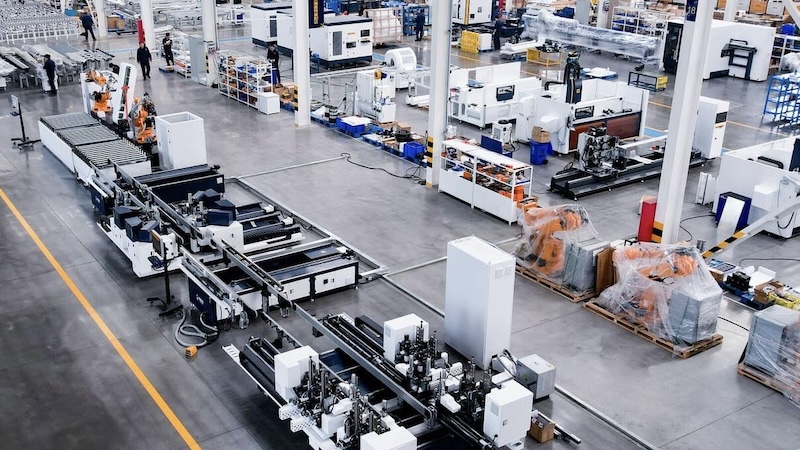
    In today's global economy, China stands as a crucial cornerstone for manufacturing and supply chain activities, playing a vital role for businesses worldwide. It is imperative for companies to grasp and manage the Chinese supply chain effectively, as it is not merely advantageous but rather a necessity.

    Every day, a multitude of high-quality products, spanning from basic toys to cutting-edge electronics, are both manufactured in and sourced from China. However, amid the successes in sourcing from China, there are also instances of disappointments and failures.

    The crucial question remains: What sets successful companies in managing supply chains in China apart from those that encounter problems?

    The difference lies in the understanding of principles and practices of supply chain and China supplier quality management. It is quite different when compared to how it works in the West.  If your company fails to understand this reality and does not take the necessary actions, it is bound to face difficulties.

    In this post, we will discuss what strategies you need to adopt so that you can improve your efficiency, whether you are a seasoned businessman or a newbie doing business with any Chinese company.

    Understanding China supply chain

    Before we proceed further, let us first try to understand the landscape of China’s supply chain.

    1. China's manufacturing sector’s evolution

    It is no secret that today, China has become one of the leaders in the manufacturing sector due to the following reasons:

    - Availability of cheap manpower source.
    - Creating robust manufacturing capacity.
    - Excellent infrastructure.
    - Pro-business policies of the Chinese government.  

    The journey from an agriculture-based country to become an industry-based country and then dominating in that field was fantastic. However, there can often be certain hick-ups as this transformation was not so easy.

    a. Current challenges in China supply chain

    Managing the Chinese supply chain presents distinct challenges, encompassing logistical obstacles, evolving regulations, and disruptions triggered by global occurrences like the pandemic. Furthermore, factors such as language barriers, cultural disparities, and intellectual property considerations persist in assessing the tenacity and flexibility of international companies operating in China.

    b. Main players in China supply chain

    Business owners need to recognize the following few main players in their supply chain:

    - Manufacturers or producers
    - Distributors
    - Logistic companies.

    Therefore, it is very important to create a better bond with these three key agencies by developing better product quality, terms and conditions, and a reliable structure for the supply chain.

    2. Strategic approaches for improving your China supply chain

    To set the right supply chain and quality management while sourcing from China, you need to emphasise the following few matters, too.

    a. Cultivating relationships and building trust

    In the Chinese business landscape, success hinges not only on transactions but also on fostering relationships. Nurturing solid, trust-based connections with your suppliers is fundamental. This process may entail frequent visits to production sites, consistent communication, and the establishment of mutual respect and understanding.

    These relationships can serve as your most valuable asset in guaranteeing product quality and securing preferential treatment during periods of increased demand.

    b. Leveraging technology to improve your supply chain management

    Utilizing cutting-edge technology can greatly boost the efficiency of your supply chain. The following tools can be integrated to improve workflow, reduce mistakes, and provide instant supply chain visibility.

    - ERP (Enterprise Resource Planning)
    - SCM (Supply Chain Management)
    - CRM (Customer Relationship Management).

    Blockchain and other innovations also have the potential to improve traceability and transparency, which is important for reducing risks associated with defective goods and compliance issues.

    c. Get adjusted to regulatory changes and market dynamics

    Remaining abreast of the most recent regulatory modifications and market trends in China is essential. This entails monitoring shifts in trade regulations and tariffs as well as comprehending cultural transformations and consumer preferences that might impact your business.

    Swift adaptation to these changes can confer a competitive advantage and prevent costly disruptions.

    d. Enhancing logistics and distribution

    Effective logistics and distribution networks are pivotal to the success of your endeavours in China. This encompasses the selection of skilled logistic partners who possess in-depth knowledge of the Chinese market and can navigate its regulatory complexities.

    Fine-tuning your logistics strategies, including selecting the most efficient transportation routes and optimal warehousing solutions, can diminish lead times and costs, thereby enhancing overall efficiency.

    e. Embracing sustainability in the supply chain

    In today’s international trade practice, people give a very high priority to sustainability, and hence, China has also understood its importance. Businesses that give top priority to environmental protection practices can not only help protect our environment but also attract customers.

    To meet environmental regulations, one must invest in creating the necessary facilities or select only those suppliers who use green practices in their manufacturing process.

    Supply chain management strategies

    A master's degree in supply chain management is not required. You can deal with international sourcing companies, recruit seasoned experts, or use supply chain managers' sourcing networks.

    Entrepreneurs should understand the basics of product production and distribution, recognizing every agency involved in the supply chain, from raw material extraction to customer delivery, which is crucial for business success.

    The units in your supply chain network that must be linked together in your chain fit into any one or more of the following categories:

    - Suppliers
    - Manufacturers
    - Consultants
    - Internal teams
    - Warehousing
    - Logistics.

    It is important to understand that all aspects of product development are vital in the supply chain. Supply is not just buying and shipping. One has to remember the following important functions, too:

    - Product development
    - Marketing
    - Operations
    - Distribution
    - Finance
    - Procurement
    - Customer service.

    Whether external entities or internal teams, each link collaborates to bring your product to market. Supply chain planning entails identifying partners, prioritizing procurement, monitoring progress, evaluating supplier performance, and implementing enhancements to ensure efficient production and sales.

    Common supply chain strategy examples

    Numerous supply chain management strategies exist due to diverse industry challenges and unique company priorities. Understanding your specific challenges and priorities can assist supply chain experts in selecting the most suitable strategy for your product.

    a. Industry challenges

    Understand sector-specific supply chain challenges by researching industry trends, competitor issues, and historical obstacles. A few questions must be asked based on the type of your industry:

    - How quickly does technology change?

    - How robust is your supplier network for all your materials and components?

    - What is the capacity of your supplier network?

    - What technology challenges do your industry face?

    - Are there any shipping and storage safety issues?

    - How volatile is the demand?

    - How important is executing new technologies?

    - What are external influences that you have no control over?

    - What are customer expectations?

    - How well can you guess customer demand in the short and long term?

    b. Your Priorities

    Align industry challenges with business goals and strategies to establish supply chain management priorities. When you consider manufacturing and selling your product, then you must trade-offs between 4 supply chain factors:

    - Cost
    - Schedule
    - Robustness
    - Customer value.

    Six types of strategies for supply chain management

    Given four key priorities and a multitude of industry challenges, the diverse range of supply chain strategies becomes evident. Striving for a balance rather than solely focusing on cost or robustness, these strategies typically fall into one of six fundamental types.

    1. Efficient flow

    For products with consistent and predictable demand, a cohesive supply chain strategy is essential for synchronized operations, ensuring timely delivery to the correct destination. Effective inventory management and demand forecasting are essential in maintaining optimal inventory levels through continuous communication within the network.

    Collaborative vendor selection fosters partnerships throughout the chain, facilitating production that is aligned with customer demand. This approach emphasizes customer value, particularly in terms of product availability.

    2. Effective cost control

    This strategy prioritizes cost efficiency through price maximization and cost optimization, selecting low-cost providers for manufacturing and logistics, adapting designs to reduce production costs, and enhancing forecasting accuracy. The primary goal is to achieve cost savings as the central market focus.

    3. High speed

    In the agile supply chain strategy, prioritizing rapid time-to-market and product variation is vital, with flexibility in product, manufacturing, and shipping options emphasized over cost considerations. Collaboration with multiple vendors optimizes scheduling efficiency, emphasizing schedule adherence.

    4. Capable to customization

    The agile supply chain strategy focuses on rapid time-to-market and product variation, highlighting flexibility in product development, manufacturing, and shipping over cost concerns.

    Collaboration with multiple vendors enhances scheduling efficiency to prioritize meeting deadlines. This approach underscores the importance of schedule adherence, allowing for quick product changes and efficient logistics to meet industry demands effectively.

    5. Flexible to demand fluctuation

    The agile supply chain strategy prioritizes rapid time-to-market and product variation, emphasizing flexibility in product development, manufacturing, and shipping over cost concerns. Collaboration with multiple vendors enhances scheduling efficiency to meet deadlines, highlighting the importance of schedule adherence to meet industry demands effectively.

    6. Responsive to customer problems

    The last strategy is employed when customers look to your products to solve their unique problems, emphasizing customer satisfaction by offering solutions that other providers cannot. Demand unpredictability is managed by producing only when specific customer needs are confirmed.

    Design and manufacturing collaboratively cater to these individual demands while working with responsive vendors, building capacity instead of maintaining inventory to maximize value for specific customers.

    How do you adapt to disruptions in your supply chain?

    You should always be prepared for unexpected events in your supply chain and quality management strategies, which should encompass three fundamental adjustments as a precaution. Each adaptation should offer various solutions for the three vital facets of your supply chain:

    - Manufacturing
    - Logistics
    - Distribution.

    The initial adaptation involves employing multiple suppliers for raw materials and components, ensuring backups are in place for every material or component, even if you primarily purchase from only one source.

    Similarly, the concept of diversification applies to manufacturing and all related production elements. If your budget allows for it, or if disruptions would prove costly for your product, don't simply identify multiple sources—integrate them into your daily supply chain operations.

    This dispersion of work contributes to building resilience within your supply chain. As for shipping, it necessitates a distinct approach due to its notoriously unpredictable nature.

    Having multiple logistics channels means more than just engaging various trans-Pacific shippers; it involves establishing contingency plans for alternative transport methods, such as rail or air, based on the specific requirements of your products.

    It is vital to anticipate various scenarios, including natural disasters or shipping disruptions, like a vessel becoming lodged in the Suez Canal, to ensure comprehensive preparation and response.

    When it comes to the last aspect of your supply chain, distribution, you should think about the possible obstacles that could appear when working with current channels like Amazon or other e-commerce platforms or when forming alliances with big-box stores.

    It is essential to have backup plans in place in case there are issues with these distributors in order to guarantee that clients can continue to obtain the goods. In order to improve supply chain resilience in this area, you should create and maintain alternate channels for selling your goods to customers directly.

    What lesson we have learned from experience?

    An essential lesson learned is the necessity of investing in insurance to mitigate supply chain disruptions. Organizations with built-in flexibility and capacity in their strategies, such as Toyota surpassing GM in global auto manufacturing, demonstrate the value of inventory and capacity during crises.

    The second valuable takeaway is the significance of digital supply chain operations, which offer real-time insights into production and distribution. Access to data enables swift problem detection, bottleneck identification, and agile process adaptation, emphasizing the importance of modern ERP tools for a resilient supply chain foundation.

    Lastly, understanding the market's needs and preferences stands out as a lasting lesson from recent disruptions. Aligning product offerings with consumer demands through effective supply chain management underscores the core purpose of supply chains: providing desired products at the right time.

    These lessons underscore the importance of resilience, digitalization, and market understanding in optimizing supply chain and quality management strategies for success.

    Conclusion

    To succeed in managing China’s supply chain and quality management will not be too difficult if the businesses understand the steps properly, which we have discussed above. Certainly, there are no shortcuts available to success.

    Aaron Li
    Hey, this is Aaron Li, an expert in quality sourcing. Since 2012, I have helped 300+ startups to source from China and manage the quality. I'd like to share my experience and knowledge for frequently asked questions related to product sourcing and quality control.
    All Articles
    How to Find Quality Products Made in China: Ultimate Guide
    How to Perform Quality Control Checks in Chinese Factories
    How to Audit Manufacturing Suppliers Before Ordering
    How to Compare Sourcing Agents and Choose the Best One
    How to Order Bulk Products from China: Beginner Guide
    Sourcing from China Wholesalers: How to Get the Best Deals
    How to Optimize Your China Supply Chain for Efficiency
    Shenzhen Electronics Shopping: Avoid Common Mistakes
    From Alibaba to Amazon: Your Complete FBA Sourcing Guide
    China Inspection Services: Ensure Quality Before Shipping
    Finding Chinese Suppliers: 7 Steps to Source Products Safely
    How to Master Quality Control in China: A Step-by-Step Guide
    How to Buy Quality Products from China Online Safely
    Finding Trusted Chinese Agents for Alibaba Procurement
    How to Buy Products from China Factories Direct
    How to Manage China Procurement: From Factory to Fulfillment
    Supply Chain Management: Complete Guide to Success
    China Trade Agent vs. Sourcing Directly: Which Is Better
    Why You Need an Inspection Agent for China Manufacturing
    China to Amazon FBA: Avoid Costly Shipping Mistakes
    How to Hire Export Agents in China and Avoid Scams
    Guide to Understanding China's Product Development Boom
    How to Source from China: Manufacturer Selection Tips
    How to Choose Quality Inspection Methods That Work
    How to Build Relationships with Wholesale Tea Suppliers
    China Sourcing Guide: Avoid Costly Mistakes & Scams
    How to Choose an Alibaba Sourcing Agent That Saves Money
    Where to Source Products to Sell on Amazon in 2026
    Where Are Lululemon Products Made? China Factory Guide
    How to Source Artificial Flowers from China and Assure Quality
    Does Rolex Source Parts from China? The Truth Revealed
    How to Source Manufacturers in China: Complete Guide
    How to Request Product Sourcing Quotes That Save Money
    Sourcing Outdoor Products from China: Buyer's Handbook
    Top Skills Every Quality Control Inspector Needs Now
    Finding the Right China Factory: 5 Essential Steps to Follow
    Procurement in China: Avoid Costly Mistakes & Delays
    Import from China: Quality Control & Sourcing Tips
    Importing from China to Europe: Step-by-Step Process
    Professional QC Inspection Services: From Factory to Customer
    China Purchasing Guide: Avoid Costly Import Mistakes
    China Outsourcing Guide: How to Avoid Common Pitfalls
    Asia's Leading Sourcing Firms: Reviews & Comparisons
    How to Start Manufacturing in China Without Mistakes
    China Sourcing Agent Fees: Complete Cost Breakdown
    How to Source from China Suppliers Without Getting Scammed
    Quality Control in China: Expert Service Providers
    China Quality Control: How to Inspect Your Products
    Import Goods from China to UK: Step-by-Step Process
    How to Conduct a Successful Factory Audit in China
    How to Choose the Best Shenzhen Sourcing Agent for You
    How to Avoid Low-Quality Products When Sourcing from China
    Leading Strategic Sourcing Firms for Better Negotiations
    How to Source Products from China Wholesale Suppliers
    What is Quality Management in Manufacturing Industry
    How to Choose the Right Product Development Factory
    How to Implement Quality Control in Manufacturing Process
    How to Source Products from China Without Getting Scammed
    How to Build a Strategic Sourcing Management System
    How to Verify Quality of A Product Made in China
    Tips for How to Verify China Sourcing Companies
    How to Find Reliable Factories in China for Your Business
    Top China Sourcing Companies: What You Need to Know
    How to Avoid Scams When Sourcing from China Factories
    Consumer Goods Business Model: How to Start & Scale
    China Sourcing Agent Services: Save Money & Avoid Scams
    How to Order Custom Metal Products from China Safely
    How to Implement IQC in Chinese Manufacturing Facilities
    Is a Buying Agent Necessary for Importing from China
    Complete Guide to Ordering OEM Products from China
    How to Source Profitable Products for Amazon FBA in 2026
    How China Sourcing Agents Help Find Suppliers Fast
    Affordable Outdoor Gear from China: What You Need to Know
    China's Supply Chain Dominance: What Businesses Must Know
    Ship from China to USA: Costs, Times & Best Methods
    International Freight: Complete Guide to Global Shipping
    Complete Guide to Purchasing Steel Products from China
    Where to Buy Bulk Products from China: Complete Guide
    Buying Wholesale from China: Avoid Scams & Save Money
    How to Conduct Quality Inspections in China Effectively
    How to Choose FBA Product Development Services in China
    How to Find Reliable Suppliers for Consumer Products from China
    LED Downlights Factory Direct: Save 40% on Bulk Orders
    Prototype Circuit Board Manufacturing: 7 Key Steps
    Manufacturing Quality Control: Complete Inspection Guide
    How Custom Order Software Reduces Fulfillment Errors
    How to Source Quality Massage Guns at Wholesale Rates
    How LED Advertising Boards Boost Business Visibility
    How to Choose the Best Water Purifier for Your Family
    Best Biodegradable Takeout Containers for Your Business
    How to Select the Best Drinkware Suppliers for Retail
    How to Choose a Watch Manufacturer in China Safely
    Find a Manufacturer in China: Best Practices and Expert Insights
    Shipment Inspection Checklist: Avoid Costly Mistakes
    What Is Direct Sourcing in Procurement? Complete Guide
    Best Practices for Prototype Development for Startups
    Shipping Mark on Carton: Complete Guide for Exporters
    Factory Social Audit Requirements: Pass with Confidence
    How to Find a Reliable 1688 Agent for Bulk Purchases
    High-Quality Chinese Products: Your Complete Buying Guide
    Read More
    References
    Our Features
    Custom Products
    Turn concept to reality
    Quick Response
    Within 24 hours
    Detail Oriented
    Strive for perfection
    Assured Quality
    100% Guarantee