Maple Sourcing Ltd.
Maple Sourcing Ltd.
We Make Your Sourcing Easy!
Need help? sales@maplesourcing.com
English
Maple Sourcing Ltd.
Maple Sourcing Ltd.

A Detailed Guide to Import from China to the UK

2024-07-29
4896 Views
Table of Content [Hide]

    248.jpg

    Today, China is in a position to supply all kinds of manufacturing goods almost everywhere in the world. Most businesses whether a small businessman or a large business corporation prefer to source their products from China.

    As per the available data, China has emerged as a significant supplier for global traders, exporting 331 billion worth of goods worldwide in 2021. Out of which, 61 billion of exports was sent to the UK. The rapid expansion of China's export capacity has prompted numerous companies to establish their own supply chain.

    Nevertheless, the import from China to the UK entails navigating stringent regulations set forth by both China and the United Kingdom.

    What products does the UK mostly import from China?

    Depending upon what kind of business you are involved in the UK, you are allowed to import several products from China. As per the data available in the year 2021, the following are the products that were mostly imported from China:

    - Electrical and electronic equipment worth value of $19.73 Billion

    - Machinery, boilers, and nuclear reactors worth $17.58 Billion

    - Furniture, prefabricated buildings, lighting signs worth $6.72 Billion

    - Miscellaneous chemical products worth $6.00 Billion

    - Toys, games, and sports requisites worth $5.39 Billion.

    The data indicates that the primary import into the United Kingdom comprises Electrical equipment, sourced from a variety of entities including brick-and-mortar stores and E-commerce enterprises.

    Following closely is industrial machinery tailored for business applications in manufacturing and engineering endeavours. This distinction between corporate construction materials and consumer goods imported into the UK underscores the diverse product range accessible, fostering opportunities for businesses to diversify their product portfolios.

    What steps should be followed to import from China?

    If your company is interested to import from China to the UK for any Chinese goods, then it is important that you may go through the following steps.

    1. Check whether your items are permitted to be imported into the UK

    It is important to confirm whether a license is required or the goods are acceptable once you have decided which one to import. While some commodities are exempt from licensing requirements and can be brought into the UK, there are some things for which a license is required.

    It is crucial to understand that some products are completely forbidden. In these situations, looking for alternatives is advised.

    There are three major types of restrictions in the UK such as:

    - Bans

    - Quotas

    - Surveillance.

    Products that are banned should not be imported, while goods subject to quota restrictions can be imported with volume limits. For items under surveillance, a license is required to import, allowing unrestricted volume once the license is obtained.

    For clarification on import permissions or licensing requirements, contacting the Department for International Trade in the UK is recommended. Currently prohibited goods include:

    - Animal skins

    - Asbestos

    - Torture equipment

    - Firearms

    - Ivory

    - Military equipment

    - Perishable items.

    On the other hand, goods like furniture, toys, clothing, computers, cars, and household goods are all free to import. You can move on to the following step after figuring out the import status of your goods.

    2. Find out your commodity codes for classifying your items for tax and regulations

    All imports must be legally declared and categorized using a commodity code. Obtaining the correct commodity codes for your products is essential for completing necessary paperwork and declarations accurately.

    These codes are also vital for assessing VAT and any associated fees. If you use the wrong commodity codes, your products may be seized, delayed, or subject to fines. Even while certain products might have an obvious classification, if necessary, the Trade Tariff tool can help identify the appropriate commodity codes.

    Email correspondence with HM Revenue and Customs (HMRC). can provide a response in a maximum of three working days should additional assistance be needed.

    3. Check if you have to register for VAT

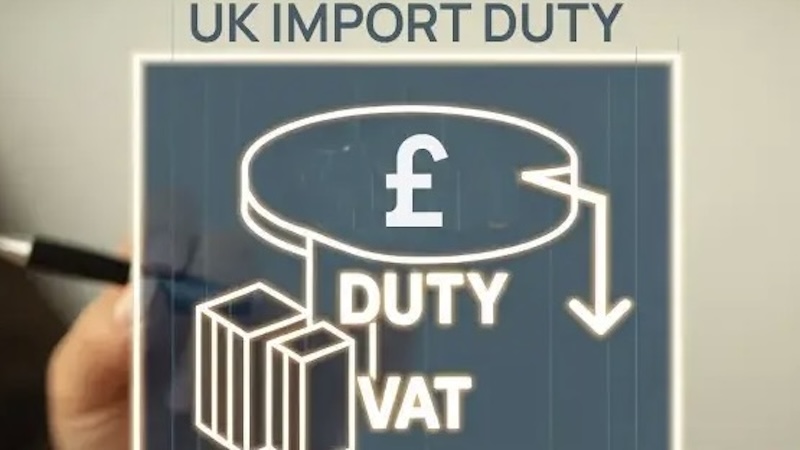
    To import your goods from China, this is another important procedure that you must be aware of. Determine if VAT registration is necessary based on your goods' value, it is a crucial financial obligation to consider.

    If the value of your goods is exceeding the ceiling of £85,000, then it is necessary that you have to register for VAT.

    For a regular importer your past imports will also be considered and if within the existing financial year, you have exceeded the above amount or it is likely that in next 30 days, you may exceed this value then you have to do Vat Registrations.

    The HMRC (HM Revenue and Customs) will respond to your application within next 3 working days. Following this procedure, you may proceed to go for obtaining EORI number, which is yet another important document.

    4. Register for an EORI number

    EORI number will help streamline your custom process. If you are interested in obtaining your EORI number, then you need to fill a C220 form. This form can easily be downloaded from internet. You may fill all your details in this form and then can email it at eori@hmrc.gsi.gov.uk.

    This procedure may take around 48 to 72 hours. Upon approval, your EORI number will be issued and can then be utilized to facilitate customs clearance for your incoming products.

    5. Power of attorney and customs registration

    In China, importers and exporters must register with customs because authorization to clear products is dependent upon this registration. It is imperative that commercial invoices contain a customs Registration number.

    To import from China to the UK more quickly, think about working with a reliable freight forwarder who can advise you on any import limitations that may apply. Hiring a China direct sourcing agent who can handle customs registration and manage a power of attorney on your behalf is an additional option.

    6. Ensure compliance with the UKCA mark and other regulations

    Goods imported into the UK must meet safety standards for consumers, as governed by regulations like the UKCA mark, which certifies compliance with UK safety and quality laws. Different products are subject to specific rules and standards. Navigating these regulatory requirements independently can be challenging for organizations due to the complexity and the necessity of thorough lab testing to ensure compliance.

    To help with these requirements, third-party quality assurance companies can provide extensive services that range from product testing to shipment inspections and labelling. Involving a third-party organization helps the supply chain run more smoothly and lowers the possibility of failed inspections or breaking the previously mentioned rules.

    7. Ensure the quality of your products

    The important consideration when importing goods into the UK is to ensure that the products maintain excellent quality. This not only protects your brand's reputation with customers but also reduces the possibility of noncompliance with regulatory requirements.

    In contrast, poor or possibly dangerous product quality can harm the reputation of your company and cause supply chain hiccups, such as delayed or even returned goods, which can have a severe financial impact.

    Shipping rates from China to the UK

    If you prefer to book a full container load, known as FCL, then then all the items will be loaded within a 20’ or 40’ long container. If you are importing products in high volume, then FCL is a preferable option. Whether the container is filled to the brim or not, the cost for FCL is normally fixed.

    Conversely, LCL, or less than container load, denotes that your items will be sent with other boxes or pallets because they do not fill a whole container. It is crucial to remember that your products must be deconsolidated at the destination port and consolidated at the origin port when shipping LCL.

    When you prefer to import from China to the UK by air freight, then it is typically a faster but will be more expensive choice than delivering them by sea.

    Import documents

    To begin, let us identify the essential import documents required for your foreign goods to enter the UK under the jurisdiction of HM Revenue & Customs (UK Customs authorities).

    1. Commercial invoice

    The commercial invoice is an essential import document in many countries, including the UK. It serves to provide Customs with details about the imported products such as:

    - Description

    - Quantity

    - Weight

    - Monetary value

    - Commodity Code

    - Importer’s information

    - Exporter’s information

    - Payment terms

    - Total invoice value.

    The Customs Value or Valuation, which influences the taxes and duties payable, is based on the purchase values specified in your commercial invoice.

    2. Packing list

    The packing list is a vital document in the majority of international freight shipments, as it furnishes all relevant parties with details concerning the packaging of the goods:

    - Description of the goods

    - Quantity, weight, and dimensions of the packages‍

    - The type of packaging used, such as boxes, cartons, vials, etc.

    - Shipping marks and/or seal numbers

    - Commercial invoice number

    - Importer/exporter details.

    3. Certificate of origin

    Certain countries, including the UK, may mandate importers to possess a certificate of origin. This document serves the purpose of demonstrating to Customs the manufacturing and shipping origins of the importer's goods.

    ‍4. Bill of lading

    The bill of lading is primarily utilized for ocean freight shipments and is a compulsory requirement. This document is issued by the freight forwarder or carrier to acknowledge the shipment and cargo.

    It has got three key roles:

    - It states the details about shipping terms which was agreed between the carrier and importer

    - It serves as a title document of the goods

    - It acts as an acknowledgment of the loading of all the goods onto the ship.

    5. Import declaration

    HM Revenue & Customs mandates importers to submit an entry summary (safety and security) declaration before goods from China reach the UK. It is in addition to a full import declaration upon the goods' arrival at the UK border. You have the option to follow the steps to complete and submit these declarations on your own using the provided links, or you can choose to enlist a freight forwarder to manage these processes on your behalf.

    6. HS code/commodity code

    The HS code, or Harmonised System code, known in the UK as the Harmonised Code, Commodity Code, or Tariff Code, is essential for customs classification. This code enables Customs to classify products and determine the applicable duties and taxes required for imports. It is vital to identify the specific commodity code for your product as it must be included in the majority of important import documentation.

    7. EORI number

    We have discussed the EORI number before, too. This is one of the important numbers that all businesses in the European countries will need for conducting any business. This unique number serves as the primary identification for businesses in all Customs procedures. Without an EORI number, Customs clearance of goods is not possible, potentially resulting in storage fees until the EORI number is obtained.

    How to decrease your cost and shipping time?

    1. Book in advance - While it takes the longest to transit, shipping by water is usually the most economical option. Making reservations in advance helps reduce expenses and ease the anxiety brought on by possible delays.

    2. Ship off-peak - When carriers experience high demand, both shipping costs and transit times tend to increase. It is advisable to schedule shipments during off-peak seasons whenever feasible to potentially mitigate these challenges.

    3. Get your documentation in order - Properly organizing your documentation can have a significant impact on expediting the customs clearance process.

    4. Know your HS codes - Many shippers are surprised by the extent to which customs fees can impact business expenses. It is important to conduct thorough research to effectively budget for these costs.

    Conclusion

    ‍There is no doubt that China has emerged as one of the major sources to import from China to the UK however, while going for this route, it is important that you get the necessary awareness of the entire procedures so that your business can run smoothly without any hick-ups. Importing from China can offer your business several advantages, and if you can manage it effectively, then you can surely increase your profit margin.

    Aaron Li
    Hey, this is Aaron Li, an expert in quality sourcing. Since 2012, I have helped 300+ startups to source from China and manage the quality. I'd like to share my experience and knowledge for frequently asked questions related to product sourcing and quality control.
    All Articles
    Importing from China to Europe: Step-by-Step Process
    Professional QC Inspection Services: From Factory to Customer
    China Purchasing Guide: Avoid Costly Import Mistakes
    China Outsourcing Guide: How to Avoid Common Pitfalls
    Asia's Leading Sourcing Firms: Reviews & Comparisons
    How to Start Manufacturing in China Without Mistakes
    China Sourcing Agent Fees: Complete Cost Breakdown
    How to Source from China Suppliers Without Getting Scammed
    Quality Control in China: Expert Service Providers
    China Quality Control: How to Inspect Your Products
    Import Goods from China to UK: Step-by-Step Process
    How to Conduct a Successful Factory Audit in China
    How to Choose the Best Shenzhen Sourcing Agent for You
    How to Avoid Low-Quality Products When Sourcing from China
    Leading Strategic Sourcing Firms for Better Negotiations
    How to Source Products from China Wholesale Suppliers
    What is Quality Management in Manufacturing Industry
    How to Choose the Right Product Development Factory
    How to Implement Quality Control in Manufacturing Process
    How to Source Products from China Without Getting Scammed
    How to Build a Strategic Sourcing Management System
    How to Verify Quality of A Product Made in China
    Tips for How to Verify China Sourcing Companies
    How to Find Reliable Factories in China for Your Business
    Top China Sourcing Companies: What You Need to Know
    How to Avoid Scams When Sourcing from China Factories
    Consumer Goods Business Model: How to Start & Scale
    China Sourcing Agent Services: Save Money & Avoid Scams
    How to Order Custom Metal Products from China Safely
    How to Implement IQC in Chinese Manufacturing Facilities
    Is a Buying Agent Necessary for Importing from China
    Complete Guide to Ordering OEM Products from China
    How to Source Profitable Products for Amazon FBA in 2026
    How China Sourcing Agents Help Find Suppliers Fast
    Affordable Outdoor Gear from China: What You Need to Know
    China's Supply Chain Dominance: What Businesses Must Know
    Ship from China to USA: Costs, Times & Best Methods
    International Freight: Complete Guide to Global Shipping
    Complete Guide to Purchasing Steel Products from China
    Where to Buy Bulk Products from China: Complete Guide
    Buying Wholesale from China: Avoid Scams & Save Money
    How to Conduct Quality Inspections in China Effectively
    How to Choose FBA Product Development Services in China
    How to Find Reliable Suppliers for Consumer Products from China
    LED Downlights Factory Direct: Save 40% on Bulk Orders
    Prototype Circuit Board Manufacturing: 7 Key Steps
    Manufacturing Quality Control: Complete Inspection Guide
    How Custom Order Software Reduces Fulfillment Errors
    How to Source Quality Massage Guns at Wholesale Rates
    How LED Advertising Boards Boost Business Visibility
    How to Choose the Best Water Purifier for Your Family
    Best Biodegradable Takeout Containers for Your Business
    How to Select the Best Drinkware Suppliers for Retail
    How to Choose a Watch Manufacturer in China Safely
    Find a Manufacturer in China: Best Practices and Expert Insights
    Shipment Inspection Checklist: Avoid Costly Mistakes
    What Is Direct Sourcing in Procurement? Complete Guide
    Best Practices for Prototype Development for Startups
    Shipping Mark on Carton: Complete Guide for Exporters
    Factory Social Audit Requirements: Pass with Confidence
    How to Find a Reliable 1688 Agent for Bulk Purchases
    High-Quality Chinese Products: Your Complete Buying Guide
    How to Choose the Right China Sourcing Agent for You
    Global Procurement Process: From Planning to Results
    How to Develop Mechanical Prototypes Cost-Effectively
    Electronic Prototype Development Made Simple & Fast
    How to Outsource Medical Device Development Successfully
    How to Choose the Right Product Development Service
    Complete Guide to LCL Shipping Charges & Hidden Fees
    Master Amazon Product Sourcing: Beginner's Roadmap
    What Is Single Source Procurement? Definition & Examples
    Direct Sourcing vs Traditional Procurement: Key Differences
    Line Inspection in Quality Control: Complete Guide
    How to Find Reliable Made in China Wholesale Deals
    How to Start a Cat Products Wholesale Business Today
    FedEx Global Shipping: Fast International Delivery Guide
    Master eBay Global Delivery: Tips for Cross-Border Buying
    How to Find Reliable Global Shipping at Best Prices
    Trusted Dropshipping Suppliers for Your Shopify Store
    Best Automation Tools for Shopify Dropshipping Businesses
    How to Find Profitable Alibaba Items for Amazon FBA
    China's Trade Policies: What Global Businesses Must Know
    Custom Fast Food Packaging: Boost Your Brand Identity
    How to Win Government Contracts Through Procurement Agencies
    Import from China to USA: Step-by-Step for Beginners
    Import from China: Calculate All Fees Before You Ship
    Find Quality Suppliers: Proven Methods for Product Sourcing
    How to Start EU-China Import Export Business Today
    Hot Products to Import from China: Ultimate 2026 Guide
    What Does the USA Buy from China? Top 10 Imports List
    What Is Automatic Visual Inspection? Expert Overview
    How to Audit Suppliers and Reduce Supply Chain Risk
    Custom Soap Packaging: Elevate Your Brand Identity
    Why Custom Coffee Bags Matter for Your Coffee Business
    Understanding Quality Assurance: The Ultimate Overview
    What Is AQL? Acceptance Quality Limits Explained Simply
    Customs Broker Explained: Why Your Business Needs One
    Customs Clearance Times: What to Expect & How to Speed Up
    How to Calculate Landed Cost: Step-by-Step Guide
    What Is a Proforma Invoice? Everything You Need to Know
    Read More
    References
    Our Features
    Custom Products
    Turn concept to reality
    Quick Response
    Within 24 hours
    Detail Oriented
    Strive for perfection
    Assured Quality
    100% Guarantee