



Before approving made in China wholesale hardware products, compare supplier identity, production capability, payment timing, and defect-handling rules.
That advice sounds simple, but many sourcing failures happen because buyers move from quotation to purchase order too quickly. In hardware categories, small mistakes tend to create expensive consequences. A hinge that is slightly out of tolerance may fail during installation. A lock body made from the wrong grade of material may corrode sooner than expected. A cabinet handle with inconsistent plating may technically work but still generate returns, complaints, and damage to your brand. In other words, the risk is not limited to whether the supplier ships something. The real question is whether the supplier can ship the right product, consistently, at scale, with commercially workable support when problems appear.
Those earlier mistakes often happen when buyers treat China as one uniform sourcing market. In practice, understanding where products are made, which factories specialize in what, and who is actually quoting your order makes it much easier to source reliable China-based production support with fewer surprises.
China's hardware industry is large, layered, and highly regionalized. Two suppliers may both describe themselves as hardware manufacturers, yet one may specialize in decorative zinc alloy pieces for furniture while the other focuses on stamped steel brackets for construction use. Their tooling, surface treatment capability, tolerances, packaging methods, and export habits may be completely different. That is why broad supplier claims should never substitute for category-specific evidence. A sourcing process becomes much more stable when buyers identify not only who can make hardware, but who regularly makes their hardware.
It is also important to understand that the supply chain often includes multiple entities. A quotation may come from a trading company, a factory sales office, a sourcing agent, or a workshop operating through a parent company. None of these arrangements is automatically unacceptable, but each one affects accountability, communication flow, and pricing structure. Buyers who fail to map that chain early often struggle later when they need technical answers, corrective action, or fast production updates.
Guangzhou is widely associated with broad product variety and active trading networks, which can be useful when you need to compare multiple hardware categories in one sourcing trip. Buyers often look there for decorative fittings, furniture hardware, and general building accessories. The advantage is convenience, but the trade-off is that some sellers are intermediaries rather than factories, so verification matters.
For many importers, Guangzhou works well as a comparison market because it exposes them to many styles, price points, and supplier types in a short time. If you are still refining product direction, that can be useful. You may be able to compare finishes, packaging standards, and product design variations more efficiently than in a single-purpose manufacturing town. At the same time, the density of traders means buyers should be careful not to confuse showroom strength with production strength. A professional catalog and attractive booth do not prove in-house manufacturing capability, stable quality systems, or real control over raw materials.
Wenzhou is often attractive for buyers who need commercially practical hardware rather than presentation-heavy offerings. Many suppliers there are used to repeat industrial orders, replacement-part business, and OEM production where consistency and cost control matter more than display polish. That can make the region a solid fit for standard hinges, locks, latches, and mechanical fittings. However, even within a strong cluster, capabilities vary. One factory may excel at die-casting but outsource plating. Another may assemble well but have weak packaging discipline. That is why location should guide your search, not replace vetting.
Shanghai's role is different. Buyers sometimes assume that because Shanghai is globally known, it is itself the center of all hardware production. In reality, it often serves as a coordination, commercial, and export-facing hub tied to surrounding manufacturing regions. This can be valuable if your sourcing project requires more structured documentation, multilingual communication, engineering revisions, or smoother support around compliance and logistics. For overseas buyers managing custom products or more demanding project schedules, that coordination advantage can offset higher overhead.
A practical example shows why regional understanding matters. A buyer sourcing low-cost cabinet handles may receive a very competitive quote from a company based in Shanghai, but the actual production may be subcontracted to workshops elsewhere, with plating handled by a separate third party. Another buyer working directly with a specialized handle factory in Guangdong may pay slightly more but get stronger consistency and fewer finish claims. Without understanding the regional and operational setup, both suppliers might appear similar on paper.
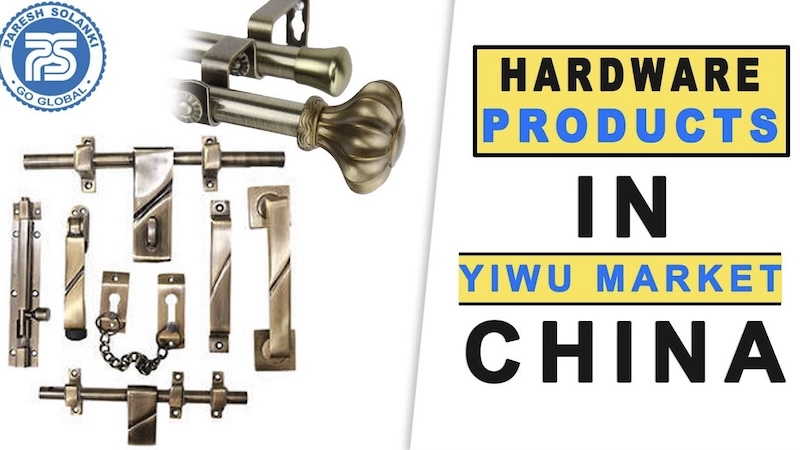
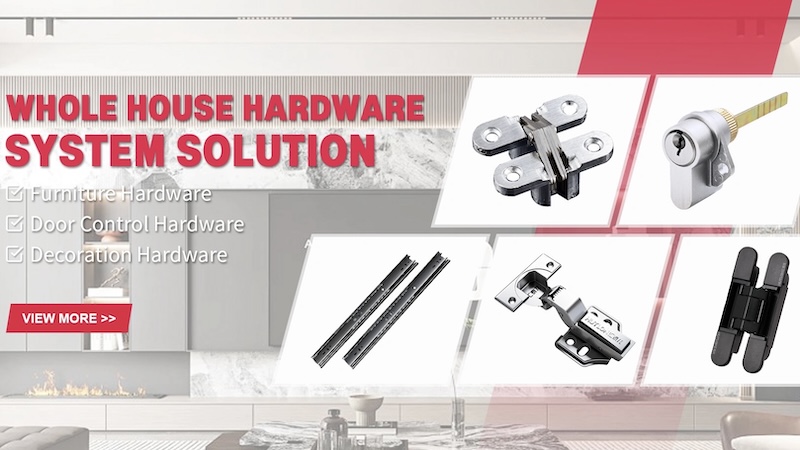
China's hardware sector covers a very wide range, and that matters because supplier selection should match the product type, not just the quote. Furniture hardware includes drawer slides, cabinet handles, concealed hinges, furniture legs, and connectors. Builder's hardware typically covers door hardware, locks, brackets, gate fittings, bathroom accessories, and other installation-focused items used in residential or commercial projects.
This distinction helps prevent a common sourcing error: choosing a factory with general capability but limited experience in your exact category. A plant that produces cabinet hardware may not be the best choice for exterior door fittings or heavy-duty structural accessories. When reviewing factory-side coordination, ask for category-specific production examples, finishing options, packaging standards, and export experience tied to your intended application. That is far more useful than relying on a broad company profile alone.
Category differences affect nearly every part of production. Furniture hardware often requires a stronger focus on appearance, smooth operation, and compatibility with modern assembly systems. Buyers may care about color consistency across batches, soft-close performance, or the ability to match contemporary design trends. Builder's hardware, by contrast, often places heavier emphasis on load-bearing function, corrosion resistance, safety performance, installation reliability, and replacement-part availability. A supplier that understands one environment may not automatically understand the other.
For example, a decorative indoor pull handle and an exterior gate hinge may both be called "hardware," but their manufacturing priorities differ sharply. The handle may need a premium finish that matches interior décor under showroom lighting. The hinge may need proper coating thickness, weather resistance, weld integrity, and dependable movement after long exposure to moisture or dust. If a buyer uses the same approval standard for both, problems are likely. The factory may meet appearance expectations but miss performance requirements, or vice versa.
Buyers should also consider how the end market changes the sourcing standard. Products sold into DIY retail channels may need barcode-ready packaging, installation instructions, and visually clean blister or box presentation. Hardware supplied into contractor or project channels may need stronger bulk packaging, lot traceability, and reliable dimensional consistency for faster site installation. In both cases, asking the supplier for recent examples serving the same sales channel provides better insight than simply reviewing generic product photos.
Another key part of the landscape is knowing whether you are dealing with a direct manufacturer or a trading company. Neither model is automatically wrong. A factory may offer better process visibility, more control over specifications, and clearer answers on tooling, materials, and quality checks. A trading company can be helpful when you need mixed product lines, easier communication, or one point of contact across several workshops.
The risk appears when the seller's role is unclear. If you think you are buying trusted manufacturing oversight directly from a factory but are actually working through layers of intermediaries, lead times, accountability, and quality consistency can become harder to manage. Ask direct questions about production ownership, subcontracting, and inspection access. For buyers comparing a hardware production supplier or a broader supplier coordination company, that clarity supports better decisions and reduces the chance of repeating the sourcing mistakes covered earlier.
A direct manufacturer can be especially useful when your order depends on stable technical control. If you need tooling modification, custom stamping, specific alloy composition, or repeatable finishing standards, being closer to the production floor typically helps. Questions can be answered faster, engineering changes are easier to document, and inspection findings can be discussed with the people actually responsible for the process.
A trading company, however, can be the better fit when your order includes several categories that no single factory makes well. For instance, a buyer building a furniture hardware line may need handles, hinges, fasteners, brackets, and leveling feet from different specialist factories. Coordinating all of that alone can take significant time. A capable trading company or sourcing partner may simplify communication, consolidate shipments, and manage factory follow-up more efficiently than the buyer could internally.
The problem is not the model itself; it is lack of transparency. Some intermediaries present themselves as factories because they assume buyers prefer that language. Others avoid discussing subcontracting until a problem arises. A better approach is to ask operational questions that reveal the truth naturally: Who owns the tooling? Where will the goods actually be made? Can inspection occur at the production site? Who issues the final packing list? Who approves corrective action if defects are found? Honest answers to these questions are often more valuable than a simple claim of being a "manufacturer."
After identifying the main manufacturing hubs and product clusters, the practical challenge is choosing a supplier you can actually trust. In a category where small quality gaps can create large downstream costs, careful vetting is what turns China-based production support into a workable sourcing channel instead of a recurring risk.
Many buyers make the mistake of treating supplier sourcing as a one-step screening exercise. In reality, vetting works best as a sequence. First, identify category fit. Second, confirm commercial legitimacy. Third, test communication and documentation quality. Fourth, review samples and manufacturing evidence. Fifth, align quality controls before any production deposit is sent. When one of those steps is skipped, the supplier may still win the order, but the buyer increases the chance of discovering weaknesses too late.
B2B platforms are useful for building an initial supplier list, but they should be treated as screening tools rather than proof of capability. Common starting points include Made-in-China and Taiwanese industrial directories such as Manufacturers.com.tw, especially when you want to compare furniture hardware, fasteners, hand tools, or builder's hardware across multiple sellers. These marketplaces help buyers review product scope, export experience, response quality, and catalog depth before spending time on calls or samples.
A smart approach is to short-list suppliers by product fit first, then compare how clearly they present materials, finishes, standards, packaging, and OEM or private-label support. If a listing is vague, recycled across categories, or overloaded with broad claims, that is a warning sign. For buyers seeking reliable factory-side coordination, the platform profile is only the opening file, not the final verdict.
One practical way to use B2B platforms well is to compare not just the product, but the quality of information. A supplier that names materials clearly, differentiates finish options accurately, explains MOQ by SKU, and responds to technical questions with specifics is usually easier to work with later than one relying on generic sales language. If a supplier cannot explain whether a hinge is cold-rolled steel or stainless steel, or whether a lock finish is electroplated or powder coated, that weakness will likely show up again during sampling and production.
Buyers should also pay attention to image patterns and catalog behavior. Reused stock images, unrelated product categories under one profile, or dozens of highly technical products with no coherent specialization can indicate a trader with limited direct control. That does not automatically disqualify the seller, but it should change your next step. You may still continue, but with stronger verification requirements.
Trade shows and industry referrals can complement online research. A supplier that appears on a marketplace, has a consistent trade-show presence, and can provide recent export references usually offers more confidence than a profile that exists only online. Even if direct customer references are limited due to confidentiality, suppliers should still be able to demonstrate export markets served, typical order sizes, and the hardware categories they know best.
Verification should focus on whether the supplier can repeatedly deliver the exact product you need, at the quality level your market expects. Start by confirming business identity, factory or trading status, core product specialization, and communication consistency. Then review sample quality, production photos or videos, documentation habits, and willingness to answer detailed questions about tolerances, coatings, materials, testing, and packaging.
A practical checklist includes:
Product match: Ask for recent examples in the same category, not just a large general catalog.
Documentation quality: Serious suppliers can usually provide clear specifications, inspection records, or compliance-related paperwork when relevant.
Sampling process: Evaluate not only the sample itself, but also labeling, packing, and revision control.
Communication discipline: Delayed or evasive replies often signal trouble later in production.
Order readiness: Confirm MOQ, lead time ranges, tooling needs, and how changes are managed.
This is especially important for hardware import from China, where small misunderstandings can affect finish consistency, fit, and return rates.
Beyond the checklist, buyers should test how the supplier handles detail under mild pressure. For example, send a structured RFQ that includes material requirements, finish expectations, packaging format, target quantity, and destination market. Then compare the replies. Strong suppliers usually answer in a structured way, flag open points, and identify issues that may affect cost or lead time. Weak suppliers often ignore half the details and reply only with a price. That may seem fast, but it is usually a warning sign rather than a service advantage.
Sample review should also go beyond first impressions. With hardware, a sample can look good on a desk and still fail in use. Test screw alignment, thread quality, movement smoothness, edge finishing, coating uniformity, and consistency between multiple sample pieces if possible. If the supplier sends one excellent sample but cannot reproduce the same finish on later pieces, the first sample had limited value. Asking for more than one sample or a revised sample after feedback can reveal whether the supplier has real process control.
Documentation habits are another strong predictor of future performance. A supplier that tracks revision numbers, marks carton labels properly, and confirms technical changes in writing is far easier to manage during scale-up than one that relies on informal chat messages and verbal assumptions. In sourcing, professionalism often appears first in small administrative details.
Longevity does not guarantee quality, but it often shows that a supplier has survived real market pressure, repeat orders, and operational challenges. Ask how long the company has been exporting, whether its main business is the same hardware category you are sourcing, and how stable its production setup appears. A supplier that has focused on one line of hardware for years is usually easier to assess than one that suddenly offers every product under the sun.
Certifications should also be handled carefully. Relevant management or product-related certificates can support credibility, but buyers should verify that the documents match the company name, scope, and product category involved. A trusted manufacturing oversight supplier should be able to explain what its certifications cover and what they do not cover. If you work with a production quality support service or sourcing partner, ask them to verify these details independently before committing to volume orders.
In practice, longevity matters most when paired with relevance. A company may have been in business for 15 years, but if it only started exporting your hardware category recently, that experience may not reduce much risk. On the other hand, a younger supplier with a focused team and a narrow specialization in your exact product type may be a better operational match. The key is to separate age from competence.
Certifications should be interpreted with the same discipline. Quality management certifications may indicate that a supplier follows some formal process, but they do not prove your specific product will be made correctly. Product test reports may support claims about corrosion resistance, cycle life, or material performance, but only if they actually apply to the same design, same material, and same production conditions. Buyers should ask simple clarifying questions: Which factory does this certificate apply to? What product family is covered? When was it issued? Is it still valid? Who conducted the test?
A useful habit is to compare certification claims with factory behavior. If a supplier presents itself as highly systemized but sends inconsistent specifications, changes lead times casually, or cannot explain its own process steps, the paperwork may be telling a stronger story than reality. Good vetting means aligning documents with observable competence.
After you shortlist factories and confirm their background, the main risk shifts from supplier identity to shipment quality. For buyers sourcing supplier coordination, a disciplined inspection and support plan is what turns a promising quote into reliable China-based production support that performs as expected after arrival.
Risk mitigation in hardware sourcing is less about eliminating every defect and more about controlling predictable failure points. Most order problems fall into familiar categories: wrong material, wrong finish, poor dimensional control, mixed packaging, hidden subcontracting, rushed shipment timing, or weak defect response after delivery. A buyer that plans for these risks in advance usually handles sourcing more effectively than one that reacts only after containers arrive.
A pre-shipment inspection is your last practical checkpoint before the balance payment is released and goods leave the factory. In China hardware sourcing, skipping it is one of the easiest ways to import defects, mixed specifications, weak finishes, or incomplete packaging. Even when working with a trusted factory-side coordination supplier, inspection should be treated as a standard control, not a sign of distrust.
Focus the inspection on the points that affect real use and resale. For hardware, that often includes dimensions, material or finish consistency, surface defects, moving-part function, assembly fit, labeling, carton strength, and quantity verification. Your purchase order, approved sample, and packaging standard should all be part of the inspection file so the checker is comparing production against documented requirements rather than verbal promises.
A practical protocol usually covers:
Sampling and count checks: Confirm quantities and inspect a representative sample from packed goods, not only loose showroom pieces.
Workmanship review: Look for burrs, scratches, plating issues, corrosion signs, sharp edges, and uneven coatings.
Function testing: Open, close, lock, fasten, or load-test items as appropriate for the product category.
Packaging verification: Check barcodes, inner packs, manuals, labels, and drop-resistant export cartons.
Defect reporting: Classify issues clearly so rework, replacement, or hold decisions are easy to make.
If your order involves custom tooling or design changes, align inspection with your product development and sourcing process. Many buyers use a product development company or sourcing partner to define tolerances and approval standards before mass production starts. That reduces disputes later and improves the odds of receiving reliable manufacturing oversight instead of arguing over what "acceptable" means after production is finished.
The strongest inspections are designed around actual commercial risk. For example, if your hardware will be sold through retail channels, packaging accuracy and barcode placement may be just as important as the product itself. If your goods are going into construction projects, dimensional accuracy, load function, and installation compatibility may deserve heavier sampling. A generic inspection template is helpful, but your final checklist should reflect how the product will be used and how defects will affect your business.
Timing also matters. Waiting until 100% of goods are packed may be too late if serious production issues are found. For higher-risk orders, buyers often benefit from an earlier in-process check, especially when the product is customized or uses a new finish. Catching a plating issue after all units are completed is far more expensive than catching it during production. Even a brief production update with photos, batch records, or random measurement data can help identify problems before they become shipment-level failures.
Consider a simple case: a buyer orders 20,000 cabinet hinges with a satin nickel finish. The first sample is acceptable, but during mass production the plating subcontractor changes process parameters slightly. The color difference is subtle under factory lighting but obvious in a retail display. Without inspection against the approved sample, the shipment may technically match the item type while still becoming commercially unusable. This is exactly the kind of issue a disciplined pre-shipment inspection is meant to catch.
Inspection lowers risk, but it does not remove it. Some problems only appear during installation or after repeated use, so warranty terms and post-purchase support deserve the same attention as unit cost. When comparing production quality support company options, ask how defects are handled, who approves claims, what evidence is required, and whether replacements are sent with the next order or credited financially.
Clear after-sales terms are especially important for builders' hardware, furniture hardware, and other products where failure can create project delays or customer complaints. Instead of relying on broad promises, request written language covering the claim window, excluded damage, spare-part availability, response times, and responsibility for freight on replacement items. If a supplier cannot define that process clearly, future support may be inconsistent.
To reduce friction after delivery, keep a simple support framework in place:
Save approved samples, inspection reports, and batch records by purchase order.
Photograph defects by carton, label, and item condition.
Agree on a claim timeline before shipment.
Clarify whether support is refund, credit, remake, or replacement parts.
A practical point often overlooked is that warranty value depends on enforceability, not wording alone. A supplier may promise to "take responsibility," but if there is no agreed claim method, no batch traceability, and no clarity on freight cost, that promise may be difficult to convert into action. Buyers should therefore define the process before the order ships. For example: claims must be submitted within a set number of days after receipt; evidence must include photos, quantity count, and carton labels; the supplier must respond within a defined timeframe; and resolution will be by credit, replacement, or remake under specified conditions.
This matters even more when products are installed by contractors or resold under your own brand. A defect may generate labor claims, site delays, or retailer chargebacks that greatly exceed the factory's unit price. Suppliers rarely accept all downstream costs, but a mature supplier will at least discuss realistic support mechanisms and preventive steps for future orders. That willingness is often a better signal of long-term value than the initial quote.
Q1: What is the biggest mistake buyers make when ordering factory-side coordination?
The most common mistake is approving a supplier too quickly based on price, fast replies, or polished listings. Low quotes can hide weaker materials, inconsistent tolerances, unclear packaging standards, or limited after-sales support. If you want reliable manufacturing oversight, compare samples, confirm specifications in writing, and verify who is actually manufacturing the product.
Many failed orders begin with a quote that looks "good enough." The buyer assumes missing details can be settled later, but later is when leverage is weaker and misunderstandings are more expensive. The safer approach is to slow down before payment, not after defects appear.
Q2: How can I tell if a supplier is genuinely trustworthy?
Look for consistency across several checkpoints rather than one impressive claim. A trusted production quality support source should be able to explain its production scope, quality controls, lead times, and defect-handling process in clear terms. If answers change between sales conversations and formal documents, treat that as a warning sign.
Trustworthiness also shows up in how suppliers handle inconvenient questions. Good suppliers do not need to pretend every request is easy. If they openly explain risks, MOQ realities, tooling limits, or possible lead-time pressure, that honesty is often a positive sign.
Q3: Should I choose a factory or a trading company?
Either can work, but the choice depends on your order type. A factory may offer better process visibility for stable, repeat products, while a trading company can help when you need mixed categories, lower coordination burden, or broader sourcing support. The mistake is assuming one model is always better without matching it to your purchasing needs.
If your team has strong sourcing experience and needs one specialized item, direct factory sourcing may be ideal. If you need ten related hardware SKUs from several specialist workshops, a capable coordinator may save time and reduce administrative strain.
Q4: Is the cheapest quote ever the right choice?
Usually not. Supplier coordination cost should be reviewed alongside tooling, packaging, inspection, shipping terms, replacement policy, and communication quality. A slightly higher quote can be the safer commercial option if it reduces rework, delays, or dispute risk.
In hardware, the cheapest unit price can become the most expensive landed result if corrosion, poor fit, or weak packaging creates returns and replacements.
Q5: What should be written into the purchase agreement?
Keep it practical and specific. Include:
Product specifications, materials, finishes, dimensions, and tolerances
Approved sample reference and revision version
Packaging details, labeling, carton marks, and accessories
Quantity, unit price, Incoterms, and payment schedule
Lead time, inspection timing, and shipment approval conditions
Defect standard, claim window, and remedy method
The best agreements reduce ambiguity. If a term would be hard for a third party to verify during inspection, rewrite it in measurable language.
Q6: How many samples should I review before ordering?
One sample can confirm basic fit and appearance, but it may not represent full production consistency. For higher-risk or customized items, review pre-production samples and, if needed, production-stage samples tied to the approved specification. This is one of the simplest ways to move closer to trusted China-based production support rather than relying on assumptions.
Where finish consistency matters, reviewing multiple samples from different mini-batches can be especially helpful.
Q7: What if the supplier says minor variations are normal?
Some variation may be realistic, but "normal" should never replace agreed standards. Ask the supplier to define acceptable variation in measurable terms before production starts. If they avoid specifics, you may be looking at a factory-side coordination supplier that is not ready for disciplined quality management.
For instance, acceptable color deviation, dimensional tolerance, or plating thickness should be described in technical or visual terms, not left to opinion after production.
Q8: Do I need a third-party inspection for every order?
Not always. For low-value, proven products from a stable source, you may choose periodic inspections instead of checking every shipment. For new suppliers, custom items, or orders where failure would be expensive, independent inspection is usually worth considering.
Many buyers reduce inspection frequency only after the supplier has demonstrated consistency across several successful orders.
Q9: How do I reduce risk when reordering?
Do not assume a good first order guarantees future consistency. Keep version-controlled specifications, confirm any material or process changes before production, and monitor whether response speed or quality discipline slips over time. Even a capable manufacturing oversight company can change personnel, subcontractors, or sourcing inputs.
Repeat orders should be treated as controlled repeats, not informal rebuys. Confirm the same finish, same packing method, and same performance standard each time.
Q10: Can one sourcing partner handle everything?
Sometimes, but broad claims deserve scrutiny. If a production quality support service or supplier coordination experts say they can manage product selection, vetting, quality checks, and logistics, ask which steps they control directly and which are outsourced. The safer approach is clarity, not convenience alone.
A good partner will explain its role boundaries. That transparency is usually more valuable than a promise to do everything.
Q11: Why do buyers get confused by "China-based hardware production in China" style searches?
Search phrasing can be awkward, but the intent is usually simple: buyers want dependable Chinese-made hardware and a dependable buying process. Focus less on the wording and more on evidence of competence, documentation quality, and issue resolution.
The companies worth shortlisting are the ones that can convert vague sourcing intent into a structured purchasing process.
A successful long-term approach to manufacturing oversight is built on repeatable habits, not assumptions. That means choosing a production quality support supplier that can support your product category, order cadence, quality expectations, and post-shipment follow-up without constant firefighting. It also means reviewing total supplier coordination cost through the full sourcing cycle, including sampling, packaging, inspection, lead-time stability, and issue resolution. For buyers trying to build trusted China-based production support programs instead of chasing the lowest initial quote, a structured China product sourcing workflow or support from a qualified product sourcing agent/company can reduce friction and improve decision quality. The goal is not simply to buy factory-side coordination in China once, but to create a sourcing system that becomes more predictable with every order.
That system should be practical. Start with product clarity, not supplier promises. Build a short list based on real category fit. Verify who is producing the goods, how quality is controlled, and what happens if defects are found. Test communication during sampling, because it often predicts communication during problems. Use inspection not as a last-minute ritual, but as part of a broader control plan linked to specifications, packaging, and shipment approval. And after delivery, review performance honestly so that the next order starts from evidence rather than memory.
If you are ready to move forward, close this article by turning the seven mistakes into supplier selection criteria and a real pilot order plan. Shortlist partners, test communication responsiveness, confirm quality controls, and start with a manageable purchase that reveals how the relationship works under normal pressure. That is the most practical path to trusted manufacturing oversight and a more dependable China production quality support supply strategy. If internal bandwidth is limited, working with a product sourcing company can help keep qualification, sampling, and supplier coordination disciplined from the start. Over time, the best results usually come from the same disciplined pattern: fewer assumptions, better documentation, and supplier relationships built on verified performance instead of optimistic first impressions.
 English